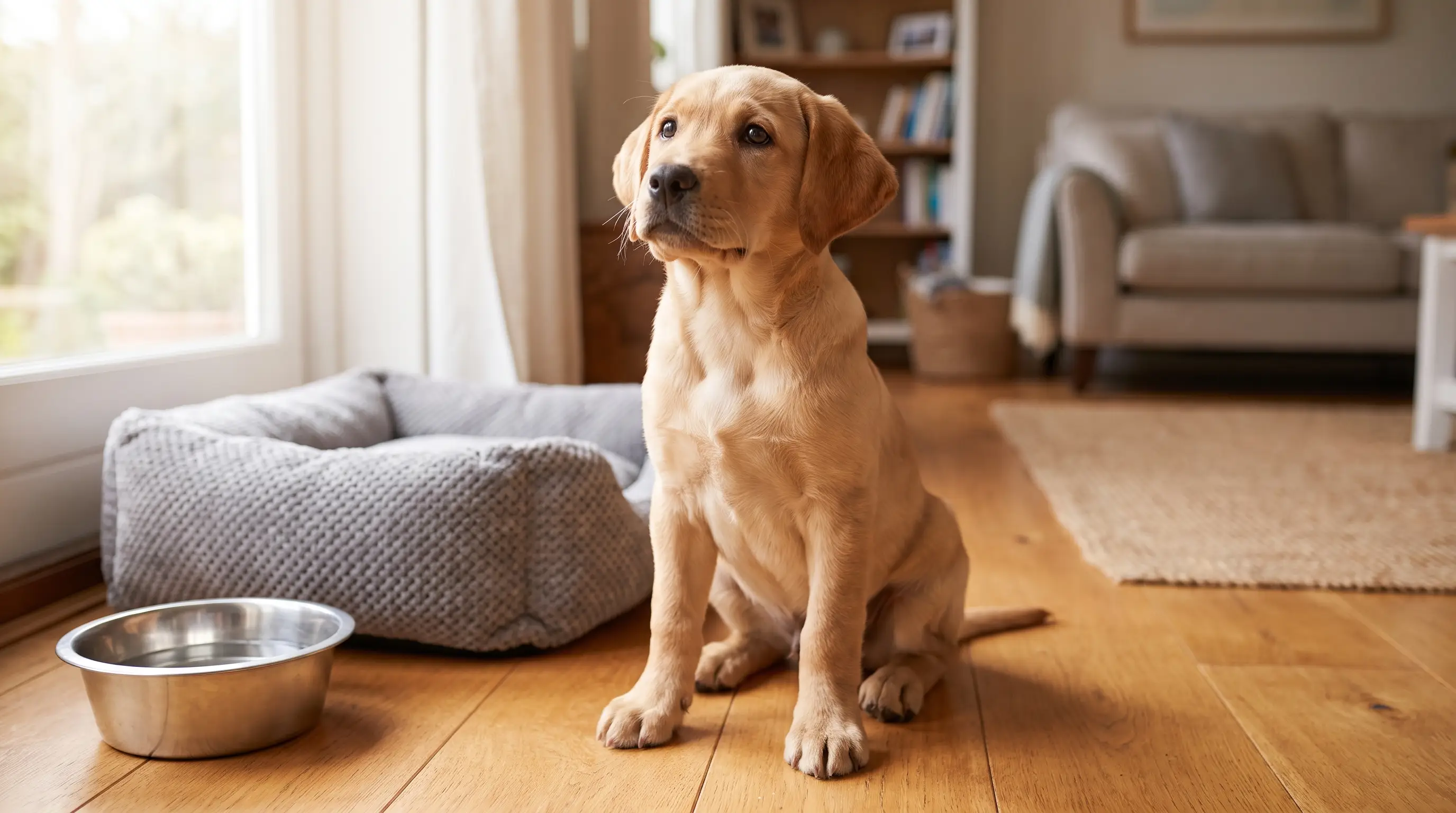
Bringing a puppy home: the first 48 hours
The first 48 hours set the tone for everything that follows, so keep them quiet, predictable and short on excitement. Your puppy has just left its mother and littermates and lost every familiar smell in one afternoon. Your only real jobs on day one are to keep it safe, start the toilet routine from the first hour, and let it decompress. Everything else can wait.
Before arrival: puppy-proof the house and get the kit
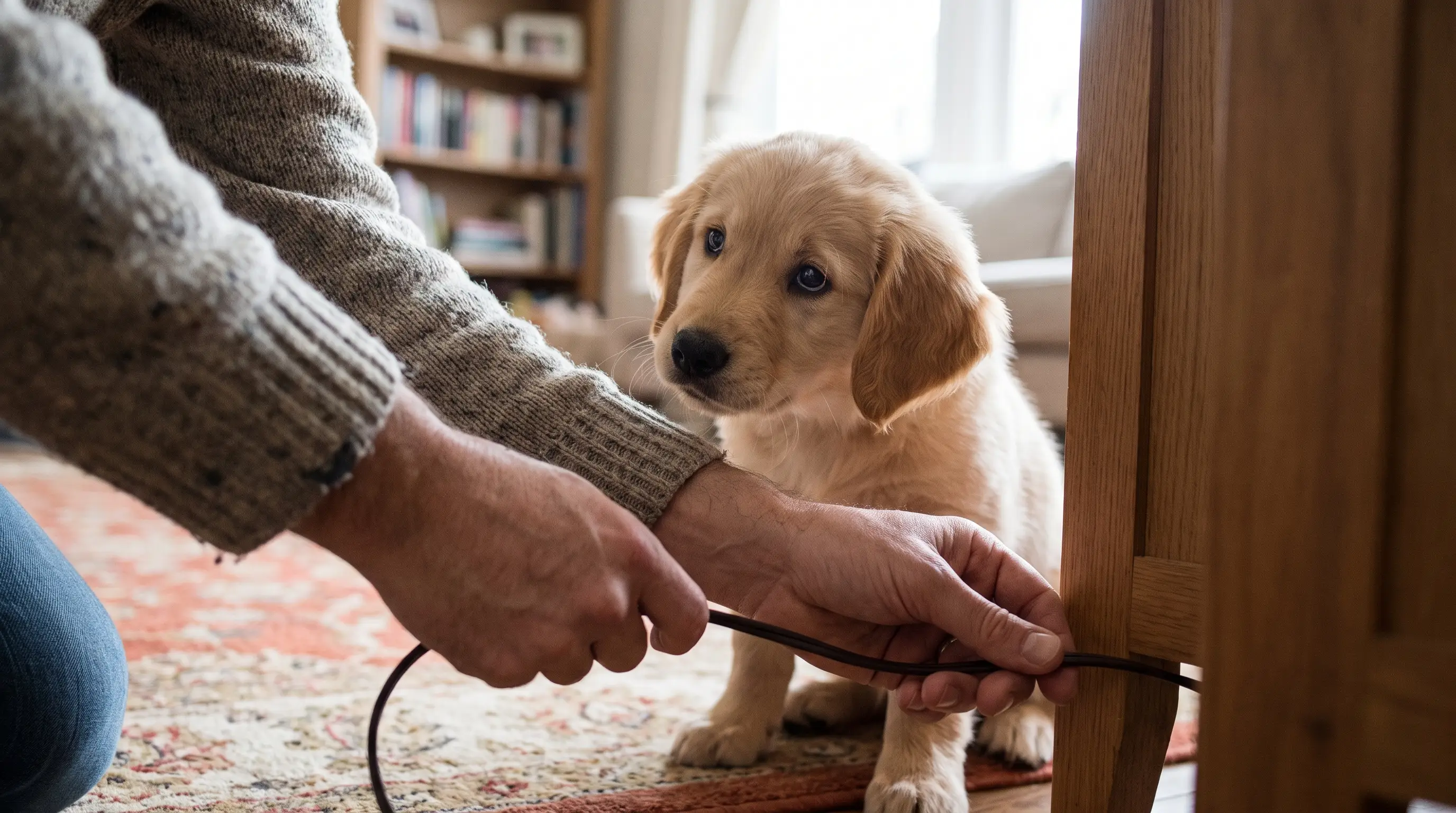
Puppy-proof before the puppy arrives, because a curious eight-week-old will chew, swallow and investigate anything at nose height. Get down on the floor and look at the room the way it will: tape down or hide electrical cords, pick up small objects it could swallow, and lock away cleaners and medicines. Move houseplants out of reach and check which ones are toxic, along with the everyday foods that can poison a dog. We cover the full list in what foods are toxic to dogs.
The kit is short. A crate sized so the adult dog can stand and turn around, a soft bed, food and water bowls, a collar with an ID tag, and a couple of chew toys. Buy the exact food the breeder was using and enough for at least a week. Changing diet on top of a house move is the fastest way to an upset stomach, so keep the food identical for now and switch brands later, slowly, over a week or more if you want to.
The ride home and the first few hours
Keep the ride home secure and calm, and expect a nervous or car-sick puppy. Secure it in a crate or a fitted harness rather than loose on a lap, bring a towel in case of accidents, and ask the breeder for a blanket or toy carrying the litter's scent. That familiar smell does more to settle a puppy than anything you can buy new. Drive gently and resist the urge to make a fuss.
At home, take it straight to the toilet spot before you go inside, then let it explore just one room where you are too. Show it where the water bowl lives and where it should toilet. Keep visitors away for now; the whole neighbourhood meeting the puppy can wait a week. This quiet start is what trainers mean by decompression: give a frightened animal time and space rather than a party, and it relaxes far faster. Puppies this age sleep up to 18 to 20 hours a day, so let it nap whenever it drops off.
Toilet training from hour one
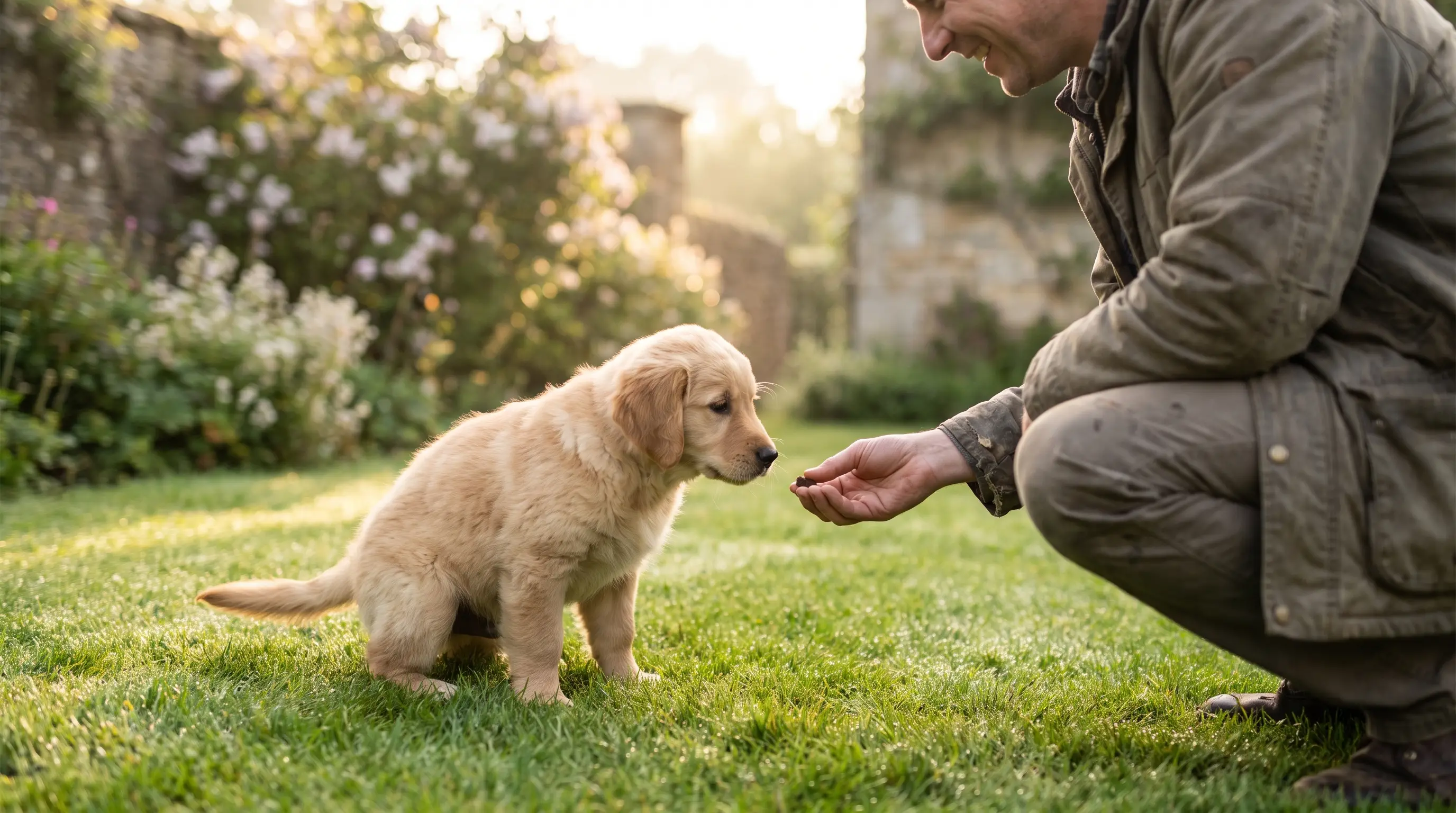
Start toilet training the moment you get home, not next week. Take the puppy outside after every sleep, every meal, every play session and first thing in the morning, then reward it heavily the instant it goes in the right place. Praise and a small treat outside teach the lesson far better than any telling-off indoors. A useful rule of thumb: a puppy can hold its bladder for roughly one hour per month of age, so a two-month-old needs a break about every two hours in the daytime.
Never punish an accident inside. The puppy will not connect a scolding to something it did minutes ago; it will just learn to hide from you. Clean the spot with an enzyme cleaner so the smell does not draw it back, and take it out more often. Meals drive the schedule, so a steady feeding routine makes toilet training predictable. If you are unsure on portions, see how much to feed a dog.
The first night
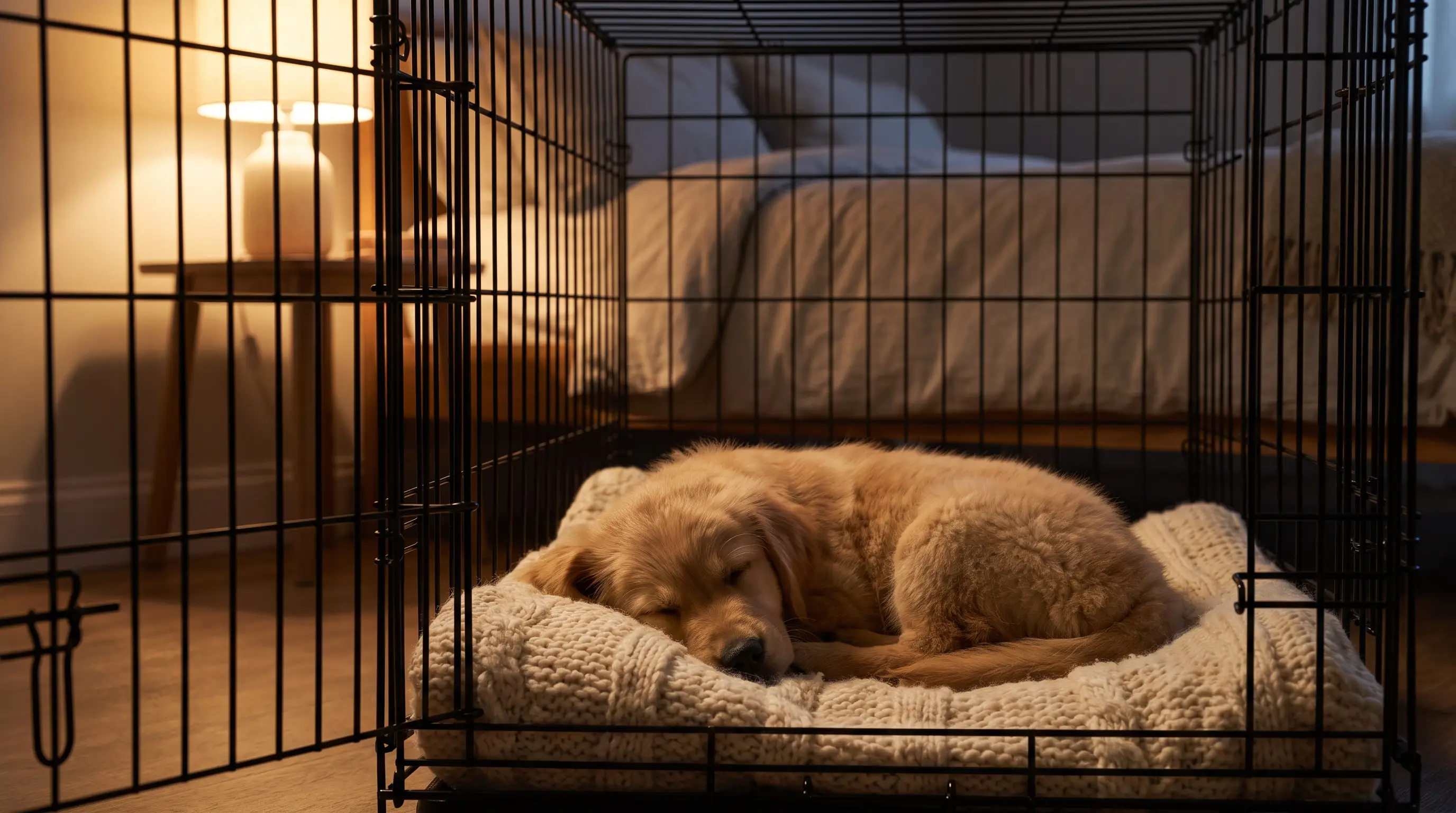
Put the crate right next to your bed for the first night so the puppy can hear and smell you. This is its first night ever alone, away from its mother and littermates, and crying is normal. Go to it if it needs the toilet, and offer quiet reassurance, but keep it low-key rather than turning every whimper into playtime and attention. Most puppies settle within a few nights, and are usually sleeping through by around three to four months.
Take the water bowl up a couple of hours before bed and give one last toilet trip right before lights out. Even so, a young puppy often cannot hold on all night, so set an alarm or listen for restlessness and carry it straight outside, calmly, with no fuss. Back to bed afterwards. The point of the crate near your bed is comfort now; you can move it across the room, then out, once the settling is done.
The name, gentle bite inhibition and a routine
Begin the name and a little gentle training on day one, but keep every session short and light. Say the name in a happy voice and reward the puppy for looking at you. For the sharp puppy teeth, teach bite inhibition: when it bites too hard, give a short high yelp, pause the game for a moment, then redirect it onto a chew toy. It learns that soft mouths keep the fun going and teeth on skin stop it.
Start a rough daily rhythm of sleep, meals, toilet trips and short bursts of play, because puppies settle fastest when the day is predictable. Keep exercise gentle while the joints are still growing; a common guideline is only a few minutes of walking per month of age, once or twice a day, and let the rest be free pottering at home. Long hikes and stairs can wait. A tired puppy that has had a little play and a lot of sleep is a calm one.
Health: booking the first vet visit
Book the first vet visit within the first few days of bringing the puppy home. That check confirms it is healthy, and starts the vaccination and socialisation plan that shapes the next few months. Bring any paperwork from the breeder on worming and early vaccines so the vet can pick up the schedule; we walk through the timings in the puppy vaccination guide.
Watch how it eats and settles. A stressed puppy may pick at the first meal or skip it, which is common, but if it refuses food for more than a day, seems weak, or has ongoing vomiting or diarrhoea, call the vet rather than waiting. The theme of these first 48 hours is the same throughout: time, not overwhelm. Keep it calm, keep the routine steady, and let the puppy grow into its new home at its own pace.
Common questions
How long does it take for a puppy to settle into a new home?
Most puppies start to settle within a few days and are usually comfortable within two to three weeks. Full settling, including sleeping through the night, often takes until around three to four months, and varies with the puppy's temperament and breed.
Should you let a puppy cry it out on the first night?
No, don't let a puppy cry it out on its first nights. Check quietly whether it needs the toilet or comfort, reassure it briefly, then give it a few minutes to settle. Ignoring genuine distress in the first week can make a nervous puppy worse, not better.
Where should a puppy sleep on its first night?
A puppy should sleep in a crate or bed placed right next to yours for the first nights, so it can hear and smell you. Being close to you reduces crying and lets you hear when it needs a toilet trip. You can move it further away gradually once it has settled.
How long can a puppy hold its bladder at night?
A rough rule is one hour per month of age, so a two-month-old puppy can hold on about two hours in the daytime. At night, when they are asleep and still, many young puppies manage four to five hours, but most cannot last a full night until around four to six months.
What should you not do when you first get a puppy?
Don't overwhelm it with visitors, long outings or too much of the house at once, and never punish toilet accidents. Avoid changing its food straight away, skipping the first-night crate near your bed, or over-exercising growing joints. Keep the first days quiet and predictable.
How long can you leave a puppy alone on its first day?
Barely at all on the first day, and only a few minutes at a time in the first weeks. A young puppy cannot hold its bladder long or cope well with being alone, so build up alone-time slowly. Leaving it for hours early on tends to cause accidents and separation anxiety.
More in Dogs

8 rare dog breeds most people never meet
Eight of the world's rarest dog breeds — where they come from, what makes them unusual, and why you almost never see one.

Foxtails: The Summer Grass Seed That Burrows Into Pets
Foxtail grass seeds catch in fur and travel one way—inward. Here's how to spot them on a cat or dog, and stop them.
The oldest dog ever and how long dogs really live
Bluey reached 29 years. Bobi's 31-year claim fell apart. Here's the real math on dog lifespan, and how to buy your dog more time.