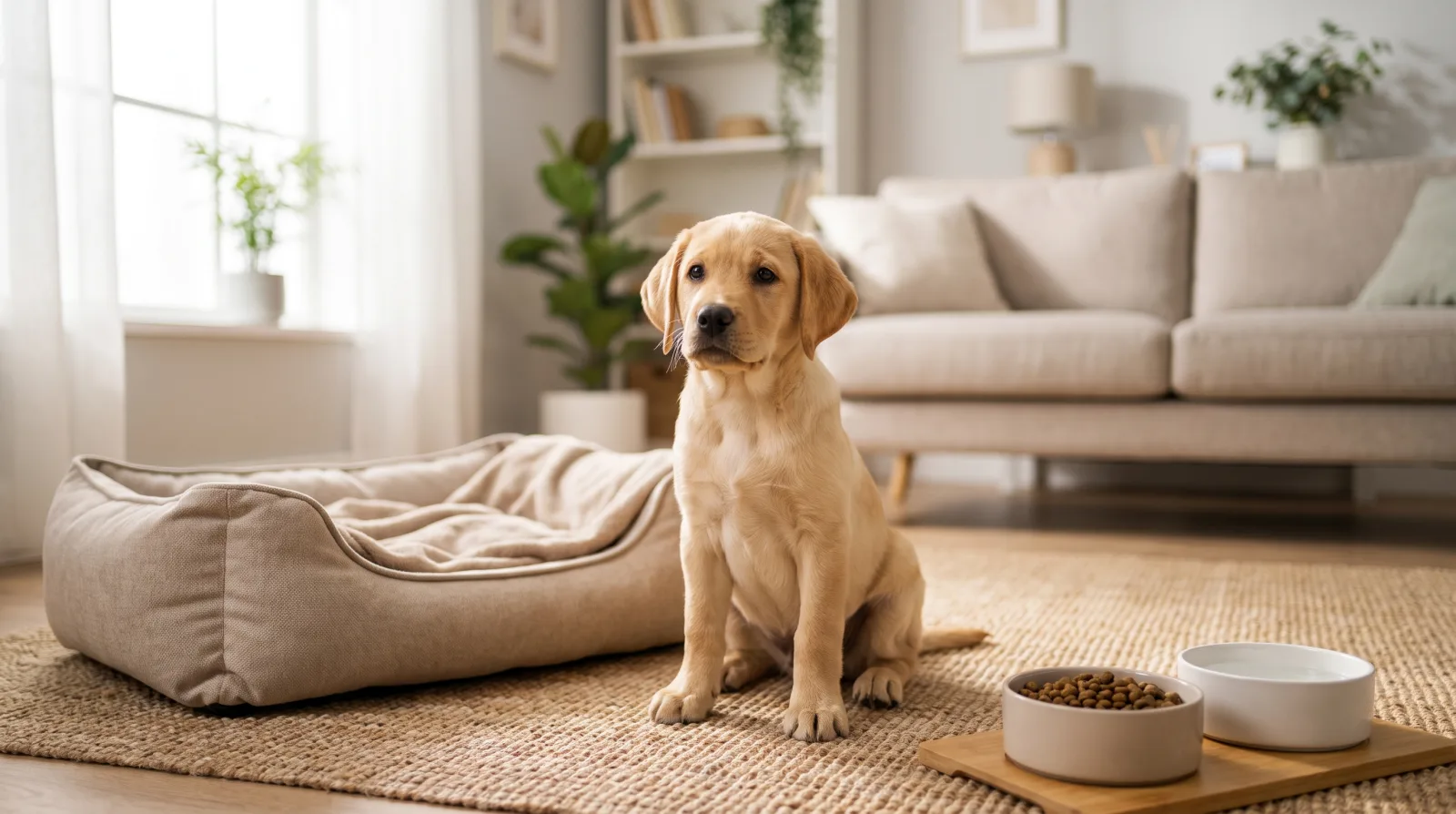
New puppy checklist: everything to buy and prepare
Before your puppy comes home, buy seven basics and make a plan for the first week. The basics are food and water bowls, a crate, a collar or harness with a lead, a bed, safe chew toys, a week of the exact food the breeder was feeding, and toilet pads or a chosen spot in the garden. The plan is quieter than the shopping: puppy-proof the house, keep the first days calm, and register with a vet before you need one. Do that much before the carrier comes through the door and the hard part of those first weeks is already handled. This page is the one checklist that points to every deeper guide you'll want next.
The shopping list — what to buy
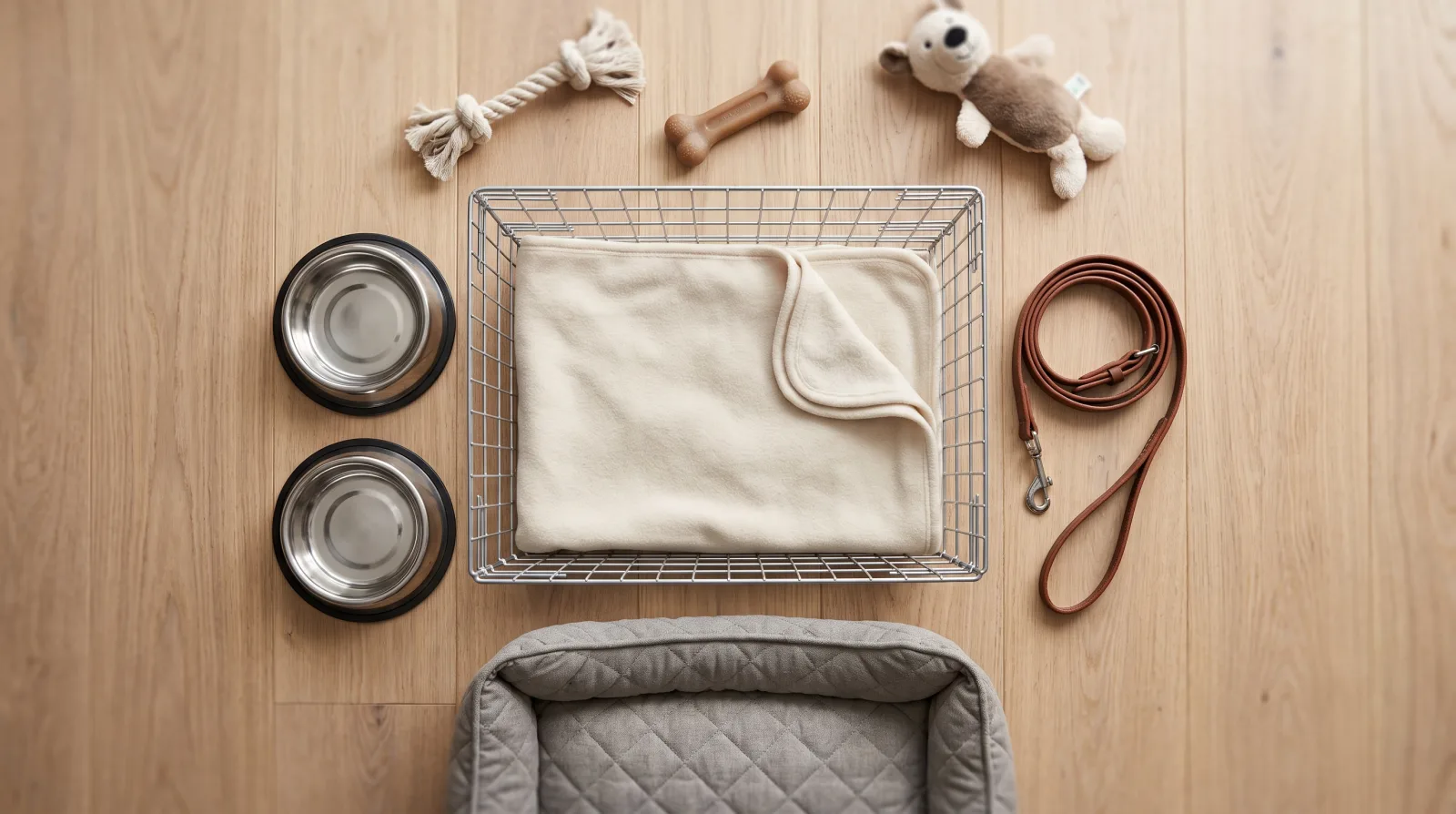
Seven things cover a puppy's first weeks, and none of them need to be expensive. Food and water bowls, shallow and stable enough not to tip; a crate sized for the adult dog it will become, not the small thing that arrives; a flat collar or a harness with an ID tag and a lead; a washable bed; a handful of chew toys soft enough to bend in your hand; a week's worth of the exact food the breeder was using; and toilet pads or a chosen spot in the garden for the house-training you start on hour one. That list handles eating, sleeping, chewing, toileting and the first walks, which is the whole of a puppy's day.
Buy the food first, and buy the same brand and recipe the breeder fed, because changing diet on the same day as a house move is the quickest route to an upset stomach. Size the crate for the grown dog and use a divider while the puppy is small, so you're not buying a second one in three months. Don't spend much on the first bed — most puppies chew one, and a cheap washable bed you replace later beats an expensive one destroyed in a fortnight. Everything past this list — the second toys, the fancy playpen, the coat — can wait until you know the dog.
Puppy-proof before the puppy is loose
Puppy-proof the house before the puppy is loose in it, not after it finds the trouble. A curious eight-week-old explores with its mouth, so the job is to get down to floor level and clear what it can chew or swallow: trailing cords, small objects, low houseplants, and anything toxic behind a cupboard it can nudge open. We won't repeat the full sweep here, because we've already written it — work through dog-proofing your home and garden room by room, including the fence and gate check that stops a small dog slipping out on day one.
Do it before adoption day rather than during it. The afternoon you bring a puppy home is not the afternoon to discover the gap under the gate or the daffodil bulbs in the border, so walk the house and garden a few days ahead while you can still fix things calmly. Once it's done it stays done, and you get to spend the first days watching the puppy instead of chasing it away from the bin.
The first days — keep them calm
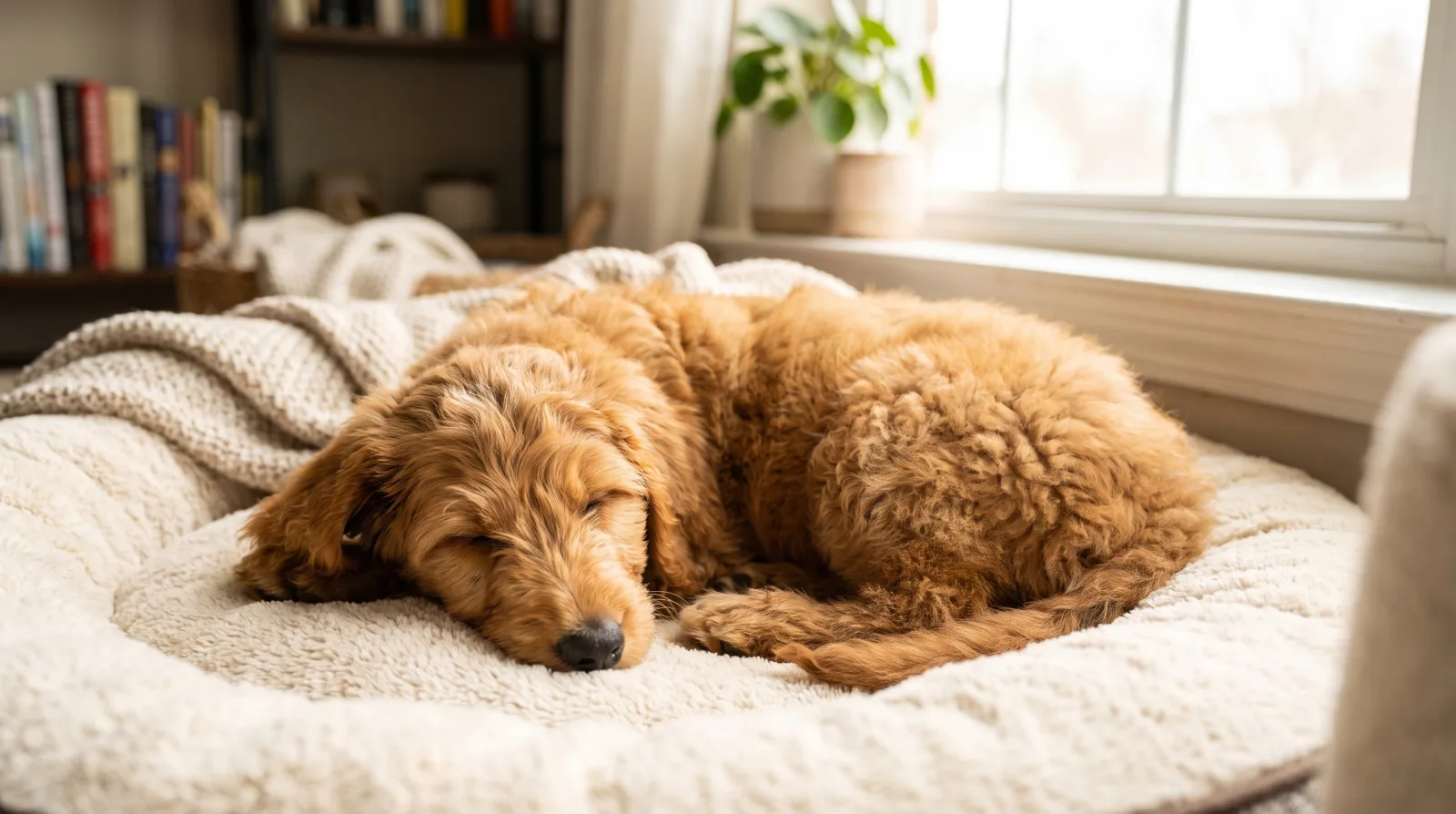
Keep the first days short on excitement and long on routine. A puppy that has just left its mother and littermates has lost every familiar smell in one afternoon, so it needs quiet, a predictable rhythm and somewhere of its own far more than it needs a house tour or a stream of visitors. Start the toilet routine from the first hour, take it to the same spot after every sleep, meal and play session, and keep the crate as a calm den rather than somewhere it's shut away.
There is a rough rhythm to how a dog settles, and it's worth knowing before you start so you don't read early nerves as a problem. We walk through it in the 3-3-3 rule for a newly settled dog, and the hour-by-hour plan for those first two days, including the first night, is in bringing a puppy home. This checklist gets you to the front door ready; those two get you through the days after it. The longer road that follows — vaccinations, the socialization window, teething and adolescence — runs on its own first-year timeline once these early weeks are behind you.
Introducing children and resident pets
Introduce the puppy to children and any resident pets slowly, on the puppy's terms. With children, the rule is calm and supervised: teach them to let the puppy come to them rather than chase or carry it, keep the first meetings short, and give the puppy a space it can retreat to where no one follows. A puppy that learns in its first week that children are gentle and predictable grows up easy around them; one that gets mobbed learns the opposite.
With a resident dog or cat, don't force a nose-to-nose meeting on arrival. Let them smell each other through a door or a baby gate first, keep the early face-to-face meetings brief and on neutral ground where you can, and feed them apart so mealtimes never become a contest. Give your older pet its own escape route and plenty of your attention, because most friction in the first weeks is the resident animal deciding whether this newcomer is a threat — and time and calm settle that better than any introduction trick.
Health setup — vet, vaccinations, parasites
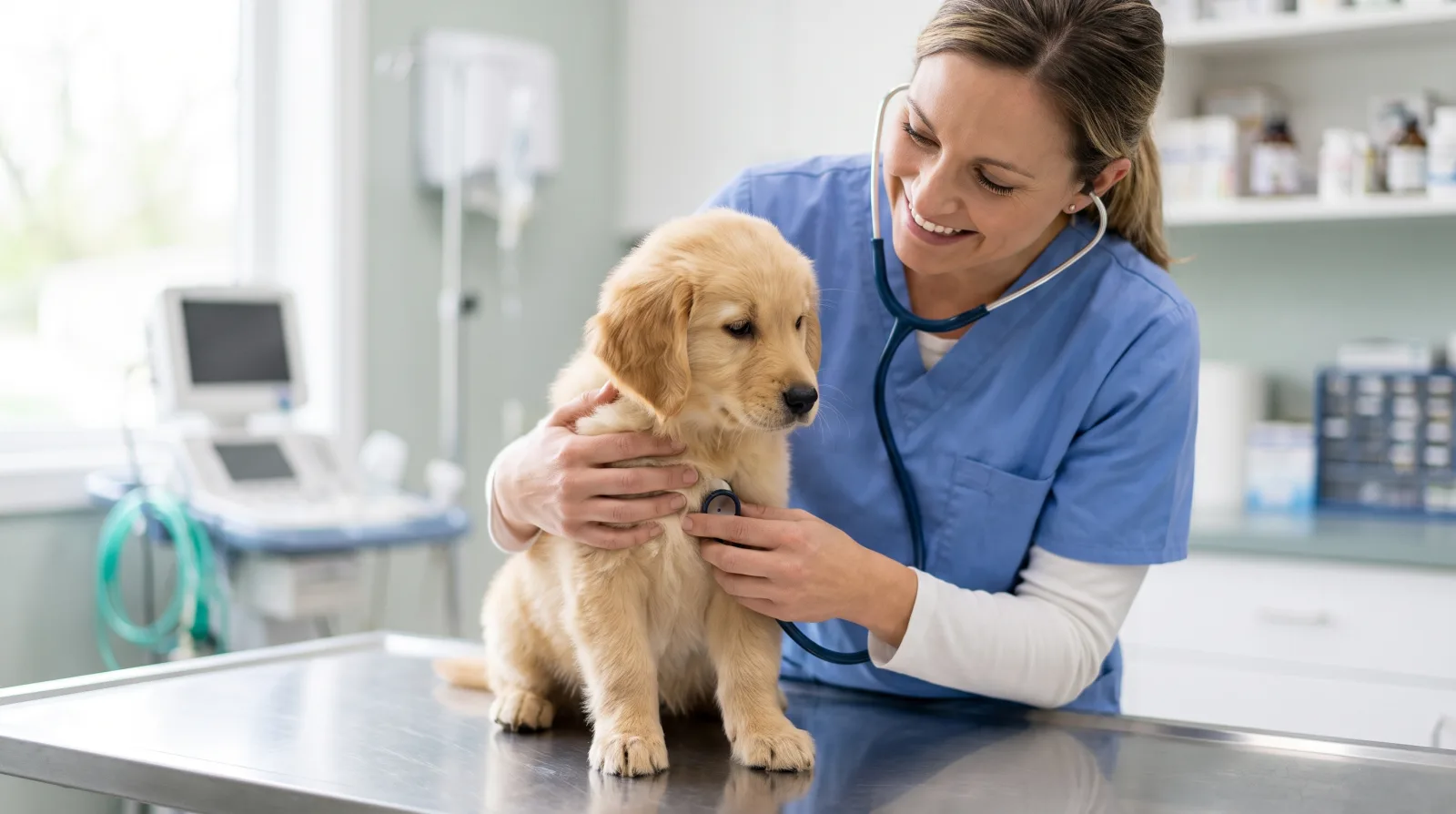
Line up the puppy's health care before you need it. Register with a vet in the first days and book an early check-up, both to catch anything wrong and to start the vaccination and parasite schedule on time. Ask the breeder exactly what the puppy has already had — first vaccinations, worming, microchipping — and take the paperwork to that first appointment so nothing gets repeated or missed.
Vaccinations run on a schedule that decides when a puppy can safely meet the outside world, and it's worth understanding rather than guessing; we set it out in the puppy vaccination timeline. Parasite control starts early too — worms are common in puppies, and fleas and ticks come with the first walks — so read fleas, ticks and worms for what to treat and when. Get the vet, the jabs and the parasite cover sorted in the first fortnight and the rest of the first year has a foundation under it.
Training starts on day one
Training starts the day the puppy arrives whether you mean it to or not, because the puppy is learning what works from its first hour in the house. Keep it simple and kind: reward what you want, ignore or redirect what you don't, and use the puppy's own food for the earliest lessons so training is just part of the day rather than a separate event. Short, frequent and upbeat beats long and stern with an eight-week-old attention span.
The first month has a natural order to it, from name and toilet training to sit, settle and time alone, and we lay it out in puppy training in the first month. The one skill worth starting early and never rushing is coming back when called, because a reliable recall is what earns a dog its freedom later; teaching a rock-solid recall covers how to build it from the beginning. If you're still choosing which puppy suits your home, our dog breed profiles cover typical size, energy and temperament before you commit.
Common questions
What do I need for a new puppy?
At a minimum: food and water bowls, a crate sized for the adult dog, a collar or harness with an ID tag and a lead, a washable bed, a few safe chew toys, toilet pads or a chosen garden spot, and a week's supply of the exact food the breeder was using. Beyond the shopping list you need a puppy-proofed home, a vet registered, and a calm plan for the first days. Everything else can wait until you know the dog.
What should I buy before bringing a puppy home?
Buy the food first, and buy the same brand and recipe the breeder was feeding so the diet doesn't change on moving day. Then the kit: bowls, a crate with a divider, a collar or harness and a lead, a cheap washable bed you can replace, and chew toys soft enough to bend in your hand. Skip the expensive bed and the extra gadgets until the puppy is past the chewing stage.
When should I puppy-proof my house?
Puppy-proof before adoption day, not during it. Walk the house and garden a few days ahead so you can fix hazards calmly — trailing cords, swallowable objects, toxic plants, the gap under the gate — rather than discovering them with a curious puppy already loose. Doing it early means the first days are for settling the puppy in, not chasing it out of trouble.
What does a puppy need on the first day?
On day one a puppy needs the basics within reach and a quiet routine, not a house tour. Have its bowls, bed, crate and the breeder's food ready, take it to its toilet spot from the first hour, and keep visitors and other pets away while it decompresses. Doing less on the first day, and keeping it calm and predictable, settles a puppy faster than fussing over it.
How much does it cost to set up for a new puppy?
The setup cost varies a lot by where you live, the size of the dog and how much you buy new, so treat any single figure with suspicion. The unavoidable one-off costs are a crate, a bed, bowls, a collar and lead, and toys; the bigger ongoing costs are food and vet care, including the first vaccinations and parasite treatment. You can keep the initial spend down by buying the same food the breeder used, sizing the crate for the adult dog so you only buy one, and skipping the expensive extras until you know the puppy.
How do I prepare my house for a puppy?
Get down to floor level and clear each room before the puppy arrives: tape or hide cords, pick up small objects it could swallow, move toxic plants and lock away cleaners and medicines. Secure the garden fence and gate, set up the crate and bed in a quiet corner, and agree the house rules with everyone at home. Our full guide to dog-proofing your home and garden walks through it room by room.
More in Dogs

Reading the pet food ingredient list: meat, meal and by-product
'Chicken' first isn't the win it looks like, and 'by-product' isn't the villain. How to read an ingredient panel the way the people who write it do.

Human-grade vs feed-grade pet food, decoded
'Human-grade' is one of the few pet-food terms with a legal meaning — and one of the most stretched. Here's what it really requires, and whether it's worth paying for.
Pet food quality words, decoded: what the label really promises
Human-grade, holistic, natural, premium, single protein. Most of it is marketing, some of it is law. Here's what each word actually guarantees — and the one claim that really matters.