Puppy training: your first month, step by step
Teach life skills before tricks. In a puppy's first month at home, the work that matters is a safe crate, its own name, a toilet routine, a soft mouth, and calm exposure to the world, roughly in that order. Sit and come are worth starting, but they sit below those foundations, and everything is taught with rewards, in tiny sessions, with your expectations kept low.
What to teach in the first month
Start with the skills your puppy will use every day, not the ones that impress guests. The useful order is: help the crate feel like a den, teach name recognition, build a house-training routine, work on bite inhibition, and start a couple of reward-based cues. Threaded through all of it, and more important than any single cue, is socialisation, because the window for it closes early.
A helpful frame is to separate life skills from commands. Toilet training, settling alone, a soft mouth, and comfort with new sounds and surfaces are life skills, and they shape the adult dog far more than sit or shake. An eight-week-old puppy is a baby with a short attention span and a smaller bladder, so keep the bar low. You are aiming for a puppy that feels safe and predicts good things from you, not a finished pet by week four.
Crate training as a safe den
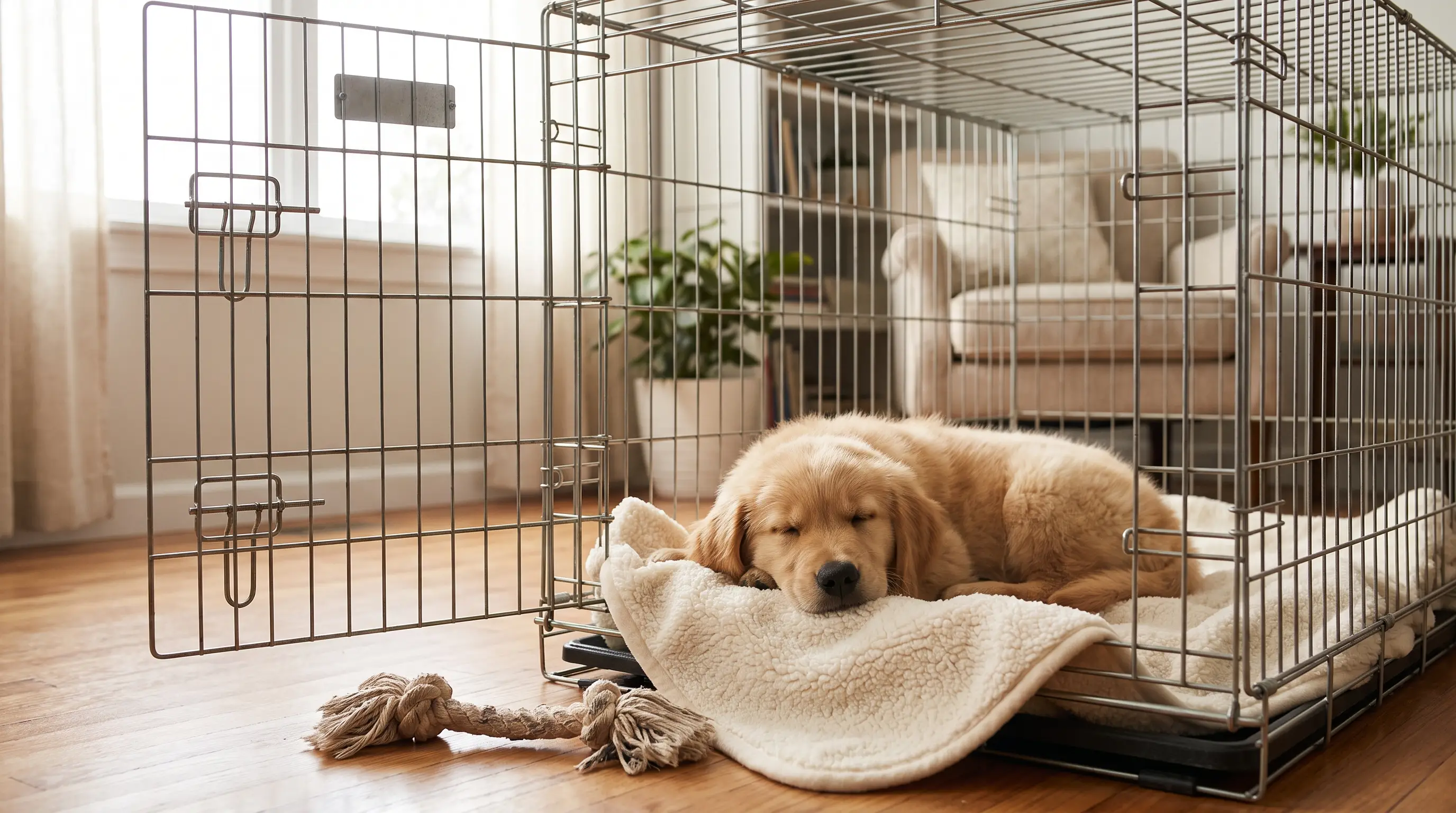
A crate works when it is a den the puppy chooses, never a place it is sent as punishment. Feed meals near it, then inside it, toss treats and a chew in with the door open, and let the puppy come and go so the space only ever predicts good things. Once it settles inside happily, close the door for seconds at a time and build up slowly.
Never use the crate to punish, and never shut a frightened puppy in and walk off, because a den that traps you is not a den. Keep sessions in it short at first and pair time inside with something to chew. Done this way, the crate doubles as a house-training tool, since most puppies avoid soiling the spot they sleep in, and it gives you a safe place to leave the puppy while you build up alone time.
House-training as a routine
House-training is a routine you run, not a lesson the puppy studies. Take the puppy outside after every sleep, meal, and play session, and at least every couple of hours in between. A rough guide to bladder capacity is one hour per month of age plus one, so an eight-week-old puppy needs frequent trips and cannot be expected to hold on for long. Go out with them, wait, and the instant they finish, reward with a treat and quiet praise so outside becomes the paid option.
Accidents will happen, and how you handle them decides how fast you succeed. Never scold or rub a puppy's nose in a mess, which teaches fear of you, not where to go. Clean up with an enzymatic cleaner rather than a normal household one, because dog urine contains scent markers that pull the puppy back to the same spot, and enzyme cleaners break those compounds down instead of masking them.
Bite inhibition
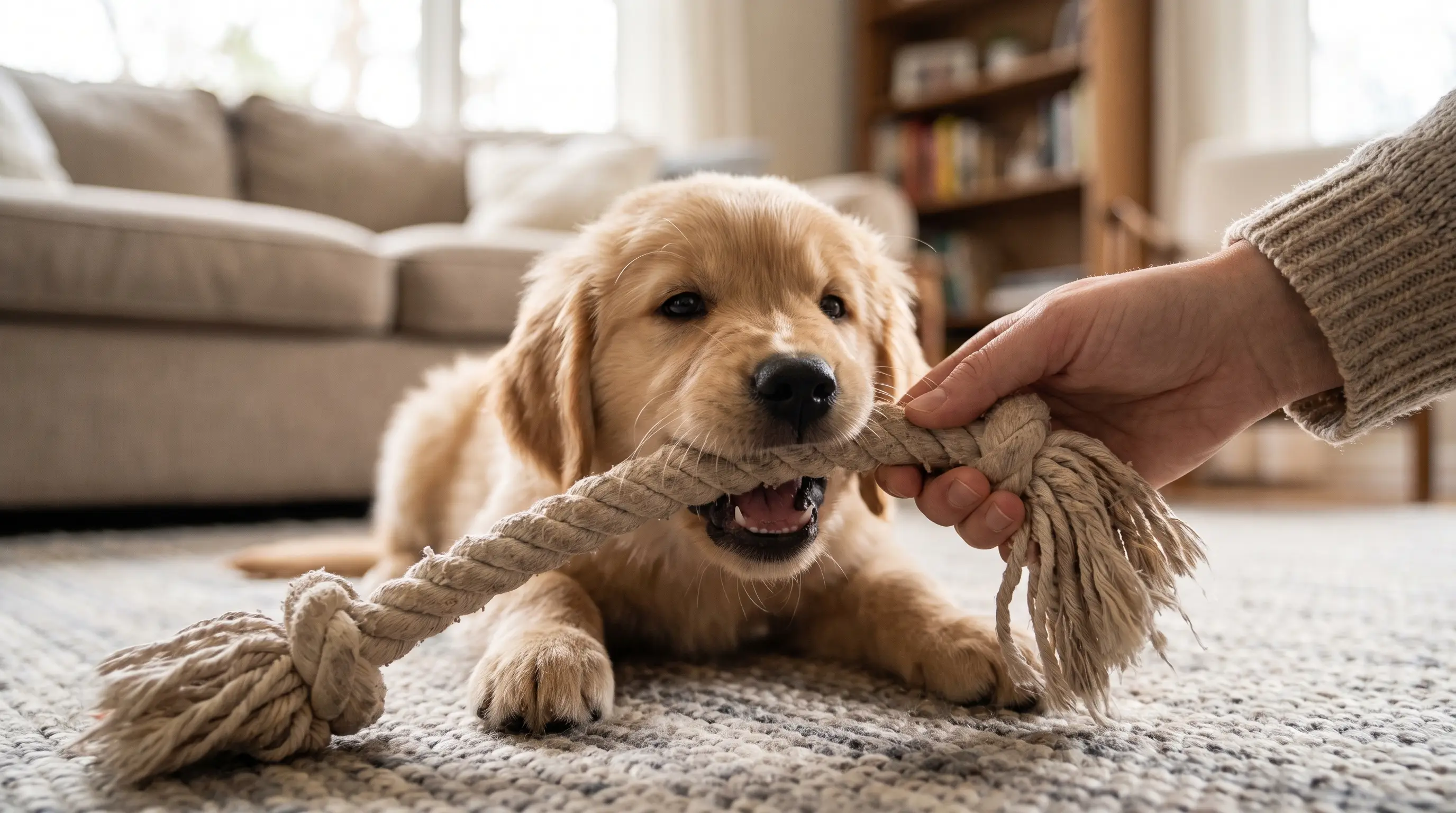
Puppies bite in play, and the goal of this first month is to teach a soft mouth, not to stamp the behaviour out. When teeth catch your skin too hard, give a short high-pitched yelp or simply go still and quiet for a moment, then redirect onto a toy the puppy is allowed to bite. That pause tells the puppy that hard mouthing ends the fun, which is exactly how littermates teach each other pressure control.
Skip telling the puppy off, smacking, or holding its muzzle, all of which frighten a young dog and can make mouthing worse. Keep a chew toy within reach so you always have something to swap in, and end play before the puppy gets over-tired and nippy. This is slow work that runs for months, so treat every calm redirect as progress rather than expecting biting to vanish in a week.
First cues: sit, come, and a hand target
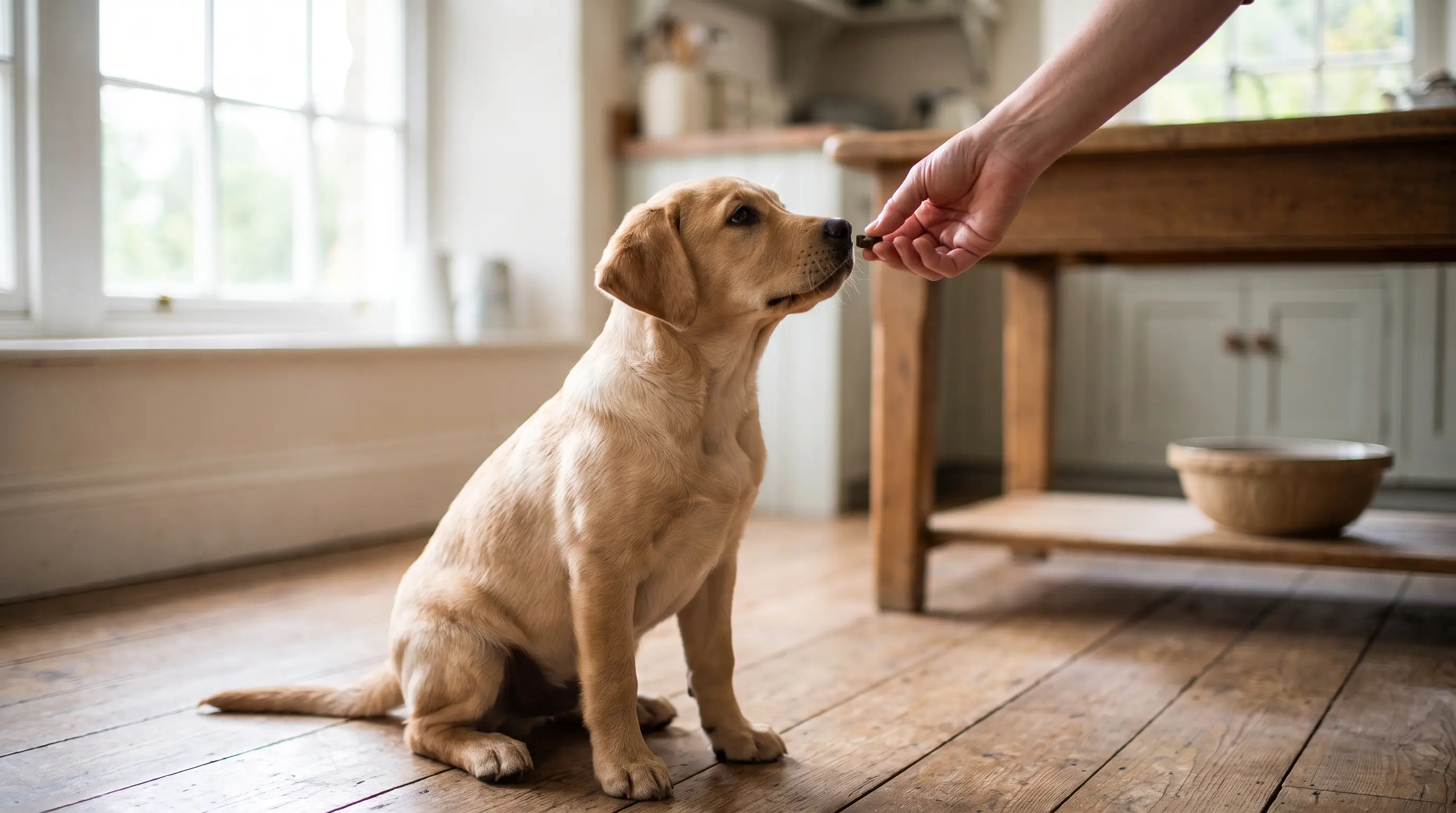
Teach the first cues with food and praise, in sessions of two to three minutes, several times a day. For sit, hold a treat at the puppy's nose and lift it slowly back so the bottom drops, then mark and reward. For come, say the name, and pay well every single time the puppy arrives, so recall always means something good. A hand target, where the puppy touches its nose to your open palm for a treat, is an easy first win and a handy way to move a dog around later.
Use rewards, not corrections, because reward-based training is the only method with solid science behind it, and it is what veterinary behaviour groups recommend. Keep sessions short and stop while the puppy still wants more, ending on something it got right. Even a fast learner like the Border Collie works best in brief bursts at this age, so short and frequent beats long and frustrating.
Socialisation is the real priority
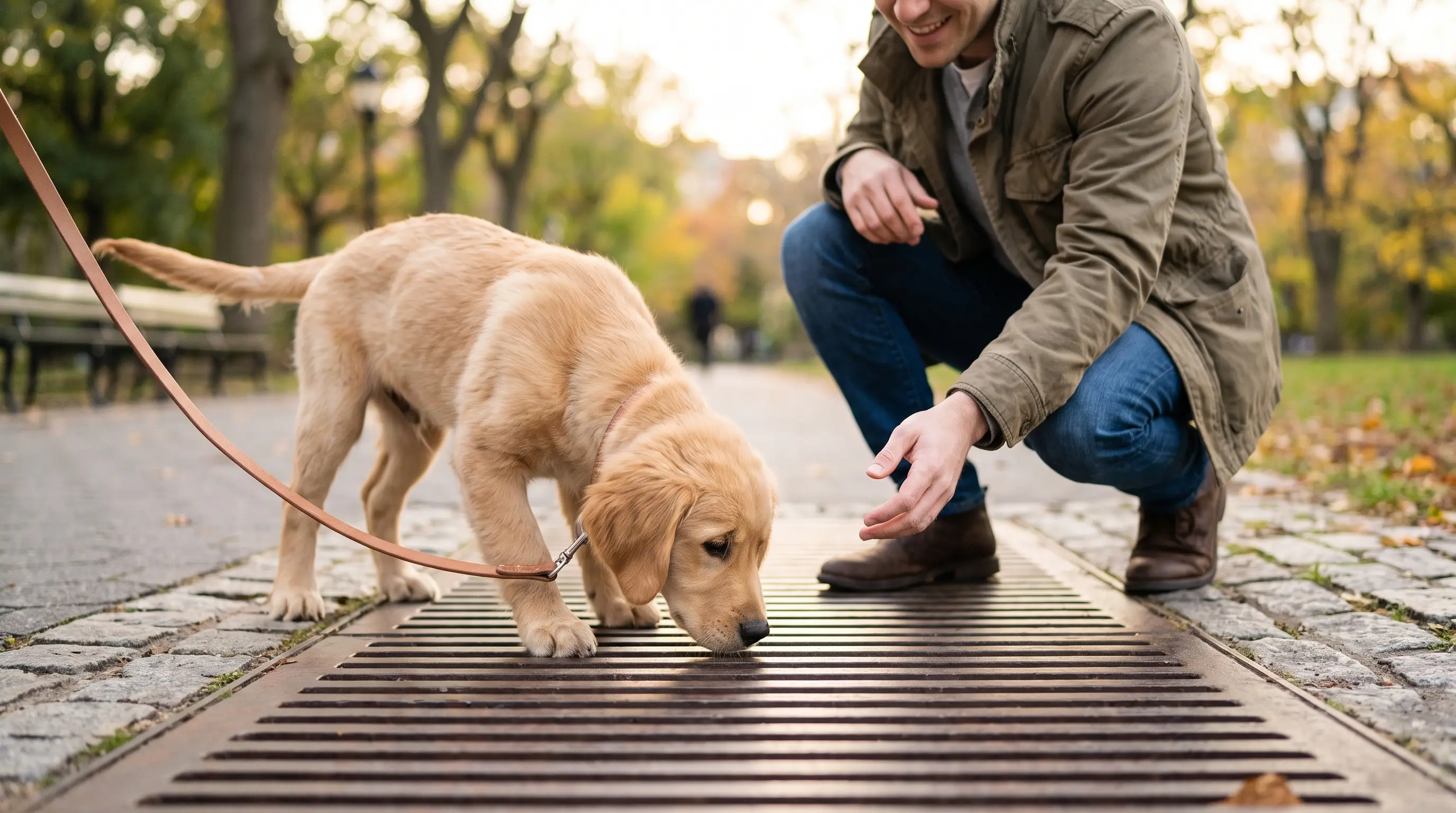
Socialisation is the single most important thing you do this month, because the window for it closes early. The sensitive period runs from roughly three weeks to around twelve to fourteen weeks and is largely shut by sixteen to eighteen weeks. During this time the brain files new experiences as normal or as threatening, and gaps are hard to fill later. Aim for careful, positive exposure to sounds, surfaces, people of different kinds, and calm vaccinated dogs, always letting the puppy approach at its own pace and pairing new things with treats.
Because the behavioural window closes before the vaccination course finishes, veterinary behaviour groups advise starting socialisation early, using safe settings and healthy dogs rather than waiting. And ignore anyone who tells you to dominate the puppy or roll it onto its back. That idea comes from a discredited reading of captive wolf packs that the researchers themselves later walked back, since wild wolves live as families, not rank-obsessed rivals. Punishment builds fear, not learning, so keep it kind and keep it short.
Common questions
What should you teach a puppy first?
Teach the crate, its name, and a house-training routine first, before any tricks. These life skills make the puppy feel safe and predictable, and everything else builds on them. Formal cues like sit and come come next, taught with treats in short sessions.
What is the 3-3-3 rule for puppies?
The 3-3-3 rule describes a new dog settling in, not a training plan: roughly three days to decompress, three weeks to start learning the routine, and three months to feel at home. It is a rough guide to patience, and individual puppies vary a lot.
At what age should you start training a puppy?
Start as soon as the puppy comes home, usually around eight weeks. Puppies can learn simple cues and a toilet routine from day one, and early socialisation is time-sensitive. Use short, reward-based sessions rather than waiting for the puppy to be older.
How do you discipline a puppy?
Don't punish a puppy; redirect it and reward the behaviour you want instead. Scolding, smacking, or alpha-rolling creates fear rather than learning and can make problems worse. Interrupt unwanted behaviour calmly, swap in an allowed alternative, and reward that.
How do I stop my puppy from biting?
When your puppy bites too hard, yelp or go still for a moment, then redirect onto a chew toy. This teaches bite inhibition, a soft mouth, the way littermates do. Never hold the muzzle or tell the puppy off, and end play before it gets over-tired and nippy.
How long should a puppy training session be?
Keep puppy training sessions to about two to three minutes, several times a day. Puppies have short attention spans, so brief and frequent works far better than one long lesson. End each session while the puppy is still keen, on something it got right.
More in Dogs
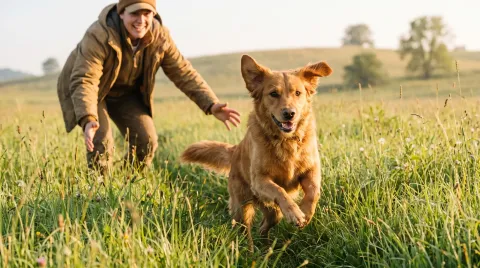
Dog recall training: build a come that actually works
A recall you can trust in a real emergency, plus the everyday habits that quietly poison the word "come" until your dog ignores it.
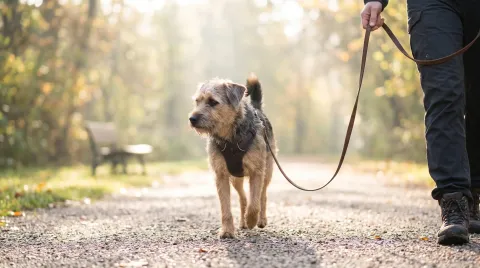
Stop the pulling: loose-lead walking that works
Dogs pull because it pays off. Reward the side, stop dead the second the lead goes tight, skip the pain tools — the kind method that actually sticks.
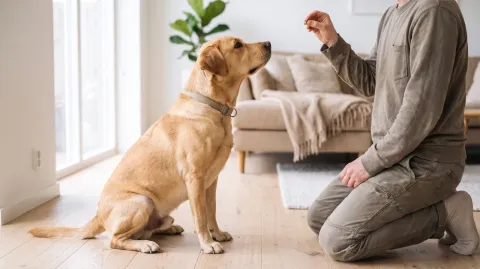
10 things every dog should know
The ten cues that make a dog easy to live with, in the order worth teaching them, with five minutes a day and nothing a dog has to be forced into.

How to crate train a puppy, step by step
Done right, a crate becomes the one place a puppy feels safest — not a cage. The reward-based method, the timing, and the mistakes that make a puppy hate it.
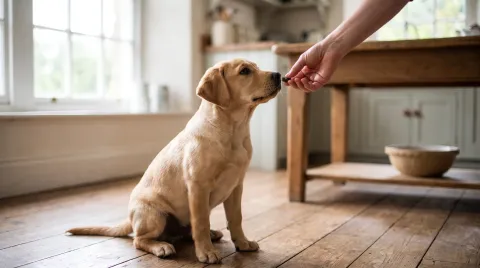
How to stop a puppy biting and mouthing
Puppy biting is normal, not aggression — and how you respond in the first months decides whether it fades or hardens. The reward-based fixes that actually work.

How to stop a dog barking too much
Barking is communication, not defiance, and the fix depends entirely on which of four reasons is driving it. The reward-based method for each, and why shouting or a bark collar usually makes it worse.