
Fleas, ticks and worms: the parasite basics
Fleas, ticks and worms are the three parasites almost every cat and dog will meet, and the sensible plan is to stop them before they arrive rather than fight them once they have. Each one causes more than the obvious itch: fleas carry tapeworm, ticks pass on disease, and some worms can infect people, especially children. Here is what each parasite does, how to spot it, and the prevention that actually works.
Fleas
Fleas cause relentless itching, and in sensitive animals a single bite can set off flea-allergy dermatitis, an over-reaction to flea saliva that leaves the skin raw, bald and infected from scratching. They do more damage than the scratching suggests. Fleas carry the tapeworm Dipylidium caninum, which a pet swallows when it bites at an itchy patch and eats an infected flea. In kittens and puppies a heavy infestation can drain enough blood to cause anaemia, which is genuinely dangerous in a small animal.
The trap with fleas is that what you see is a tiny fraction of what is there. The adult fleas jumping on your pet are only about 5% of the population. The other 95% are eggs, larvae and pupae sitting in carpet, bedding and the cracks of the floor, waiting to hatch. For every flea you spot, assume there are many more you cannot. That is why a quick spray on the cat never ends the problem, and why treating the home matters as much as treating the animal. To check, comb dark specks onto a damp white tissue: if they smear rusty red, that is flea dirt (digested blood), and you have fleas whether or not you saw one.
Ticks
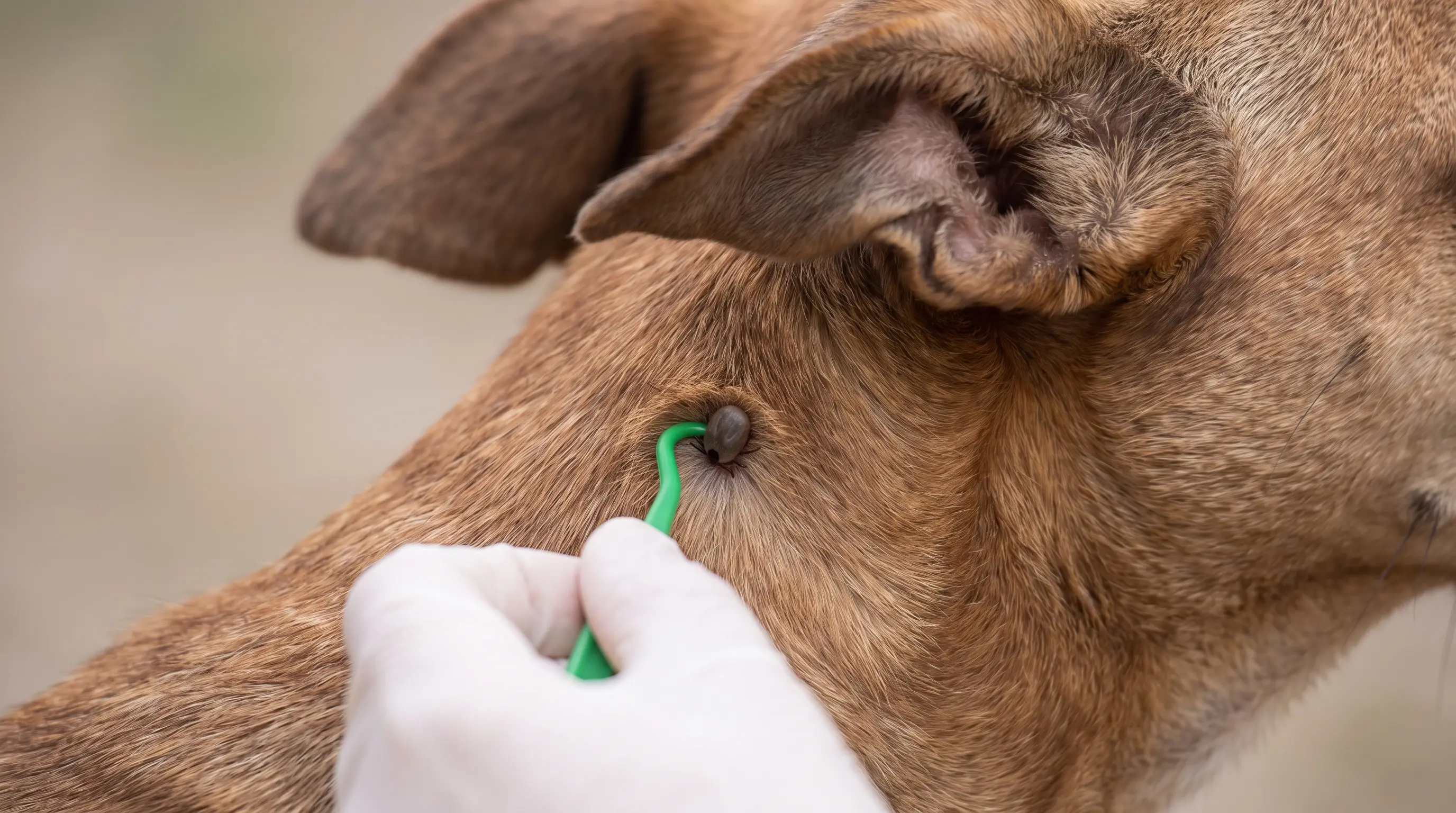
Ticks are far more than a nuisance because they can pass on disease while they feed, including Lyme disease and several others depending on where you live. A tick attaches, buries its mouthparts in the skin and swells over a day or two, so the sooner you find and remove it, the lower the risk of infection. Run your hands over your dog after every walk through grass or woodland, paying attention to the ears, neck, armpits and between the toes. If you walk in long grass, the same check catches foxtail grass seeds too.
To remove a tick, use a proper tick tool or fine-tipped tweezers and grip as close to the skin as you can. Pull straight out with steady, even pressure. Do not twist, do not squeeze the tick's body, and never try to burn it off or smother it in oil, all of which make it more likely to regurgitate infected material into the bite. Wash the area afterwards and keep the tick in case your vet wants to identify it. See a vet if the mouthparts break off and stay in, if the site becomes red and swollen, or if your pet is off-colour, tired or lame in the weeks after a bite.
Worms
Worms are internal parasites that a pet picks up from the environment, prey, fleas or slugs, and they range from common to life-threatening. Roundworm and hookworm live in the gut and are passed through infected faeces and soil; puppies and kittens are often born with or nurse in roundworm. Tapeworm arrives by way of a swallowed flea, which ties worming and flea control together. The one many owners have never heard of is lungworm (Angiostrongylus vasorum), which a dog catches by eating the slugs and snails hiding on grass, in puddles or on a chewed toy, and it can cause bleeding problems and be fatal if untreated. In some regions heartworm, spread by mosquitoes, is a serious risk and needs its own preventive.
Some of these worms are zoonotic, meaning they infect people. Roundworm larvae from dog and cat faeces are a real risk to children, who can swallow eggs from contaminated soil or sandpits and, rarely, suffer damage to the eyes or organs. That is the honest reason regular worming is not optional: it protects the family as much as the pet. Because you usually cannot see worms until an infection is advanced, you treat on a schedule rather than waiting for signs.
Prevention
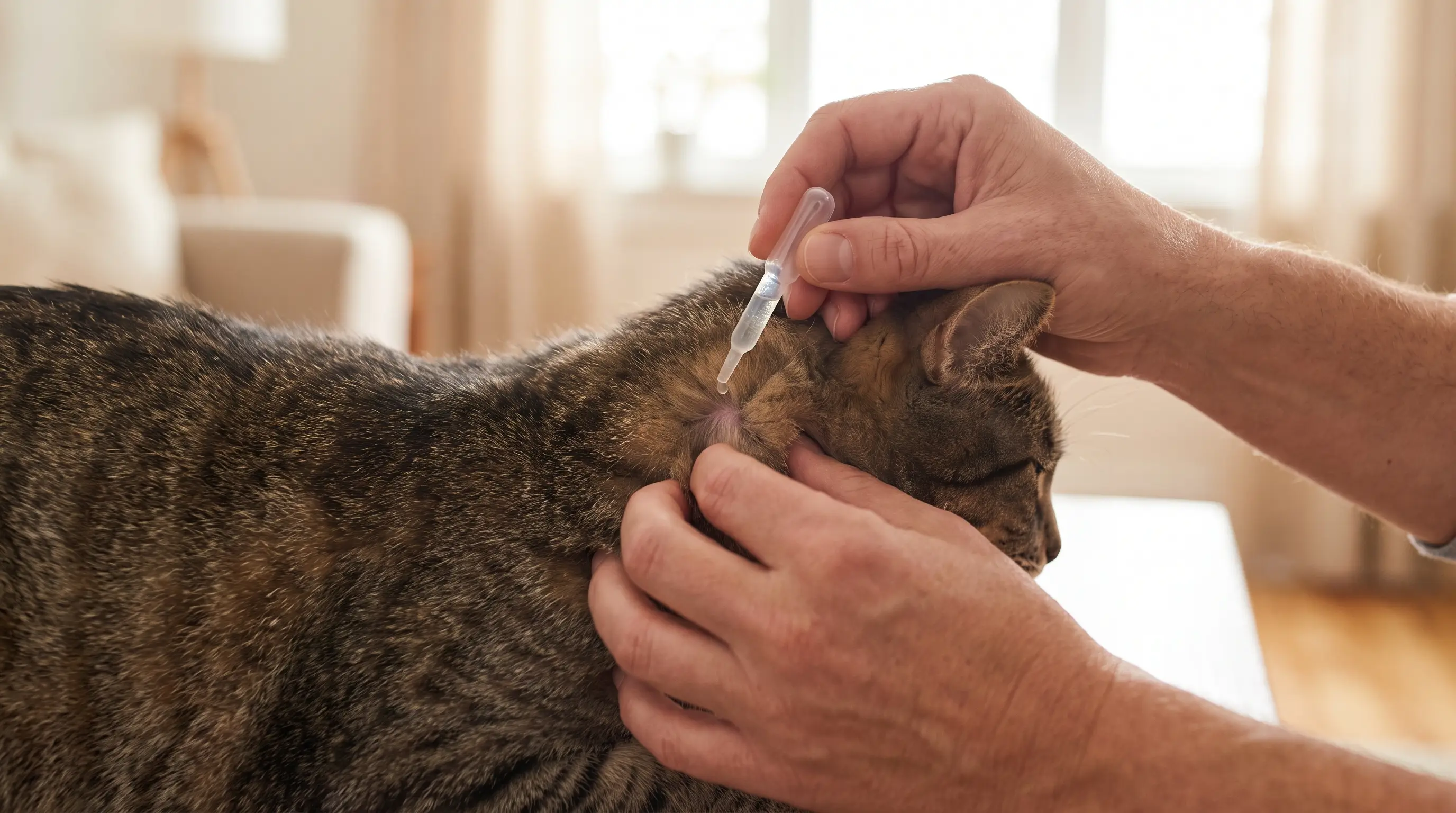
Prevention beats treatment because it is cheaper, safer and stops the disease and home infestation before they start. The core plan has a few parts. Use a vet-recommended preventive against fleas and ticks, whether spot-on, tablet or collar, and keep it up on schedule, most are monthly. In much of the world a mild winter means fleas survive indoors and ticks stay active, so year-round cover is often the right call; your vet will tell you whether your climate allows a seasonal break.
Worming runs on its own timetable and is more frequent for the young. Puppies and kittens are typically wormed every two weeks until around 12 weeks, then monthly to six months, because each round only kills the worms present that day and a new batch is always maturing. Adults are usually wormed several times a year, more often if they hunt or scavenge. Alongside the products, check the coat after every walk, and treat the home and all the pets in it together: clear one animal and leave the others, and the fleas simply move back in. Ask your vet for a product matched to the species, weight and region rather than guessing off a shelf, the same care you would take feeding a Beagle that scavenges everything on a walk.
The permethrin warning for cats
Never put a dog flea or tick product on a cat, because many contain permethrin, which is highly toxic to cats and can kill them. Cats lack the liver enzyme that breaks permethrin down, so it builds up and attacks the nervous system, causing drooling, twitching, muscle tremors, seizures and death. Using a smaller amount does not make it safe. The danger is not only direct application: a cat that grooms a recently treated dog, or curls up where the dog has been, can absorb enough to be poisoned, so keep the two apart for a couple of days after a permethrin dog treatment, or better, choose a dog product without it if you share a home with cats. If you think a cat has been exposed, whether you applied the wrong product or it rubbed against a treated dog, contact a vet straight away, because early treatment saves lives. The simple rule holds for every parasite product: ask your vet for the right one for the species, weight and region, and read the label before it goes anywhere near your pet.
Common questions
How do I know if my dog has fleas?
Look for scratching, small dark specks of flea dirt in the coat that smear rusty red on a damp tissue, and tiny brown insects the size of sesame seeds, most often around the tail base, belly and groin. A flea comb helps reveal live fleas. If you find flea dirt, your dog has fleas even if you never see one jump.
Can I use dog flea treatment on my cat?
No. Many dog flea and tick products contain permethrin, which is highly toxic to cats and can cause tremors, seizures and death, even in small amounts. Always use a product labelled for cats, and if you have both pets, ask your vet for a dog product that is safe around cats.
How do you remove a tick from a dog?
Grip the tick as close to the skin as possible with a tick tool or fine-tipped tweezers and pull straight out with steady, even pressure. Do not twist, squeeze the body, or try to burn it off, as this can push infected material into the bite. Wash the area afterwards and watch for redness or illness in the following weeks.
Do dogs need flea and tick treatment all year round?
In most regions, yes. Fleas survive indoors through winter and many ticks stay active whenever it is above freezing, so a summer-only approach leaves gaps. Your vet can tell you whether your local climate is cold enough to allow a seasonal break rather than year-round cover.
Can worms from dogs and cats infect humans?
Yes, some can. Roundworm eggs passed in pet faeces can survive in soil and infect people, particularly children, and rarely cause damage to the eyes or organs. This is the main reason regular worming and prompt clean-up of faeces matter for the whole household, not just the pet.
How often should I deworm my puppy or kitten?
Puppies and kittens are usually wormed every two weeks until about 12 weeks of age, then monthly until six months. The frequent schedule is needed because each dose only kills worms present that day, while a new batch keeps maturing. Follow your vet's exact timetable for your pet.
More in Dogs

Dog heatstroke: signs, first aid and prevention
Dogs cool themselves by panting, not sweating, so summer heat overwhelms them fast. Here's how to spot heatstroke and act in the minutes that matter.

Foxtails: the summer grass seed that burrows into pets
Foxtail grass seeds catch in fur and travel one way—inward. Here's how to spot them on a cat or dog, and stop them.

Why is my dog peeing in the house? Causes and how to stop it
An adult dog that starts having accidents isn't being defiant — it's giving you a symptom. The medical checklist, the marking-vs-emptying distinction, and the retraining plan that works.

Autumn dangers for dogs: acorns, conkers and mushrooms
Autumn puts three scavenging hazards on the ground — acorns, conkers and wild mushrooms — plus rat bait and fermenting fruit. What's toxic, what the warning signs are, and when to call the vet.

Winter pet dangers: antifreeze, road salt and chocolate season
Antifreeze is the winter emergency — sweet, deadly and quick. Plus gritted-salt paws, the festive-food gauntlet and cats sheltering in warm car engines. What to watch and when it's urgent.

The pet danger calendar: what to watch, month by month
Most pet hazards are seasonal and many are regional. Here's the year mapped out — when heatstroke, grass seeds, processionary caterpillars, antifreeze and the rest actually peak, and which ones your area even has.