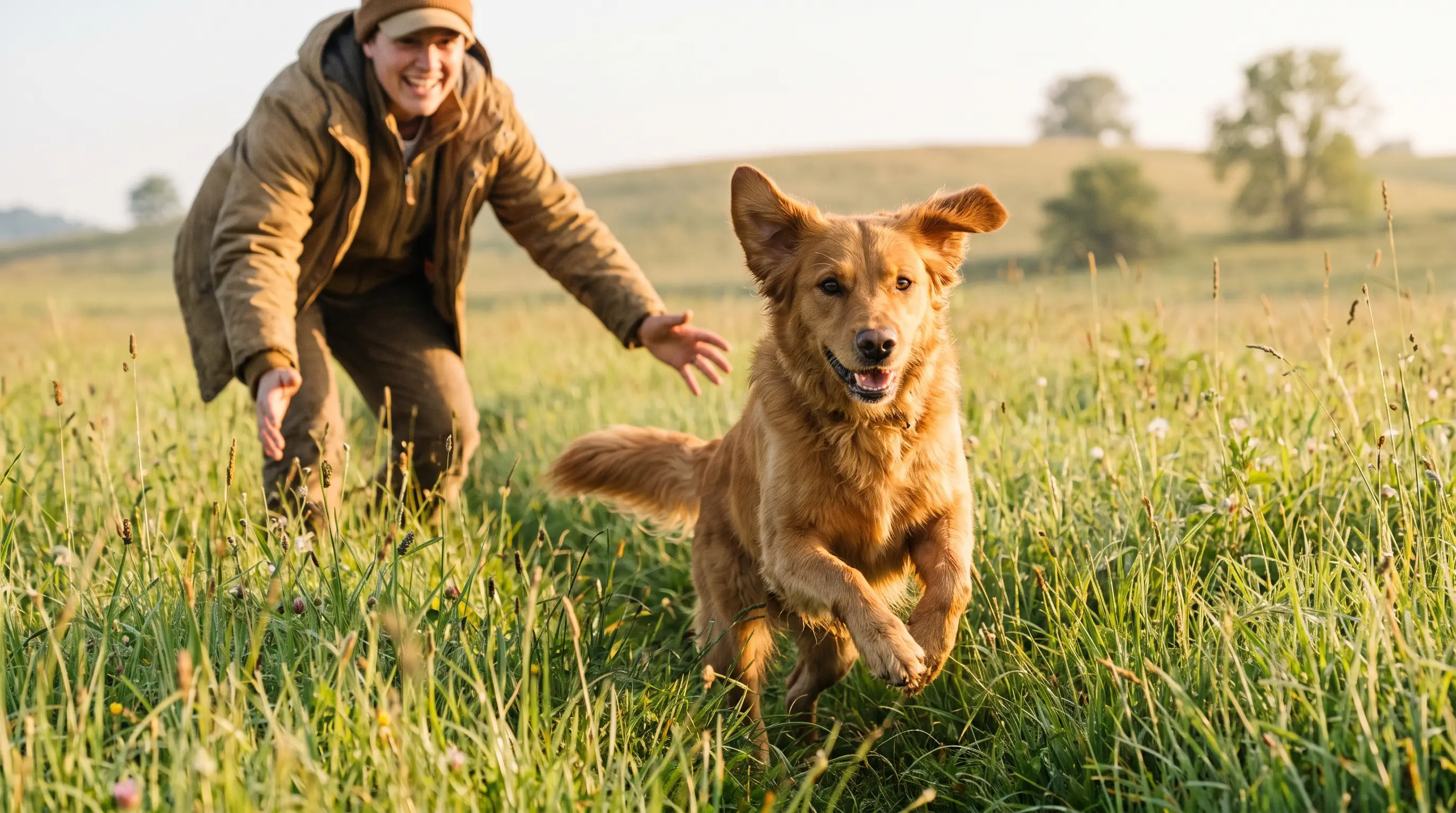
Dog recall training: build a come that actually works
A reliable recall is built on one simple deal: coming to you is always the best thing that happens, every single time. Most recalls break not because the dog is stubborn but because owners accidentally teach the opposite, calling the dog and then ending the fun, forcing a bath, or telling it off. Get the deal right and hold it, and "come" becomes a word your dog runs toward instead of away from.
A reliable recall
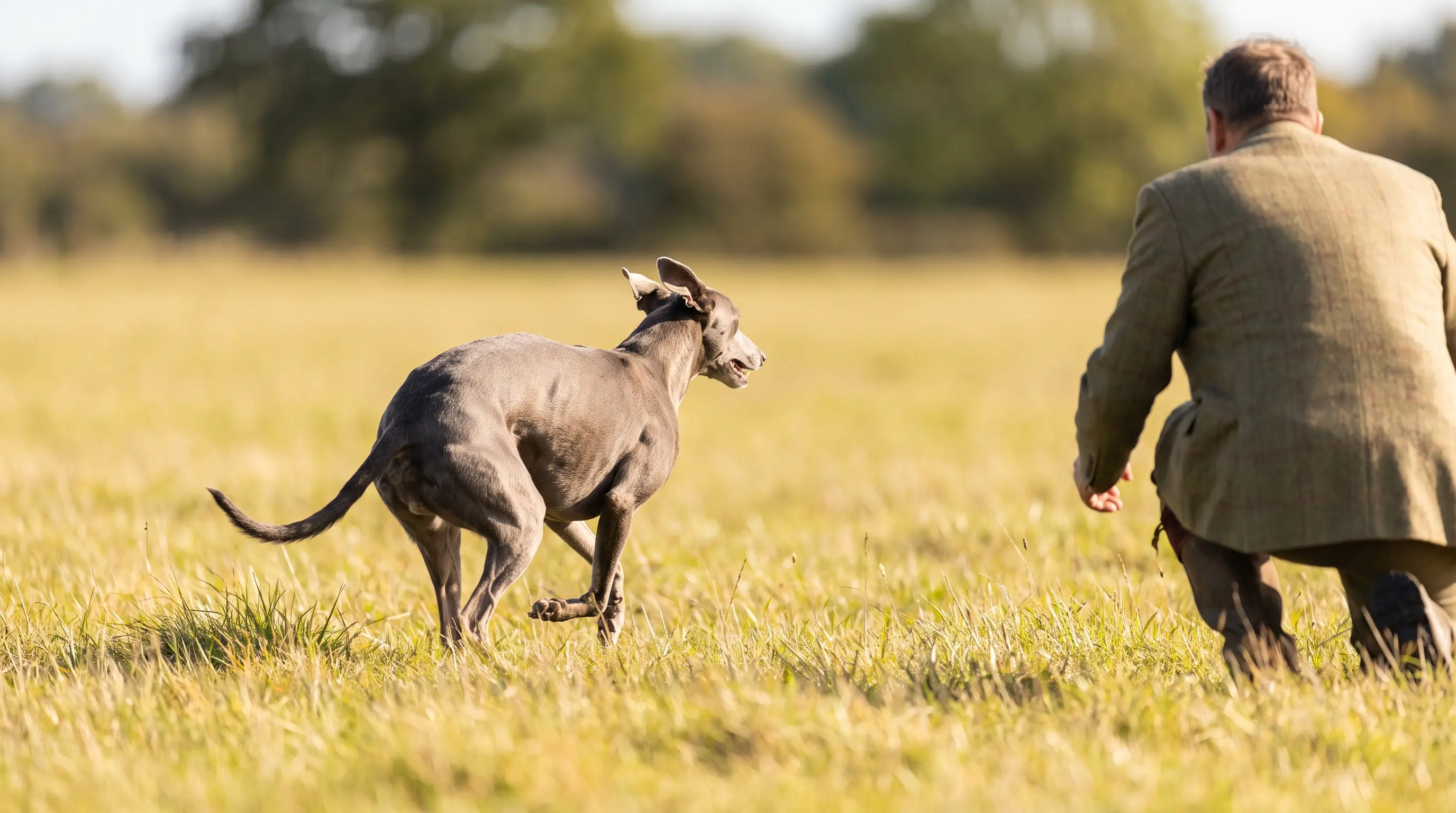
A reliable recall means that when you call, your dog turns and comes fast, whatever else is going on. That is the standard worth training for, because it is the difference between a dog you can trust near a road and one who lives on a lead. The mechanism is not obedience or dominance. It is a learned expectation that returning to you pays better than anything the dog could do instead. Trainers who measure it aim for something close to 95 percent success in a given setting before adding harder distractions, and they build to that with short, frequent sessions rather than one long grind. Everything below is about protecting that expectation and never spending it carelessly.
Poisoning the cue
The fastest way to destroy a recall is to call your dog and then do something it hates. If "come" reliably predicts the end of play, a bath, nail clipping, or a scolding, the word stops meaning "good things over here" and starts meaning "the fun is about to stop." Trainers call this a poisoned cue, and dogs learn it quickly because it is genuine cause and effect from their side. The classic version happens at the park: the only time some owners say "come" is when the lead clips back on and everyone goes home. After a few weeks the dog does the sensible thing and drifts just out of reach. The second poison is calling when you cannot back it up. Every "come" your dog ignores teaches that the word is optional, so early on you only use it when you are almost certain the dog will respond, and you keep a lead or long line on to make sure.
Fixing a poisoned cue usually means retiring the word and starting fresh with a new one, because the old association is hard to overwrite. It is easier to protect the cue from the start than to rebuild trust in it later.
Building it from scratch
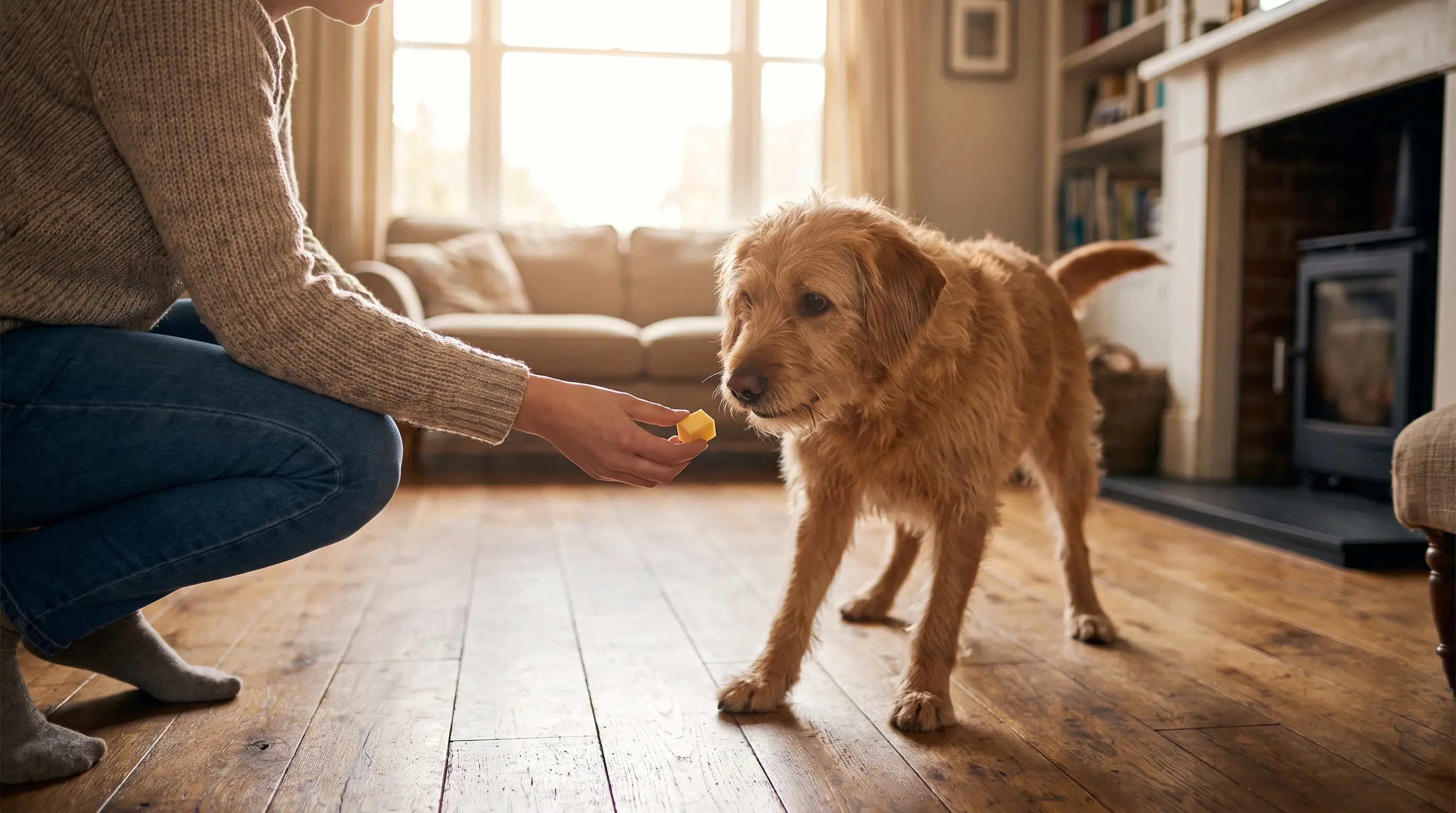
Start by picking a clean cue and paying for it with food your dog does not get any other way. Choose a fresh word, or a whistle, that has never been used in anger, and pair it with genuinely high-value rewards. Kibble does not cut it outdoors; real recall pay is chicken, cheese, or a bit of hot dog, delivered the instant your dog reaches you. Begin indoors with no distractions. Say the cue once, and the moment your dog comes, throw a party: several small treats fed one after another, warm praise, maybe a quick game. Ten little treats handed over one at a time beats one big treat, because you are stretching the good feeling. Only say the cue when your dog is already moving toward you at first, then start calling from a step away, then from another room. Turning it into hide and seek around the house keeps it fun and fast. Keep sessions to a few minutes and stop while your dog still wants more.
Practicing on a long line
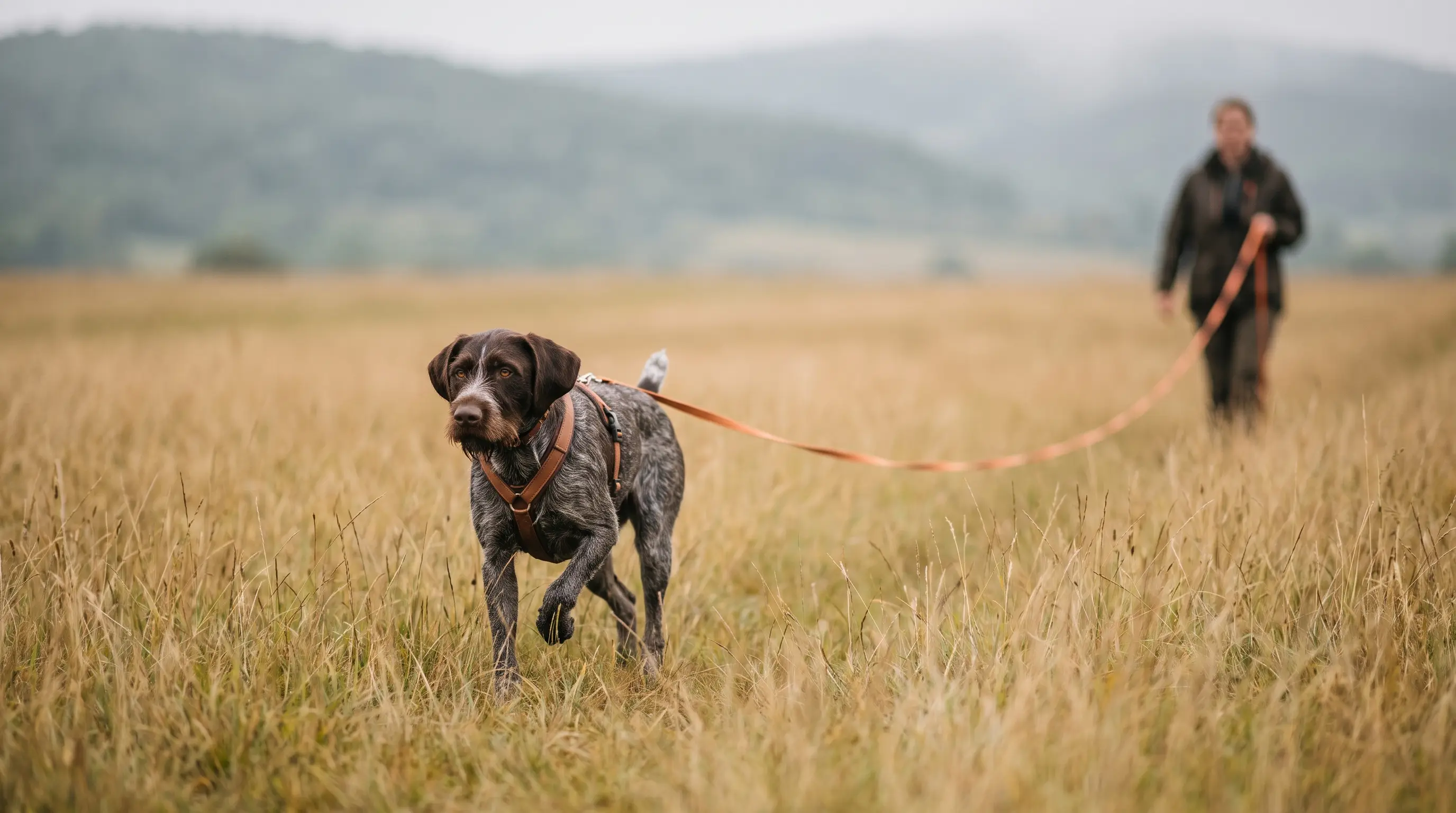
Before you ever drop the lead outdoors, put your dog on a long line and rehearse recall against real distractions. A long line is a light 5 to 10 metre lead that lets the dog move and sniff while you keep a physical safety net, so a missed recall never becomes a rewarded escape. Work through the levels: garden, then quiet field, then places with other dogs and people, only moving up when your dog is responding reliably at the current level. High-drive dogs make this obvious; a bird-fixated pointer or a working line breed like the Border Collie will show you exactly where the distraction becomes stronger than your cheese, and that is your cue to make the reward better or the setting easier. Trainers generally want weeks of solid long-line responses across varied places before trusting a dog off lead in an open, unfenced space. There is no shame in keeping the line on for months. Rushing to off-lead is how most recalls quietly fall apart.
Never chase, never punish
Never chase a dog that will not come, and never punish one that comes back late. If your dog blanks the recall and you run after it, you have just started the best game in the world from the dog's point of view, and you will lose. Do the opposite: turn and run the other way, clap, get excited, and let the dog chase you. Most dogs cannot resist a moving, playful human. And when a dog finally returns after ignoring you for a minute, the temptation to grab it and tell it off is strong and completely counterproductive. From the dog's side, the last thing it did was come to you, so a telling-off punishes the coming, not the leaving. Reward every return, even a slow, annoying one, because the alternative is a dog that decides coming back is not worth it. Patience and consistency are the whole game. The owner who stays calm and pays every recall ends up with a dog that comes; the one who lunges, grabs, and scolds ends up chasing.
The emergency recall
Keep one separate emergency recall that you use only for real danger and always jackpot. This is a distinct sound, often a specific whistle pattern or a special word, that you never waste on everyday calls. Because you only use it when it counts, and because it always pays out with something extraordinary, a fistful of chicken, the biggest party your dog has ever had, it keeps a near-automatic response even when your ordinary cue is losing to a squirrel. Charge it the same way you built the main recall, indoors first with no distractions, then gradually harder, but protect it obsessively. Say it once, never twice, and never for anything less than a car, a fight, or a bolt toward a road. Every casual use burns a little of its power. Treated as a genuine emergency brake and always jackpotted, it becomes the one cue you can spend when everything else has failed.
Common questions
How do I get my dog to come when called?
Start indoors with no distractions, say your cue once, and reward the instant your dog reaches you with something genuinely valuable like chicken or cheese. Build up gradually to harder settings on a long line, and make coming to you the best thing that happens every time so the behaviour holds outdoors.
Why won't my dog come when called?
Usually because coming to you has stopped paying off, or the cue predicts something the dog dislikes like the end of play or going home. Dogs also fail when the distraction outdoors is stronger than the reward, or when they have learned the cue is optional because you have called and not backed it up.
Should you punish a dog for not coming when called?
No. Punishing a dog that eventually returns teaches it that coming back leads to something unpleasant, so it will be slower or refuse next time. Even after a frustrating wait, reward the recall, because from the dog's point of view you are rewarding the last thing it did, which was come to you.
What treats are best for recall training?
Small, soft, high-value treats the dog does not get otherwise, such as chicken, cheese, or hot dog, work far better than dry kibble. Break them into tiny pieces so you can feed several in a row and stretch out the reward when your dog comes.
How long does it take to train a dog to come when called?
Basic recall can start in days, but a recall you trust off lead usually takes weeks to months of practice across different places. Short, frequent sessions build it faster than long occasional ones, and reliability drops if you rush to off-lead before the dog is solid on a long line.
How do you train an emergency recall?
Pick a distinct sound, such as a specific whistle pattern, that you only ever use for genuine emergencies, and charge it by pairing it with an extraordinary reward. Use it once, never for routine calls, and always jackpot with something huge so it keeps near-automatic power when your everyday cue fails.
More in Dogs

How to stop a puppy biting and mouthing
Puppy biting is normal, not aggression — and how you respond in the first months decides whether it fades or hardens. The reward-based fixes that actually work.

How to stop a dog barking too much
Barking is communication, not defiance, and the fix depends entirely on which of four reasons is driving it. The reward-based method for each, and why shouting or a bark collar usually makes it worse.
House training a puppy: the schedule that actually works
Most house-training failures are a supervision problem, not a stubborn puppy. The realistic age-based schedule, the signals to watch for, and how to recover from a setback.
How to socialize a puppy: the critical window, done right
A puppy's sensitive period for accepting new things as normal narrows sharply by around 16 weeks. What to expose it to, why every single experience has to end well, and where more is not automatically better.
Puppy training: your first month, step by step
What to teach a new puppy first, in the right order, with reward-based methods a vet would sign off on and no dominance nonsense.
Stop the pulling: loose-lead walking that works
Dogs pull because it pays off. Reward the side, stop dead the second the lead goes tight, skip the pain tools — the kind method that actually sticks.