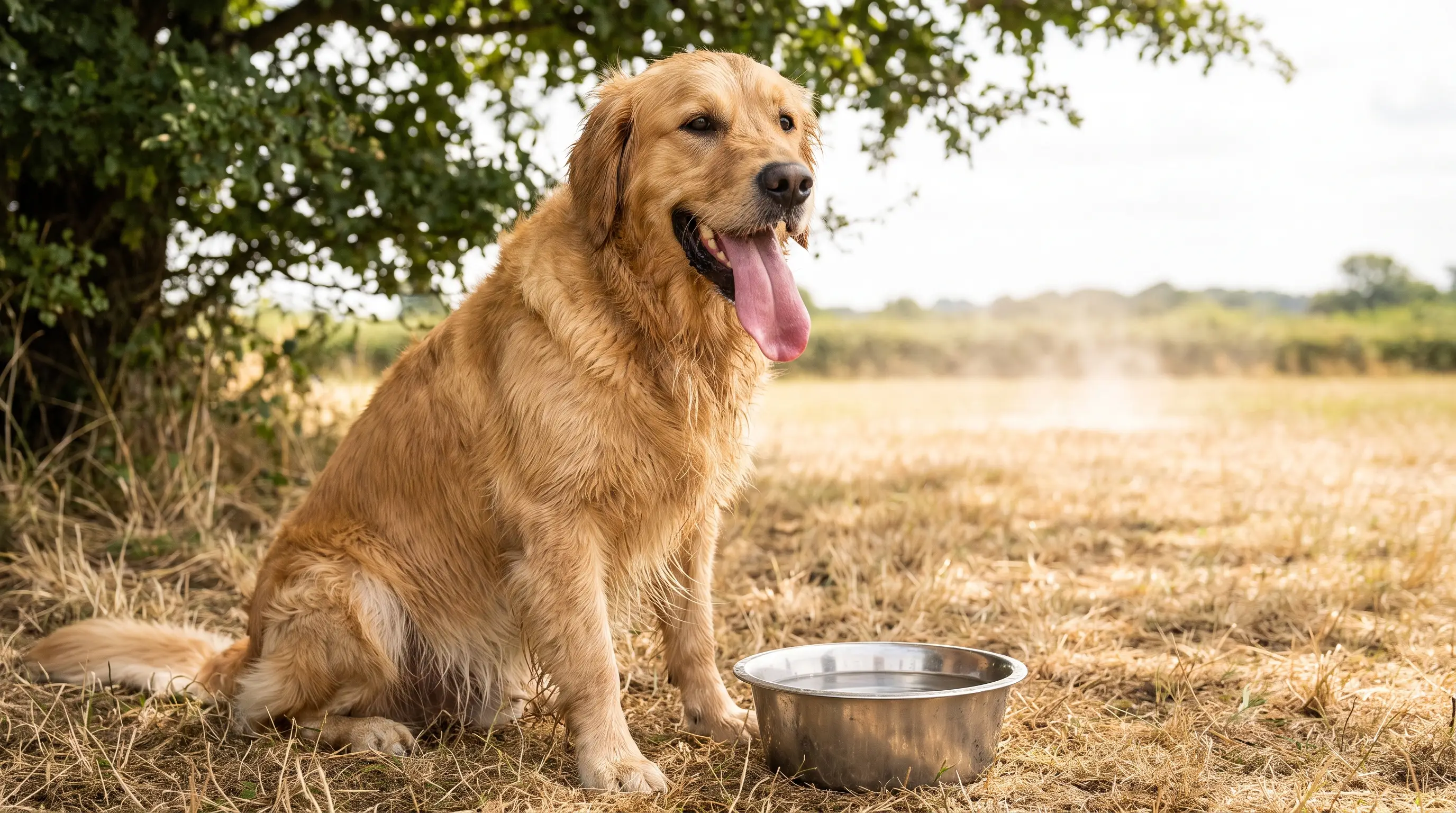
Dog heatstroke: signs, first aid and prevention
Heatstroke kills dogs quickly, and it is almost entirely preventable. Dogs cannot sweat the way people do, so on a hot, humid day their core temperature can race past a survivable point in minutes. Knowing the warning signs and the first few first-aid steps cold, before you ever need them, is the difference that saves a dog's life.
Heatstroke in dogs
Heatstroke is a fast, dangerous rise in body temperature that a dog cannot bring back down on its own, and it can turn fatal within minutes. A healthy dog runs at roughly 38 to 39°C (101 to 102.5°F). Once the core climbs past about 40°C (104°F), the systems that keep a dog alive start to break down.
The reason dogs overheat so easily comes down to plumbing. People sweat across almost the whole body; dogs have only a few sweat glands in their paw pads and shed most of their heat by panting, moving air over a wet tongue and airway to carry warmth away. Panting works well in dry heat and poorly in humid air, and it stops working at all once a dog is exhausted or its airway is already narrow. Add direct sun, a thick coat, or hard exercise, and the heat pours in faster than the dog can pump it out.
Dogs most at risk

Flat-faced brachycephalic breeds overheat first and worst, because their squashed airways mean they can barely pant effectively. A French bulldog, bulldog or pug is already working hard just to breathe on a mild day, so it has almost no cooling capacity left in reserve when the temperature rises. These breeds turn up in emergency clinics for heat illness far out of proportion to their numbers.
They are not the only ones at risk. Old dogs and very young puppies regulate temperature poorly, overweight dogs carry insulation they cannot switch off, and thick-coated or dark-coated dogs trap and absorb more heat. Dogs with heart or airway conditions have less margin, and any healthy dog can be pushed into heatstroke by over-exercise on a hot day. If your dog is a flat-faced breed, a senior, or heavy, treat warm weather as a genuine hazard rather than a mild inconvenience.
The parked car
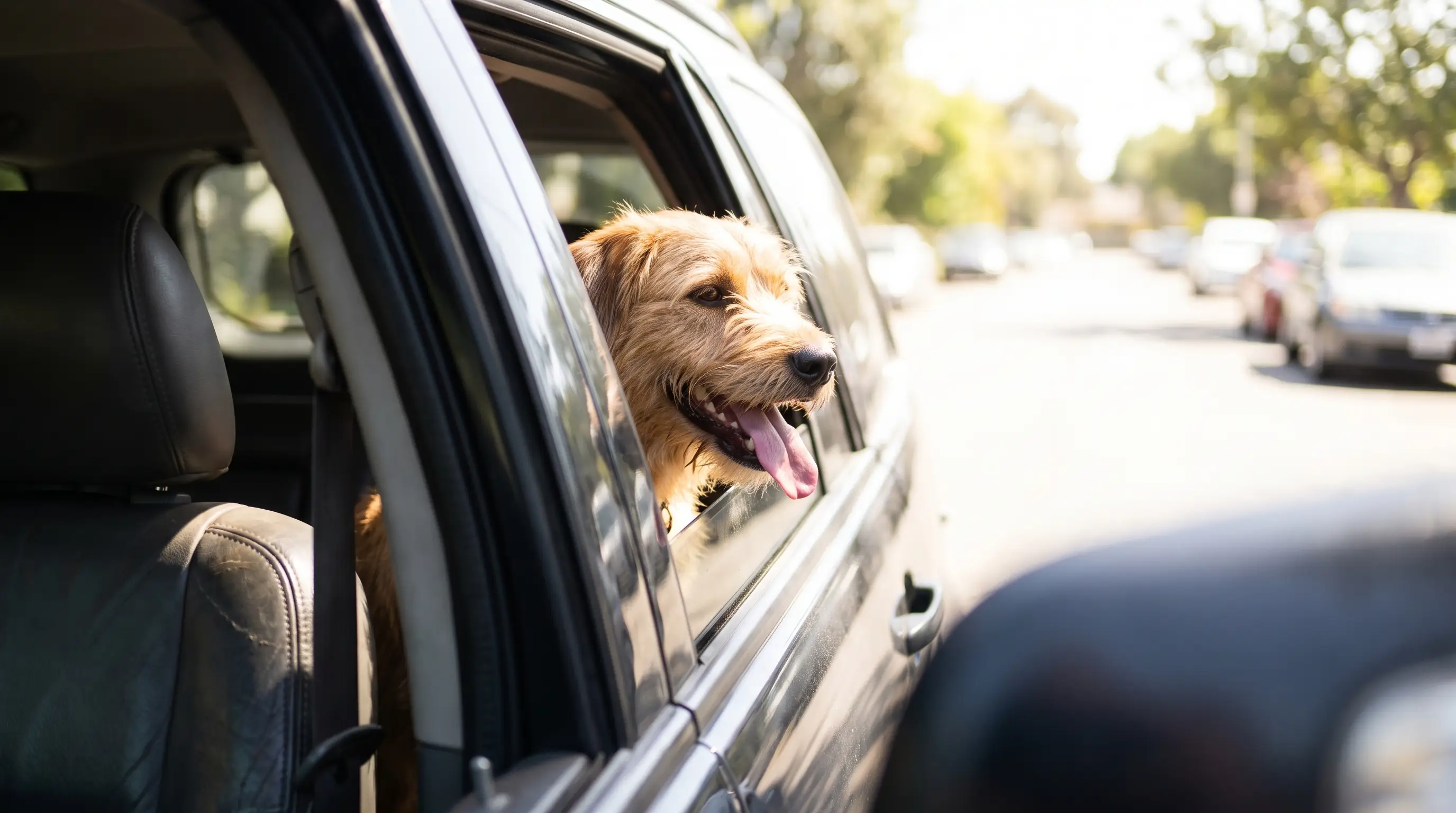
Never leave a dog in a parked car in warm weather, not even for a minute. A car in the sun acts like a greenhouse: the interior can climb to lethal temperatures within about ten to fifteen minutes, even on a day that feels only mildly warm outside, and even in the shade the heat builds fast. Cracking the windows makes almost no difference to how quickly the cabin cooks.
This is the classic killer precisely because it feels harmless. A quick errand runs long, the sun shifts onto the car, and a dog that was fine when you shut the door is in serious trouble by the time you get back. There is no safe version of this. Leave the dog at home, or take someone who can stay with it out of the vehicle. If you ever see a distressed dog shut in a hot car, call local emergency services or the police without delay.
Warning signs
The first warning sign is heavy, frantic panting that does not settle, often with thick, ropey drool. Look next at the gums: bright red or brick-coloured gums mean the dog is dumping heat into its skin and struggling. As heatstroke deepens, a dog becomes wobbly, disoriented or glassy-eyed, may vomit or have diarrhoea (sometimes bloody), and can collapse, lose consciousness or seize.
Do not wait for the dramatic signs before acting. Frantic panting and red gums on a hot day are already the emergency; collapse and seizures are the late stage, when organ damage is well underway. If your dog shows the early signs, start cooling straight away and treat it as time-critical.
First aid
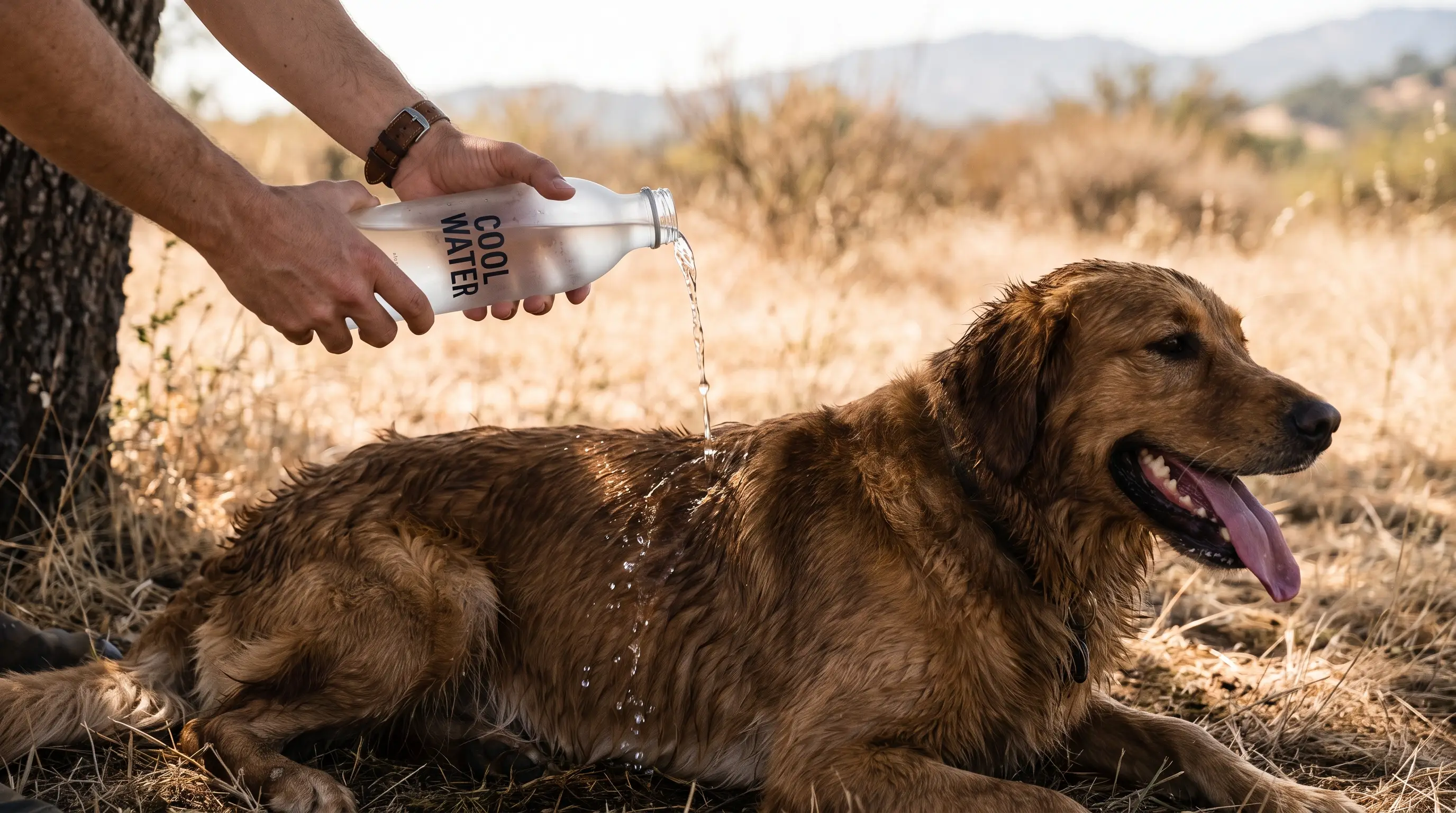
Act immediately, because minutes matter. Move the dog out of the heat into shade or air-conditioning, then wet it thoroughly with cool, not ice-cold, water, concentrating on the belly, groin, armpits and paws where blood runs close to the surface. Ice-cold water can make surface vessels clamp shut and trap heat inside, so cool tap water works better on a compromised dog.
Get air moving over the wet fur with a fan or a breeze to speed evaporation, and offer small sips of water if the dog is alert enough to drink, without forcing it. Then get to a vet straight away, even if the dog seems to be recovering. Heatstroke can injure the kidneys, gut, brain and blood-clotting system, and that damage can surface hours later. Cool the dog first, then transport it, ideally calling the clinic on the way so they are ready.
Prevention
Nearly every case of heatstroke is preventable with a few simple habits. Walk in the early morning or late evening and skip midday heat entirely; on the hottest days, a shorter walk or none at all beats a dangerous one. Before you set off, do the seven-second test on the pavement: press the back of your hand to the surface for seven seconds, and if it is too hot for you to hold, it is too hot for your dog's paws.
Always bring water and find shade on longer outings, and give your dog cool places and good airflow at home. Watch flat-faced breeds, seniors and heavy dogs especially closely, and cut activity hard when it is warm and humid. Heatstroke moves fast, but so can you if you have already decided what a hot day means for your dog.
Common questions
What are the first signs of heatstroke in a dog?
The earliest signs are heavy, frantic panting, thick ropey drool, and bright red gums. A dog may then become wobbly, restless or glassy-eyed, vomit or have diarrhoea, and in serious cases collapse or seize. Treat any of these on a hot day as an emergency and start cooling immediately.
How do I cool down a dog with heatstroke?
Move the dog into shade or air-conditioning and pour or sponge cool water over its body, focusing on the belly, groin and paws. Get air moving over the wet fur with a fan or breeze, and offer small sips of water. Use cool water rather than ice-cold, and get to a vet straight away.
What temperature is too hot for a dog?
There is no single safe number, but risk climbs sharply above roughly 25 to 28°C (77 to 82°F), and humidity makes it far worse because panting works less well in damp air. A dog's own body normally sits near 38 to 39°C; a core above 40°C (104°F) signals heatstroke.
Can a dog fully recover from heatstroke?
Many dogs recover fully if they are cooled fast and seen by a vet quickly, but the outcome depends on how high the temperature went and for how long. Heatstroke can damage the kidneys, gut, brain and clotting system, and that damage sometimes appears hours later, which is why a vet visit matters even after a dog seems fine.
How long can a dog be in a hot car before it dies?
Only minutes. On a warm day a parked car's interior can climb to lethal temperatures within about ten to fifteen minutes, and cracking the windows barely slows it. Never leave a dog in a car in warm weather, even briefly.
At what temperature do dogs get heatstroke?
Heatstroke is generally defined as a core body temperature above about 40°C (104°F), rising toward 41°C (106°F) and beyond in severe cases. A healthy dog normally runs at 38 to 39°C, so even a couple of degrees of overheating is dangerous.
More in Dogs
8 rare dog breeds most people never meet
Eight of the world's rarest dog breeds — where they come from, what makes them unusual, and why you almost never see one.

Foxtails: The Summer Grass Seed That Burrows Into Pets
Foxtail grass seeds catch in fur and travel one way—inward. Here's how to spot them on a cat or dog, and stop them.
The oldest dog ever and how long dogs really live
Bluey reached 29 years. Bobi's 31-year claim fell apart. Here's the real math on dog lifespan, and how to buy your dog more time.