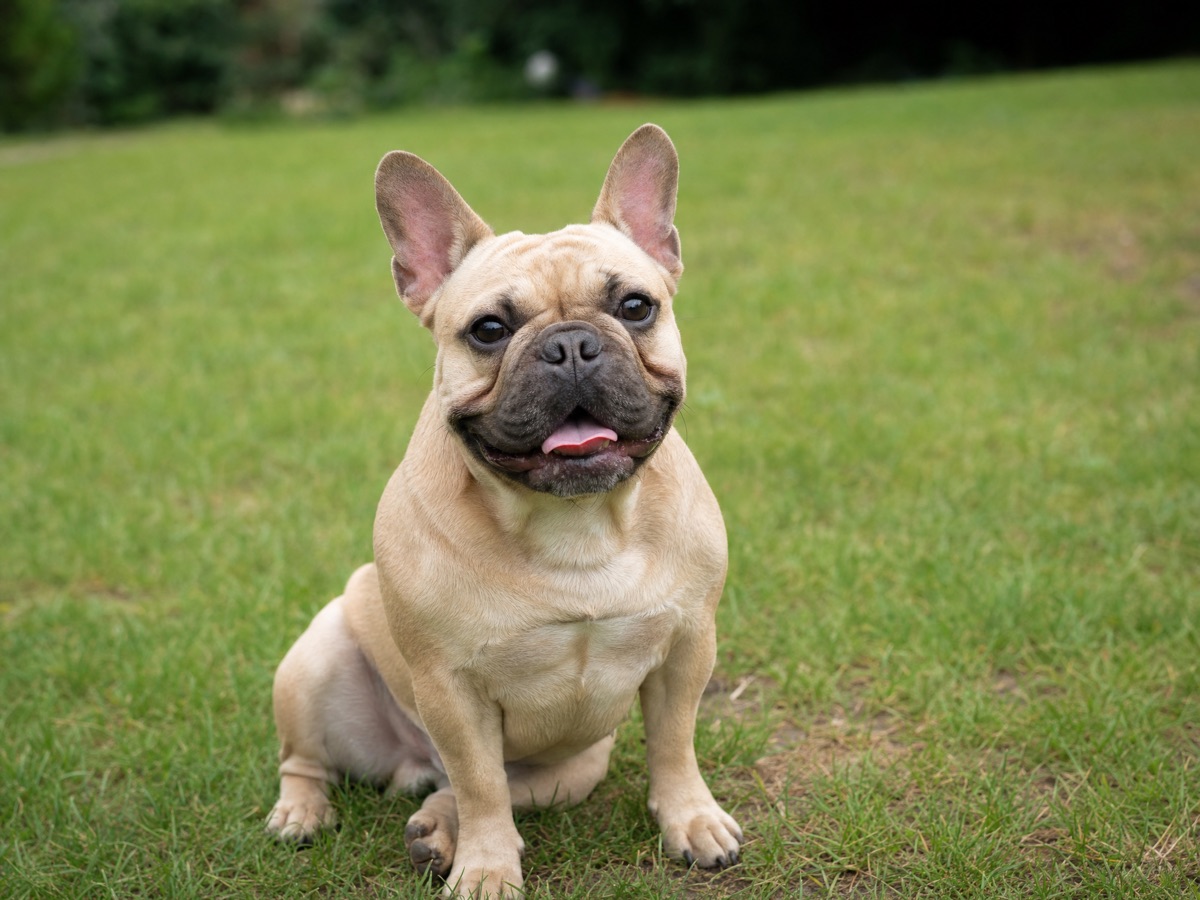
French Bulldog
Bat ears, big charm — the clownish city companion of the moment.
On these lists: Dogs for apartments · Small dogs
Vital stats
| Size | Small · 28–33 cm |
| Weight | 8–14 kg |
| Life expectancy | 10–12 years |
| Energy | Low-moderate — 30–45 min/day |
| Shedding | Moderate |
| Coat | Short, smooth · fawn, brindle, pied |
| Group | Companion · FCI №101 / AKC Non-Sporting |
| Origin | England / France |
| FCI group | 9 — Companion and Toy Dogs · FCI 101 |
Breed traits
Friendliness
Care
Mind
The French Bulldog by the numbers
The French Bulldog facts owners search for most — price, lifespan, weight, shedding and colours, in one place.
Widely bred, so you can usually find a litter from a registered breeder without a long wait. Ongoing costs stay modest — it eats little and routine vet care sits at the lower end.
We don't quote a single figure: the real price swings with breeder, region, bloodline and health testing — and a rescue costs a fraction of a breeder's litter. Adopting is almost always the cheapest route.
Temperament
Descended from the toy bulldogs of Nottingham lacemakers who emigrated to France, the Frenchie was bred for one job only: company. It does that job brilliantly — playful, people-centred and endlessly amusing, happiest as the small shadow at your heel. Expect mischief, expressive silences, and mild outrage whenever it is left out of anything.
Habits & quirks
The head tilt
A masterclass in wordless communication — one ear-swivelling tilt and you are forgiven anything.
Champion snorer
That flat face comes with a soundtrack: snuffles, grunts and full-throated snoring from any soft surface.
Velcro mode
Frenchies follow you room to room; a closed bathroom door is treated as a personal betrayal.
The frog sit
Hind legs splayed flat behind it — the breed's signature, deeply undignified resting pose.
Health
The Frenchie's flat face is its biggest health issue: many struggle to breathe well and overheat easily, a set of problems called BOAS. The breed is also prone to spinal (IVDD) and kneecap trouble. Buy from a breeder who selects for open nostrils and sound airways, never leave a Frenchie in the heat, and keep it lean to spare the back.
Nutrition
| Exercise | Short, cool walks and indoor play — never push a Frenchie in heat or humidity, when its airway can fail quickly. |
| Health | Budget for brachycephalic realities: breathing, spine and eye issues are common, so choose health-tested breeders and a good vet. |
| Grooming | Wipe the facial folds and tail pocket regularly to prevent yeasty skin infections; the coat itself needs little. |
| Feeding | Keep it lean — extra weight sits directly on an already compromised airway and spine. |
Extra weight sits straight on a Frenchie's breathing and its back, so keep it lean and measure every meal. Many are gassy or have sensitive stomachs, so a steady, good-quality diet beats frequent changes. Raise the bowl if your dog gulps and struggles.
Puppy guide
A Frenchie puppy is playful and people-focused but shouldn't be pushed physically. Keep exercise short and cool, protect the developing spine — no big jumps on and off furniture — and start handling the face folds early so grooming is easy later. Watch heat from day one; puppies overheat fast.
Training
Frenchies are clever, stubborn and food-motivated — train in short, upbeat, reward-based sessions and they pick things up quickly. They bore of drilling, so keep it light. House-training can take patience. Above all, teach calm settling, because a wound-up Frenchie overheats.
Known health issues
No breed is problem-free. These are the conditions most worth knowing about for this breed — with what a good breeder screens for and what an owner watches. General guidance, not a substitute for your vet.
Breathing trouble (BOAS)
Flat-faced breeds are prone to obstructed airways — the full story is here. Good breeders screen: Airway-graded parents (RFG 0–3); open nostrils. Watch for: Snoring, easy tiring, and overheating in warm weather.
Back trouble (IVDD)
Slipped or ruptured spinal discs, a real risk in long-backed breeds like the Dachshund and Corgi. Good breeders screen: Choose lines without early disc disease; keep pups lean. Watch for: Sudden pain, a hunched back, wobbling or dragging hind legs — see a vet fast.
Slipping kneecap
A kneecap that slips out of place, common in small breeds and usually manageable. Good breeders screen: Vet-checked knees on the parents. Watch for: An occasional skip or hop on a back leg.
Worried about a symptom right now? Why is my dog scratching so much? Causes and when to see a vet · Flat faces, hard breathing: the truth about brachycephalic dogs · Dog heatstroke: signs, first aid and prevention
Life expectancy
French Bulldogs live 10–12 years. Breathing and weight decide most of it. A Frenchie from airway-tested lines, kept lean and out of the heat, avoids the problems that cut the breed's life short. Budget for the vet bills the flat face can bring.
Popular French mixes
Frenchton
A slightly longer-nosed cross that often breathes a little easier than a purebred Frenchie. Playful, affectionate and flat-friendly.
Frug
Two flat-faced companions combined — very people-focused, but it doubles down on the breathing and heat risks, so choose the parents carefully.
Frengle
A livelier, longer-muzzled cross with more energy and a better nose than a Frenchie. Friendly and playful, and usually breathes more freely.
Froodle
A curlier, often lower-shedding cross that tends toward a longer muzzle. Bright and affectionate; coat and looks vary widely.
French Bull Tzu
A small, affectionate lap cross. It can still carry flat-faced breathing issues, so watch heat and effort.
Similar breeds
Breeds with a similar build and background — worth a look if this one isn't quite the fit.
Compare this breed
Breeds that look like this
Common questions
Are French Bulldogs good pets?
Yes — affectionate, adaptable and great for flats. Just budget for potential health costs and keep them cool, lean and never over-exercised.
Can French Bulldogs swim?
Most can't — their heavy front and flat face make swimming dangerous. Never leave one unsupervised near water, including pools.
Why are French Bulldogs so expensive?
Breeding is costly: most litters require artificial insemination and caesarean delivery, and litters are small. Cheap puppies usually mean corners cut on health — the most expensive kind of bargain.
Does the French Bulldog shed a lot?
Moderately. The French Bulldog sheds a fair amount, steadily through the year with heavier seasonal patches. A weekly brush keeps most of the loose hair off your floors and clothes.
Is the French Bulldog hypoallergenic?
Not really. No dog is truly hypoallergenic, and the French Bulldog's shedding coat releases plenty of the dander that sets off allergies. If someone at home is allergic, this isn't the easiest breed to live with — spend time around one first.
Is the French Bulldog good with children?
Generally yes. The French Bulldog is a friendly, people-loving breed that usually does well with children when raised and socialised well. As with any dog, teach children to be gentle and supervise around toddlers.
Is the French Bulldog easy to train?
Reasonably. The French Bulldog is trainable with consistency and rewards, though it isn't the quickest study. Keep sessions short and positive, and be patient with the basics like recall.
Stories featuring this breed
All stories →
Why is my dog scratching so much? Causes and when to see a vet
Fleas, allergies, mites or dry skin — the common reasons dogs itch, what helps at home, and the point where scratching turns into a problem that needs a vet.

Flat faces, hard breathing: the truth about brachycephalic dogs
A pug's snore is a warning, not a feature. What BOAS is, which breeds it affects, and what a responsible owner and breeder actually do about it.
Dog breeds named after the wrong country
The Great Dane is German. The Australian Shepherd is American. Breed names are charming, and they are terrible geography.