Bengal vs Ocicat
Two spotted athletes with wild looks. One actually has wild ancestry; the other only looks the part, and that difference shapes the whole cat.
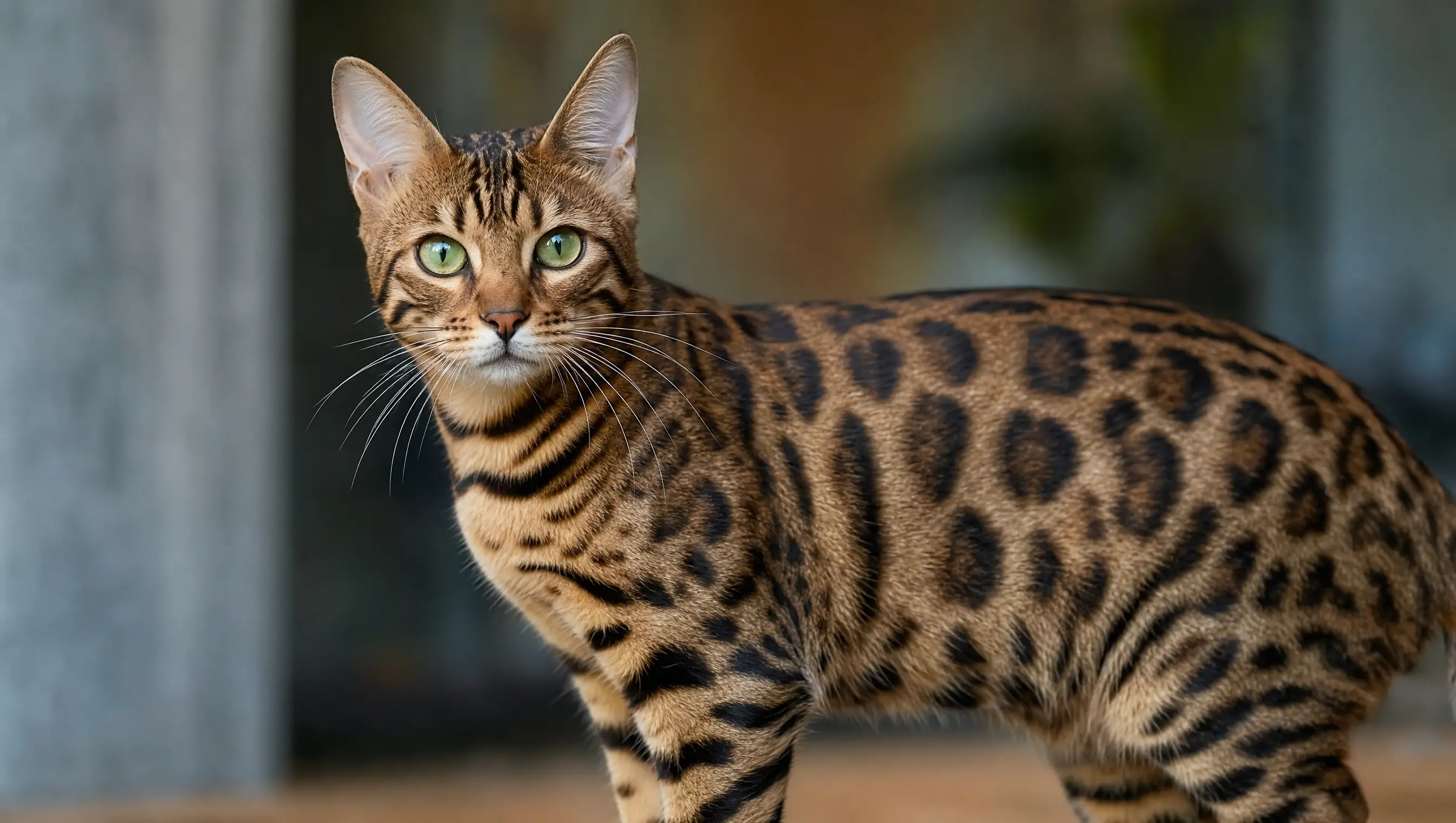 Bengal
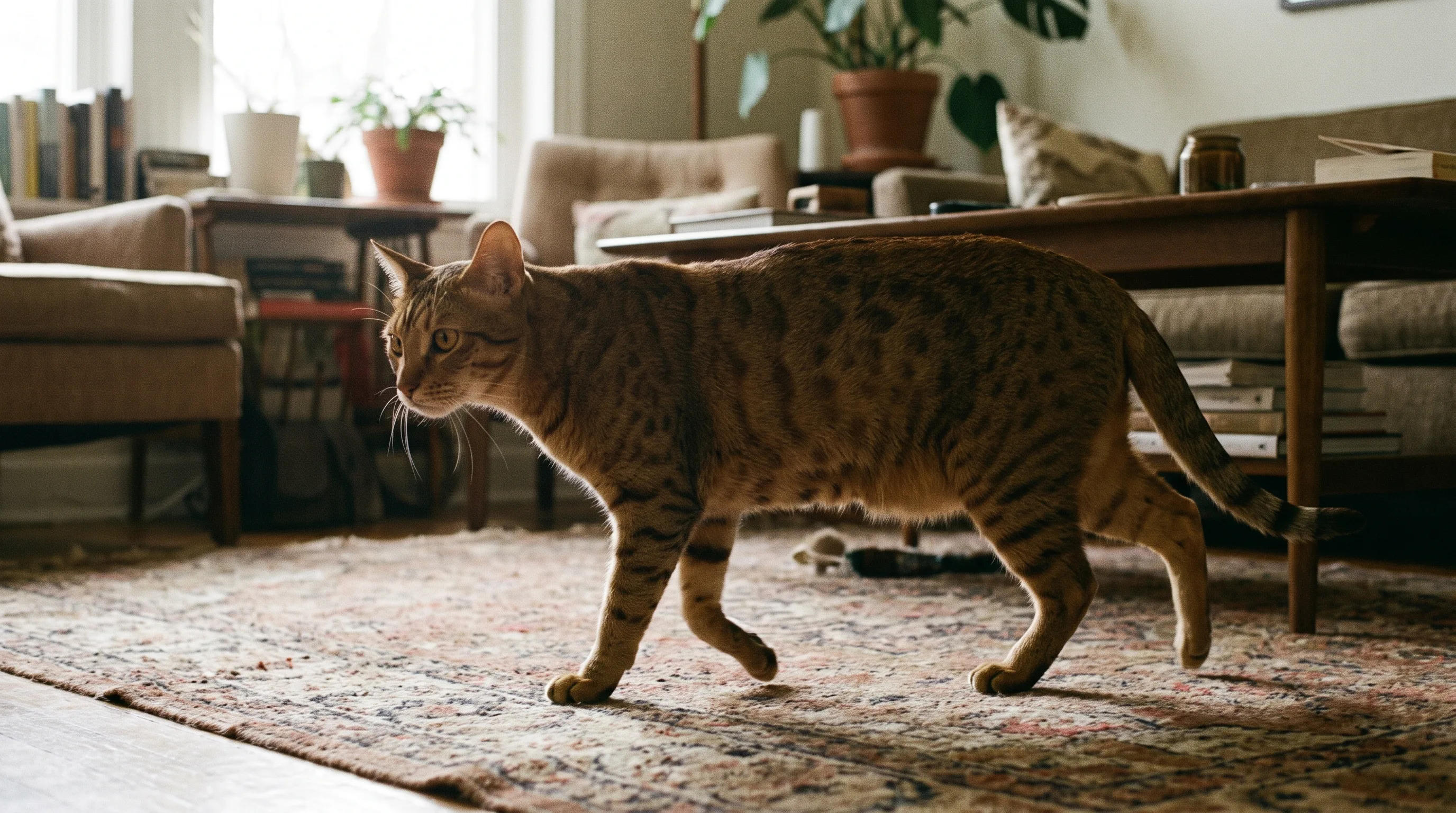 Ocicat
The Ocicat is the easier cat: spotted like a small ocelot but entirely domestic, outgoing with strangers, trainable, and happy in any active home. The Bengal brings the glittering rosetted coat and genuine leopard-cat ancestry a few generations back, and with it more intensity: a Bengal without enough to do will redecorate. For a first spotted cat, take the Ocicat; take the Bengal if you can honestly promise it a busy life.
Side by side
| Bengal | Ocicat | |
|---|---|---|
| Size | Medium–large · long, muscular frame | Medium to large · long, powerful, heavy-boned |
| Weight | 4–7 kg · males heavier | 2.7–5 kg females · up to 7 kg males |
| Life expectancy | 12–16 years | 12–18 years |
| Energy | Very high — needs a real outlet | Very high — needs a job every day |
| Shedding | Low, coat is short and close-lying | Low, short satiny coat |
| Coat | Short, dense, spotted or marbled | Short, satiny, close-lying; spotted agouti |
| Good with children | 4/5 | 5/5 |
| Trainability | 5/5 | 5/5 |
| Openness to strangers | 3/5 | 5/5 |
Where the spots come from
The Bengal descends from deliberate crosses between domestic cats and the Asian leopard cat, a small wild species; the Bengals sold as pets are several generations removed from that cross. The Ocicat has no wild blood at all: it appeared in a 1960s Siamese-Abyssinian litter and was named for its resemblance to the ocelot. Same look at a glance, opposite origins.
Temperament and energy
Both are very high-energy, athletic cats that need climbing space and daily play. The Bengal is the more intense: obsessed with water, capable of taps and door handles, and loud about boredom. The Ocicat spends the same energy more sociably; it greets visitors, learns fetch and leash-walking readily, and is often described as dog-like. Neither breed is background furniture.
Grooming and shedding
The one easy chapter for both: short, close-lying coats that shed little and need a weekly polish at most. The Bengal's coat often carries a glitter effect and feels more pelt than fur; the Ocicat's is satiny. Your time goes on play, not brushing.
Health and buying
Bengals have DNA tests worth asking for: PRA-b (an eye disease) and PK deficiency (an anaemia), plus HCM screening in the line. The Ocicat is generally robust; its founder breeds contribute a PK-deficiency and PRA risk the same DNA tests cover. One more check for the Bengal: a few countries and regions restrict early-generation cats, so confirm local rules, though standard pet Bengals are legal almost everywhere.
Common questions
Are Bengals legal to own?
Standard pet Bengals, several generations from the wild cross, are legal in most places. A few jurisdictions restrict or register early-generation Bengals, so check your local rules before buying one of those.
Which is calmer, a Bengal or an Ocicat?
Neither is calm, but the Ocicat is the more even-tempered and the easier to please. The Bengal runs hotter and protests harder when under-stimulated.
Can they live in an apartment?
Yes, if the apartment works for a living: vertical space, puzzle feeders and real daily play sessions. Without that, both breeds, the Bengal especially, will invent their own entertainment at your expense.