British Shorthair vs Russian Blue
Two plush, quiet, blue-grey cats that strangers mix up and owners never do. One is an unflappable armchair companion, the other a shy, devoted shadow.
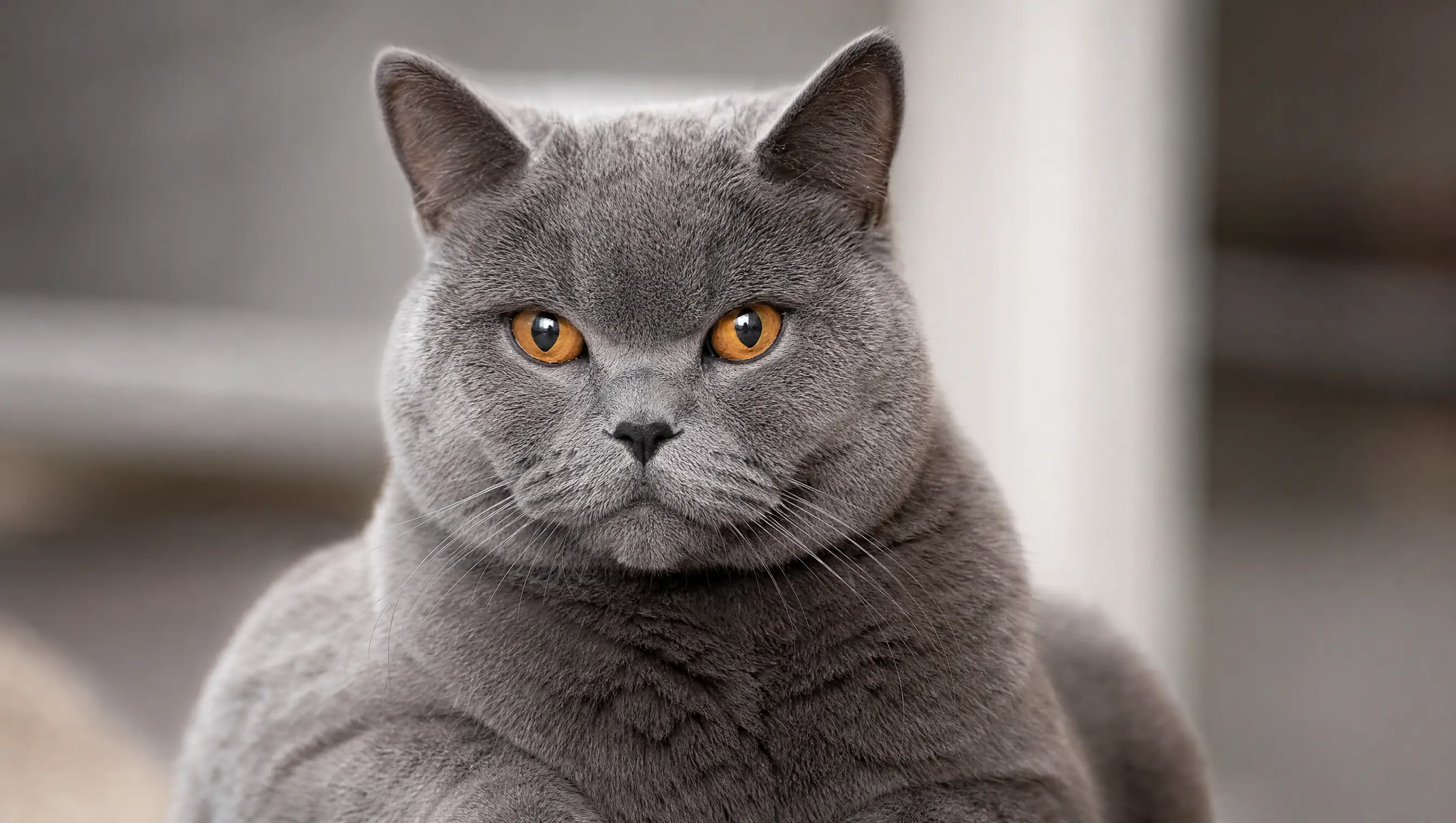 British Shorthair
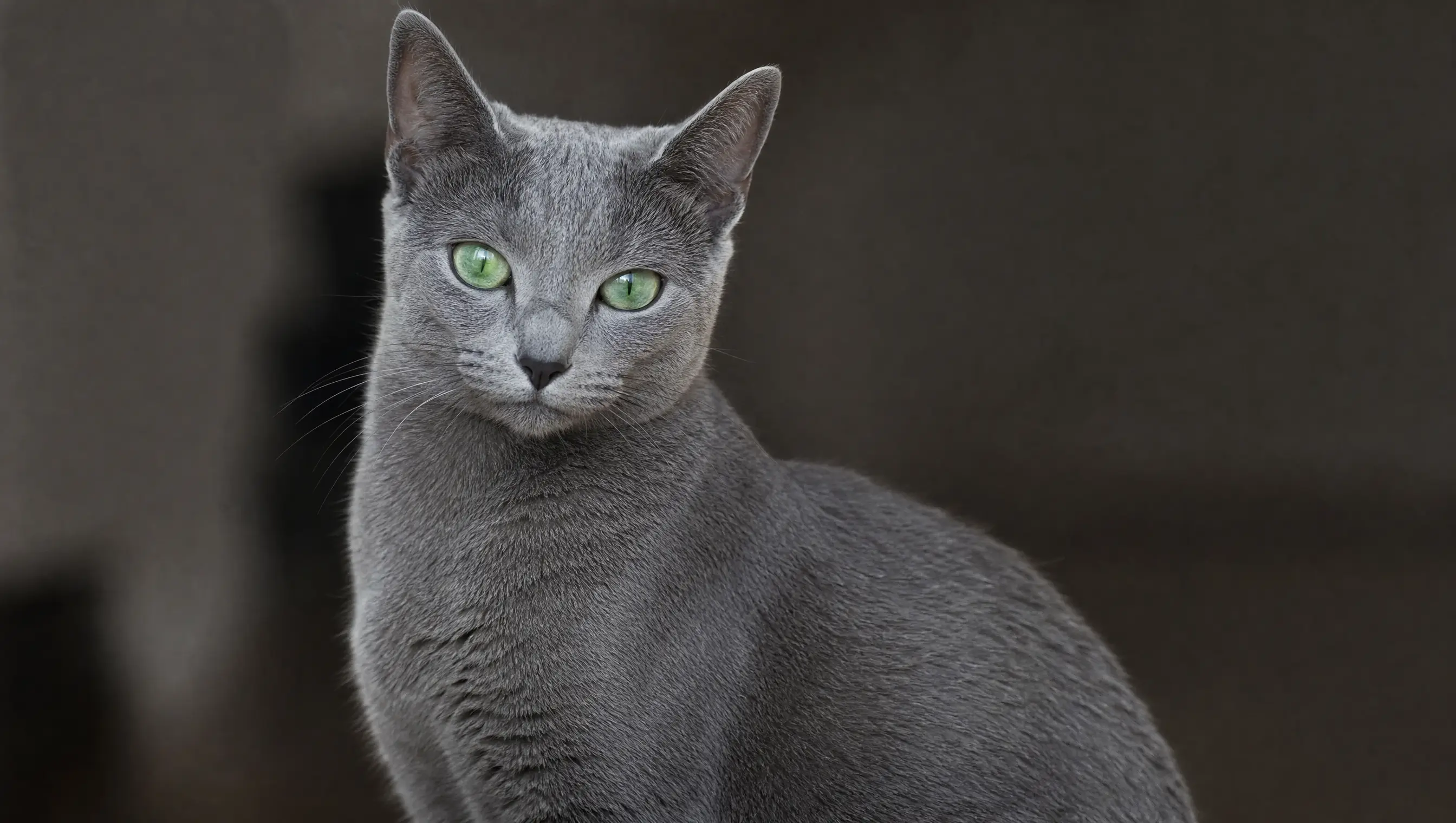 Russian Blue
Pick the British Shorthair for an easy, independent cat that takes life as it comes, copes fine with a working household, and would rather sit near you than on you. Pick the Russian Blue for a quieter, more devoted cat that bonds hard with its own people and vanishes when the doorbell rings. Both are tidy, plush and undemanding to groom; the Russian Blue often lives longer.
Side by side
| British Shorthair | Russian Blue | |
|---|---|---|
| Size | Medium to large · stocky, cobby build | Small to medium · fine-boned, long-legged |
| Weight | 4–8 kg · toms often heavier | 3–5 kg |
| Life expectancy | 12–17 years | 15–20 years |
| Energy | Low — placid and unhurried | Moderate — playful in bursts, then settled |
| Shedding | Moderate, heavier in spring and autumn | Low year-round |
| Coat | Short, dense, plush, no undercoat mat | Short, dense double coat; blue-grey with silver tipping |
| Good with children | 4/5 | 3/5 |
| Trainability | 2/5 | 3/5 |
| Openness to strangers | 2/5 | 1/5 |
Telling them apart
The British Shorthair is round everywhere: cheeks, eyes, body, a stocky 4 to 8 kg with a dense, plush coat and usually copper-gold eyes. The Russian Blue is half the weight at 3 to 5 kg, fine-boned and long-legged, with a silver sheen to the coat and vivid green eyes. In a blue-coated cat, eye colour is the quick tell: green says Russian Blue.
Temperament
The British Shorthair has a firm four-on-the-floor policy: friendly, calm, happy to be in the room, but not a cat for carrying or lap-pinning. It takes visitors, noise and change in its stride. The Russian Blue is the opposite kind of quiet: cautious with strangers, attached to routine, and deeply affectionate once it has decided you're its person. Guests may never see it; you'll have a shadow.
Grooming and shedding
Both are easy. The British Shorthair needs a weekly brush, stepping up in spring and autumn when the dense coat turns over. The Russian Blue's short double coat sheds remarkably little year-round and keeps itself presentable; a weekly once-over is plenty.
Health and lifespan
The Russian Blue is one of the soundest pedigree cats going, with no breed-specific DNA test to chase and lifespans of 15 to 20 years. The British Shorthair is sturdy too, but its placid, food-loving nature gains weight easily, so measure meals; HCM heart screening in the breeding line is worth asking about. Keep either lean and they're both long-haul companions.
Common questions
Are Russian Blues hypoallergenic?
No cat is. Russian Blues are said to produce less of the main allergen, Fel d 1, but the evidence is thin and it varies cat by cat. If allergies are the issue, spend time with the actual cat before committing.
Which is better for a full-time worker?
The British Shorthair handles alone-time better than most breeds. The Russian Blue copes too, as long as its routine holds and its person comes home; it's less suited to chaotic, high-traffic households.
Which is better with children?
The British Shorthair, for most families: it's unflappable and sets clear limits without drama. The Russian Blue does well with calm, older children but finds boisterous little ones stressful.