Russian Blue
Quiet, plush and cautious — a cat that earns its way to you rather than leaping into your arms.
On these lists: Cats for apartments · Hypoallergenic cats · Cats for first-time owners · Low-maintenance cats
Vital stats
| Size | Small to medium · fine-boned, long-legged |
| Weight | 3–5 kg |
| Life expectancy | 15–20 years |
| Energy | Moderate — playful in bursts, then settled |
| Shedding | Low year-round |
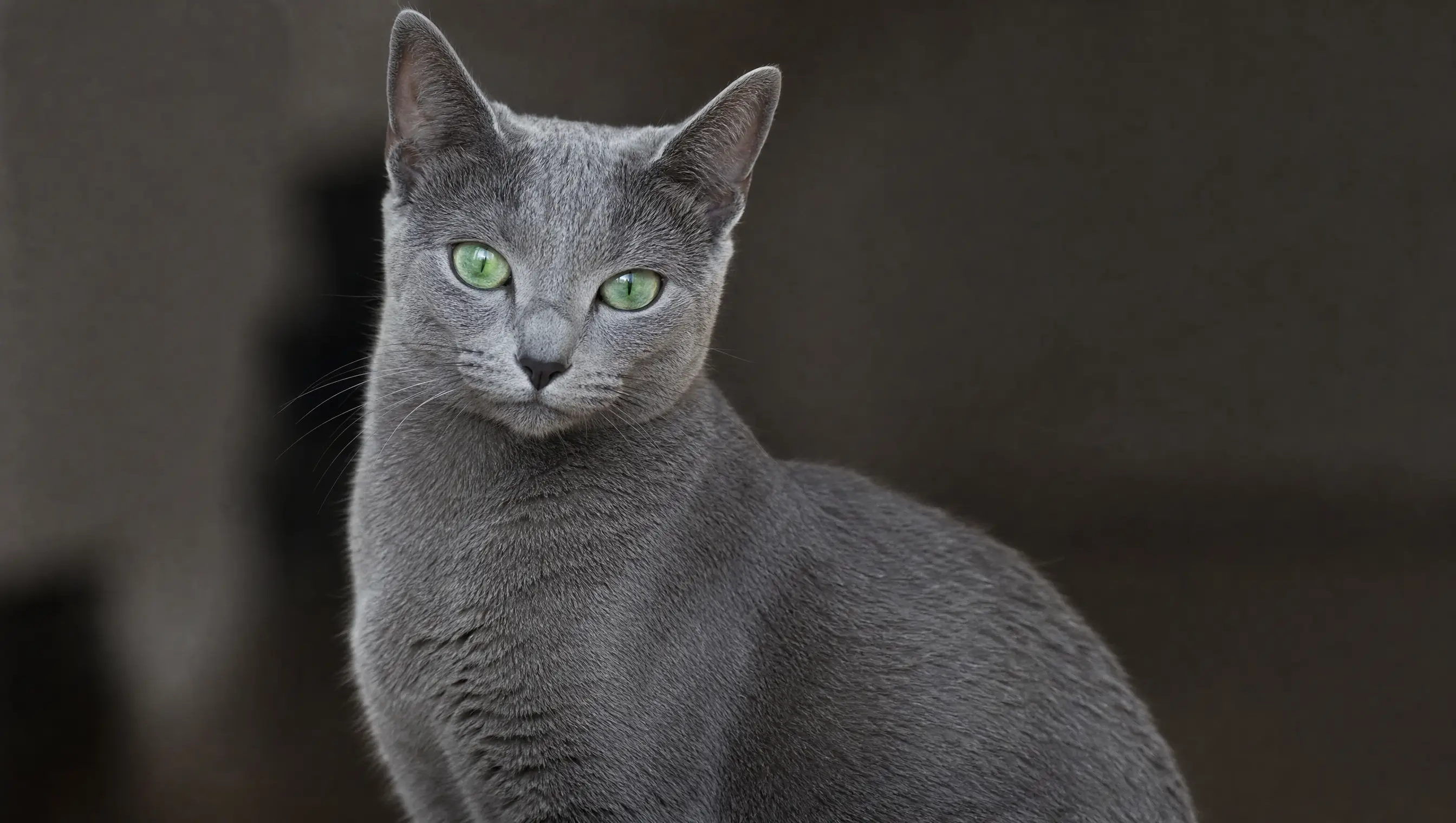
| Coat | Short, dense double coat; blue-grey with silver tipping |
| Group | Shorthair |
| Origin | Russia |
Breed traits
Friendliness
Care
Mind
The Russian Blue by the numbers
The Russian Blue facts owners search for most — price, lifespan, weight, shedding and colours, in one place.
Widely bred, so you can usually find a litter from a registered breeder without a long wait. Ongoing costs stay modest — it eats little and routine vet care sits at the lower end.
We don't quote a single figure: the real price swings with breeder, region, bloodline and health testing — and a rescue costs a fraction of a breeder's litter. Adopting is almost always the cheapest route.
Temperament
Russian Blues are shy before they are affectionate. New people, loud rooms and changes to the routine make them retreat to another room, and they'll size up a visitor for a long while before deciding anything. But that reserve is the whole point: the trust they give their own family is deep and quiet. They tend to bond hardest with one or two people, follow them around at a polite distance, and greet them at the door. They're near-silent — you get a soft chirp, not a chorus — and they play in short, tidy bursts rather than tearing up the house. Sensitive to mess and disruption, they like a clean litter box, meals on schedule, and a household that doesn't change much.
Habits & quirks
Slow to trust
A new visitor gets watched from a doorway for a good while; push it and the cat simply leaves, so let it come to you.
The half-smile
The upturned mouth and wide-set green eyes give many Russian Blues a permanent faint smile, a look breeders have long prized.
Routine-keeper
Meals late, a moved litter box or rearranged furniture will genuinely unsettle them; they thrive on a predictable day.
Quiet shadow
Not a lap-diver but a room-sharer — it'll settle a few feet away and keep half an eye on you all evening.
Health
The Russian Blue is one of the sturdier pedigree cats — there's no single widespread inherited disease tied to the breed, and it's often long-lived. That soundness is genuinely good news, but it isn't a reason to coast: annual vet checks and dental care still matter, and the one everyday risk is weight. This is a food-motivated cat on a fine-boned frame, so it hides extra kilos badly and puts them on quietly if you free-feed. Keep it lean and keep up the routine care, and you're most of the way there.
Nutrition
| Grooming | The dense double coat looks high-maintenance but isn't — a weekly brush keeps it glossy and cuts down the little it sheds. |
| Weight | Food-motivated and easily bored into snacking; measure meals and skip free-feeding, as this fine-boned cat hides extra weight badly. |
| Health | One of the sturdier pedigree breeds with no single widespread inherited disease, and often long-lived — but it isn't a licence to skip annual checks and dental care. |
| Settling in | Give a nervous newcomer one quiet room first and let it expand on its own timetable; forcing socialisation backfires with this breed. |
A Russian Blue is a carnivore that loves its food and gets bored into snacking, which is a quiet route to a heavy cat on such fine bones. Measure meals and skip the always-full bowl — free-feeding is where the weight creeps on. Wet food helps with hydration and keeps a food-focused cat satisfied on fewer calories. Aim for ribs you can feel but not see; because the build is delicate, even a little extra shows up as strain, so portion control matters more than the breed's easy looks suggest.
Kitten guide
A Russian Blue kitten is shyer than most, so the early weeks set the tone for life. Socialise it gently and often with people, sounds and other pets while it's young, and let it approach on its own timetable — forcing it backfires with this breed. Give a nervous newcomer one quiet room to start, then let it expand as it gains confidence. Set up a calm, predictable indoor space with a scratching post and things to climb, keep the litter box clean and the routine steady, and start vaccinations and vet visits early so handling feels normal.
Training
Russian Blues are clean, quiet and easy, but they run on routine and dislike disruption. Litter habits come naturally — just keep the box clean and in a settled spot, because this is a fastidious cat that will protest a dirty or moved tray. Enrichment suits their tidy, bursty play style: short sessions with a wand toy, a puzzle feeder, a few good climbing spots. Give it a sturdy scratching post and redirect it there from the furniture. Let a reserved cat come to you, get it used to a carrier early, and keep changes gradual — meals on time and a stable home do more for this breed than any amount of drilling.
Life expectancy
Russian Blues live 15–20 years. This is one of the longer-lived cat breeds, and a Russian Blue kept lean, fed on a routine and given regular checks and dental care can reach the top end of that range. Weight is the main thing to stay ahead of — the fine frame carries it badly — and a calm, settled home suits a cat that lives best when little changes.
Similar breeds
Breeds with a similar build and background — worth a look if this one isn't quite the fit.
Compare this breed
Common questions
Are Russian Blues hypoallergenic?
No cat truly is. Russian Blues are often said to produce less of the Fel d 1 allergen and to shed little, and some allergy sufferers do react less to them, but there's no guarantee — spend time with one before committing.
Do Russian Blues get along with children and other pets?
They can, in a calm home, but they dislike chaos and rough handling and will hide from a loud, grabby toddler. They do best with older, gentle children or a quiet adult household.
Are Russian Blues good for first-time owners?
Yes, on the practical side — low grooming, quiet, robust and long-lived. Just go in expecting a reserved cat that warms up slowly, not an instant cuddler, and give it a stable routine.
Does the Russian Blue shed a lot?
Not much. The Russian Blue is a low-shedding breed, so loose hair around the home stays minimal. It still needs regular grooming, but you won't be fighting drifts of fur.
How much grooming does a Russian Blue need?
A weekly comb is usually enough for the Russian Blue, with a second pass during a seasonal moult. That keeps loose hair off your furniture and cuts down on hairballs, since everything the cat doesn't shed onto the sofa it swallows while washing.