Ragdoll vs Birman
Blue eyes, pointed coats, silky fur, gentle manners: on paper they're twins. In the room, size and four white gloves give it away.
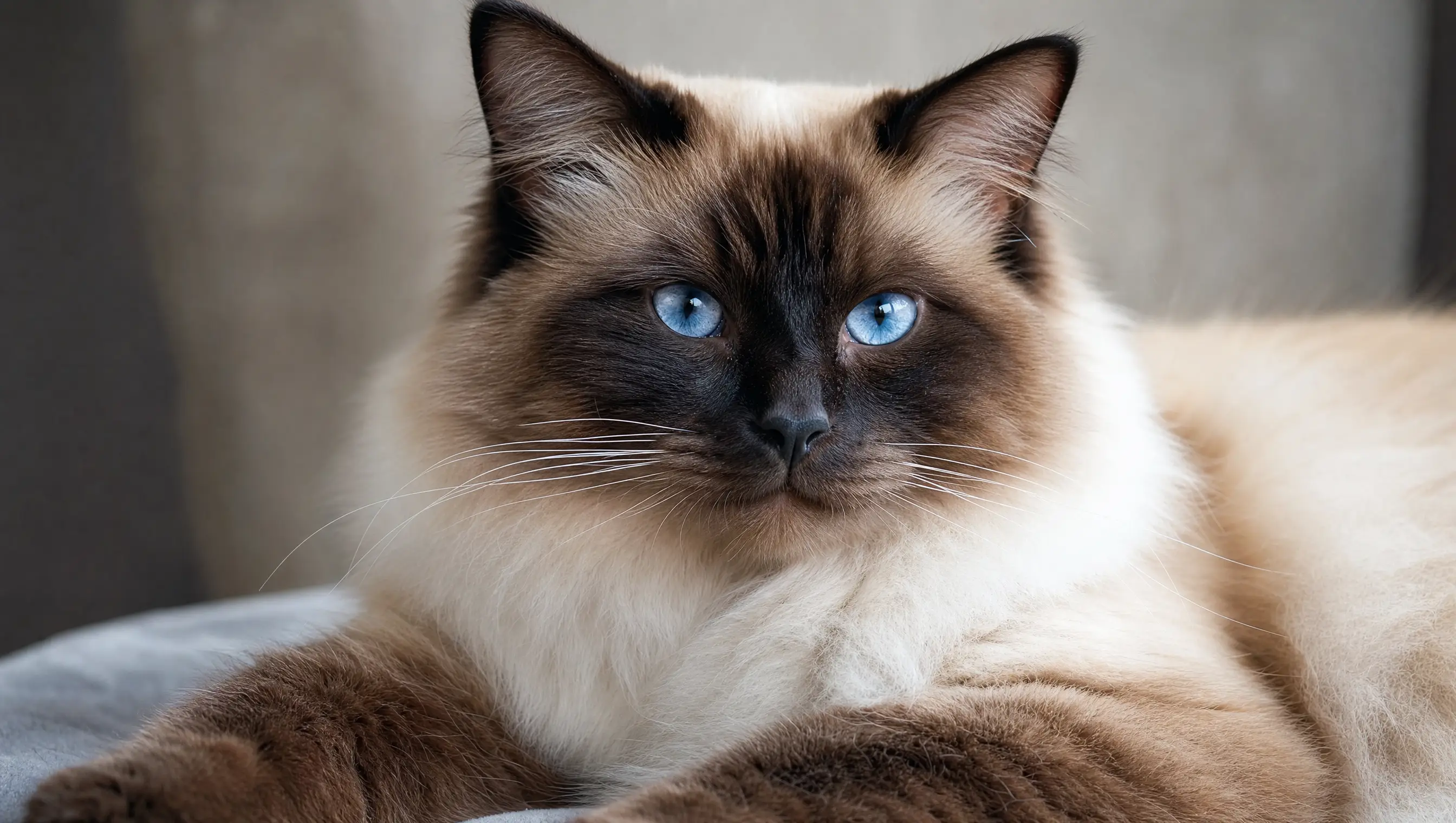 Ragdoll
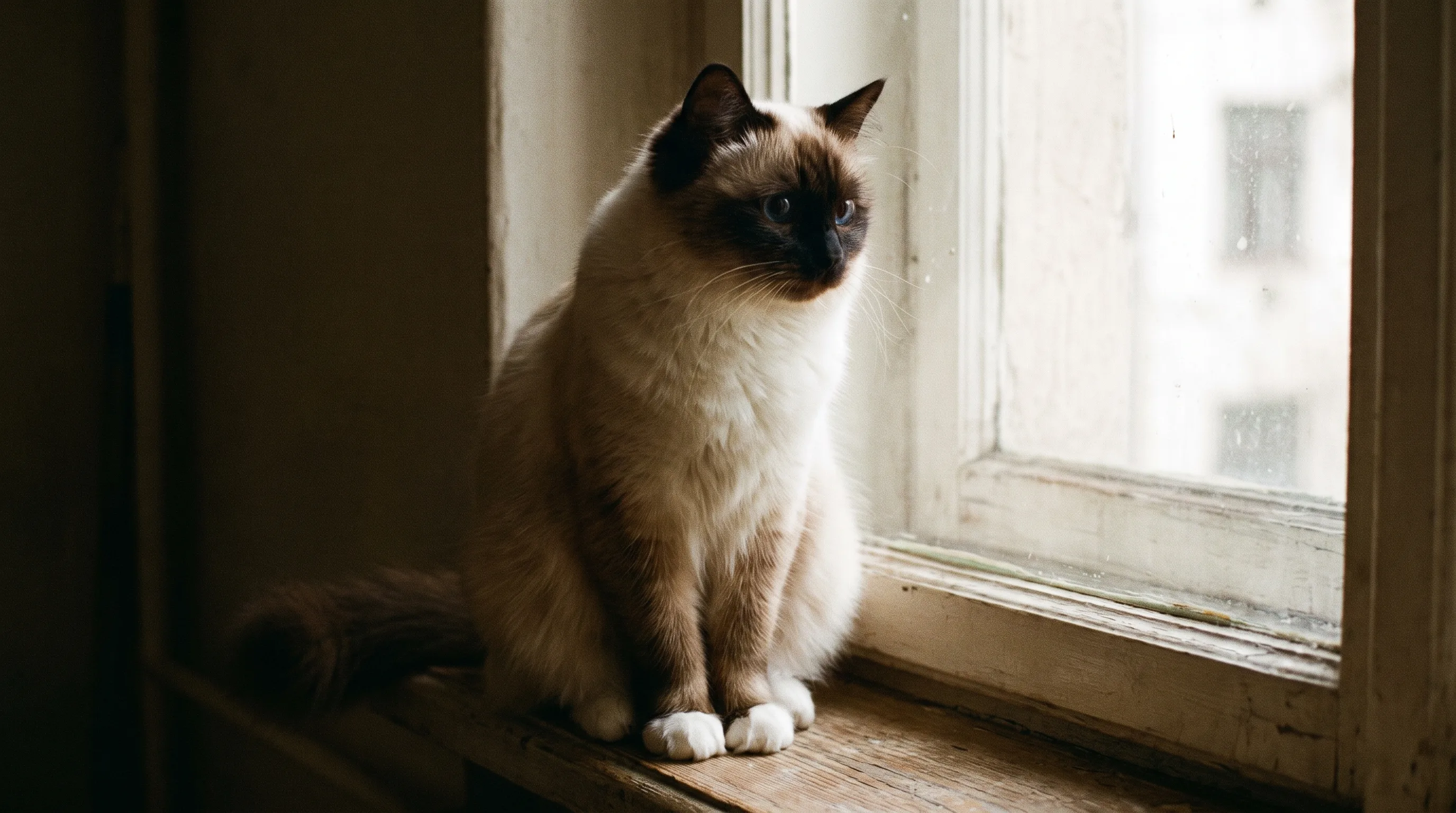 Birman
The Birman is the middle path: medium-sized, playful without being busy, sociable without being needy. The Ragdoll is bigger, floppier and more placid still, the closest thing cats offer to a plush toy that purrs. A home that wants a calm cat to hold chooses the Ragdoll; a home that wants a bit more play in a smaller, tidier frame chooses the Birman. Grooming is light for both.
Side by side
| Ragdoll | Birman | |
|---|---|---|
| Size | Large · long, broad-chested build | Medium · stocky, low on the leg |
| Weight | 4–9 kg · toms often 6–9 kg | 4–6 kg · males up to 7 kg |
| Life expectancy | 12–17 years | 12–16 years |
| Energy | Low to moderate — placid, not busy | Moderate — plays in bursts, then settles |
| Shedding | Moderate, seasonal | Moderate, heaviest in spring |
| Coat | Semi-long, silky, little undercoat | Long, silky, little undercoat; pointed with white gloves |
| Good with children | 5/5 | 5/5 |
| Trainability | 3/5 | 3/5 |
| Openness to strangers | 4/5 | 4/5 |
Telling them apart
Both are pointed cats with blue eyes and silky semi-long coats, so look at the feet and the scale. The Birman wears four white gloves, perfectly cut across each paw, and weighs a moderate 4 to 7 kg. The Ragdoll runs to 9 kg, stands noticeably larger, and its paws match its points. White gloves on a pointed cat mean Birman.
Temperament
The Ragdoll is the champion of going along with things: limp when lifted, settled where you put it, unbothered by most of what a household throws at a cat. The Birman keeps more kitten in the mix, trotting after people, batting toys around well into middle age, and splitting its attention evenly across the family rather than melting onto one lap. Neither is loud; neither is a loner.
Grooming and shedding
Two of the easiest long coats in the cat world. Both are silky with little undercoat, which is what makes mats rare: a comb twice a week covers either breed, with a little extra in spring. The Birman sheds moderately, the Ragdoll about the same; neither approaches the output of a double-coated forest breed.
Health
HCM, the common feline heart condition, is the one to ask about for both breeds, and the Ragdoll has a DNA test for a known mutation that any serious breeder will show you. Both are trusting, home-oriented cats better kept indoors or in a secured garden. Lifespans are close: 12 to 17 years for the Ragdoll, 12 to 16 for the Birman.
Common questions
How do I tell a Ragdoll from a Birman?
Check the paws and the size. A Birman has four white-gloved paws and a medium build; a Ragdoll is markedly bigger and its paws match the rest of its colouring. Both have blue eyes, so eye colour won't help.
Which is more playful?
The Birman, by a clear margin. It stays toy-driven and mobile for years, where the Ragdoll would usually rather drape itself over something warm. Neither is hyperactive.
Can they be left alone during a workday?
Both manage a normal workday with company in the morning and evening, but neither enjoys an empty house. For long regular absences, a bonded pair is the honest answer for either breed.