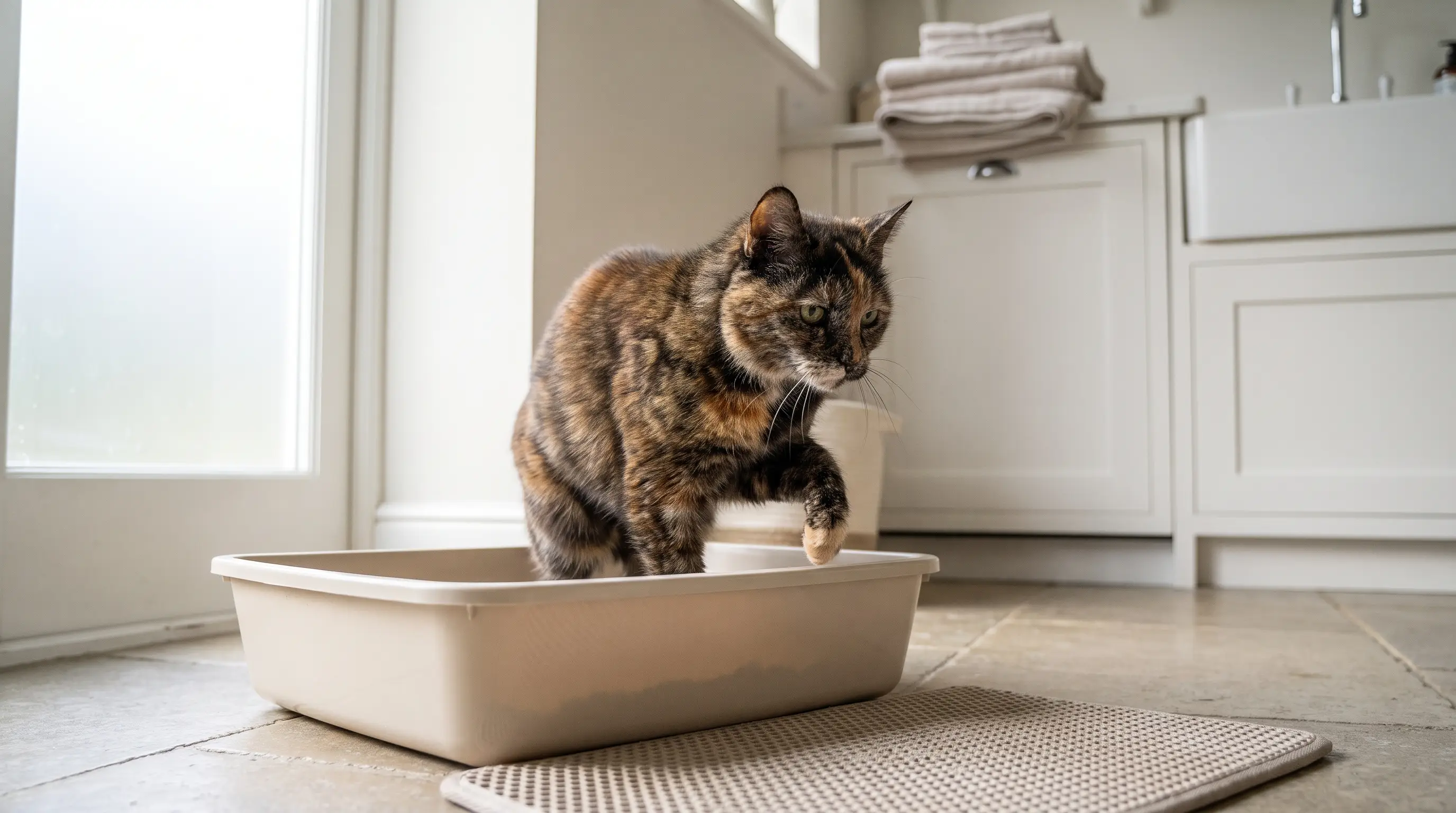
Old cat peeing outside the litter box: why and what to do
An old cat peeing outside the litter box almost always has a medical or physical cause. Cats don't do revenge. A miss is information, and in a senior cat it usually points to arthritis, kidney disease, diabetes, a urinary infection or age-related confusion. Every one of those is treatable or manageable, so book a vet appointment this week, then make the tray easier to reach. Punishing your cat fixes nothing and adds fear to an animal already struggling.
Your cat is not doing this out of spite
Cats don't do revenge. The idea that your old cat is punishing you for a new sofa, a late dinner or a weekend away gives cats a motive they simply don't have. Feline brains don't plot. When a cat that has used a tray reliably for fifteen years suddenly starts missing it, that change is a symptom, and in a senior cat it is almost always a medical or physical one. Treat every accident as a message about pain, illness or access.
Punishment makes everything worse. Shouting, squirting water or carrying your cat to the scene teaches a cat nothing about trays and everything about fearing you. A frightened cat hides more, drinks less and becomes harder to observe, which delays the diagnosis you actually need. Stay calm, clean up, and start keeping notes instead: where the accidents happen, how often, and whether the urine volume looks large or small. Your vet will want exactly that information.
See the vet first, and this week
Book a vet appointment before you change a single tray, because four common senior conditions cause most misses. Arthritis makes climbing into a high-sided tray genuinely painful, so your cat learns that the tray hurts and goes somewhere flat instead. Chronic kidney disease and diabetes both push a cat to drink and urinate far more than the old routine can handle, so a bladder that once lasted comfortably between visits now overflows on the way.
A urinary tract infection makes urination sting, and cats often blame the location rather than the illness. Cognitive decline, common in cats past fifteen, can leave a cat genuinely unsure where the tray is, especially at night. All four are picked up with a basic exam, blood test and urine sample, and all four can be treated or managed. Same-week matters: kidney disease and diabetes do lasting damage while you wait, and pain is pain every single day.
Straining with nothing coming out is an emergency
A cat straining in the tray and producing nothing needs a vet now, not tomorrow. This is the classic sign of a blocked bladder, where crystals, stones or a mucus plug seal the urethra shut. It happens mostly in male cats because their urethra is narrow, and once urine cannot leave the body, toxins build fast and the bladder can rupture. An untreated blockage can kill a cat within a day or two.
The cruel trick is that a blockage looks like constipation. An owner sees squatting, straining and crying, assumes a hairball or a stubborn stool, and waits. Don't wait. If your cat visits the tray repeatedly, strains, cries, licks its rear or produces only a drop or nothing at all, phone the nearest open vet and go. Out of hours, that means the emergency clinic. This is one of the few genuine drop-everything moments in cat ownership.
Make the tray easy to use after the vet visit
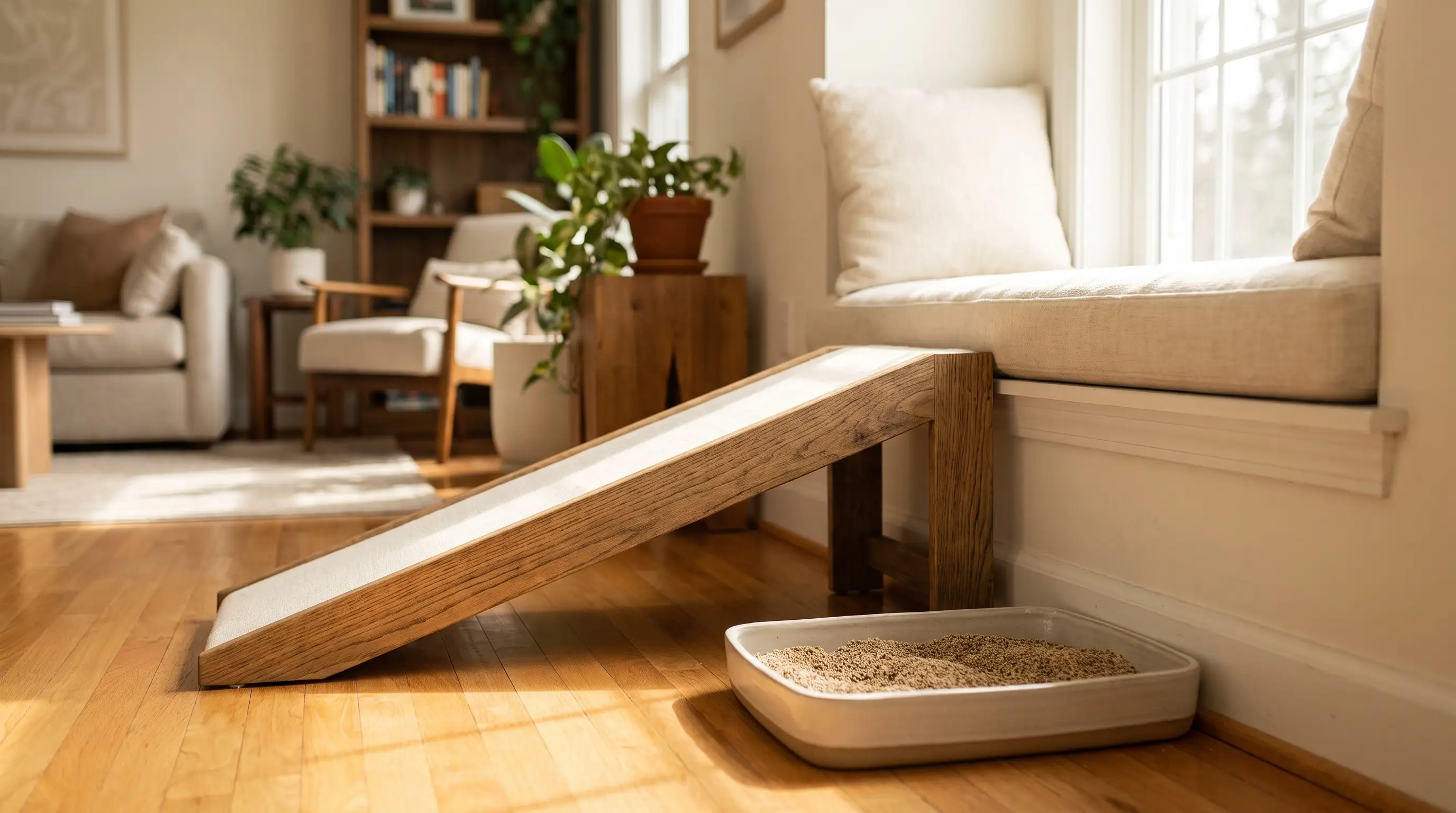
Choose a tray your cat can step into, because climbing is the problem arthritis leaves behind even once pain relief starts. Swap the high-sided or hooded box for a low-entry tray, or cut a doorway into one side of a plastic storage box and sand the edge. Go bigger too: a large tray lets stiff hips turn around without a foot landing over the edge. Put one tray on every floor of the house so a sleepy cat never faces the stairs at 3am.
Fill it with soft, unscented litter, since perfumed litter that seemed fine for years can put off a cat whose habits are already wobbling. Place trays somewhere quiet and easy, never behind a cat flap, up a jump or next to a noisy washing machine. These changes sit alongside the rest of good senior cat care: ramps, soft beds, and food and water within easy reach.
Keep the routine steady and clean without punishment
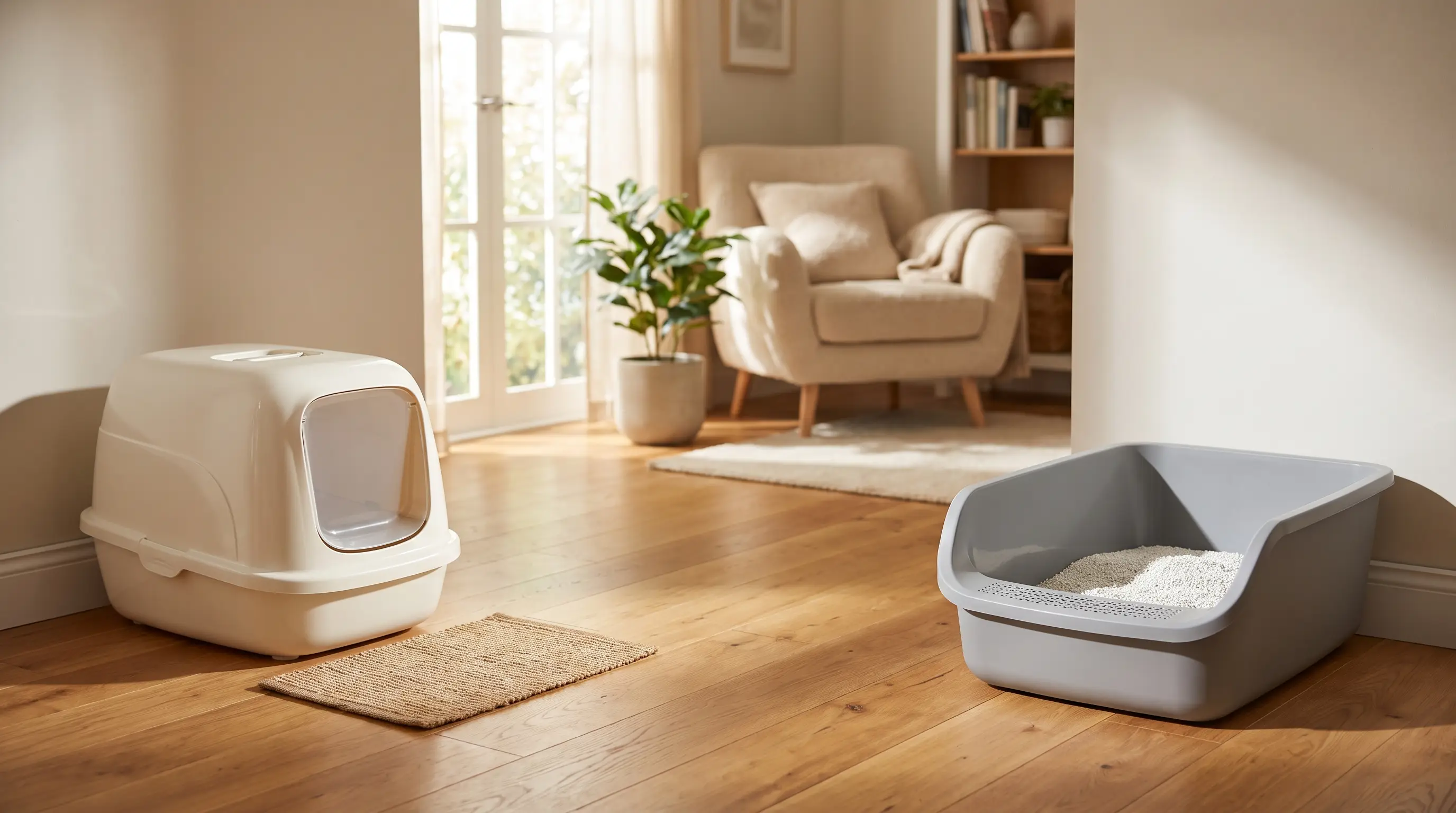
Old cats cope worst with change, so keep trays, feeding spots and routines exactly where they have always been. A house move, a new baby, building work or a new pet can all tip a senior cat into accidents, and even swapping litter brand or moving a tray two rooms over can be enough. If upheaval is unavoidable, give your cat one unchanged room with the familiar tray, bed and bowls, and watch for the signs of stress: hiding, overgrooming and going off food.
Clean accidents with an enzyme cleaner, because ordinary household products leave urine smells behind, and a spot that smells of urine reads to a cat as an approved toilet. Never rub your cat's nose in anything; a cat cannot connect the punishment to the act and only learns that you are frightening. Expect progress in weeks, not days. With the medical cause treated and the tray made easy, most old cats go back to their tray and stay there.
Common questions
Why is my old cat peeing outside the litter box?
Almost always because of a medical or physical cause: arthritis, kidney disease, diabetes, a urinary infection or age-related confusion. Book a vet check this week, then make the tray easier to reach.
Why has my elderly cat suddenly stopped using the litter box?
A sudden change usually means new pain or new illness, so treat it as a symptom and see your vet. Common triggers are arthritis flaring up, a urinary infection, or kidney disease and diabetes producing more urine than the old routine can handle.
What is the best litter box for an older cat?
A large tray with one low side your cat can step into, filled with soft unscented litter, placed somewhere quiet on each floor of the house. Skip hooded and top-entry boxes; they demand climbing that stiff joints cannot manage.
Is my old cat peeing outside the litter box out of spite?
No. Cats don't do revenge, and accidents in an old cat point to pain, illness or a tray they can no longer manage. Punishment only adds fear and delays the real fix.
When is a cat peeing outside the litter box an emergency?
When your cat strains and produces little or nothing, especially a male cat. That is the sign of a blocked bladder, which can kill within a day or two, so go to a vet now, not tomorrow.
How do I stop my senior cat from peeing on the floor?
Treat the medical cause first, then make the tray easy: low entry, one per floor, larger size, unscented litter, quiet location. Clean old accidents with an enzyme cleaner so the spot stops smelling like a toilet to your cat.
More in Cats

Organic, natural, holistic: which pet food claims are real
Only one of these words is backed by law. Here's what organic, natural, holistic, premium and gourmet actually guarantee on a bag of dog or cat food.

Single-protein and limited-ingredient dog food: when it helps
Limited-ingredient and single-protein diets have one real job — investigating food allergies with your vet. Here's when they help and when it's just marketing.

'Complete and balanced': the only pet food claim that matters
One small line on the bag decides whether a food can actually feed your pet. Here's how to find the AAFCO/FEDIAF adequacy statement and read it properly.