Kidney disease in cats: the early signs to watch
Chronic kidney disease is the most common serious illness in old cats, and roughly 30% of cats over 15 have it. The kidneys lose function slowly, so your cat looks fine long after the damage starts. By the time you notice something is wrong, most of the working kidney tissue has already gone. That sounds bleak, but caught early through routine senior blood tests it is very manageable, and many cats live comfortable years afterwards.
Why kidney disease hits old cats so hard
Cats get chronic kidney disease because their kidneys wear out with age, and roughly 30% of cats over 15 are affected. The kidneys filter waste from the blood, and once the filtering units are damaged they do not grow back. Damage builds up quietly over months or years, so the disease is well advanced before it shows.
Cats hide illness because they are wired to. A cat that looks weak in the wild is a target, so yours will carry on eating, grooming and sleeping normally until it genuinely cannot. You will not see dramatic signs early on. That instinct is exactly why old cats need regular checks rather than a wait-and-see approach, and why the guide to senior cat care puts routine vet visits front and centre.
The early signs you can actually see

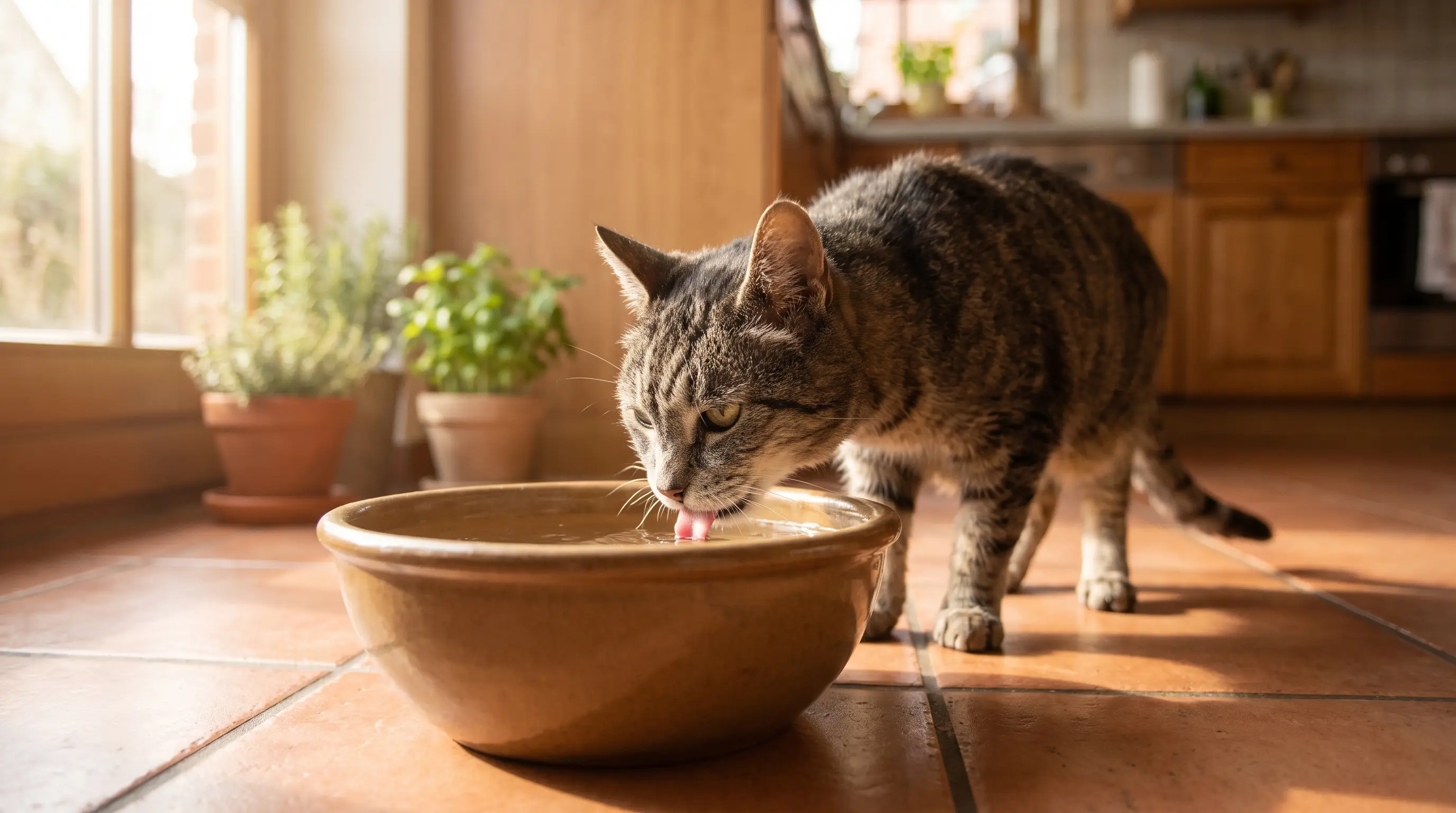
The first thing most owners notice is drinking and peeing more. Failing kidneys cannot concentrate urine, so your cat drinks more to keep up and produces larger, more frequent clumps in the litter tray. If you are scooping bigger wet lumps than you used to, or topping up the water bowl more often, take note.
Weight loss is the other early clue, and it is gradual. Your cat may look a little bonier along the spine while eating the same amount, and the coat often turns dull or unkempt because a cat feeling off-colour grooms less. None of these signs is dramatic on any single day, which is what makes them easy to miss. Weigh your cat monthly at home and keep an eye on the litter tray, because a slow trend is far easier to spot when you have something to compare against.
Why twice-yearly blood tests catch it first
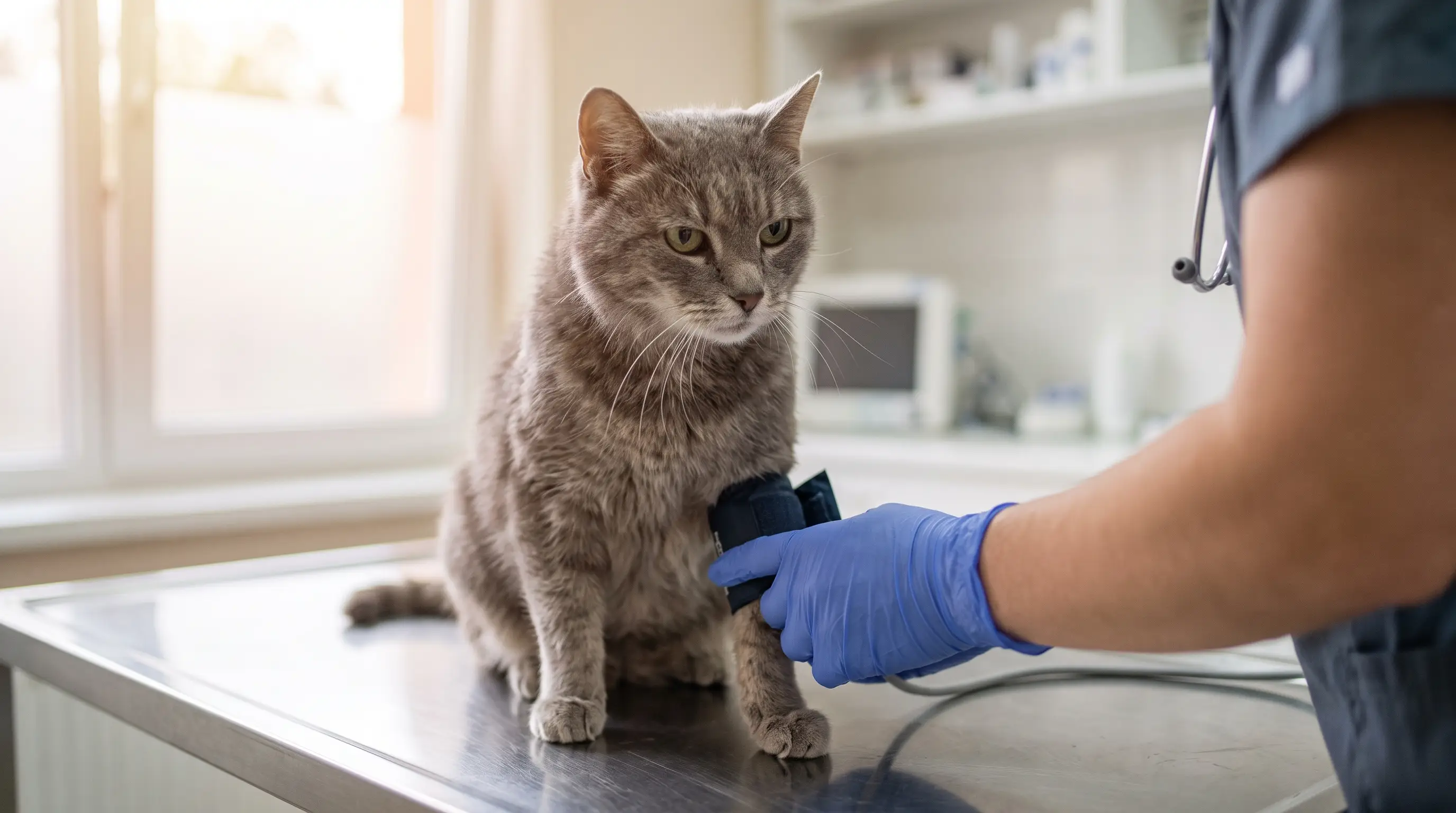
Blood tests catch kidney disease years before you would spot anything at home. Two markers, creatinine and SDMA, rise as kidney function drops, and SDMA in particular climbs early. A single result inside the normal range can still be a warning if it has crept up since last time, which is why trends across twice-yearly senior checks matter more than any one number.
This is where regular testing earns its keep. Your vet plots your cat's results over time and sees the slope before symptoms appear. Blood tests also catch conditions that mask or mimic kidney disease. An overactive thyroid, for example, can prop up kidney values and hide the problem, so hyperthyroidism is usually checked at the same time. Your vet will often measure blood pressure too, since high pressure both damages the kidneys and results from them.
What a diagnosis actually means
A kidney disease diagnosis means you manage the condition for the rest of your cat's life; there is no cure. The damage already done cannot be reversed, but the right care slows what comes next and keeps your cat comfortable. This is a long-term condition you handle together with your vet, and in most cases it is not an emergency.
Vets use a system called IRIS staging to describe how far the disease has gone, from stage one (early, minimal signs) to stage four (advanced). Staging is based mainly on blood creatinine, with urine protein and blood pressure added in. In plain terms, it tells you and your vet how much kidney function remains and what treatment fits now. A cat caught at stage one or two has a very different outlook from one diagnosed at stage four, which is the whole argument for testing early rather than waiting for symptoms.
What helps, and the honest outlook
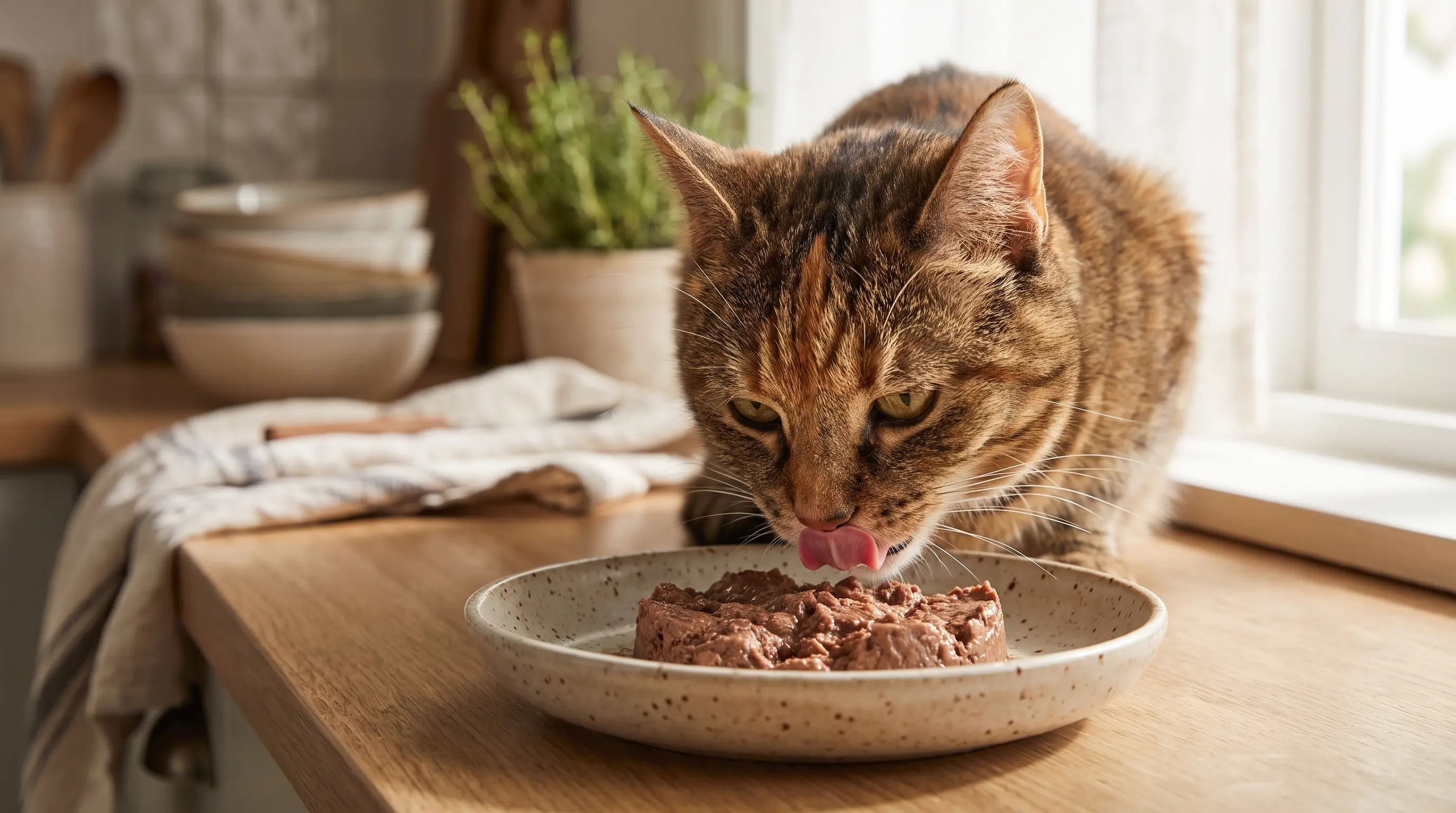
The single most effective treatment is a proper kidney diet, which is lower in phosphate and protein and proven to extend both quality and length of life. Getting more water into your cat matters almost as much, so wet food beats dry here. If you are weighing up wet versus dry food, kidney disease settles the argument, and our hydration guide has more ways to keep fluids up.
Your vet may add medication to control blood pressure, and phosphate binders when diet alone cannot keep phosphate down. Each is prescribed to fit your cat's stage and bloods. The honest outlook is genuinely encouraging: cats diagnosed early often live comfortable years with the disease, eating well and behaving normally. It asks something of you, regular vet visits, the right food and giving medication, but the payoff is more good time with a cat who feels well.
Common questions
What are the first signs of kidney disease in cats?
Drinking more and peeing more are usually first, with larger clumps in the litter tray. Gradual weight loss and a dull coat often follow. These signs are subtle, so a slow trend is easier to catch than any single day.
How long can a cat live with kidney disease?
It depends heavily on the stage at diagnosis. Cats caught early, at IRIS stage one or two, often live comfortable years with good management. Later-stage diagnoses carry a shorter outlook.
Why is my cat drinking so much water?
Increased thirst in an older cat is a classic early sign of kidney disease, because failing kidneys cannot concentrate urine. Diabetes and an overactive thyroid also cause it. Book a vet check with a blood and urine test.
Can cats recover from kidney disease?
No, chronic kidney disease cannot be cured or reversed, because damaged kidney tissue does not regenerate. It can be managed well, and the right care slows its progress and keeps your cat comfortable for a long time.
What food is best for cats with kidney disease?
A prescription kidney diet, lower in phosphate and protein, is the best-proven treatment and extends both quality and length of life. Wet versions are ideal because they add water. Ask your vet which one to use.
At what age do cats get kidney disease?
It mainly affects older cats and becomes common from around ten onwards, with roughly 30% of cats over 15 affected. Younger cats can develop it too, but it is much less likely.
See also
More in Cats

Hydration for dogs and cats: why it matters, and why cats barely drink
Cats are built to run a little dry, and it quietly damages their kidneys and bladder. How much water dogs and cats really need, and how to get more into a reluctant drinker.
Hyperthyroidism in cats: the hungry cat losing weight
Ravenous appetite with steady weight loss is the classic sign of an overactive thyroid in older cats. How vets confirm it, and why the outlook is good.
Arthritis in cats: the hidden signs and how to help
Most cats over 12 have arthritis, yet few are ever treated because cats hide pain. Learn the real signs, the vet options and the home fixes that work.
Why is my cat pooping outside the litter box? Causes and fixes
Poop on the floor has a different list of suspects than pee on the wall — urgency, pain, an unreachable tray, or (rarely) an actual message. Here's the order to check them in.
A litter box routine that actually works
Daily, weekly and monthly, plus the placement and the n+1 rule. How to keep a box a cat will keep using, and get rid of the smell without scented litter.

Autumn dangers for dogs: acorns, conkers and mushrooms
Autumn puts three scavenging hazards on the ground — acorns, conkers and wild mushrooms — plus rat bait and fermenting fruit. What's toxic, what the warning signs are, and when to call the vet.