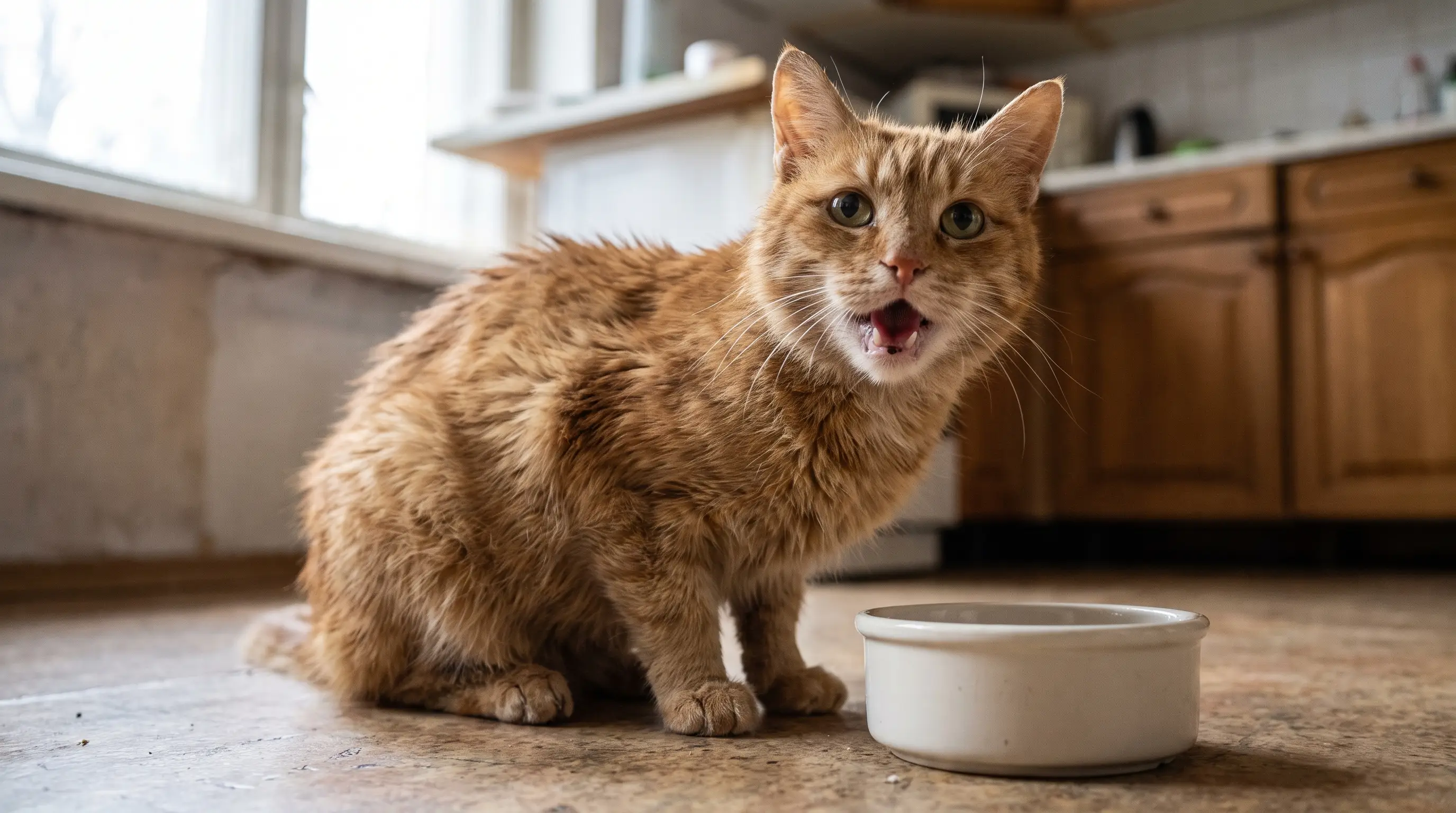
Hyperthyroidism in cats: the hungry cat losing weight
A senior cat that eats ravenously yet keeps losing weight most likely has hyperthyroidism, an overactive thyroid gland, and it is one of the most treatable diseases of feline old age. Around one cat in ten over the age of ten develops it. A benign growth on the gland pumps out too much thyroid hormone, the metabolism races, and the body burns itself thin however much food goes in. One blood test finds it, four treatments exist, and one of them comes close to a cure.
What hyperthyroidism actually is
Hyperthyroidism is a benign growth on the thyroid gland that produces far more thyroid hormone than the body needs. The thyroid sits in the neck and sets the speed of the whole metabolism, so when it overproduces, every system runs hot: the heart beats faster, the gut moves faster and the body burns calories faster than food can replace them. The growth is almost never cancerous. It simply refuses to switch off.
It is also common. Roughly one cat in ten over the age of ten develops the condition, and the average age at diagnosis is around 12 to 13. That makes it one of the most frequent diagnoses in ageing cats, and one every owner of a cat in its second decade should know by name. The cause is not fully understood, so there is nothing you could have done to prevent it. It is a disease that arrives with feline old age, which is why vets look for it as a matter of routine.
Hungry all the time, lighter every month
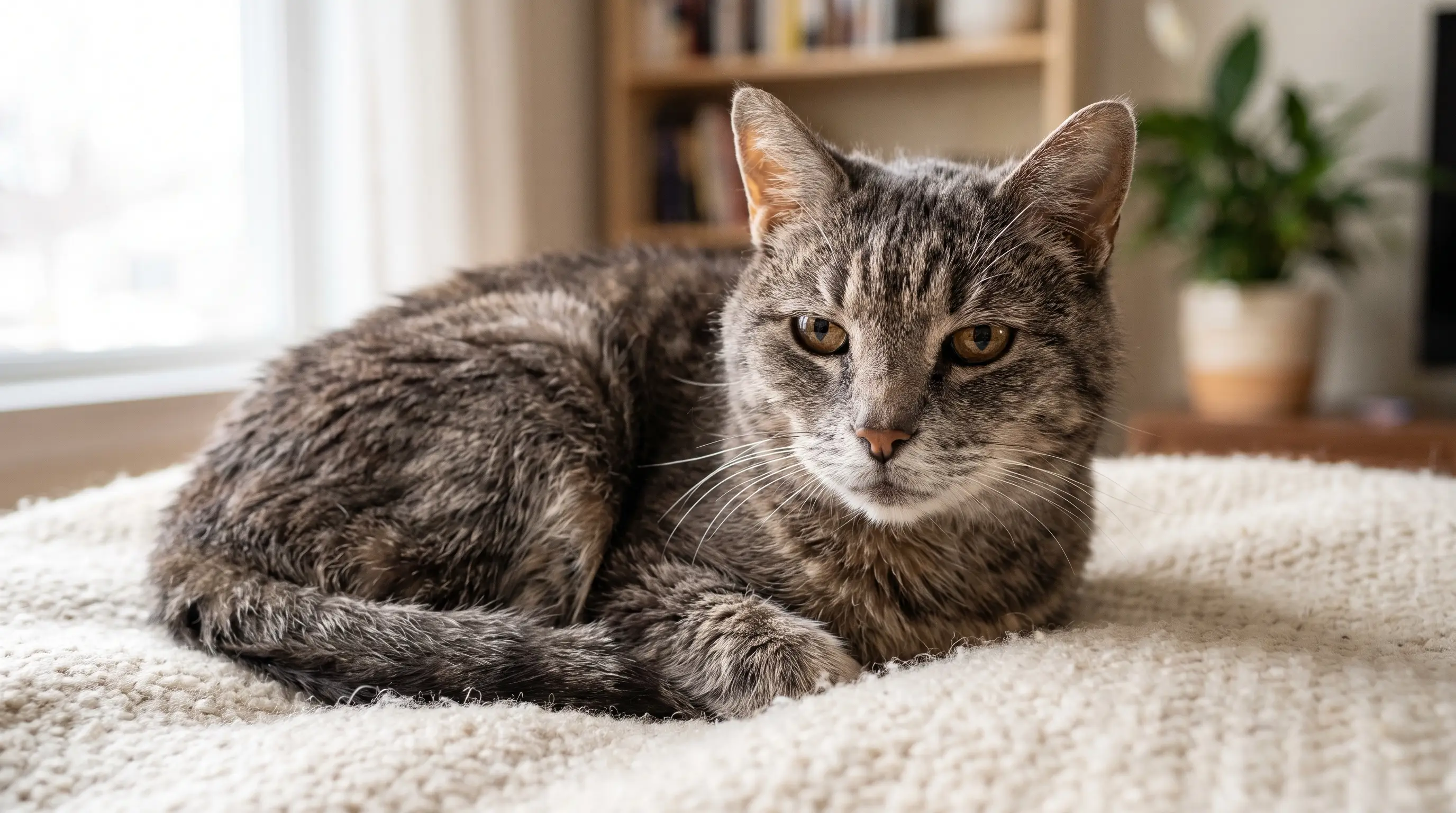
The signature is a ravenous cat that is losing weight anyway. The bowl empties, the begging gets louder, food gets stolen that never used to tempt them, and yet the spine and hips grow bonier by the month. Around that central pair you may also see restlessness, yowling at night, a racing heart, vomiting, and a coat that turns greasy or unkempt because the cat no longer grooms properly.
Owners miss it because a good appetite looks like good health. "They're eating well, they must be fine" is the most natural conclusion in the world, and with this disease it is exactly wrong. The weight loss is gradual, so eyes that see the same cat every day do not register it, and the extra energy can even read as a happy second kittenhood. If your older cat seems hungrier and lighter at the same time, book a vet visit rather than celebrating the new appetite.
Diagnosis is one blood test at the senior checkup
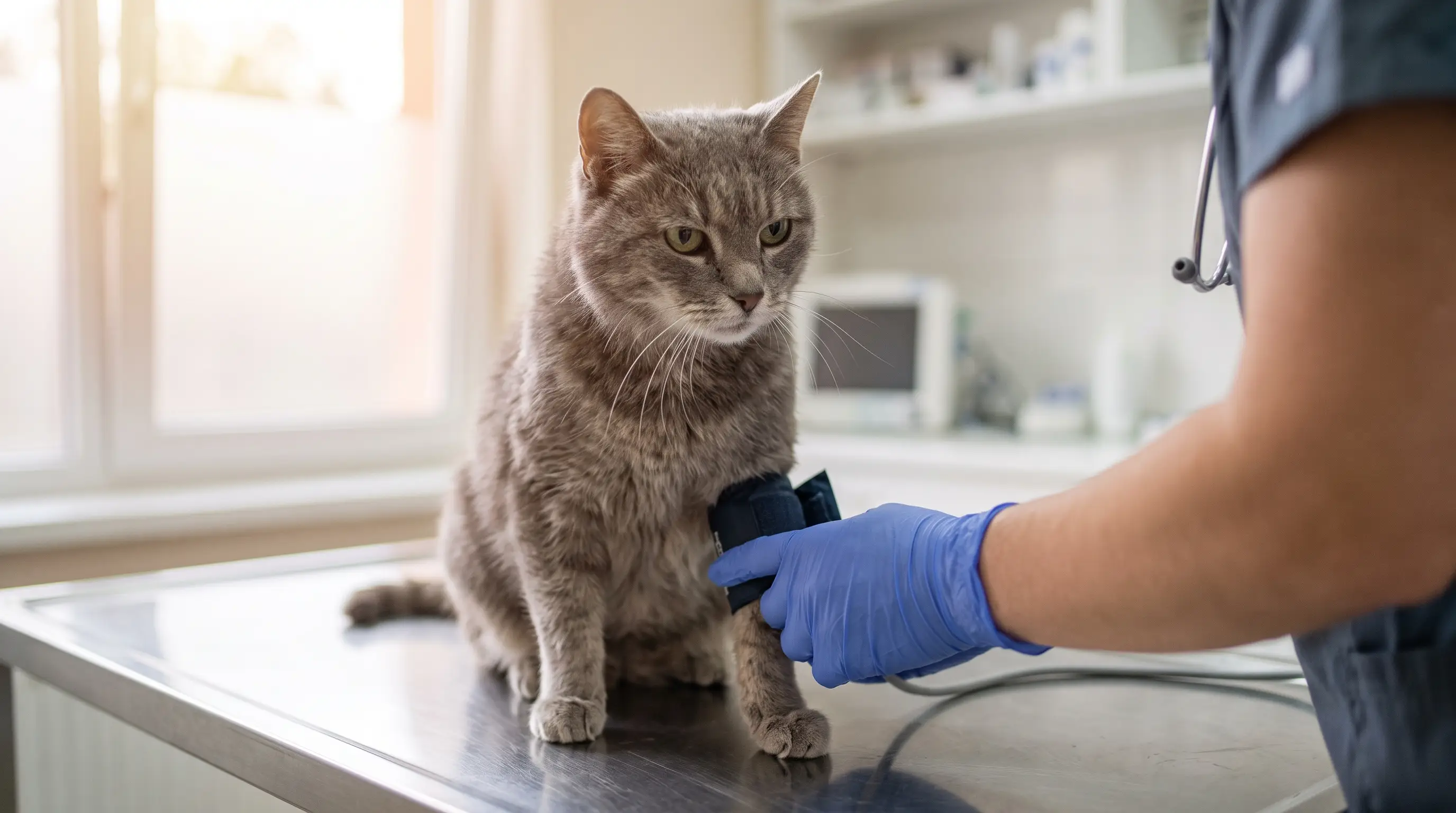
One simple blood test settles it in most cases. Your vet measures total T4, the main thyroid hormone, and in the large majority of hyperthyroid cats the level is clearly raised. The sample can be drawn during an ordinary appointment with no anaesthetic and no special preparation, and results typically come back within days. A small number of early cases sit in a grey zone and need a repeat test or a more sensitive one, but for most cats a single vial of blood gives the answer.
This is why senior checkups earn their keep. Vets generally recommend twice-yearly visits with blood work for cats over ten, precisely so that diseases like this are caught before they do lasting damage. A T4 measurement is a standard part of that senior panel, alongside kidney values and a blood pressure check. Our guide to caring for a senior cat covers what those visits should include and how to make them less stressful.
Four treatments and one kidney catch
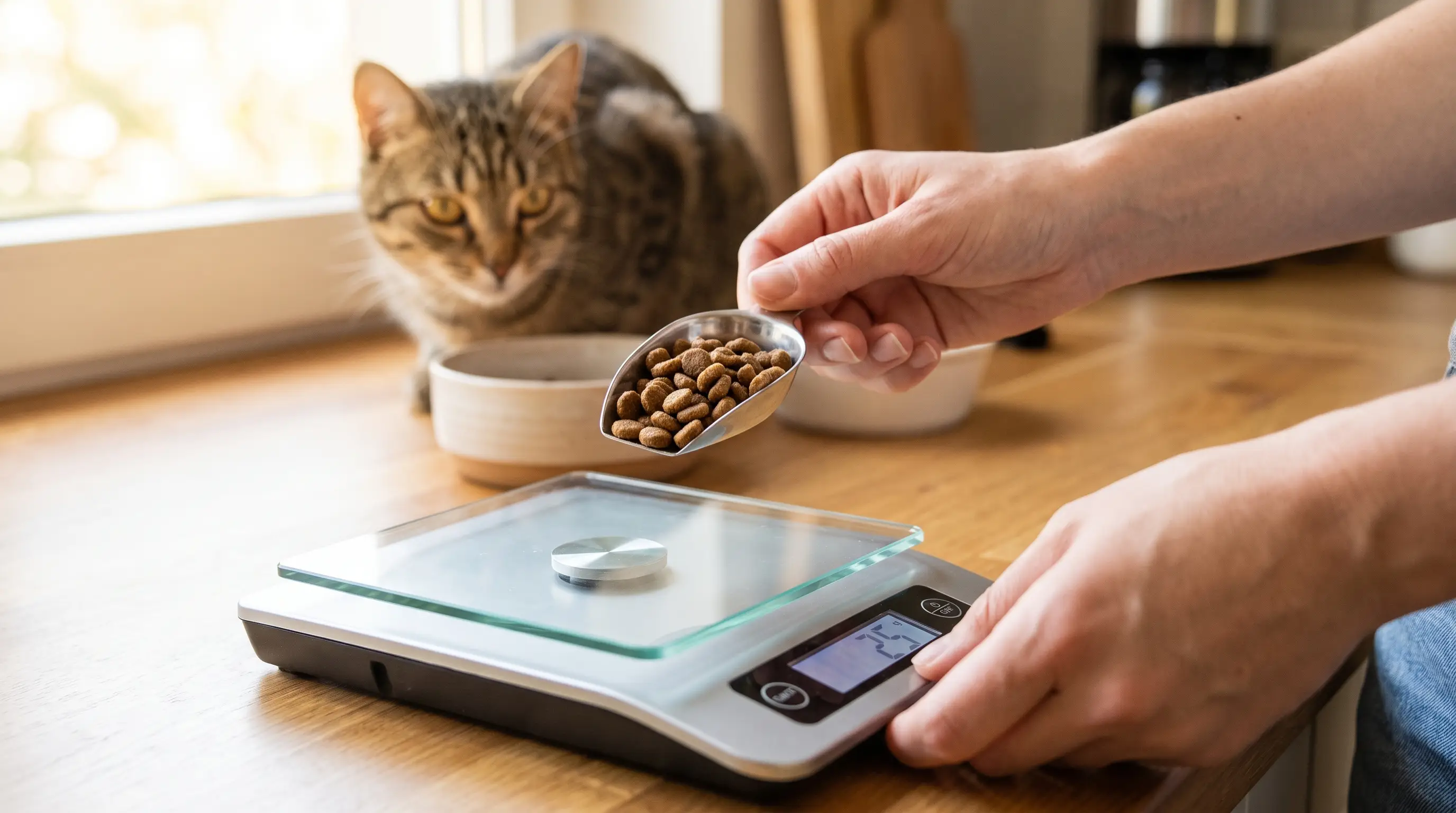
Four treatments exist, and all of them work. Daily medication, usually methimazole as a tablet or a gel rubbed inside the ear, blocks hormone production for as long as you keep giving it. An iodine-restricted prescription diet starves the gland of the raw material it needs to make hormone, though it only works if the cat eats nothing else, a stricter regime than ordinary feeding for an older cat. Surgery removes the affected gland outright. Radioiodine, a single injection that destroys the overactive tissue while sparing the rest, is the closest thing to a cure, and most cats never need treatment again after it.
There is one catch to plan for. An overactive thyroid drives extra blood through the kidneys, which can prop up their test results and hide chronic kidney disease. Once treatment slows the thyroid, the hidden problem can surface. Vets still treat the thyroid; they simply recheck kidney values a few weeks after starting, then tune the plan so both conditions are managed together.
What happens without treatment, and the outlook with it
Untreated, hyperthyroidism damages the heart and drives blood pressure up. The constant hormonal push makes the heart muscle thicken, and a thickened heart can eventually fail. High blood pressure can damage the eyes badly enough to cause sudden blindness and puts further strain on the kidneys. Add the relentless loss of weight and muscle, and an untreated hyperthyroid cat is slowly starving at a full bowl.
Treated, the outlook is genuinely good. Most cats regain weight within a few months, the night yowling settles, the coat recovers, and heart changes caught early often improve or reverse. Cats cured by radioiodine, or kept stable on medication or diet, commonly live on for years and die of something unrelated. The disease looks alarming on paper, but of all the conditions an old cat can develop, this is one of the kindest to catch, because finding it is easy and fixing it is routine.
Common questions
Why is my old cat always hungry but losing weight?
Hyperthyroidism is the most likely cause in a cat over ten: an overactive thyroid speeds up the metabolism so the body burns calories faster than the cat can eat them. Diabetes and intestinal disease can look similar, so ask your vet for a blood test rather than guessing.
What are the symptoms of hyperthyroidism in cats?
A ravenous appetite paired with weight loss is the classic sign. Restlessness, yowling at night, a racing heart, vomiting and a greasy or unkempt coat are also common.
How is hyperthyroidism in cats treated?
There are four options: daily anti-thyroid medication, an iodine-restricted prescription diet, surgery to remove the gland, or radioiodine, a single injection that is the closest thing to a cure. Your vet will help you choose based on your cat's age, kidney health and temperament.
What happens if hyperthyroidism in cats is left untreated?
The heart muscle thickens and can fail, blood pressure rises and can cause sudden blindness, and the cat keeps losing weight and muscle despite eating constantly. Untreated, the disease is eventually fatal.
How long can a cat live with hyperthyroidism?
With treatment, many cats live for years and often die of something unrelated, and radioiodine can cure the disease outright. Without treatment, life expectancy shortens considerably as heart damage and weight loss progress.
Is hyperthyroidism in cats painful?
The condition itself is not usually painful, but it is unpleasant: affected cats feel restless, anxious and endlessly hungry. Treatment resolves those symptoms, and most cats visibly relax once hormone levels return to normal.
More in Cats

Organic, natural, holistic: which pet food claims are real
Only one of these words is backed by law. Here's what organic, natural, holistic, premium and gourmet actually guarantee on a bag of dog or cat food.
Single-protein and limited-ingredient dog food: when it helps
Limited-ingredient and single-protein diets have one real job — investigating food allergies with your vet. Here's when they help and when it's just marketing.
'Complete and balanced': the only pet food claim that matters
One small line on the bag decides whether a food can actually feed your pet. Here's how to find the AAFCO/FEDIAF adequacy statement and read it properly.