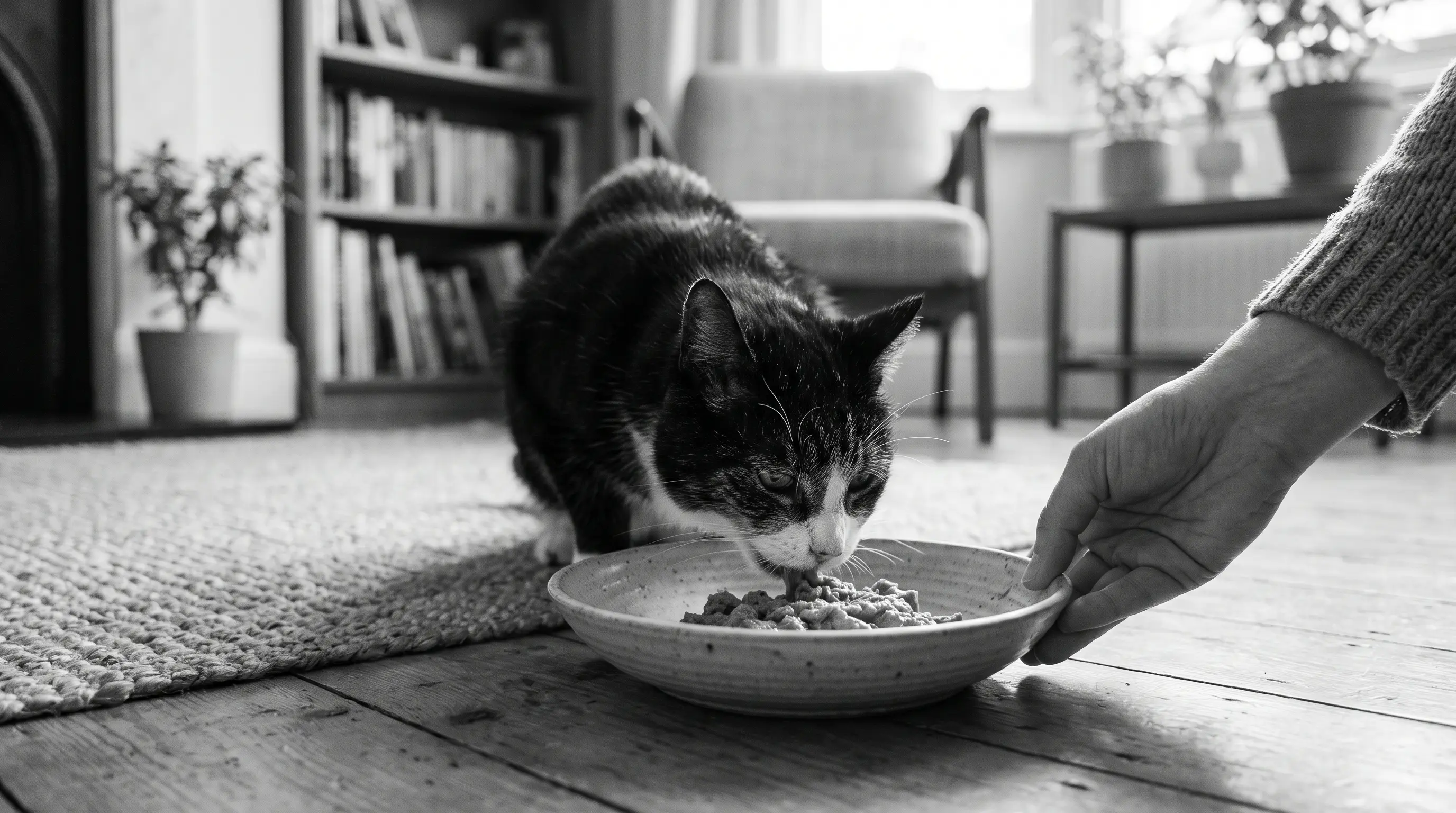
Feeding a senior cat: what actually changes after 11
Feed your senior cat more good-quality protein, not less. That is the single change that matters most after 11, and it runs against instinct: ageing cats digest protein and fat less efficiently, so the 'light senior diet' that suits many dogs quietly starves a cat's muscles. Beyond that, the risks reverse. Weight loss replaces weight gain as the danger, a skipped day of food becomes a vet call, and a warm, soft, wet meal often fixes what a new brand cannot.
Feed more protein after 11, not less
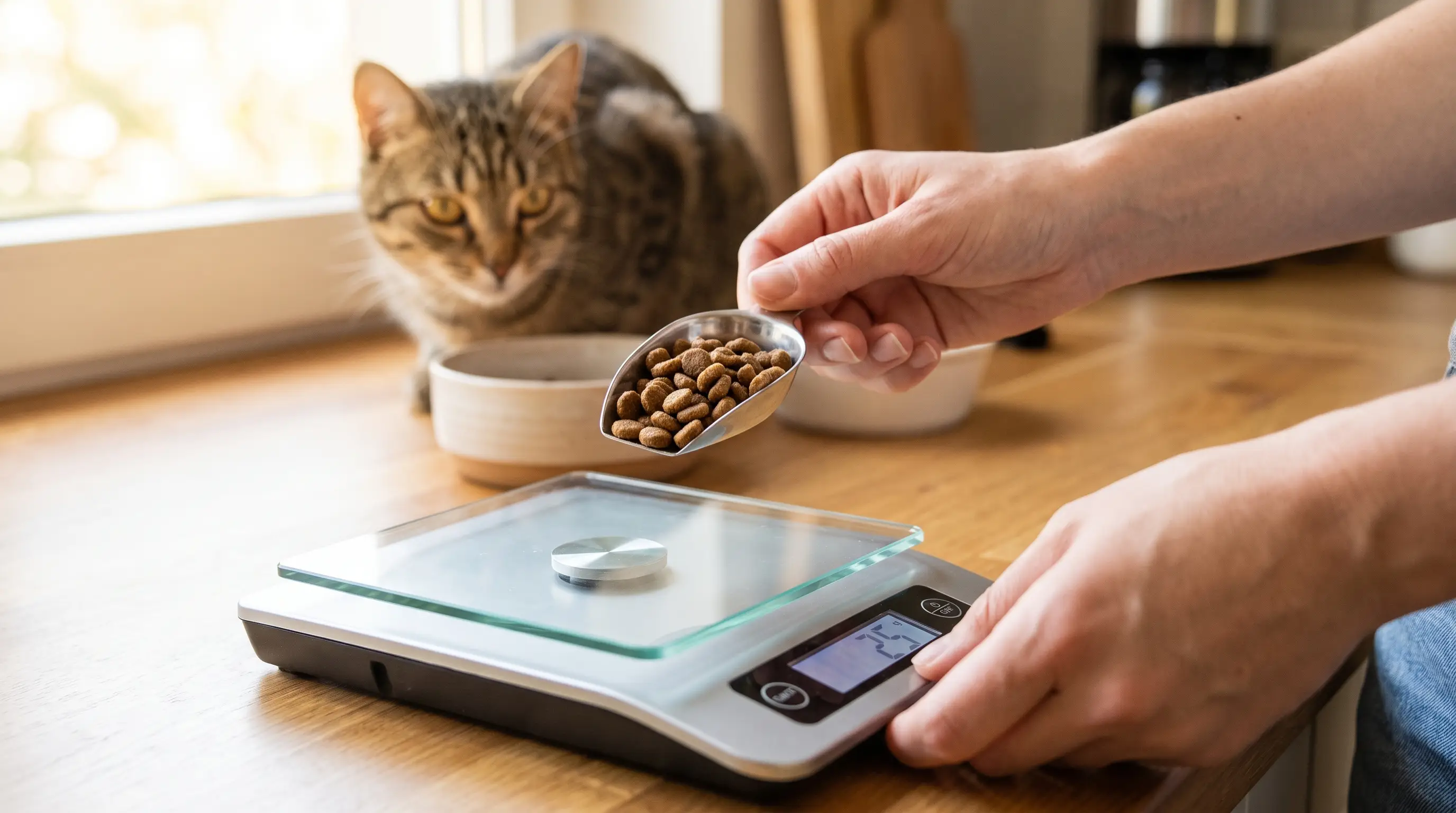
An older cat needs more good-quality animal protein than it did in middle age, because ageing cats digest protein and fat less efficiently and lose muscle when intake falls short. The 'senior means a lighter diet' habit comes from dog feeding, where a slowing metabolism and joint strain make calorie cuts sensible. Cats do not follow that pattern. Restrict protein in a healthy older cat and you accelerate the very muscle loss you are trying to avoid.
Look for a named meat first on the label and feed to maintain muscle, not just weight. Run your hand along your cat's spine and hips monthly; bone that feels sharper than before means muscle is going. The exception is diagnosed kidney disease, where your vet may prescribe controlled phosphorus and adjusted protein. That is a prescription decision, not a default. Our senior cat care guide covers the wider health checks that sit alongside diet.
Weight worries flip direction in late life
Watch an old cat for weight loss, not weight gain. Through middle age the risk runs towards obesity; from around 11 the pattern reverses, and slow wasting becomes the more dangerous direction. Because it happens under the same fur, over months, most owners miss it until a large share of body weight has already gone. A kitchen or baby scale solves this: weigh your cat monthly at home and write the number down.
A steady downward trend across two or three months deserves a vet visit even if your cat seems well. Unexplained loss with a good or ravenous appetite points to conditions such as hyperthyroidism, which is common in older cats and treatable when caught early. Loss with a poor appetite points to dental disease, kidney trouble or worse. Either way, the scale gives your vet a head start that a guess cannot.
A cat that stops eating is an emergency, not just old age
Call your vet if your cat has eaten nothing for 24 hours. Appetite loss is a warning sign in an old cat, never routine ageing, and in cats it carries a danger dogs do not share. When a cat stops eating, its body mobilises fat reserves faster than the liver can process them. The result is hepatic lipidosis, fatty liver, a condition that can turn fatal within days and is hardest to reverse once it takes hold.
Overweight cats run the highest risk because they have more fat to mobilise, but any cat can develop it. So resist the instinct to wait and see whether appetite returns on its own. Note when your cat last ate, offer a strong-smelling favourite once, and if it is refused, phone the clinic. Partial eating matters too: a cat taking a few mouthfuls and walking away for several days running needs the same call.
Dental pain quietly switches off eating
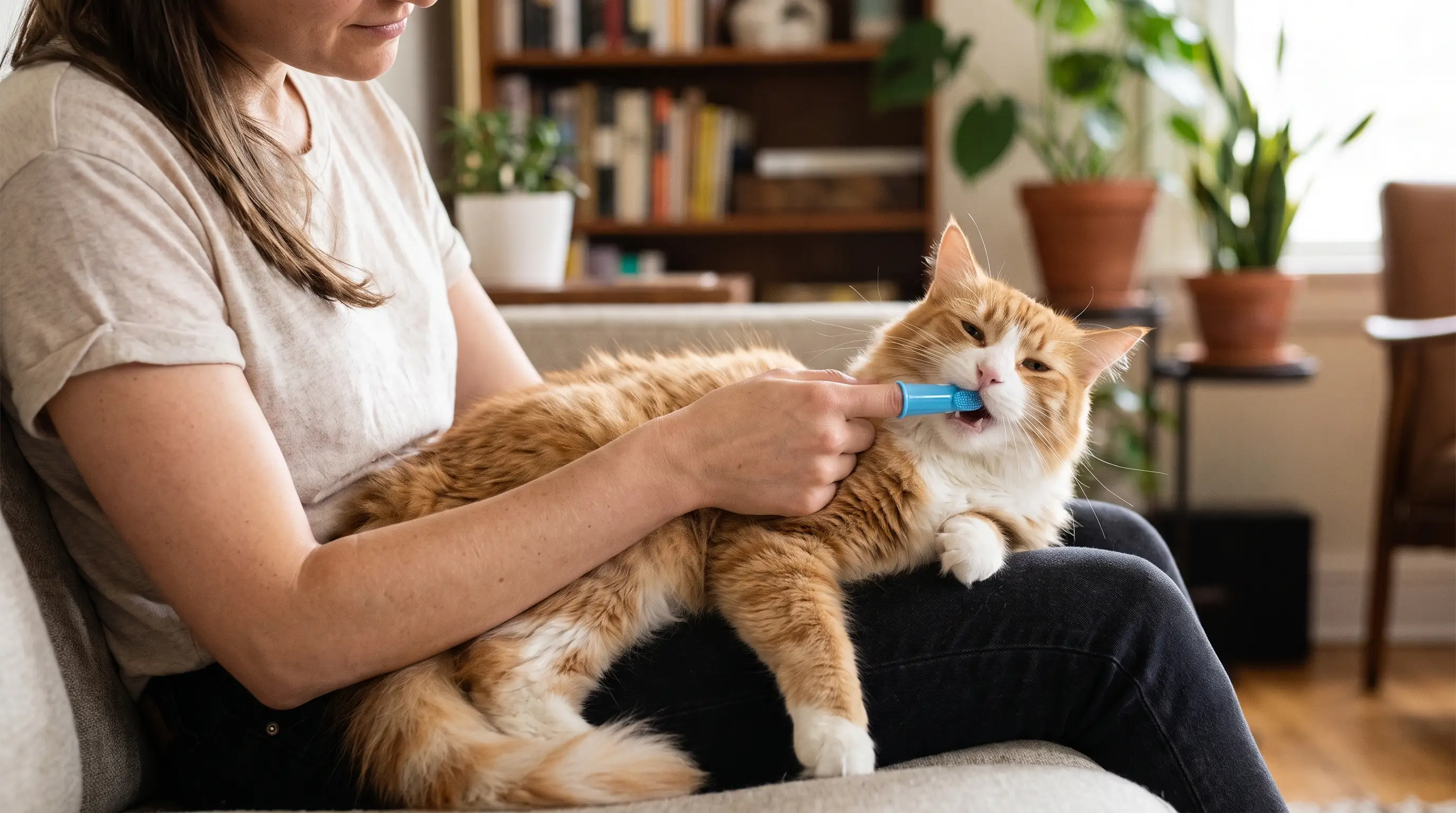
Check the mouth when an older cat turns fussy, because dental pain is one of the commonest hidden reasons a senior cat eats less. Most cats over ten have some degree of dental disease: inflamed gums, loose teeth or resorptive lesions that expose the nerve. Cats hide pain well, so instead of crying they approach the bowl, sniff, take a mouthful, drop it, or chew on one side only.
Signs worth acting on include bad breath, drooling, pawing at the mouth, a sudden preference for soft food from a cat that used to crunch biscuits, and going to the bowl hungry then walking away. None of this is behaviour to wait out. Book a dental check; treatment usually means cleaning or extractions under anaesthetic, and appetite often returns within days once the pain has gone. Age alone is no reason to refuse anaesthesia; your vet will assess the risk with blood work first.
Make eating easier for a picky older cat
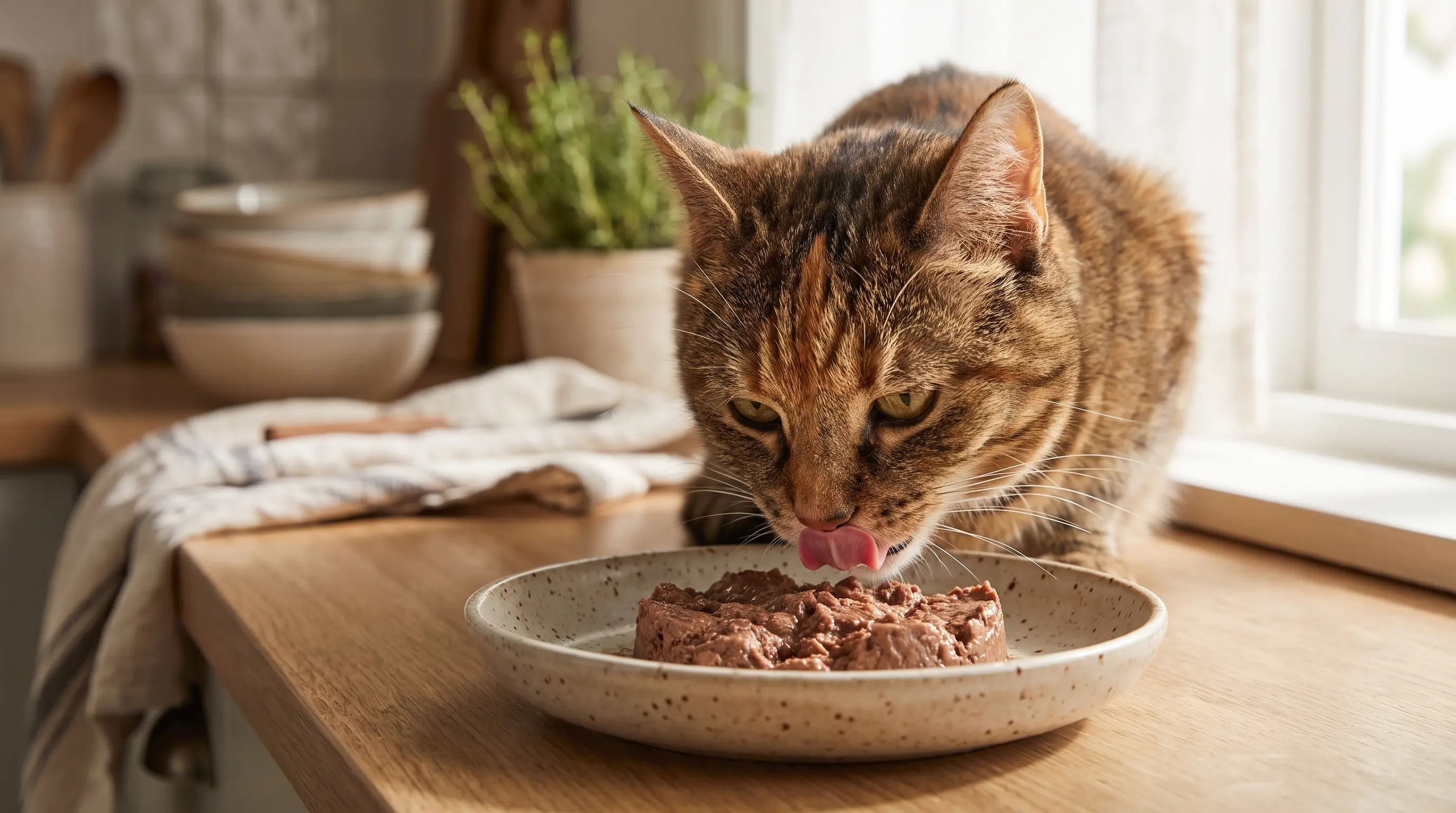
Warm the food first. A cat's sense of smell fades with age, and smell drives feline appetite, so ten seconds in the microwave, to just below body temperature, releases aroma and often restarts a stalled eater. Serve it in a shallow, wide dish so whiskers do not brush the sides, raise the bowl slightly for stiff arthritic necks, and offer smaller meals four to six times a day rather than two large ones. Soft textures, pâté or shredded, suit worn mouths far better than dry biscuit.
Wet food earns its place twice over in old age. It delivers water to cats that rarely drink enough, which supports kidneys past their best, and its texture spares sore mouths. Our wet vs dry comparison weighs the trade-offs in full. To check portions against your cat's actual weight rather than the bag's guesswork, use our food calculator and adjust monthly as the scale dictates.
Common questions
What should I feed my senior cat?
A highly digestible complete food with a named animal protein first on the label, ideally wet or with wet added. Healthy senior cats need more protein than middle-aged cats, not less; only restrict it if your vet prescribes a renal diet.
Why is my old cat not eating?
The commonest causes are dental pain, a fading sense of smell and underlying illness such as kidney disease or hyperthyroidism. Appetite loss is never normal ageing, so if warming the food does not help within a day, see your vet.
How long can an old cat go without eating?
Treat 24 hours without food as the limit before phoning your vet. A cat that stops eating can develop hepatic lipidosis (fatty liver), which can become life-threatening within days, and overweight cats are at highest risk.
Is wet or dry food better for older cats?
Wet food is usually the better lead choice for seniors: it adds water for ageing kidneys and is gentler on sore mouths. Dry food can stay in the mix if your cat still crunches it comfortably and drinks well.
Do senior cats need special food?
Not automatically. A good senior formula helps because it concentrates digestible protein and calories, but a healthy older cat can do well on any high-quality complete food; prescription diets are for diagnosed conditions such as kidney disease.
How do I get my elderly cat to eat?
Warm the food to just below body temperature, offer soft textures in a shallow wide dish, and split the daily amount into several small meals. If that fails for 24 hours, call your vet rather than rotating brands.
More in Cats
Organic, natural, holistic: which pet food claims are real
Only one of these words is backed by law. Here's what organic, natural, holistic, premium and gourmet actually guarantee on a bag of dog or cat food.
Single-protein and limited-ingredient dog food: when it helps
Limited-ingredient and single-protein diets have one real job — investigating food allergies with your vet. Here's when they help and when it's just marketing.
'Complete and balanced': the only pet food claim that matters
One small line on the bag decides whether a food can actually feed your pet. Here's how to find the AAFCO/FEDIAF adequacy statement and read it properly.