
Dog age calculator
See your dog's age in human years, adjusted for small, medium and large breeds — free, instant, no sign-up.
Estimate only — every dog is different. For real guidance on your dog's age and health, ask your vet.
From dog years to human years
01 · Pick your dog's size
Choose a breed we know, or set small, medium or large yourself — size is what changes the math after the first two years.
02 · Set the age
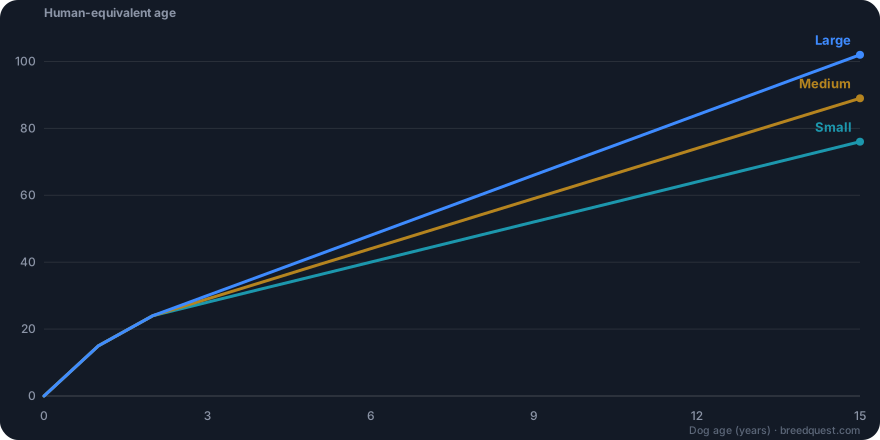
Slide to your dog's age in years — the first two years are weighted heavily, just like real development.
03 · Read the human-equivalent age
See the number, plus where your dog sits on the small/medium/large curves — and how that compares to other sizes.
Dog age questions
Why does a dog's size change its age in human years?
Bigger dogs simply don't last as long — a Great Dane's whole life often fits inside a Chihuahua's middle age. Every puppy races through its first two years at the same pace, but after that, larger breeds start aging faster per year while small breeds coast for longer. A 10-year-old Chihuahua and a 10-year-old Great Dane are not the same age at all.
When is my dog considered a senior?
It depends on size. Small dogs are often still spry at 10; medium dogs are usually senior from around 8; large and giant breeds can be senior by 6. Slowing down, stiff mornings and a greying muzzle are the real tells, not just the number.
Why do the first two years count for so much?
A dog goes from newborn to physically mature in about two years flat — walking, teething, growing a full adult body and often full fertility, all compressed into a fraction of the time it takes a person. That's worth about 24 human years by a dog's second birthday, whatever the breed. After that first sprint, aging settles into a steadier yearly pace.
Is this calculator exact?
No — treat it as a well-informed estimate, not a medical fact. It's built on published veterinary guidelines, but genetics, health history and individual dogs vary. Your vet, who actually knows your dog, is the real authority on its age and health.