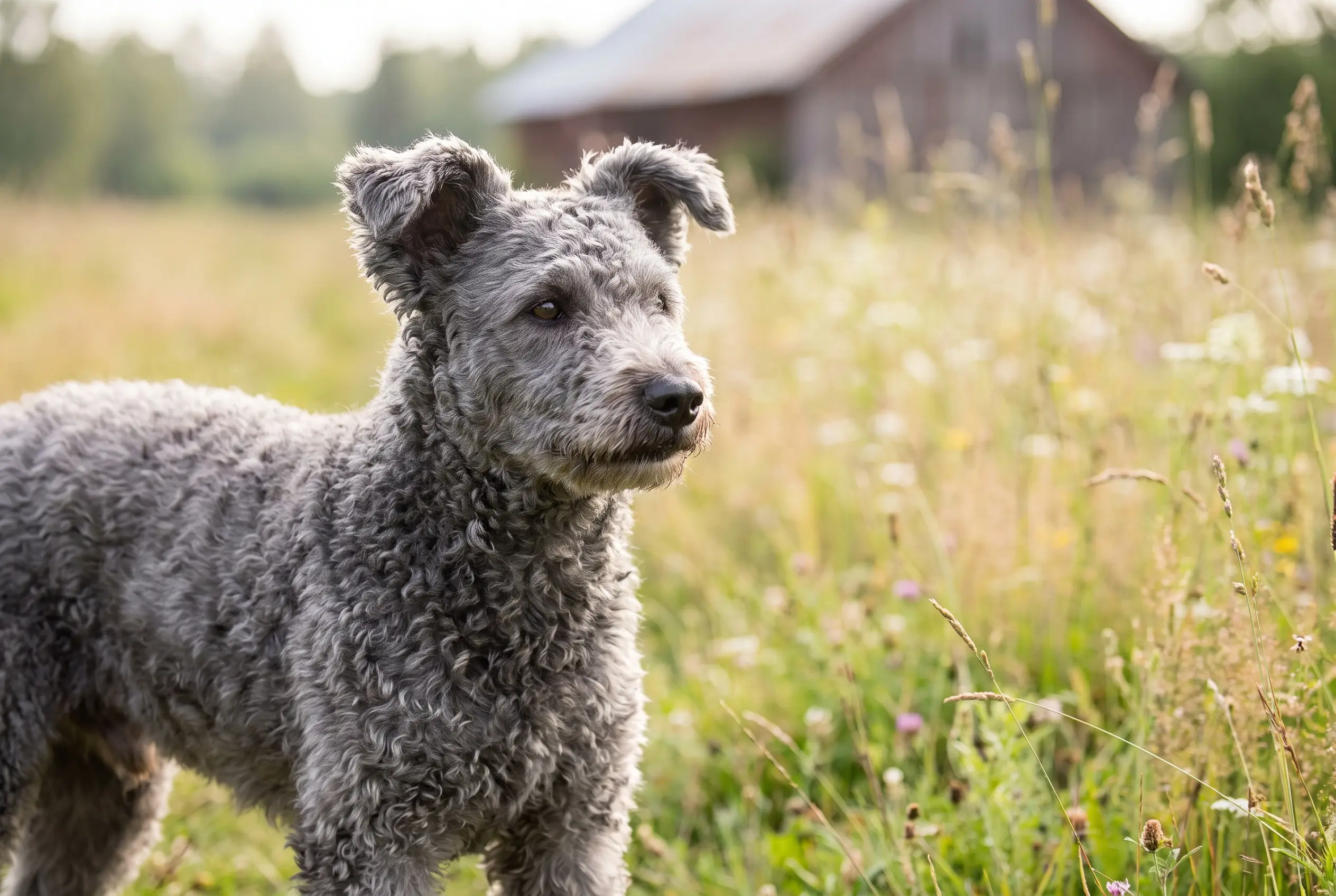
Pumi
The whimsical Hungarian — a curly acrobat with tipped ears and a terrier's fizz.
Vital stats
| Size | Small–medium · 38–47 cm |
| Weight | 8–15 kg |
| Life expectancy | 12–13 years |
| Energy | Very high — 60–90 min/day |
| Shedding | Minimal |
| Coat | Curly, corkscrew coat · grey, black, white, fawn |
| Group | Herding · FCI №56 / AKC |
| Origin | Hungary |
| FCI group | 1 — Sheepdogs and Cattledogs · FCI 56 |
Breed traits
Friendliness
Care
Mind
The Pumi by the numbers
The Pumi facts owners search for most — price, lifespan, weight, shedding and colours, in one place.
Less common, so expect a waitlist and some travel to a reputable breeder — which pushes the price up. Ongoing costs stay modest — it eats little and routine vet care sits at the lower end.
We don't quote a single figure: the real price swings with breeder, region, bloodline and health testing — and a rescue costs a fraction of a breeder's litter. Adopting is almost always the cheapest route.
Temperament
Shaped by centuries of all-purpose Hungarian farm work — driving cattle, sheep and pigs, and dispatching vermin between jobs — the Pumi blends herding brains with terrier spark. It is bold, endlessly busy and quick to learn anything, with an alert bark it considers part of the service. Its people get devotion; strangers get assessment.
Habits & quirks
The head tilt inspection
Those tipped ears swivel and the head cocks — every new sound gets formal review.
Self-appointed town crier
Arrivals, departures and squirrels are all announced with conviction.
The circus turn
Spins, bounces and balance tricks come almost pre-installed — it learns routines for fun.
Job hunting
Left idle, a Pumi will invent employment: herding the cat, patrolling windows, reorganising shoes.
Care
| Exercise | At least an hour of vigorous activity daily, plus mental work — agility and herding trials are ideal outlets. |
| Training | Fast, eager and inventive; keep sessions fresh and channel the barking early. |
| Grooming | Comb through every few weeks and trim to shape — the coat is wet-trimmed, never blow-dried straight. |
| Containment | An agile jumper with prey-chasing instincts; secure fencing is non-negotiable. |
Life expectancy
This breed has a typical life expectancy of 12–13 years.
Similar breeds
Breeds with a similar build and background — worth a look if this one isn't quite the fit.
Breeds that look like this
Common questions
What's the difference between a Pumi and a Puli?
The Puli wears cords and works mostly with sheep; the Pumi has a curly, trimmed coat, tipped ears and terrier-type character from centuries of mixed farm work. They're distinct Hungarian breeds, though related.
Do Pumik bark a lot?
Yes — alert barking is bred in, and they announce most events. Training and ample exercise reduce it, but a silent Pumi is not a realistic goal.
Are Pumik good for first-time owners?
Only very active, committed ones. Their energy and cleverness overwhelm casual households, but reward owners who train and exercise them daily.
Does the Pumi shed a lot?
Not much. The Pumi is a low-shedding breed, so loose hair around the home stays minimal. It still needs regular grooming, but you won't be fighting drifts of fur.
Is the Pumi hypoallergenic?
No dog is truly hypoallergenic, but the Pumi comes closer than most: its low-shedding coat releases less of the dander that triggers allergies. Many allergy sufferers manage well with this breed, but spend time around one before committing.
Is the Pumi good with children?
They can be. The Pumi is reasonably sociable and can be good with children in the right home, especially when socialised early. Supervise around young kids and teach dog and child to respect each other.
Is the Pumi easy to train?
Yes. The Pumi is one of the more trainable breeds — quick to learn and keen to work with you, which makes reward-based training straightforward. Start early, keep it positive, and it picks things up fast.