Burmese vs British Shorthair
A heat-seeking extrovert against the most self-contained cat in the book. Few pairs look this close on paper and live this differently.
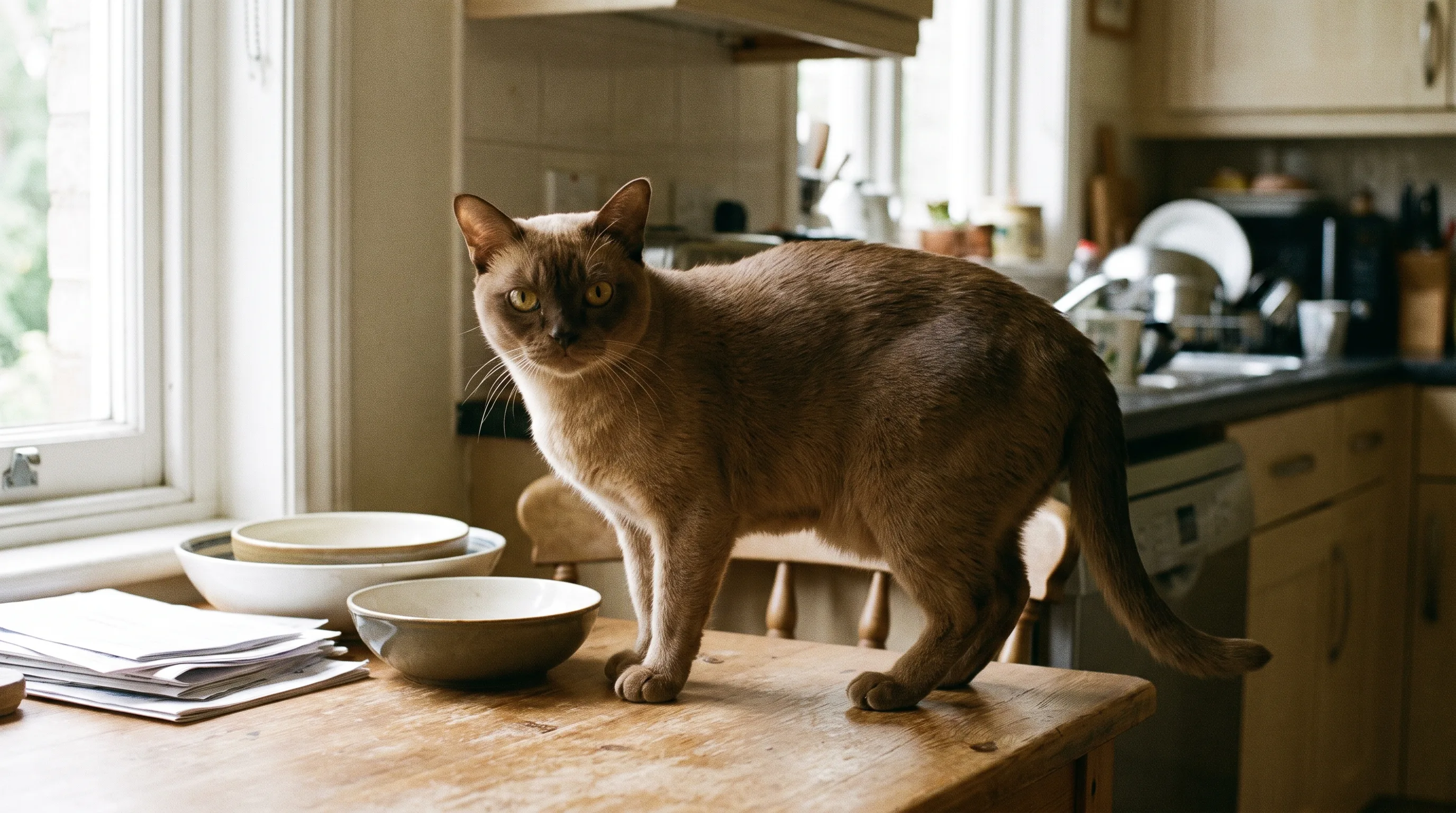 Burmese
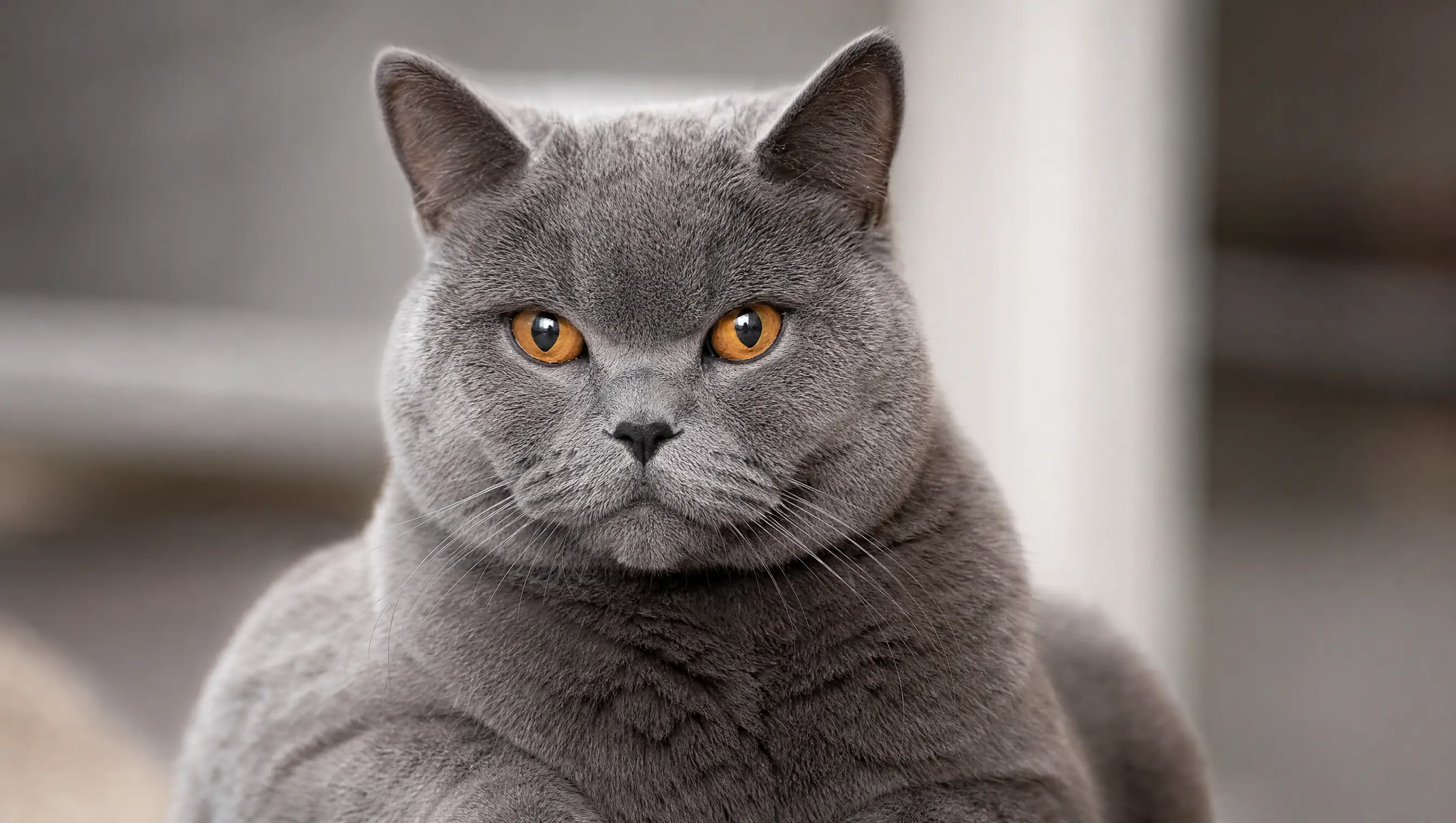 British Shorthair
Pick the Burmese for a cat that's involved in everything: it rides shoulders, greets guests, plays like a kitten for a decade and hates an empty flat. Pick the British Shorthair for a calm, independent companion that handles a working household without complaint and prefers the next cushion to your lap. Grooming is trivial for both; the choice is entirely about how much cat you want in your day.
Side by side
| Burmese | British Shorthair | |
|---|---|---|
| Size | Small to medium · compact, muscular | Medium to large · stocky, cobby build |
| Weight | 3.5–5.5 kg · males heavier | 4–8 kg · toms often heavier |
| Life expectancy | 14–18 years | 12–17 years |
| Energy | High — kitten-like for years | Low — placid and unhurried |
| Shedding | Very low, coat is short and close | Moderate, heavier in spring and autumn |
| Coat | Very short, satin, glossy; solid colours | Short, dense, plush, no undercoat mat |
| Good with children | 5/5 | 4/5 |
| Trainability | 5/5 | 2/5 |
| Openness to strangers | 5/5 | 2/5 |
Looks
Both are compact and surprisingly heavy, but the coats differ. The Burmese wears a very short, glossy satin coat over a body breeders describe as a brick wrapped in silk, usually in warm solid colours with gold eyes. The British Shorthair is the plush one: a dense, crisp coat you can sink a hand into, round cheeks, round eyes, round everything.
Temperament
This is the whole decision. The Burmese is one of the most dog-like cats there is: it follows, fetches, talks in a soft rasp and inserts itself into every activity, staying kitten-silly well into middle age. The British Shorthair is friendly on its own terms: pleased to see you, happy in the same room, firmly opposed to being carried, and entirely capable of a quiet afternoon alone.
Alone time
The British Shorthair is one of the better breeds for full-time workers, content to hold the sofa until you're back. The Burmese genuinely suffers alone: it needs company most of the day, and homes that are empty from nine to six should either look elsewhere or take two, because a Burmese pair keeps itself happy.
Health and lifespan
The Burmese is long-lived, often 14 to 18 years, with two named risks: diabetes shows up more in this breed than most, and some lines carry hypokalaemia, a muscle-weakness condition a DNA test rules out. The British Shorthair's main enemy is the scale: placid plus food-loving means weight creeps on, so measure meals; HCM screening in the line is worth asking about.
Common questions
Which suits a full-time worker?
The British Shorthair, comfortably. A single Burmese home alone all day is an unhappy one; if your heart is set on a Burmese and you work out, get two.
Are Burmese as loud as Siamese?
They talk nearly as much but at half the volume: a soft, raspy commentary rather than the Siamese yowl. You'll have conversations either way.
Which is better with children?
Both, differently. The Burmese actively plays with children and loves the attention; the British Shorthair tolerates sensible children calmly and simply removes itself when it's had enough.