Siamese vs Oriental Shorthair
The same cat underneath. One wears points and blue eyes, the other three hundred colours, and the famous voice comes as standard with both.
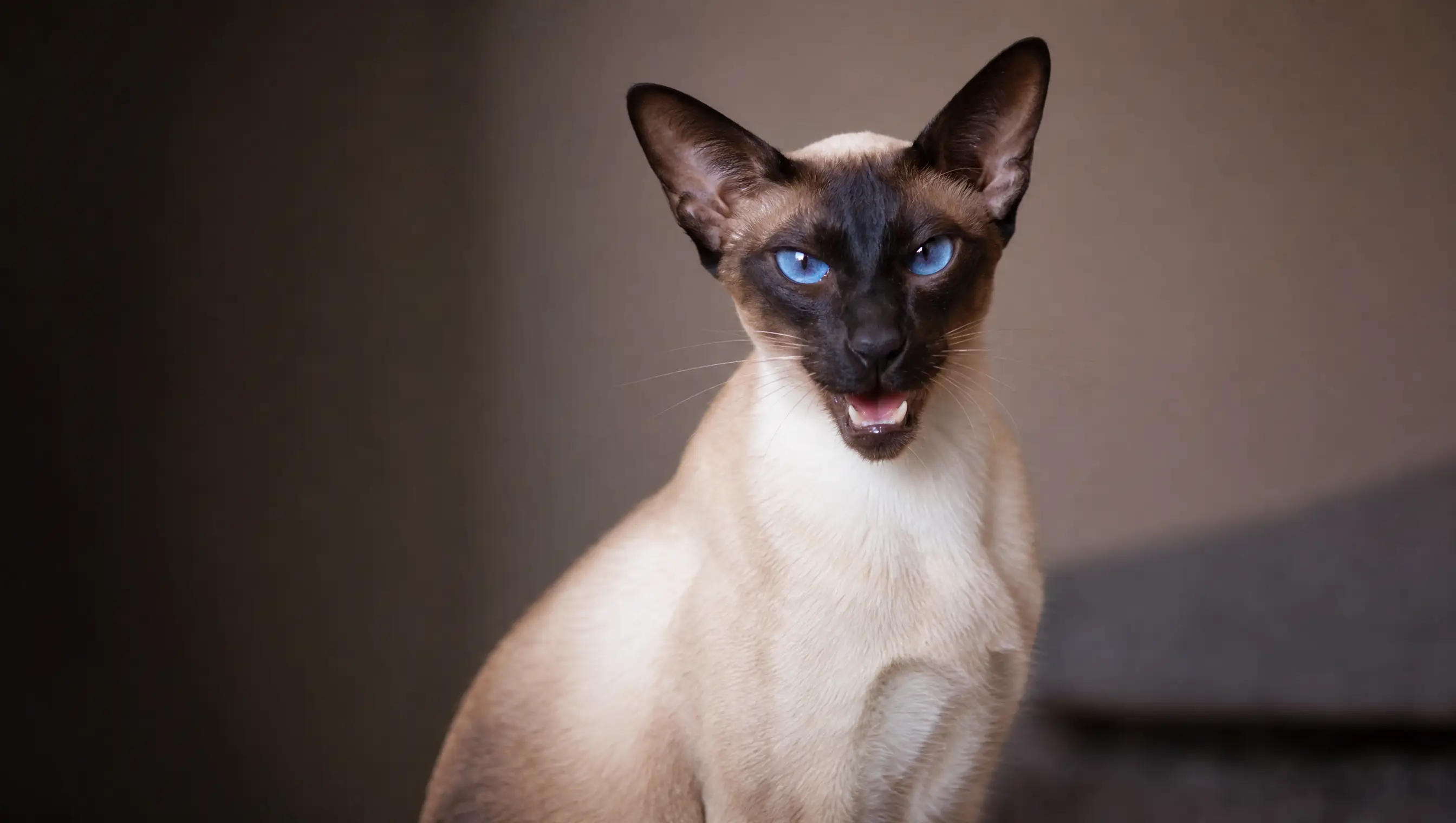 Siamese
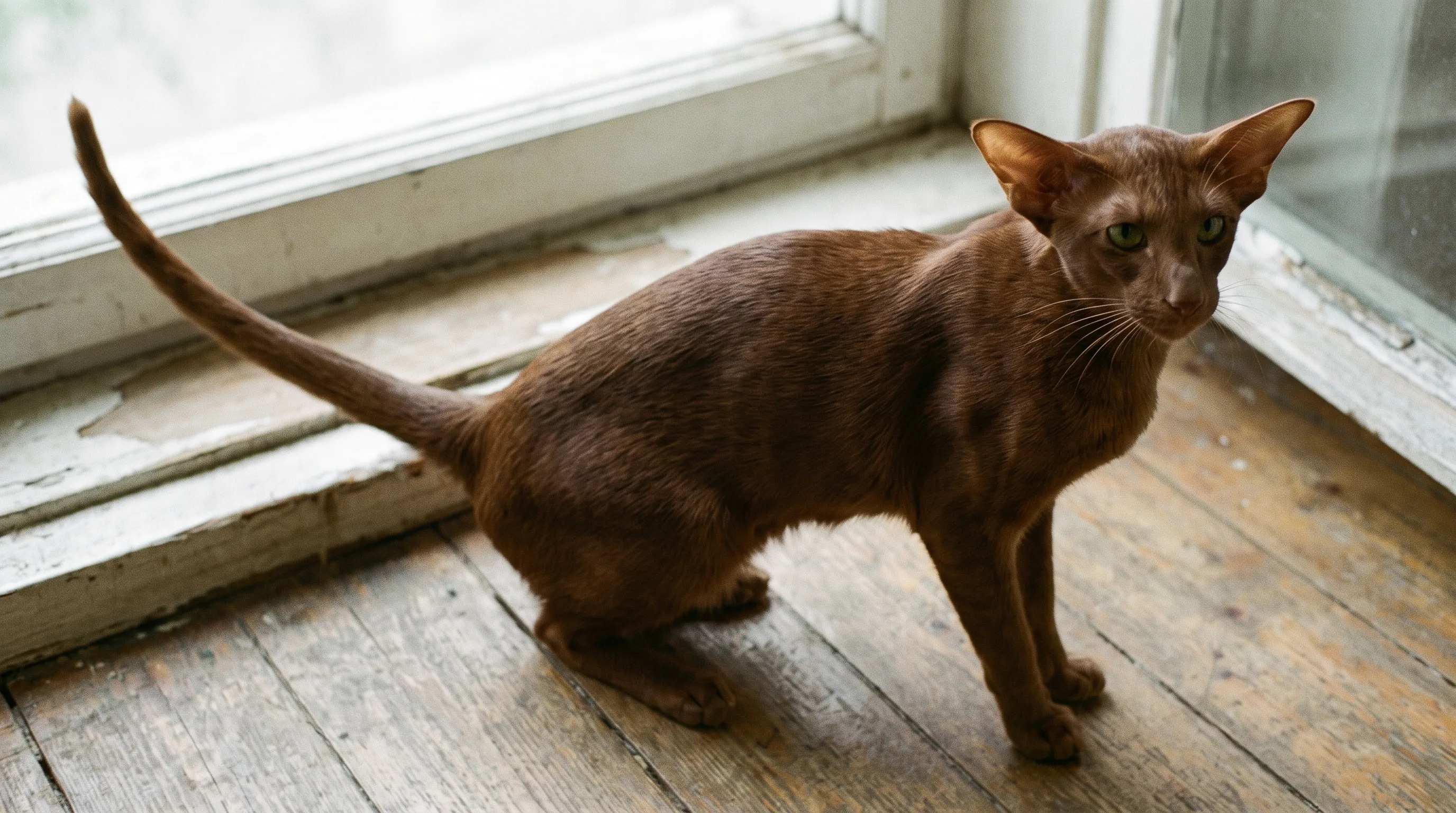 Oriental Shorthair
There's no temperament decision here: both are loud, busy, people-obsessed cats that follow you everywhere, ride shoulders and take closed doors personally. The Siamese comes pointed, always with blue eyes; the Oriental Shorthair comes in essentially every other colour and pattern, usually with green eyes. Pick the look you love and prepare for the company, because neither breed does background.
Side by side
| Siamese | Oriental Shorthair | |
|---|---|---|
| Size | Small to medium · long and lean | Small to medium · long, tubular, fine-boned |
| Weight | 3–5 kg · males at the top end | 2.5–5 kg · males heavier |
| Life expectancy | 12–20 years | 12–15 years |
| Energy | High — busy and demanding | Very high — climbing and talking all day |
| Shedding | Low · short single coat | Very low, short close coat |
| Coat | Short, fine, colour-pointed | Very short, fine, glossy; 300+ colours and patterns |
| Good with children | 4/5 | 4/5 |
| Trainability | 4/5 | 5/5 |
| Openness to strangers | 3/5 | 5/5 |
One body, many wardrobes
The Oriental Shorthair was bred from the Siamese in the mid-twentieth century with one goal: the same cat without the pointed restriction. The result is the identical long, tubular, fine-boned frame and wedge head in more than 300 colours and patterns, from solid ebony to tabby to tortie. Blue eyes and points mean Siamese; anything else on that silhouette is an Oriental.
The voice
Both breeds talk, and not as decoration: a raspy, insistent, conversational commentary on your cooking, your phone calls and your failure to open the right door. Volume and opinion run equally strong in both. Homes that find this charming are the right homes; thin walls and quiet-loving neighbours deserve a different cat.
Living with them
High energy, high intelligence, low tolerance for boredom and solitude. Both need climbing space, real play every day and, ideally, company: a bonded pair is the classic answer for working owners, and these breeds famously do well in twos. Expect a supervisor in the kitchen, a passenger on your shoulder and a lump under the duvet at night.
Health and lifespan
Both are long-lived for pedigree cats; Siamese regularly reach their late teens and sometimes 20. Shared points to ask a breeder about: dental health, which needs attention in these breeds, and amyloidosis and respiratory issues reported in some lines. Head type is a choice too: both breeds come in extreme modern and moderate old-style wedges, and the moderate heads tend to carry fewer problems.
Common questions
What's the difference between a Siamese and an Oriental?
Colour, essentially. The Siamese is always pointed with blue eyes; the Oriental Shorthair is the same cat in every other colour, usually green-eyed. Build, voice and temperament match.
Are Orientals as loud as Siamese?
Yes. The voice box came with the frame: the same rasp, the same stamina, the same opinions. Neither breed is for homes that want silence.
Can a Siamese or Oriental be left alone?
Badly. These are the classic second-cat breeds: alone all day they get loud, destructive or depressed. A pair, or a household where someone's usually home, is the honest setup.