Siberian vs Norwegian Forest Cat
Two forest cats built for northern winters, one from Russia, one from Norway. Alike in fur, different in shape and in how much of your day they want.
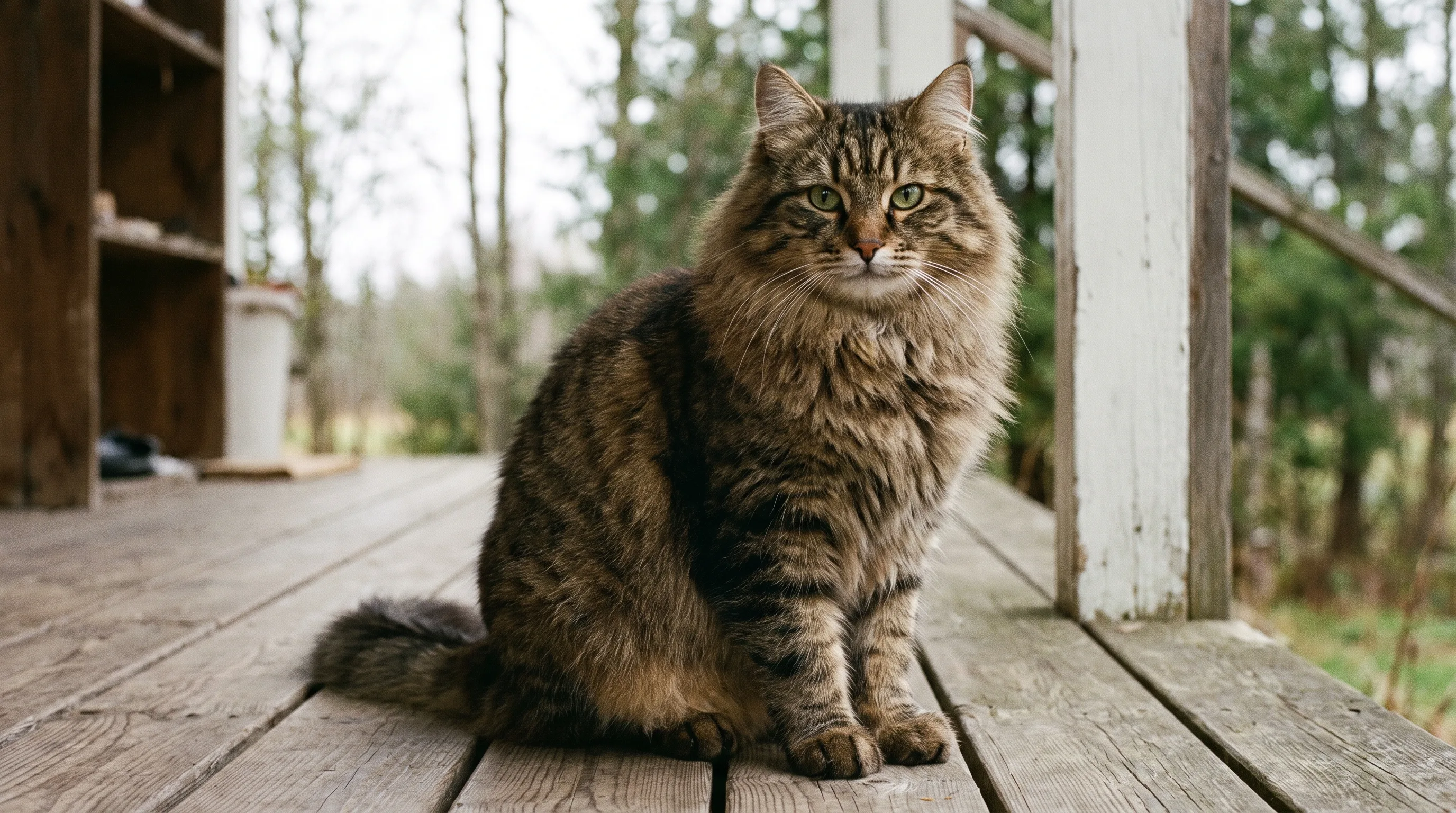 Siberian
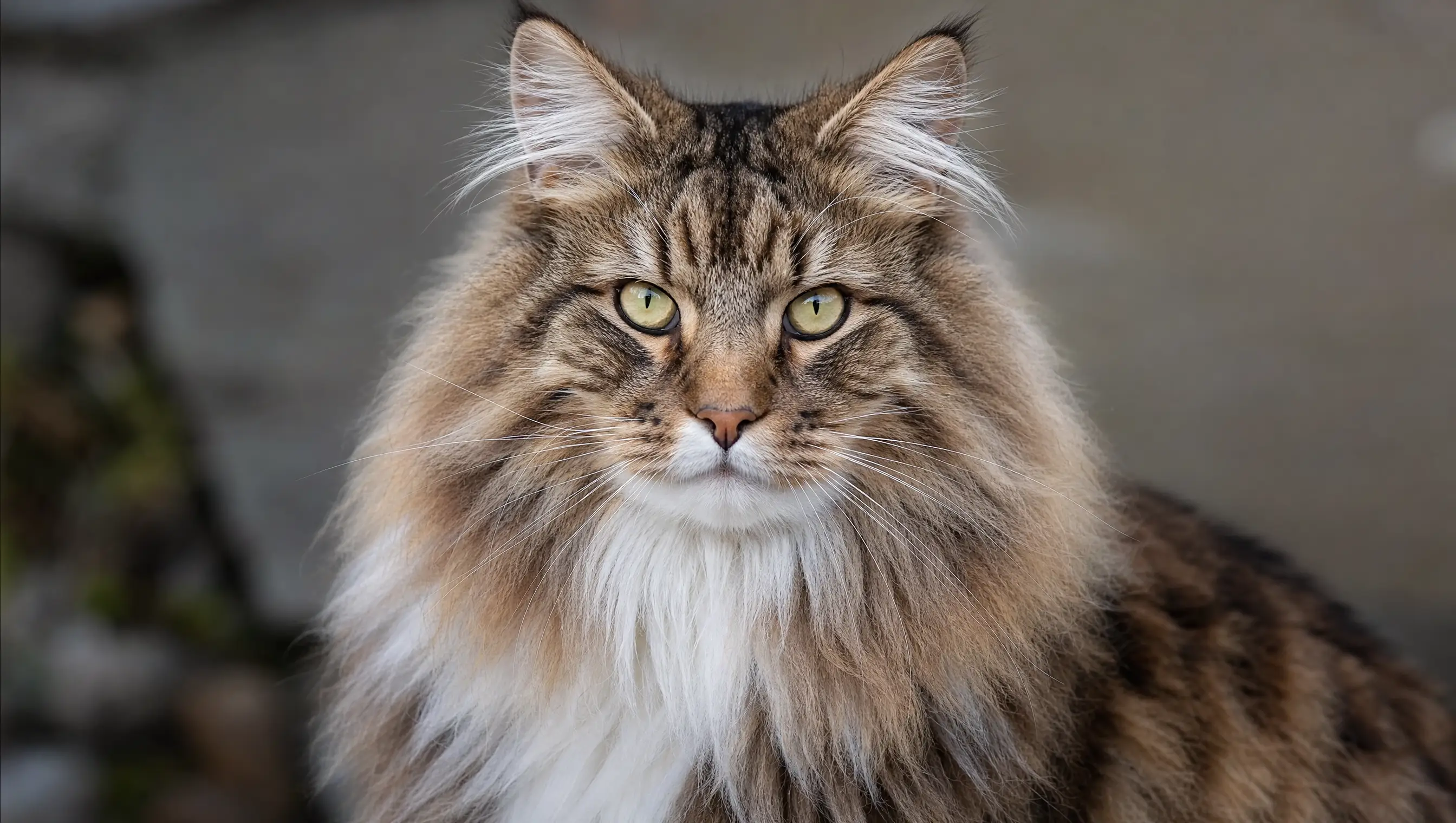 Norwegian Forest Cat
Both are big, hardy, heavily coated climbers that handle cold, children and dogs well. The Siberian is the rounder, more playful and more involved of the two, often described as dog-like and oddly fond of water. The Norwegian Forest Cat is taller, quieter and more self-contained, happiest near you rather than on you, preferably on top of something. Both moult spectacularly twice a year.
Side by side
| Siberian | Norwegian Forest Cat | |
|---|---|---|
| Size | Medium to large · powerful, barrel-chested | Large · long-bodied, muscular build |
| Weight | 4–6 kg females · 6–9 kg males | 4–9 kg · toms markedly heavier |
| Life expectancy | 12–15 years | 14–16 years |
| Energy | Moderate to high — playful, then flat out asleep | Moderate — active climber, settles indoors |
| Shedding | High, with two heavy seasonal moults | Heavy, strongly seasonal |
| Coat | Semi-long triple coat, water-resistant | Long double coat, water-resistant |
| Good with children | 5/5 | 4/5 |
| Trainability | 4/5 | 3/5 |
| Openness to strangers | 4/5 | 2/5 |
Size and looks
The Norwegian Forest Cat is the leggier, more angular cat: a triangular head, a long straight profile, and a tall frame built for climbing, with toms reaching 9 kg. The Siberian is barrel-chested and round-faced, slightly shorter but just as solid, wearing a triple coat where the Norwegian wears a double. Side by side, the Norwegian looks carved and the Siberian looks knitted.
Temperament
The Siberian is the extrovert: playful well into adulthood, involved in whatever you're doing, and famous for supervising sinks and bathtubs. The Norwegian Forest Cat is friendly but measured, a cat that chooses a high perch in your room and keeps you company from it. Both are gentle, confident cats that do well in family homes.
Grooming and shedding
Budget the same for both: a thorough comb two or three times a week, daily during the two big seasonal moults, when both breeds drop astonishing amounts of undercoat. Neither coat mats as readily as it looks like it should; both were built to be weatherproof, not decorative.
Health
Both are robust landrace breeds with one named risk each worth checking. For the Siberian it's HCM, the common feline heart disease, so ask about cardiac screening in the line. For the Norwegian Forest Cat it's GSD IV, a rare metabolic disease a simple DNA test rules out, plus hip dysplasia in some lines. Lifespans sit around 12 to 16 years for both.
Common questions
Are Siberians hypoallergenic?
Not reliably. Some Siberians measure lower on the main allergen, Fel d 1, and some allergic owners report coping well, but it varies by cat and no line guarantees it. Spend time with the specific cat before you commit.
How do you tell a Siberian from a Norwegian Forest Cat?
Look at the face: the Norwegian has a triangular head with a long, straight profile; the Siberian's face is rounder with a slight curve to it. The Norwegian also stands taller and more rectangular.
Which is more affectionate?
The Siberian, in the lap-cat sense: it seeks you out and joins in. The Norwegian Forest Cat is loyal but likes a little altitude and a little distance. Both bond closely with their families.