Sphynx vs Peterbald
Two naked cats, two different genes. The Sphynx is a sturdy Canadian; the Peterbald is a slender Russian whose coat comes in five grades, from bald to brush.
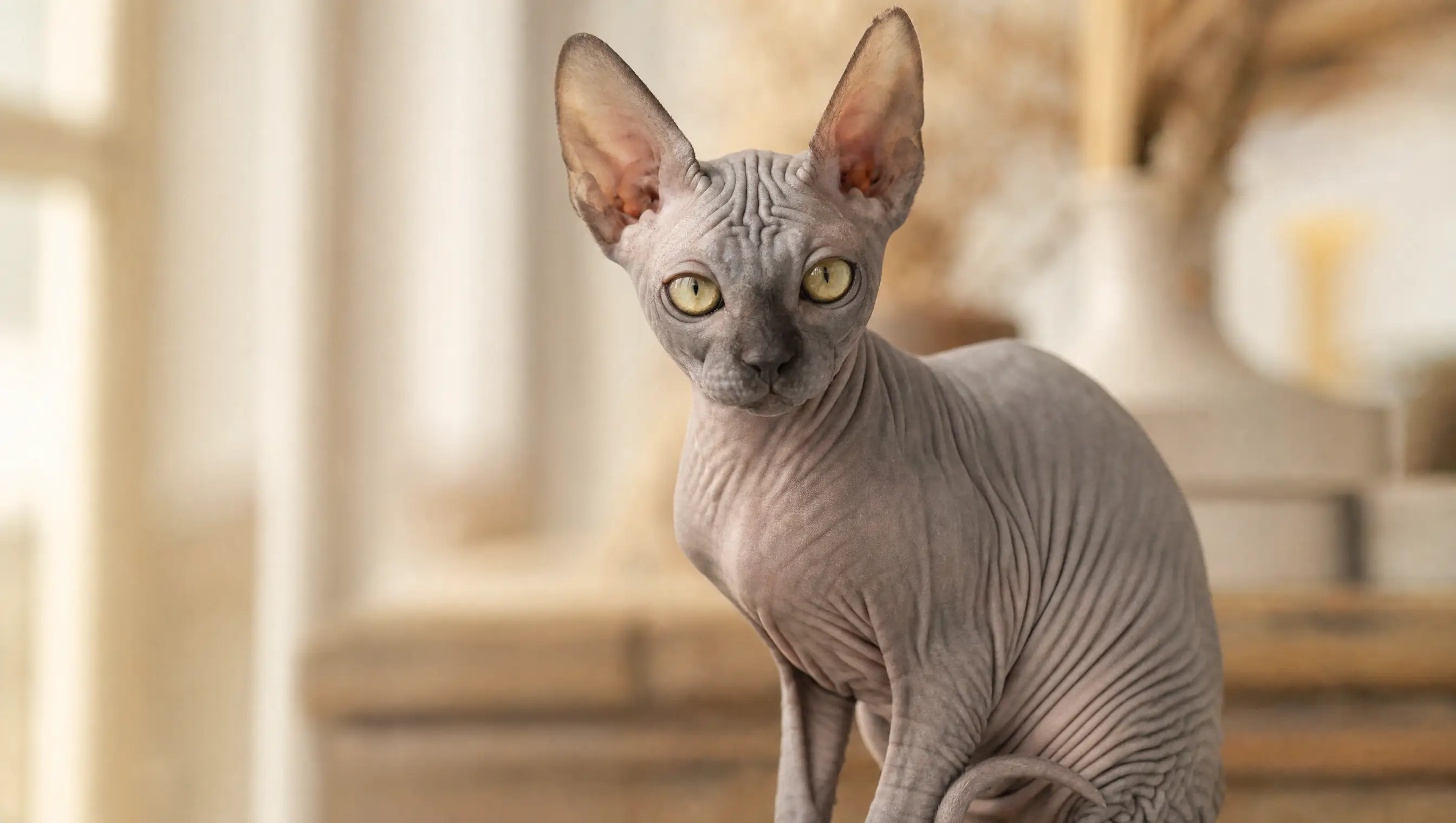 Sphynx
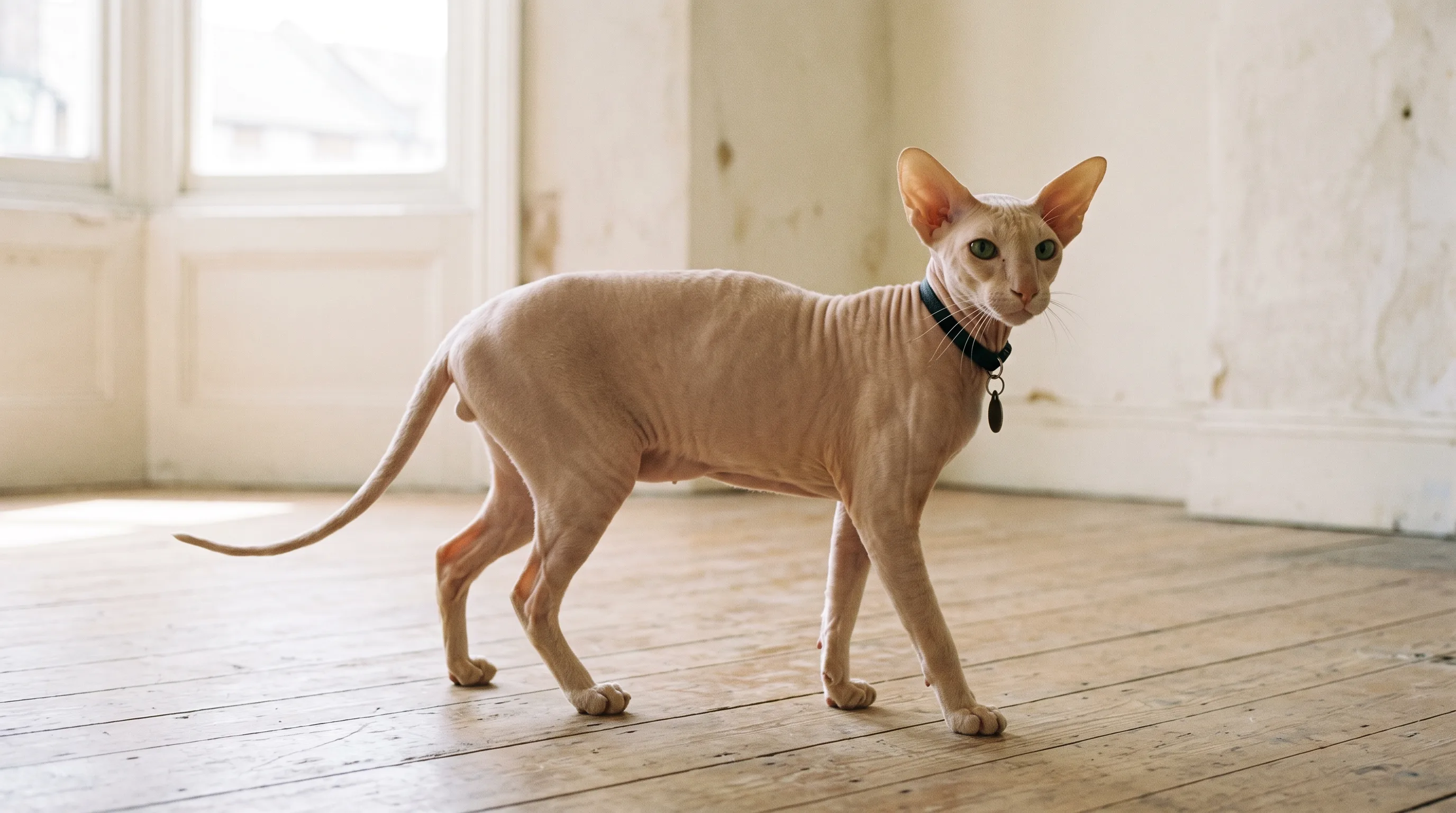 Peterbald
Both are warm, needy, high-energy companions that live strictly indoors and need skin care instead of brushing. The Sphynx is the stockier and far more common choice, with established breeders and heart-screening schemes to lean on. The Peterbald is rarer and more Oriental: lighter, longer, chattier, with a coat that can be anything from bald to a wiry brush. Either way, budget for baths, warmth and sun protection: hairless is more work, not less.
Side by side
| Sphynx | Peterbald | |
|---|---|---|
| Size | Small to medium · lean, barrel-chested | Small to medium · long, slender, fine-boned |
| Weight | 3–5 kg · males heavier | 3–5 kg · males heavier |
| Life expectancy | 8–14 years | 12–15 years |
| Energy | High — busy, acrobatic, attention-seeking | Very high — busy from morning to night |
| Shedding | Effectively none — but not hypoallergenic | None to minimal |
| Coat | Hairless; fine peach-fuzz, warm bare skin | Five types: bald, flock, velour, brush, straight |
| Good with children | 4/5 | 5/5 |
| Trainability | 4/5 | 5/5 |
| Openness to strangers | 5/5 | 5/5 |
Two genes, two silhouettes
Hairlessness arose separately in the two breeds. The Sphynx carries a recessive mutation and wears it on a rounded, muscular, pot-bellied body with a suede feel. The Peterbald's hair-loss gene is dominant, laid over a Siamese-Oriental frame: long head, big ears, whippy body, and five recognised coat grades from fully bald through flock and velour to brush. A Peterbald kitten's coat can even change as it grows.
Temperament
Both live on you and for you: these are velcro cats that burrow under duvets, perch on shoulders and follow you to the bathroom. The Peterbald adds the Oriental voice and pace, talking more and moving faster; the Sphynx is the clown of the two, more monkey than cat on a good day. Neither copes well with an empty house, and both do best with company, human or feline.
Skin care, not grooming
No fur doesn't mean no maintenance; the oil a coat would absorb sits on the skin instead. Most hairless cats need a bath or a thorough wipe-down every week or two, plus regular ear cleaning and nail care, since the grease collects there too. Add warmth in winter, shade and sun protection in summer, and an indoor-only life as standard.
Health
For the Sphynx the headline is HCM, the common feline heart disease: ask the breeder about regular cardiac ultrasound screening of the breeding cats, not just paperwork. The Peterbald has no signature disease on record, but it's a young breed with a small gene pool, so a breeder's openness about health matters all the more. Neither breed is hypoallergenic, whatever the adverts say.
Common questions
Are hairless cats hypoallergenic?
No. The main cat allergen, Fel d 1, comes from saliva and skin, not fur, and hairless cats produce it too. Some allergic owners react less because there's no shed hair spreading it, but test yourself around one first.
How often do they need baths?
Typically every one to two weeks, though it varies by cat and diet; some stay clean with a regular wipe-down. Overwashing backfires by making the skin produce more oil.
Do they get cold?
Yes, constantly, which is why they seek laps, duvets and radiators. A heated bed and, for some cats, a jumper in winter are normal equipment, and an outdoor life is off the table.