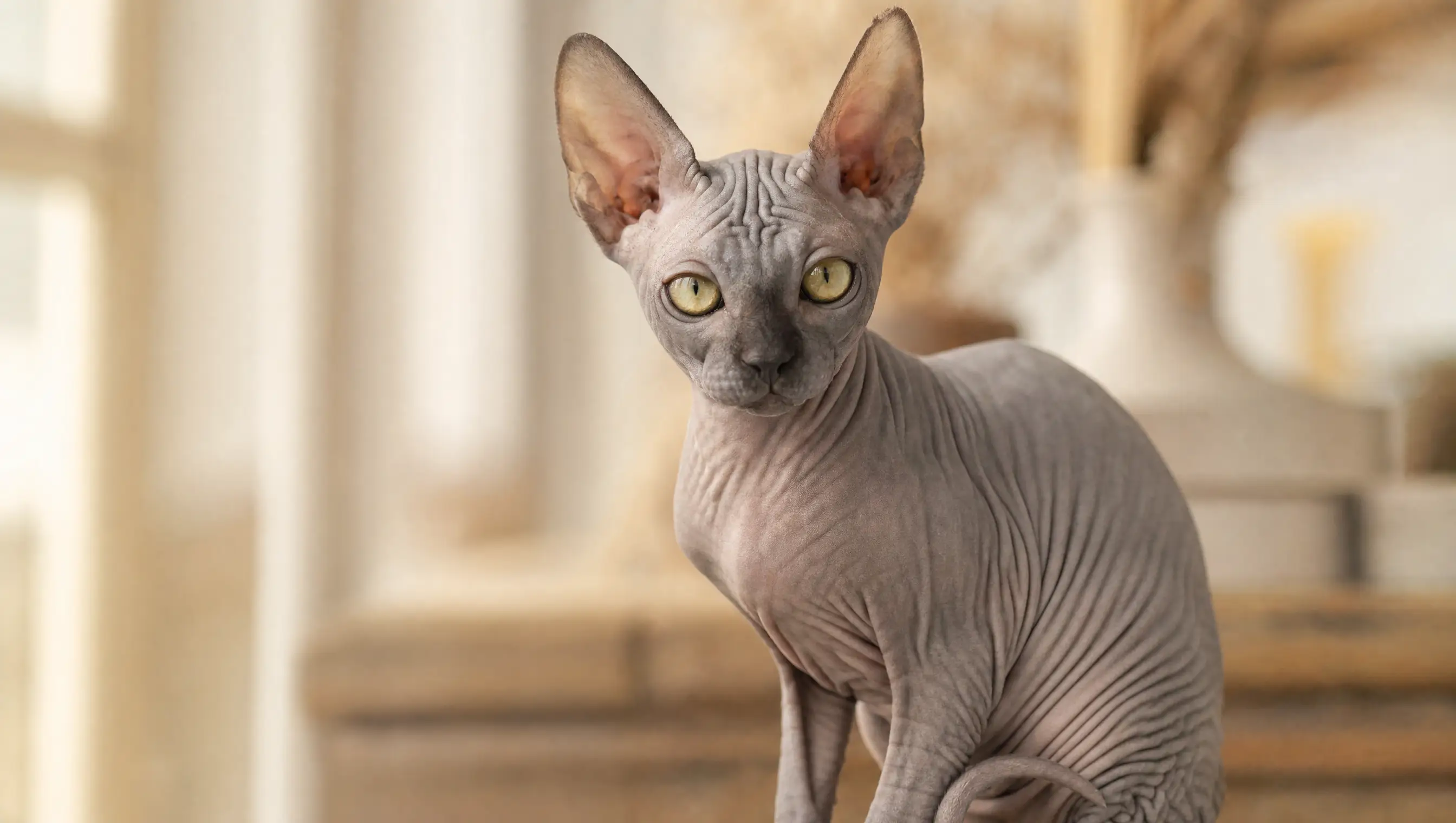
Sphynx
A hot-water bottle with a personality — hairless, needy, and always in your business.
Vital stats
| Size | Small to medium · lean, barrel-chested |
| Weight | 3–5 kg · males heavier |
| Life expectancy | 8–14 years |
| Energy | High — busy, acrobatic, attention-seeking |
| Shedding | Effectively none — but not hypoallergenic |
| Coat | Hairless; fine peach-fuzz, warm bare skin |
| Group | Hairless |
| Origin | Canada |
Breed traits
Friendliness
Care
Mind
The Sphynx by the numbers
The Sphynx facts owners search for most — price, lifespan, weight, shedding and colours, in one place.
Less common, so expect a waitlist and some travel to a reputable breeder — which pushes the price up. Ongoing costs stay modest — it eats little and routine vet care sits at the lower end.
We don't quote a single figure: the real price swings with breeder, region, bloodline and health testing — and a rescue costs a fraction of a breeder's litter. Adopting is almost always the cheapest route.
Temperament
Sphynx are relentlessly social and physical about it — they climb you, sleep under the covers, and greet strangers at the door instead of hiding. Clever, mischievous and food-motivated, they get into cupboards, counters and trouble when bored, so they do far better with company, a second pet or a busy household than left alone all day. Expect a cat that wants to be touching you most of the time and will complain if it can't. The upside is a genuinely doglike bond; the downside is a cat that does not do 'independent'. They stay kitten-like and playful well into adulthood.
Habits & quirks
Heat-seeking
With no coat they lose warmth fast, so they burrow under blankets, pile onto radiators and drape over you like a living compress.
Counter surfer
Curious, dexterous and always hungry — they open drawers, raid food and reach places a normal cat wouldn't bother with.
Greeter, not hider
Where most cats vanish when the doorbell rings, a Sphynx trots over to inspect the guest.
The grubby feel
Skin oils build up without a coat to wick them away, leaving a faint waxy film — hence the regular baths.
Health
A Sphynx needs more upkeep than a coated cat, and almost all of it is skin. With no fur to wick them away, skin oils build into a waxy film in the wrinkles, ears and nail folds, so a gentle bath about once a week is routine, not fussing. Bare skin also means it chills fast and sunburns easily — keep the house warm and strong sun off it. The one to screen for is HCM, an inherited heart-muscle disease that runs in the breed; buy from a breeder who has their cats' hearts scanned every year, and have yours checked too.
Nutrition
| Skin & bathing | Bathe roughly weekly with a gentle cat shampoo and wipe the wrinkles, nail beds and ear canals, which collect a reddish-brown waxy grime. Overdo it and you strip the skin; skip it and it gets sticky. |
| Warmth & sun | No coat means they chill easily and sunburn on bare skin — keep the house warm, offer sweaters or heated beds in winter, and keep them out of strong direct sun and outdoors entirely. |
| Heart screening | Hypertrophic cardiomyopathy (HCM) is common in the breed; buy from a breeder who does annual cardiac ultrasound on their cats, and have yours checked. HCM affects many Sphynx lines. |
| Diet & warmth budget | A fast metabolism and heat loss mean they eat more than their size suggests and can be prone to digestion issues — feed good-quality food on a routine and don't let the belly fool you into overfeeding. |
A Sphynx is a true carnivore that runs hot: the fast metabolism and constant heat loss burn through more food than its small frame suggests, and many have slightly touchy digestion. Feed a good-quality, meat-first food on a set routine rather than a bowl left out all day, and lean on wet food to keep it hydrated. Watch the portions anyway — that round pot belly is normal for the breed and shouldn't fool you into overfeeding.
Kitten guide
A Sphynx kitten loses heat even faster than the adult, so a warm spot, a soft heated bed and no draughts matter from day one. Get it used to the routine early — a gentle weekly bath, wiping the ears and nail folds, being handled all over — and it takes grooming in its stride for life. Keep it indoors, socialise it with people and other pets while it's young and confident, and start the vet relationship early, including the first cardiac check. This is a busy, climbing kitten, so make the room safe: no gaps behind cupboards, nothing toxic within reach.
Training
Sphynx are clever, food-driven and endlessly busy, which cuts both ways. Litter habits come easily; the harder job is aiming all that energy somewhere useful before it goes into raiding counters and opening drawers. Give it tall things to climb, puzzle feeders and daily play, and it stays out of trouble. Put up a sturdy scratching post and redirect it there the moment claws hit the sofa. Because a Sphynx wants to be handled, teach it early that the carrier and the bath are normal, and vet visits get far easier.
Life expectancy
Sphynx cats live 8–14 years. Heart health is the biggest lever on that figure. A kitten from cardiac-screened parents, kept warm, lean and checked yearly for HCM, avoids the breed's main threat to a long life. Stay on top of the skin and ears too, and the top of that range is realistic.
Similar breeds
Breeds with a similar build and background — worth a look if this one isn't quite the fit.
Compare this breed
Common questions
Are Sphynx cats hypoallergenic?
No. Cat allergies are usually to the Fel d 1 protein in saliva and skin oils, not the hair itself — and Sphynx still produce it. Some allergy sufferers do better with one, but there's no guarantee; spend time with an adult before committing.
Do Sphynx cats really need baths?
Yes, most do — usually about weekly. Without a coat to absorb them, skin oils build into a waxy film on the skin and inside the wrinkles, ears and nail folds, so a wipe-down or bath is part of routine care rather than optional.
What health problems are Sphynx prone to?
The big one is HCM, an inherited heart-muscle disease, so cardiac screening matters. They're also prone to skin conditions, ear-wax buildup, and being sensitive to cold. Expect a bit more vet attention than an average moggy.
Does the Sphynx shed a lot?
Moderately. The Sphynx sheds a fair amount, steadily through the year with heavier seasonal patches. A weekly brush keeps most of the loose hair off your floors and clothes.
Are Sphynx cats good with children?
Usually yes. The Sphynx is a sociable cat that tends to tolerate the noise and handling of family life better than most, which is why it comes up so often for homes with kids. It still needs somewhere high and quiet to retreat to, and children need teaching that a cat walking away is allowed to.
How much grooming does a Sphynx need?
Very little. The Sphynx handles its own coat and a comb once a week or so is plenty — mostly to catch loose hair before the cat swallows it. Claws, teeth and ears still want the usual checks, which is the part people skip on an easy-coated cat.
Stories featuring this breed
All stories →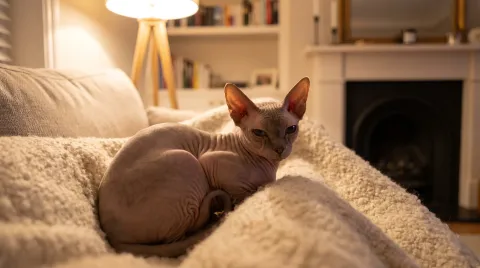
Hairless cat breeds: the four to know, and what no fur really costs
Sphynx, Peterbald, Donskoy — and the half-bald Lykoi. Where each gene came from, why hairless means more care rather than less, and the allergy promise none of them can keep.
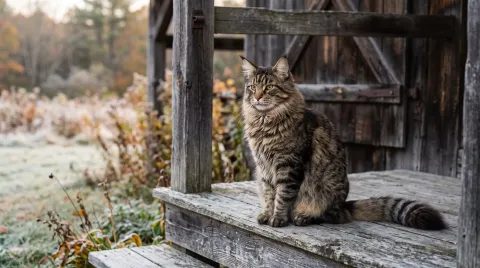
Where cat breeds come from, and why there are so few
Cats have a fraction of the breeds dogs do, and most of them are younger than the microwave. The story is landraces with paperwork versus cats made on purpose.
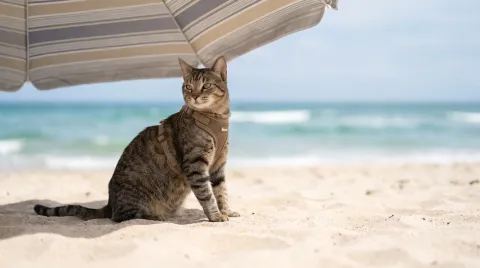
Can you take your cat to the beach? An honest guide
Most cats should skip the beach, and a few can go safely. The honest, vet-checkable guide to heat, sun, saltwater, harnesses and who stays home.