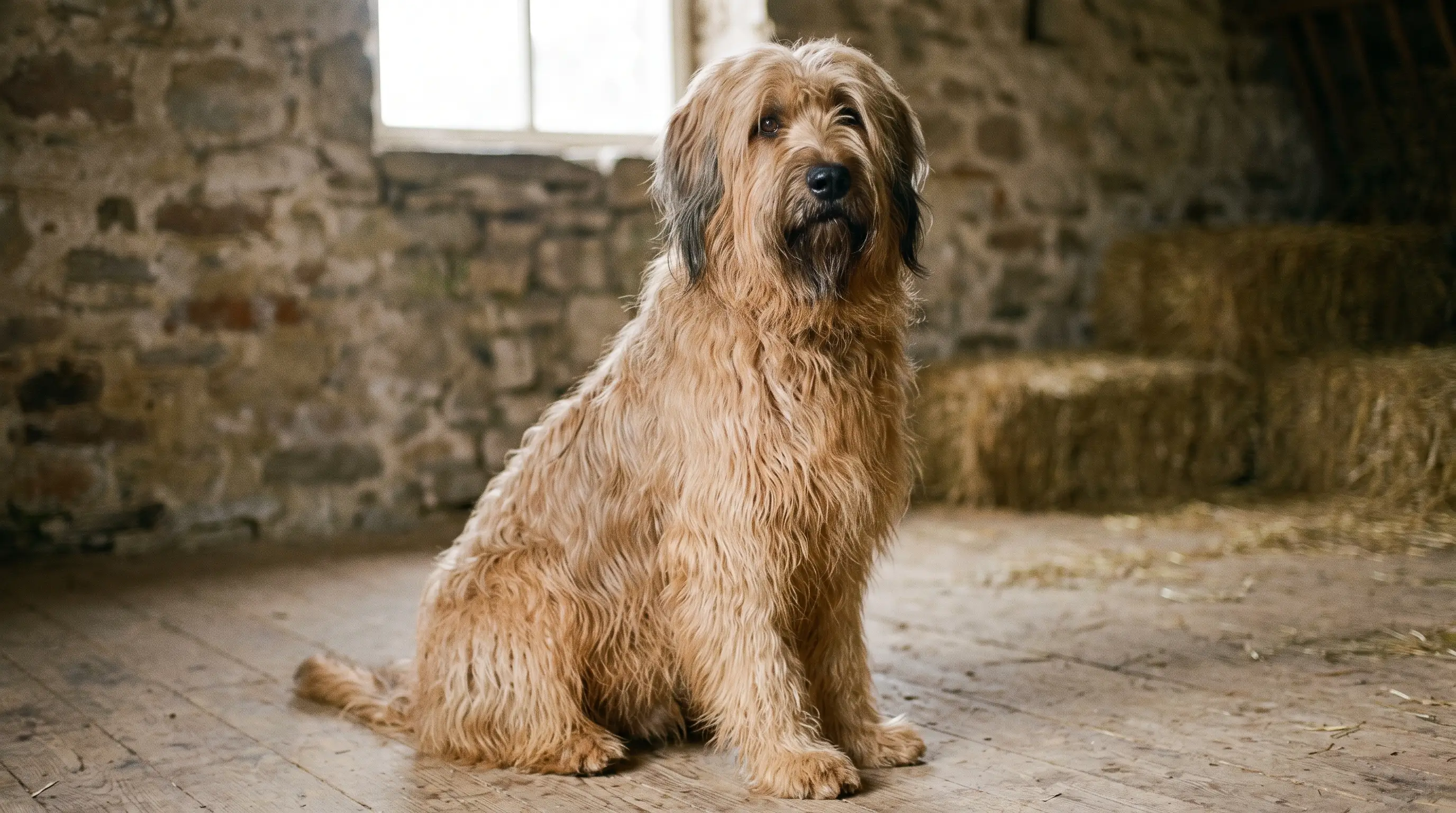
Briard
A heart wrapped in fur — France's shaggy shepherd-soldier.
Vital stats
| Size | Large · 56–68 cm |
| Weight | 25–40 kg |
| Life expectancy | 10–12 years |
| Energy | High — 1–2 hours/day |
| Shedding | Low, but the coat demands brushing |
| Coat | Long, slightly wavy goat-like coat · fawn, black, grey |
| Group | Herding · FCI №113 / AKC |
| Origin | Brie, France |
| FCI group | 1 — Sheepdogs and Cattledogs · FCI 113 |
Breed traits
Friendliness
Care
Mind
The Briard by the numbers
The Briard facts owners search for most — price, lifespan, weight, shedding and colours, in one place.
Widely bred, so you can usually find a litter from a registered breeder without a long wait. Ongoing costs run high — more food, bigger doses at the vet, and pricier insurance. Its coat also needs a professional groom every few weeks — a real line in the budget.
We don't quote a single figure: the real price swings with breeder, region, bloodline and health testing — and a rescue costs a fraction of a breeder's litter. Adopting is almost always the cheapest route.
Temperament
For centuries the Briard herded and guarded French flocks largely on its own judgement, and in the World Wars carried messages and found wounded soldiers. That history built a dog of real substance: brave, decisive and devoted, with a long memory for friends and slights alike. It watches over children like sheep — gently, but constantly.
Habits & quirks
Flock accounting
On family walks it drifts to the rear, quietly keeping everyone grouped and counted.
The curtain flick
A toss of the head clears the fringe from its eyes when something deserves a proper look.
Velcro guardian
It shadows its chosen people from room to room — shepherds called the breed 'a heart wrapped in fur'.
Opinionated helper
Bred to work unsupervised, it may improve on your instructions rather than follow them.
Health
With a Briard, health comes down to a few things you can actually test for, so buy from a breeder who does. Ask for hip scores on both parents and current eye tests, and specifically ask about CSNB — congenital stationary night blindness, a breed gene the DNA test can clear. A well-bred, well-exercised Briard is a robust dog; the long coat also hides condition, so run your hands over it and keep the weight honest underneath.
Nutrition
| Grooming | The long double coat needs thorough brushing several times a week — right to the skin, or mats form invisibly. |
| Socialisation | A natural guardian: broad, positive exposure to people and dogs in puppyhood is essential. |
| Exercise | An athletic herder needing an hour or two daily, happiest with a job — herding trials, tracking, agility. |
| Health | Ask breeders about hip scores and eye tests, including the breed-specific night-blindness gene (CSNB). |
A Briard is a big, athletic herder, and the coat makes weight easy to miss, so judge condition by feel rather than by eye — you want to find the ribs under all that hair without pressing. Feed to the dog's real workload, weigh the meals, and count treats into the day. Keeping a large breed lean takes load off the hips and joints it has to carry for a decade.
Puppy guide
A Briard puppy is a natural guardian in the making, so the single most important job of the first year is broad, positive socialisation — meet many people and many dogs, kindly, before the wariness of strangers sets in. Get it used to being brushed and handled all over from the start, because the adult coat is a real commitment and a dog that fights the brush makes it worse. Keep the growing joints off hard, repetitive impact while the frame is still filling out.
Training
Briards learn quickly but were bred to think for themselves out on the hillside, so they need a handler who is confident, consistent and fair rather than heavy. Harsh corrections backfire, and boredom just makes a clever dog creative in ways you won't enjoy. Keep training rewarding and varied, give it a job — herding, tracking, agility — and treat manners as something you build steadily, not something a dog this independent hands you for free.
Life expectancy
Briards live 10–12 years. Briards live {life}, about what you'd expect for a large herding breed. You keep a dog toward the top of that range with the levers that actually matter: parents screened for hips, eyes and CSNB, a lean body through the growing years and after, and enough real exercise to keep a working dog sound in body and settled in mind.
Similar breeds
Breeds with a similar build and background — worth a look if this one isn't quite the fit.
Breeds that look like this
Common questions
Are Briards good family dogs?
With their own family, wonderful — affectionate, patient and naturally protective of children. They're wary of strangers, so socialisation from puppyhood is non-negotiable.
How much grooming does a Briard need?
Several thorough sessions a week, down to the skin — the long coat mats quickly. Expect a real commitment or a standing salon appointment.
Are Briards easy to train?
They learn fast but were bred to think independently, so they need a confident, consistent and fair handler. Harshness backfires; boredom breeds creativity.
Does the Briard shed a lot?
Not much. The Briard is a low-shedding breed, so loose hair around the home stays minimal. It still needs regular grooming, but you won't be fighting drifts of fur.
Is the Briard hypoallergenic?
No dog is truly hypoallergenic, but the Briard comes closer than most: its low-shedding coat releases less of the dander that triggers allergies. Many allergy sufferers manage well with this breed, but spend time around one before committing.