Processionary caterpillars: an emergency for dogs
A processionary caterpillar neither bites nor stings. It injures a dog with thousands of barbed hairs, and once they are in the mouth the clock is the only thing that matters. In a study of 109 affected dogs, 45% of those whose mouths were first flushed more than six hours after contact arrived with a dying tongue, against 5% of the dogs flushed sooner. Almost all of them lived; more than a third of those followed up long-term permanently lost part of the tongue. Here is what the caterpillar does, what to do in the first minutes, and how to avoid the few weeks of the year when it is at nose height.
It does not bite and it does not sting
The damage comes from hairs, not jaws. A mature pine processionary larva carries up to a million detachable barbed hairs, called setae, packed onto pads on its back at roughly 60,000 per square millimetre. Each is about 200 micrometres long, invisible on its own, and hooked at the tip. They work into skin or the soft lining of a mouth by friction, and as they penetrate they release thaumetopoein, a protein that makes mast cells dump their histamine all at once.
Two things follow from that mechanism and both matter. This is an irritant and toxic reaction rather than a classic allergy, so a dog that has never met a caterpillar in its life can be badly hurt on first contact; there is no sensitising exposure to get out of the way first. And your dog does not have to touch anything. The larvae flick their hairs out when they are disturbed, wind carries them, and the colony sheds another load into its nest at every moult. A dog can be injured by a nest nobody spotted and a caterpillar that left weeks ago.
The first six hours decide the outcome
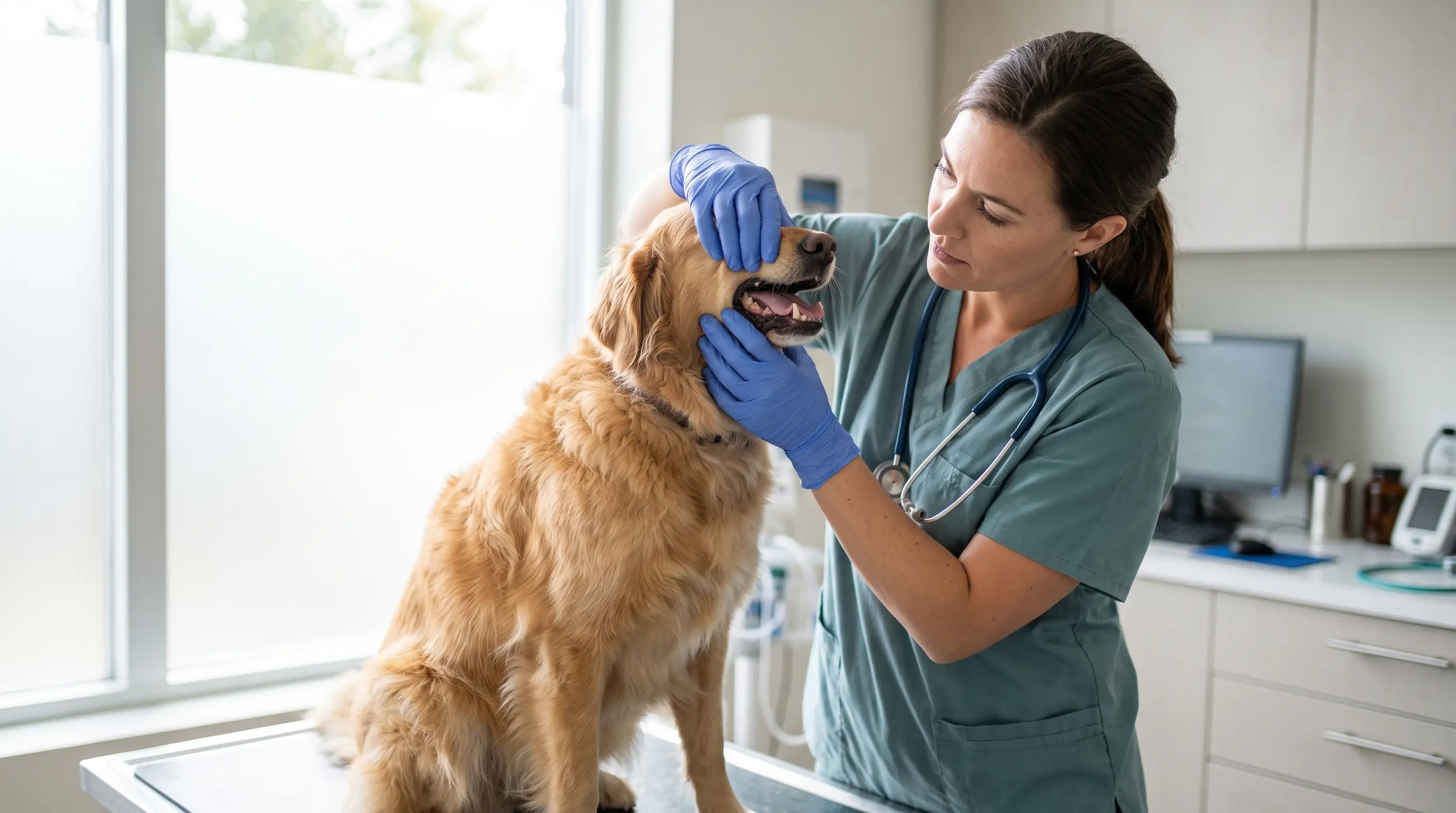
The most useful number on this subject comes from a French referral hospital that reviewed 109 dogs over sixteen years. Of the dogs whose mouths were first flushed more than six hours after contact, 45% arrived with a necrotic tongue, against 5% of those flushed within six hours. Timing, not dose, was the difference. Eighty-six per cent of the dogs had tongue injuries of some kind, from swelling to dead tissue.
So the sequence in the moment is this. Get the animal away from the area. Put gloves on before you touch it, because the hairs will go into your hands too. Flush with a lot of lukewarm water at a gentle flow for ten to fifteen minutes, holding the head so the water runs out of the mouth rather than being swallowed, and let it carry the hairs away instead of moving them around. Lift hairs off the coat with a lint roller or sticky tape before washing it. Then drive to a vet. The rinsing is what you do on the way, never instead.
What not to do is just as fixed. Do not rub, scrub or wipe, which is the mistake almost everyone makes, because rubbing snaps more hairs, drives them deeper and releases more toxin. Do not use bare hands or pick at hairs with your fingers. Flush the eyes, do not dab at them. Ignore the widespread advice to use hot water to break the toxin down, which nothing supports and which means pouring hot water into an already injured mouth. And do not reach for human medicine: paracetamol is poisonous to dogs, and an antihistamine from the cupboard is not a substitute for the trip you should be making.
What it looks like, from the first minutes on
Signs start within minutes, which is precisely why watching to see whether it settles is the wrong instinct. What owners notice first is sudden distress: pawing at the mouth, rubbing the face along the ground, head shaking, a rush of drool. Then the tongue and lips swell, swallowing becomes difficult, the nodes under the jaw come up, and the tongue may hang out because it no longer fits. Colour tracks the damage, red at first, then hard and white, then purple-black at the tip where tissue is dying. Around half of dogs vomit.
Eyes are the other target and the one people forget. In a Spanish series of 140 dogs with ocular involvement, almost all had keratitis with white infiltrates in the cornea and nearly four in five had uveitis. The encouraging half of that finding: once the hairs were flushed out and the eye treated, 139 of the 140 recovered over fifteen to thirty days. Sight is genuinely threatened and usually saved.
The real shape of the risk is not the one the internet gives you. Survival in the 109-dog study was 97% and hospital stays were short. Breathing difficulty from swelling in the throat appeared in 5% of dogs, and that uncommon case is the one that kills. What lasts is tissue: 37% of the dogs followed up long-term had permanently lost part of the tongue, which their vets recorded as having little effect on quality of life afterwards. Rarely fatal, often disfiguring, and almost entirely decided by how quickly the mouth was flushed.
Cats are not immune, they are more careful
Cats meet the same caterpillars and take the same injuries, but they turn up at the vet far less often. In one hospital's records, caterpillar poisoning accounted for 0.13% of the feline caseload. When they do come in the pattern is familiar: in a series of 11 cats, 10 had tongue lesions and 10 were drooling heavily, the only systemic sign was vomiting, all 11 survived, none stayed longer than 48 hours, and none of those followed up had lasting trouble.
The reason is behavioural rather than biological. A cat investigates a strange moving object with a paw and a long stare; a dog investigates it with its nose and mouth. That is the whole difference. It also means a cat is likelier to arrive with irritated paws and face than a ruined tongue, and that hairs groomed out of a coat can still reach the mouth the long way round. Eleven cats is a thin evidence base, so hold the reassurance loosely: rarely hurt is not the same as safe.
Prevention is two calendars and one nest
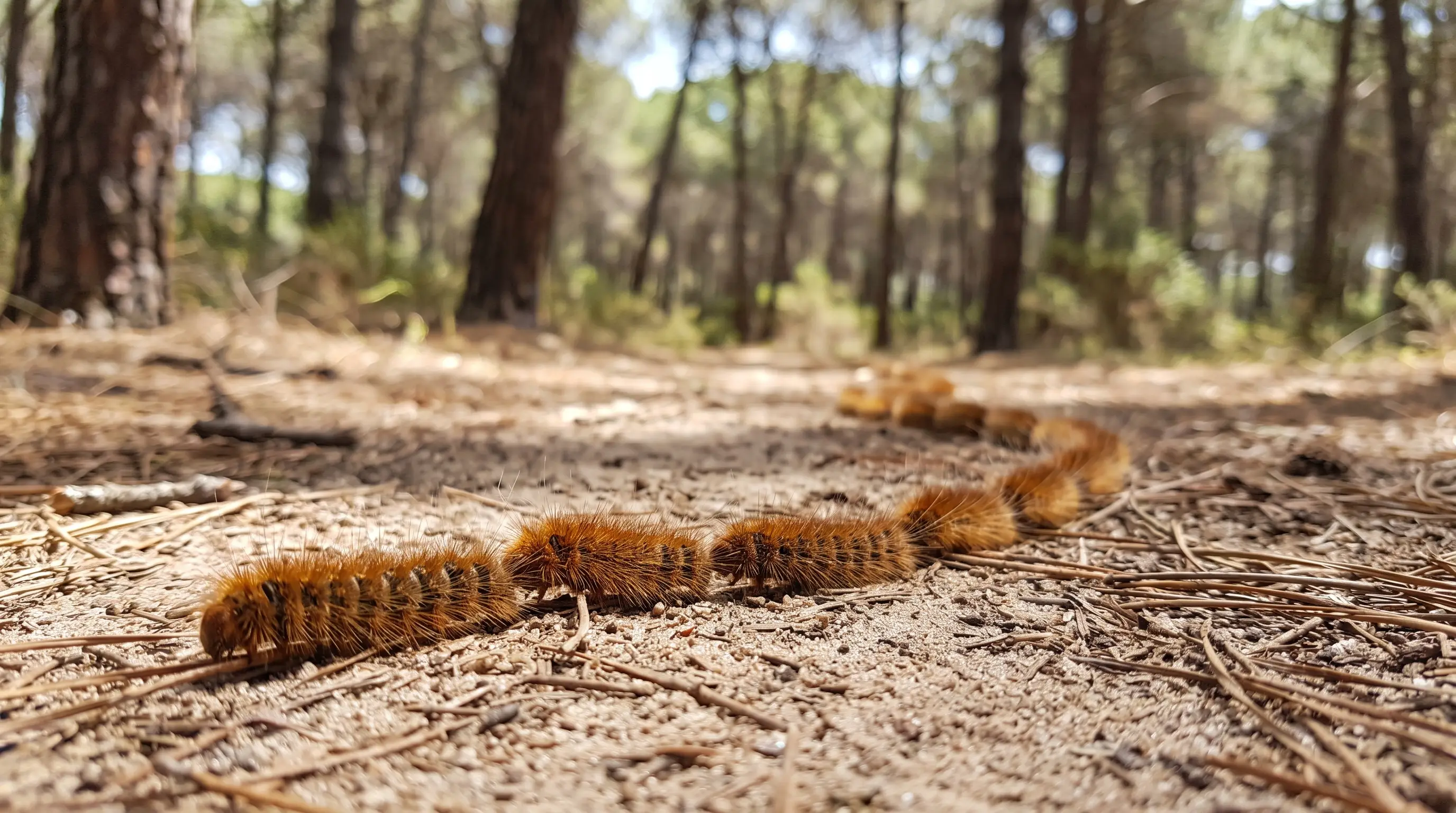
The pine processionary is a late-winter and early-spring problem across Mediterranean Europe. The caterpillars overwinter in silk tents high in the pines and come down the trunk in the single-file processions that name them, roughly February to April, to bury themselves and pupate. That descent is when they are at nose height. The oak processionary is a late-spring and summer problem further north, through Britain, the Netherlands, Belgium and Germany, its hairs dangerous from about the end of May. Neither species is staying put: the pine processionary's northern limit has advanced tens of kilometres in a generation and climbed a couple of hundred metres up Italian mountainsides.
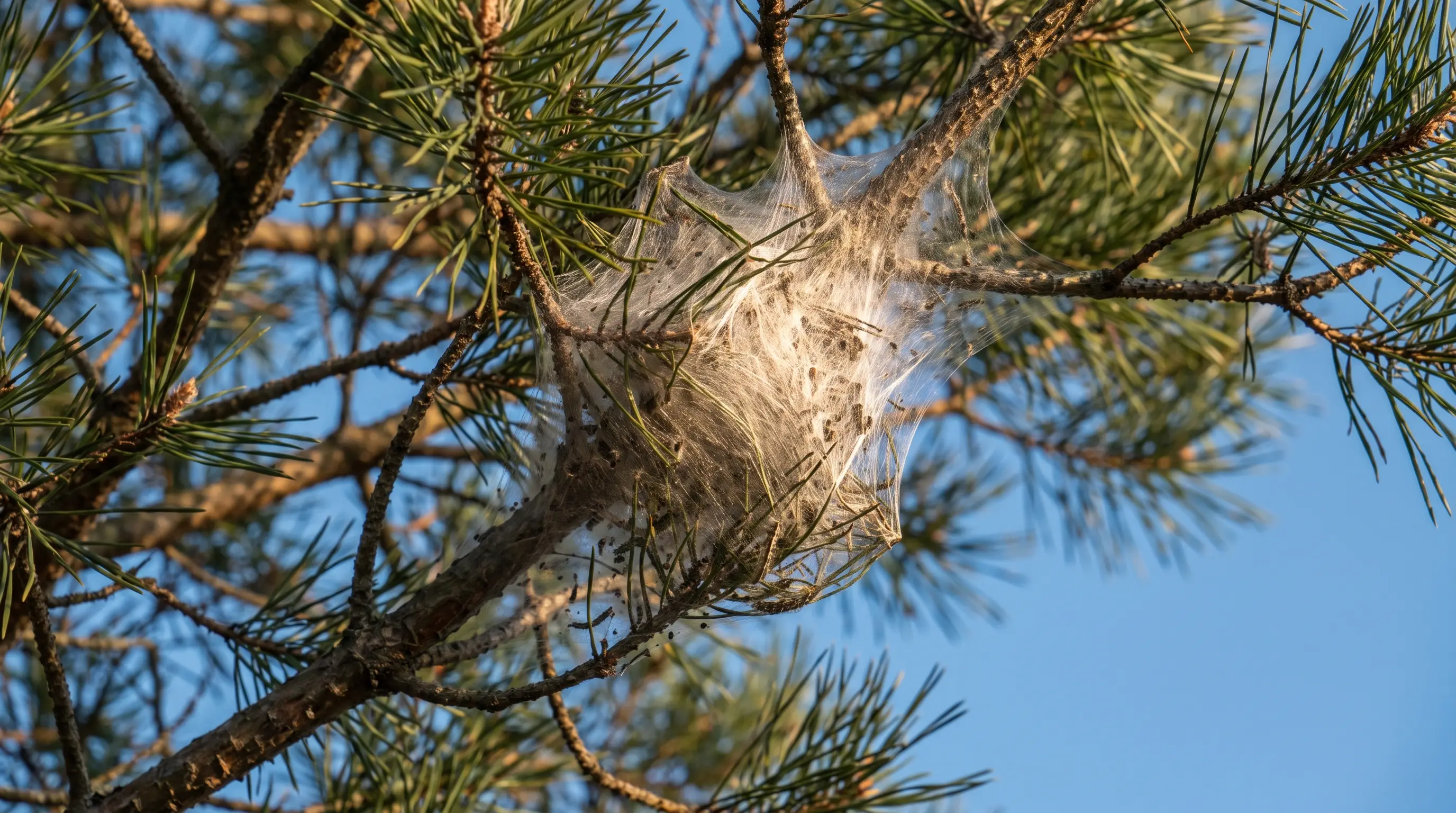
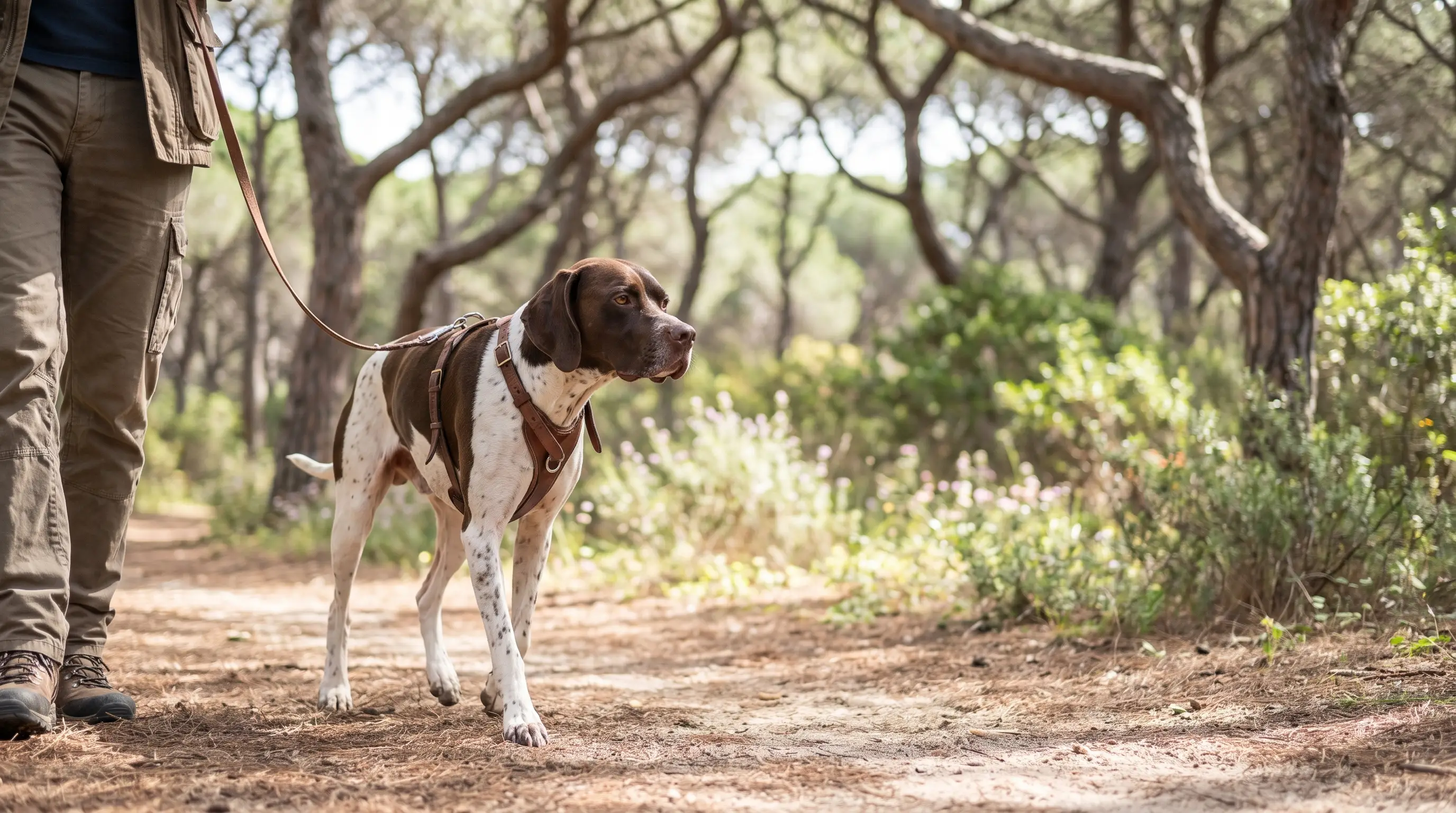
In season, walk pine and oak woodland on a lead rather than trusting recall, and learn what a nest looks like. Pine: a white silken tent on the sunny side of the crown. Oak: a dense pad of white silk on the trunk or a thick branch, never out on the leaves. Never touch, hose, burn or knock down a nest yourself, because disturbing one puts a cloud of hairs into the air; removal is a job for the council or a licensed contractor, and several countries ask you to report sightings, through TreeAlert in the UK or your gemeente in the Netherlands.
Here is the part that gets skipped. Spent nests and bare ground stay dangerous. Hairs collect in a nest with every moult and remain irritant for years, and they accumulate in the undergrowth below an infested tree, which is why cases still appear in autumn with no caterpillar in sight. Check your dog over after every walk in season, the same sweep you would do for ticks or grass seeds: muzzle, mouth if it will let you, paws, eyes, coat. A nose-led dog such as a Beagle or a Bracco Italiano working through pine litter is exactly the dog this piece is written for.
Common questions
What should I do if my dog has touched a processionary caterpillar?
Get it away from the area, put gloves on, and flush the mouth and any affected skin with plenty of lukewarm water at a gentle flow for ten to fifteen minutes without rubbing, then go straight to a vet. Flushing early is the single thing that changes the outcome, but it is what you do on the way to the clinic, not instead of going.
What are the symptoms of processionary caterpillar contact in a dog?
Heavy sudden drooling, pawing or rubbing at the mouth, a swollen tongue and lips, difficulty swallowing, and a tongue that changes colour from red to white to purple-black where tissue is dying. About half of dogs vomit. Eyes may become painful and cloudy, and swelling in the throat can make breathing difficult, which is an emergency.
How quickly do symptoms appear after contact?
Within minutes. Pain, drooling and swelling begin almost immediately, and vomiting and worsening oral damage follow over the next few hours. Because delay is the strongest predictor of a tongue dying, there is no version of this where waiting at home to see what happens is the right call.
What should I do if my dog has swallowed a processionary caterpillar?
Treat it as an emergency and go to a vet now. Swallowing one means hairs are embedded along the tongue, mouth and throat, where swelling can affect breathing. Rinse the mouth with lukewarm water on the way, holding the head so the water runs out rather than being swallowed, and do not try to make your dog sick.
Are old or empty processionary nests still dangerous?
Yes. The caterpillars shed hairs into the nest at every moult, so a spent nest can hold enormous numbers of them and stays irritant for years. The hairs also build up in the undergrowth beneath an infested tree. Never handle or knock down a nest, live or abandoned, and keep dogs away from the ground under one.
Are processionary caterpillars dangerous for cats too?
Yes, though cats are hurt far less often because they investigate with a paw rather than their mouth. In the published cases cats showed the same swollen tongues and heavy drooling as dogs, but all recovered and none had lasting damage. A cat with a suddenly painful mouth, face or paw after being outdoors in season still needs a vet the same day.
More in Dogs

Reading the pet food ingredient list: meat, meal and by-product
'Chicken' first isn't the win it looks like, and 'by-product' isn't the villain. How to read an ingredient panel the way the people who write it do.

Human-grade vs feed-grade pet food, decoded
'Human-grade' is one of the few pet-food terms with a legal meaning — and one of the most stretched. Here's what it really requires, and whether it's worth paying for.

Pet food quality words, decoded: what the label really promises
Human-grade, holistic, natural, premium, single protein. Most of it is marketing, some of it is law. Here's what each word actually guarantees — and the one claim that really matters.