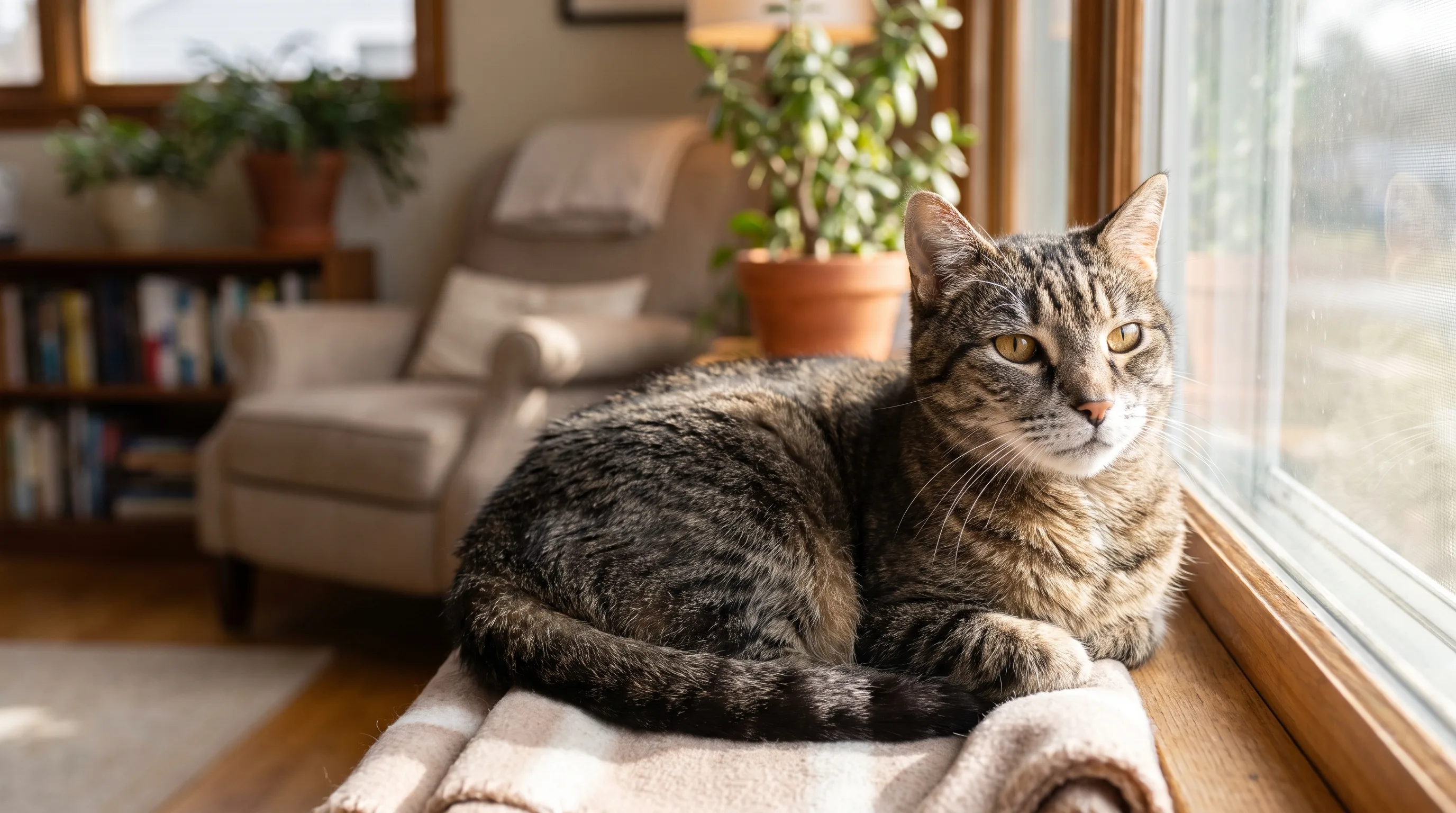
When is a cat a senior? Cat life stages, explained
A cat becomes an adult at around one year old and a senior at about eleven — but 'senior' arrives far earlier than most people expect, and it does not mean old. Vets divide a cat's life into clear stages: kitten, young adult, mature adult, senior, and super-senior. Knowing which one your cat is in tells you what to watch for and when to change the routine, and it answers the question a lot of worried owners type into a search bar: is eleven old for a cat? Short answer, no.
The short answer: a cat's life stages
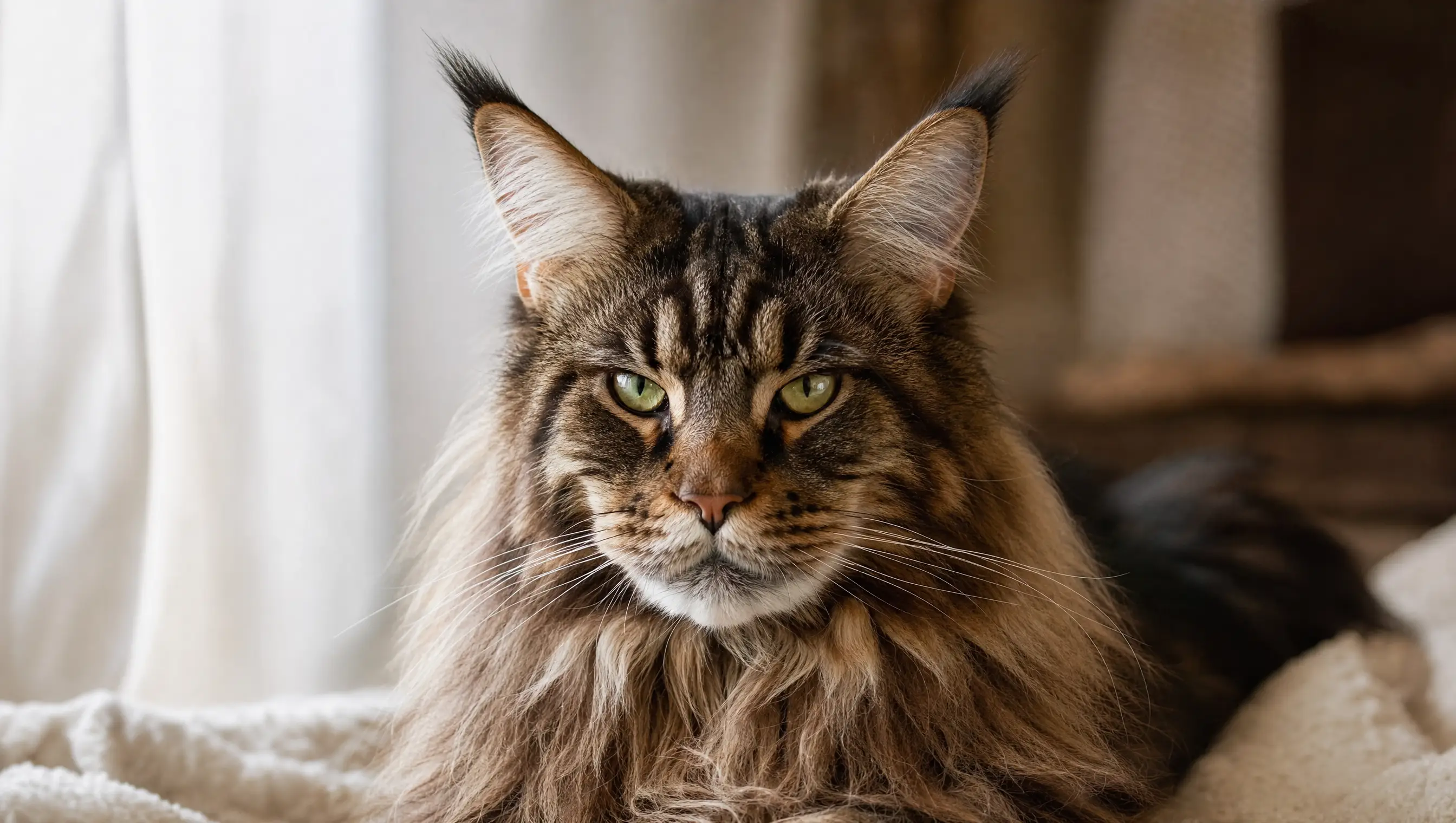
Veterinary bodies like the AAFP and AAHA sort a cat's life into five stages, and they're the clearest map there is. Each one is a cue for how often to see the vet and what to keep an eye on.
Kitten runs birth to 1 year — the fast-growing, learn-everything phase. Young adult is roughly 1–6 years, a cat in its prime. Mature adult is about 7–10, the feline equivalent of middle age, when weight and early dental problems creep in. Senior begins around 11 and runs to about 14. Super-senior (sometimes called geriatric) is 15 and up.
So a cat is technically 'senior' at eleven — which surprises people, because an eleven-year-old cat usually looks and acts perfectly well. The label is about prevention, not decline.
When a kitten stops being a kitten
A kitten officially becomes an adult cat at around 12 months, when growth slows and the fast kitten metabolism settles. Some larger breeds, like the Maine Coon, keep filling out in body and muscle until three or four, but for feeding and life-stage purposes, one year is the line.
That milestone matters most at the food bowl: kitten food is deliberately higher in calories and protein for growth, and an adult cat left on it tends to gain weight. Around the first birthday is the usual point to switch to adult food and settle into a routine. Just getting started? Our new cat checklist covers the early days.
Behaviourally, the wild kitten energy eases over the first two years rather than switching off at twelve months. A one-year-old cat is an adult on paper and often still a teenager in spirit.
Is 11 old for a cat?

No — eleven is the start of the senior stage, not old age. Plenty of cats live well into their late teens, and reaching 15, 18 or even 20 is common for a healthy indoor cat. An eleven-year-old cat is roughly sixty in human terms: firmly retired, but with years of good living ahead.
What changes at eleven is the level of attention, not the cat's quality of life. This is the age to move to twice-yearly vet visits, because the conditions that shorten cats' lives — kidney disease, overactive thyroid, arthritis, dental problems — are common in older cats and far more manageable when caught early. Many are invisible until they're advanced, which is exactly why the check-ups matter more than any symptom you'd notice at home.
If your cat is heading into this stage, senior cat care covers what actually changes and how to keep an older cat comfortable.
How old is your cat in human years?
Cats age fast at first, then steady out, so the 'times seven' shortcut is wrong for them too. A cat's first year is roughly equal to 15 human years, and the second year takes it to about 24. After that, each cat year adds around four human years.
That maths puts a 7-year-old cat at about 44 (early middle age), an 11-year-old at about 60 (newly senior), and a 15-year-old at about 76 (super-senior). It reframes the worry nicely: an eleven-year-old cat isn't ancient, it's a healthy sixty-something that deserves a proper annual check-up.
The stages matter more than the exact number. Knowing your cat is 'mature' rather than 'senior', or 'senior' rather than 'geriatric', is what tells you how closely to watch and how often to visit the vet.
Common questions
At what age is a cat considered senior?
Around 11 years. Vets split feline life into kitten (to 1 year), young adult (1–6), mature adult (7–10), senior (11–14) and super-senior (15+). Senior status is a prompt for more frequent vet checks, not a sign the cat is unwell.
Is 11 old for a cat?
No. Eleven is the beginning of the senior stage, not old age — roughly 60 in human years. Many cats live healthily into their late teens, so an eleven-year-old cat typically has years of good living ahead, provided it gets regular check-ups.
When does a kitten become an adult cat?
At around 12 months a kitten is considered an adult, when growth slows and it's time to switch from kitten food to adult food. Some large breeds like the Maine Coon keep filling out until three or four, but one year is the standard line for feeding and life stage.
How old is a cat in human years?
Not seven per year. A cat's first year is about 15 human years and the second brings it to around 24; after that each year adds roughly four. So a 7-year-old cat is about 44, an 11-year-old about 60, and a 15-year-old about 76.
What are the life stages of a cat?
Five: kitten (birth to 1 year), young adult (1–6), mature adult (7–10), senior (11–14) and super-senior or geriatric (15 and up). Each stage is mainly a guide to how often a cat should see the vet and what health issues become more likely.
At what age is a cat fully grown?
Most cats reach their full size by about 12 months. Large, slow-maturing breeds such as the Maine Coon can keep developing muscle and bulk until three or four years old, but for the average cat, one year marks the end of growth.
See also
More in Cats
Your kitten's first year: the full timeline
From 8 weeks to 12 months, stage by stage — settling in, vaccinations, the socialization window, teething, neutering and the switch to adult food.
Kitten development: a month-by-month guide
From a blind newborn to a near-adult cat in a year. The stages that matter, the socialisation window you can't get back, and why a kitten shouldn't leave its mother before eight weeks.
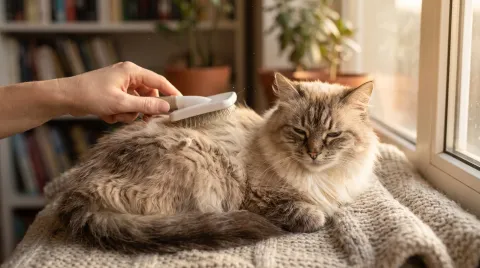
Senior cat grooming: mats, claws, teeth and weekly care
Old cats stop grooming when it hurts. How to clear mats safely, trim thick claws and care for teeth, plus a weekly check that spots trouble early.
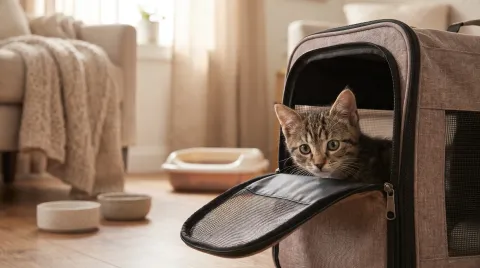
Bringing a kitten home: your first-week plan
One safe room, no chasing, and a vet booking. The calm way to settle a kitten in its first week without overwhelming it.
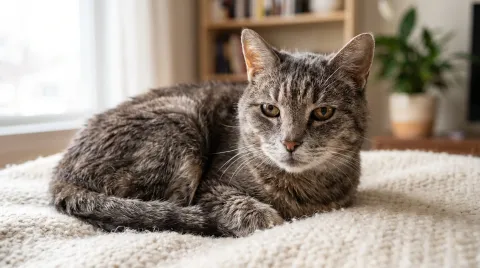
Senior cat care: what changes after 11
After 11 the job shifts from fixing problems to catching them early. The vet schedule, the weight rules and the home all change.
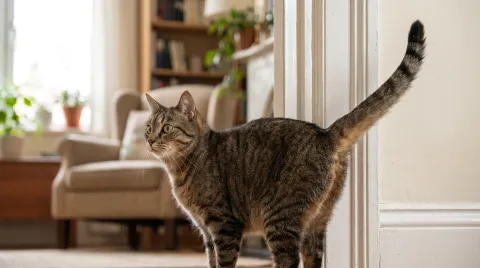
Why is my cat spraying? What it means and how to stop it
Spraying isn't a litter-box failure — it's a message about territory, written in urine. How to tell it from peeing, what's behind it, and the fixes that hold.