
Your kitten's first year: the full timeline
A kitten's first year moves fast — from a wobbly eight-week-old to a near-adult cat in twelve months — but it runs through clear stages you can plan around. Settling in, vaccinations, the socialization window, teething, neutering and the move to adult food each arrive on roughly their own schedule. Here's the whole timeline, with the deeper guide for each stage where you'll want it.
8–12 weeks: home, vaccinations and socialization
Kittens usually come home around eight to twelve weeks, once weaned and eating solid food. Start it in one quiet room rather than the whole house — our new cat checklist and guide to bringing a kitten home cover the setup, from litter tray placement to safe hiding spots.
The vaccination course typically begins around 8–9 weeks with a second dose a few weeks later; your vet will confirm the schedule and when your kitten is fully covered. This overlaps the socialization window — the early weeks when a kitten most easily accepts handling, people and household noise as normal. Gentle daily handling, calm introductions and letting it explore at its own pace now shape the confident adult cat later. A nervous rescue kitten needs this taken especially slowly, as our guide to a shy cat explains.
3–6 months: teething, play and neutering
From around three to six months a kitten loses its baby teeth for the adult set, and it will chew and bite more while that happens — redirect it onto toys rather than hands. This is peak play-energy too: structured play with wand toys channels the hunting drive and saves your ankles, and it's the foundation of a well-adjusted cat. If you want to teach handling and tricks, kittens take to clicker training readily at this age.
Neutering usually happens in this window. Many vets neuter around four to six months, before or as sexual maturity arrives, though timing can vary — confirm it with yours. It's routine, and it heads off spraying, roaming and unwanted litters.
6–12 months: adolescence and adult food
The second half of the first year is a kitten's lanky teenage phase: full of energy, testing limits, and growing into paws that suddenly look too big. Keep the play sessions and the routine going — a bored adolescent cat invents its own entertainment, usually at the top of the curtains.
The switch to adult food comes at around 12 months for most cats, when growth slows and the high-calorie kitten diet is no longer needed. Large, slow-maturing breeds like the Maine Coon keep filling out for another couple of years, but one year is the standard point to move to adult food.
The one-year mark
By twelve months your kitten is, on paper, an adult cat — full-grown for most breeds, on an established vaccination booster schedule, and settling into the personality it'll keep. In spirit it's often still a teenager for another year, so don't be surprised by bursts of kitten energy well into the second year.
From here the map is the life stages: young adult, then mature, then senior. Our guide to cat life stages picks up exactly where this one leaves off, including the honest answer to when a cat is actually 'old'.
Common questions
What are the main milestones in a kitten's first year?
The big ones are: coming home and settling (around 8–12 weeks), the vaccination course and socialization window (8–12 weeks), teething (roughly 3–6 months), neutering (often around 4–6 months), and the switch to adult food at about 12 months.
When should a kitten be vaccinated?
The vaccination course usually starts around 8–9 weeks, with a second dose a few weeks later, and boosters after that. Your vet sets the exact schedule and will tell you when your kitten is fully protected. Keep an indoor-only routine until they confirm it's covered.
When should a kitten be neutered?
Often around four to six months, before or as sexual maturity arrives, though the exact timing can vary and some vets do it earlier. It's a routine procedure that prevents spraying, roaming and unwanted litters — confirm the right timing with your own vet.
When should I switch my kitten to adult cat food?
At around 12 months for most cats, when growth slows and the calorie-dense kitten food is no longer needed. Large, slow-maturing breeds like the Maine Coon keep developing for another couple of years, but one year is the standard point to change over.
When does a kitten become a cat?
A kitten is generally considered an adult at around 12 months, when it reaches its full size and the fast kitten metabolism settles. Behaviourally, many cats stay playful and 'teenaged' into their second year, so the adult label arrives before the kitten energy fully fades.
See also
More in Cats

When is a cat a senior? Cat life stages, explained
A cat is an adult at one and a senior at eleven — but eleven isn't old. The real feline life stages, what each one means, and why 11 is barely retirement age.

Kitten development: a month-by-month guide
From a blind newborn to a near-adult cat in a year. The stages that matter, the socialisation window you can't get back, and why a kitten shouldn't leave its mother before eight weeks.
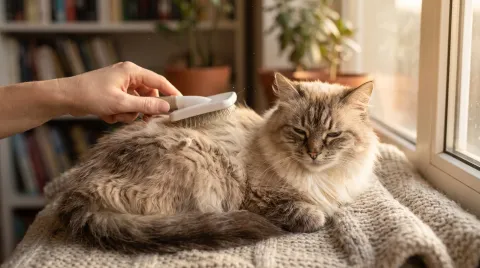
Senior cat grooming: mats, claws, teeth and weekly care
Old cats stop grooming when it hurts. How to clear mats safely, trim thick claws and care for teeth, plus a weekly check that spots trouble early.

Bringing a kitten home: your first-week plan
One safe room, no chasing, and a vet booking. The calm way to settle a kitten in its first week without overwhelming it.
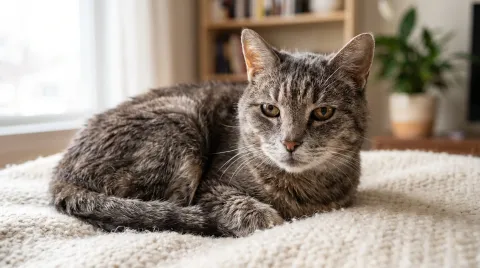
Senior cat care: what changes after 11
After 11 the job shifts from fixing problems to catching them early. The vet schedule, the weight rules and the home all change.
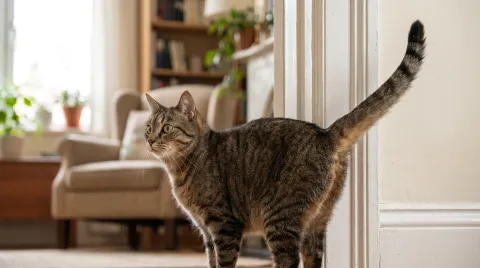
Why is my cat spraying? What it means and how to stop it
Spraying isn't a litter-box failure — it's a message about territory, written in urine. How to tell it from peeing, what's behind it, and the fixes that hold.