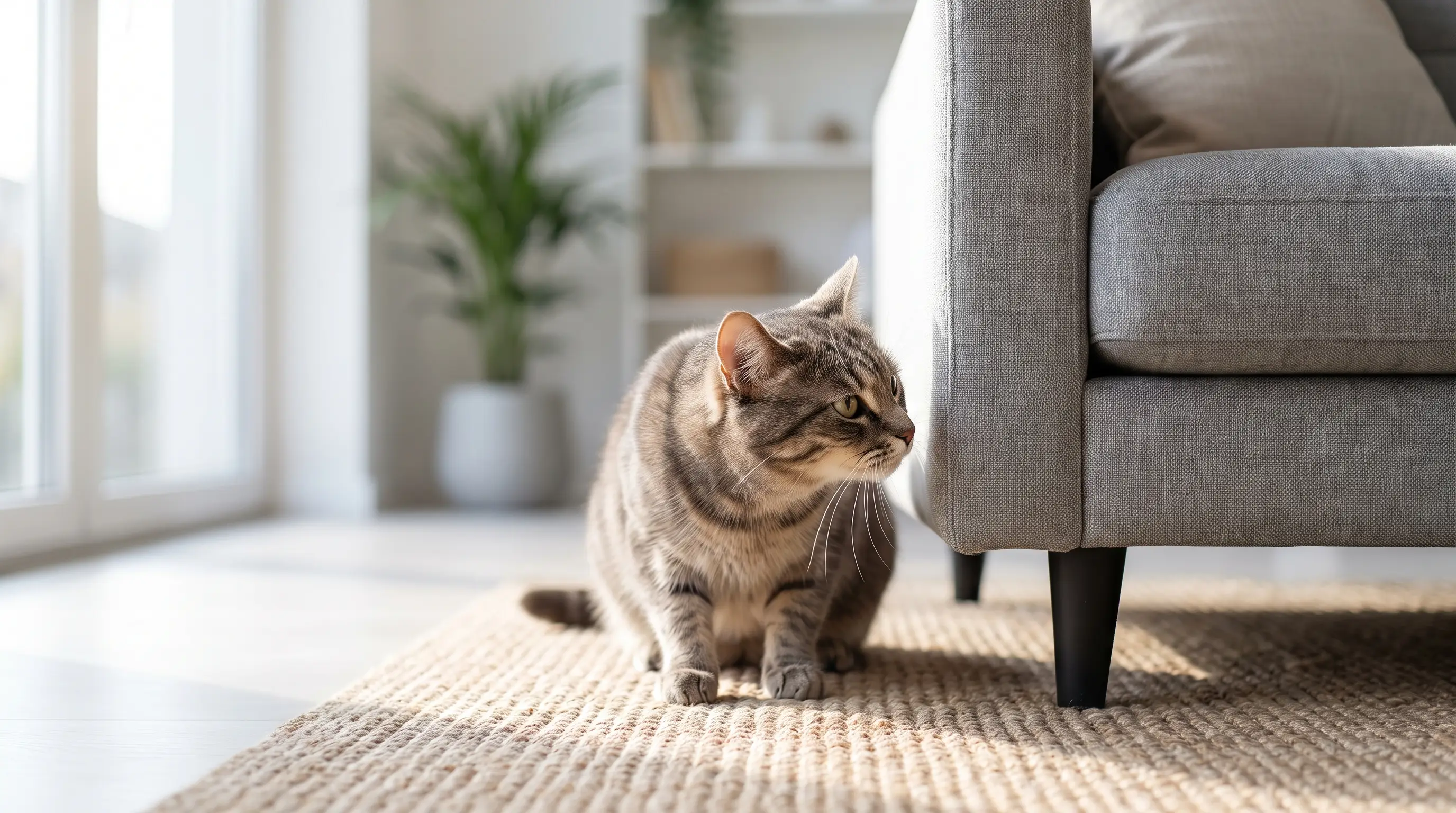
The new-cat checklist: what to set up first
Before your new cat comes home, set up five basics and one quiet room. The basics are a litter box with plain unscented litter, food and water bowls, a sturdy carrier, a bed and a scratching post. The room is a small, calm space where the cat can hide, eat and use the litter tray without meeting the whole household at once. Do that much before adoption day and the first week gets far easier, because a cat that arrives to a prepared home has somewhere safe to be from the moment you open the carrier.
The essentials
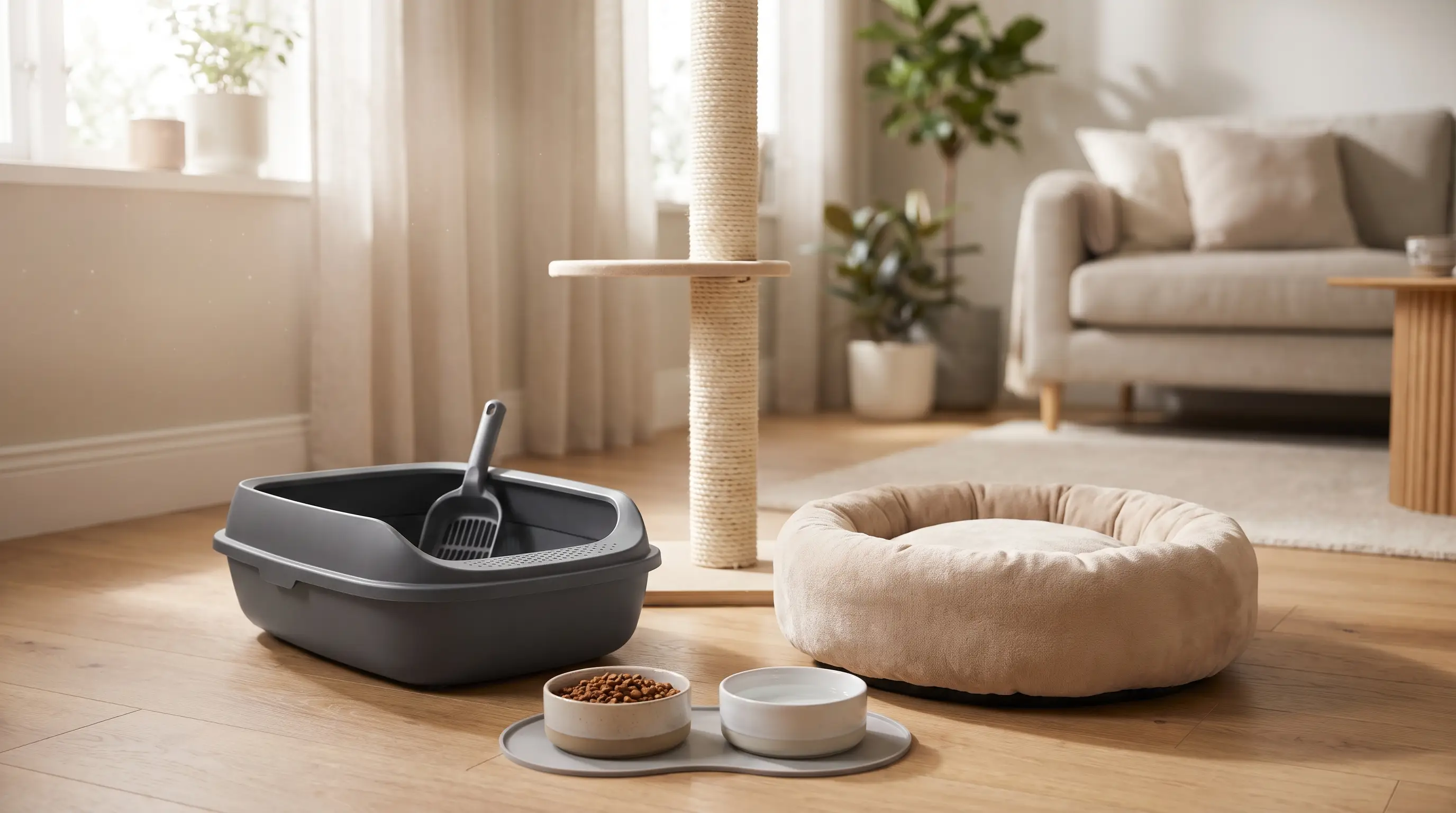
You need five things before a cat arrives, and none of them are fancy. A litter box big enough for the cat to turn around in, filled with plain unscented clumping litter; food and water bowls, ideally shallow and set apart from the tray; a sturdy carrier that opens from the top as well as the front; a bed or a soft blanket in a quiet spot; and a scratching post tall and stable enough that the cat can stretch right up it without tipping it over. That covers eating, drinking, toileting, resting and clawing, which is the whole of a cat's daily needs on day one.
Buy the litter and food first, because those are the two things a cat will look for within the first hour. Get a bag of the same food the shelter or breeder was using, so the diet doesn't change on the same day as everything else. Keep the water bowl away from the food, since many cats dislike drinking right next to where they eat. Everything else — the extra toys, the second bed, the window perch — can wait until you know the cat.
Set up one quiet safe room
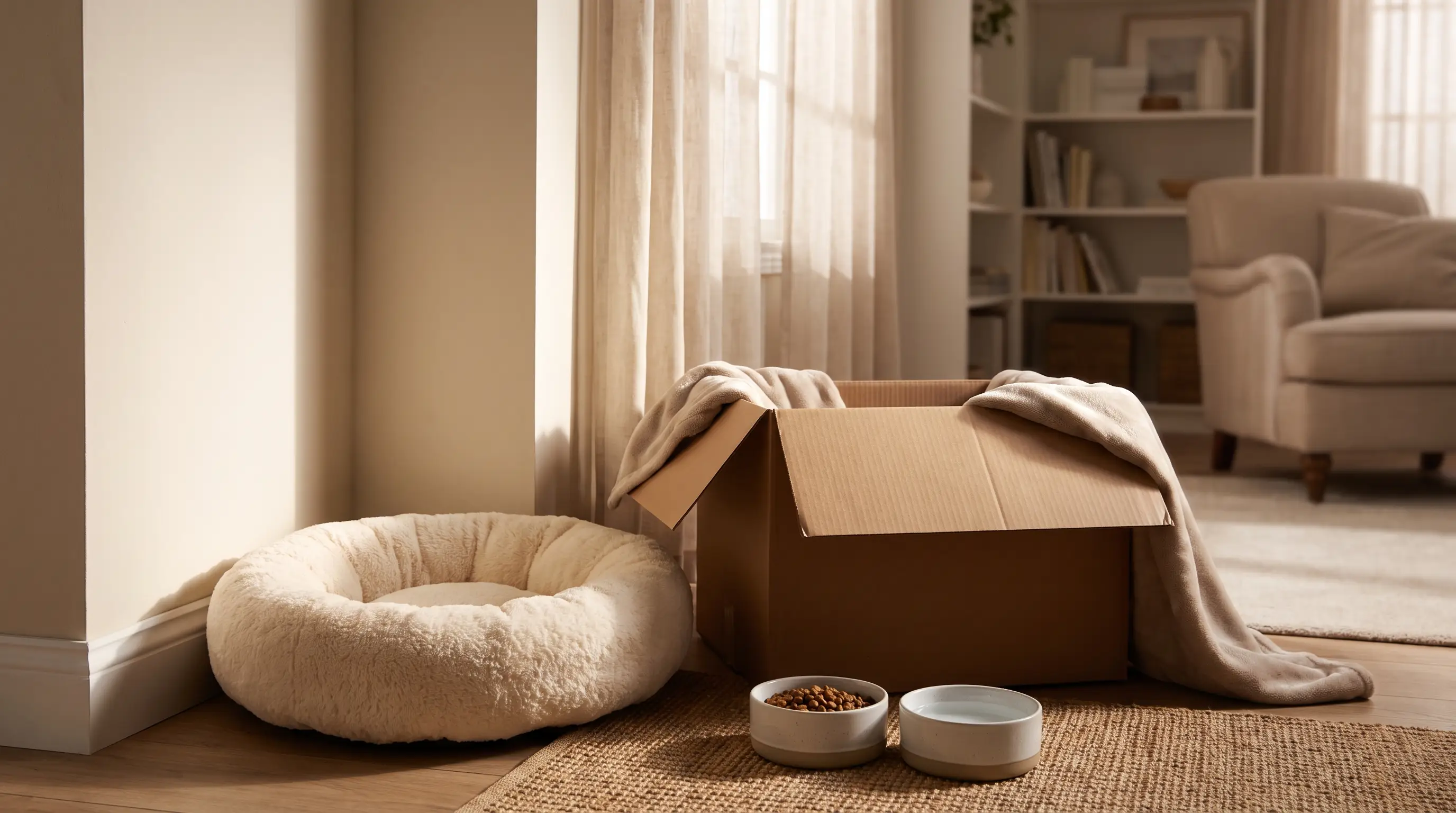
A new cat should meet one room first, not the whole house. Pick a small, quiet space you can close off — a spare bedroom, a study, even a large bathroom — and put everything the cat needs inside it: the litter box in one corner, food and water in another well away from the tray, a bed, and at least one hiding spot such as an open carrier, a cardboard box on its side, or the gap under a bed. A frightened cat that can hide settles faster than one with nowhere to retreat, so the hiding spot matters as much as the food.
The point of the safe room is to shrink the world down to something the cat can manage. A whole house of new smells, sounds and sightlines is a lot to take in after a car journey, and a scared cat will often bolt under the nearest heavy furniture and stay there. One room with familiar-smelling bedding gives it a base to venture out from at its own pace. Let the cat set that pace over days, opening the door wider only when it starts asking to explore. We walk through the full settling-in sequence in bringing a kitten home.
Cat-proof the space
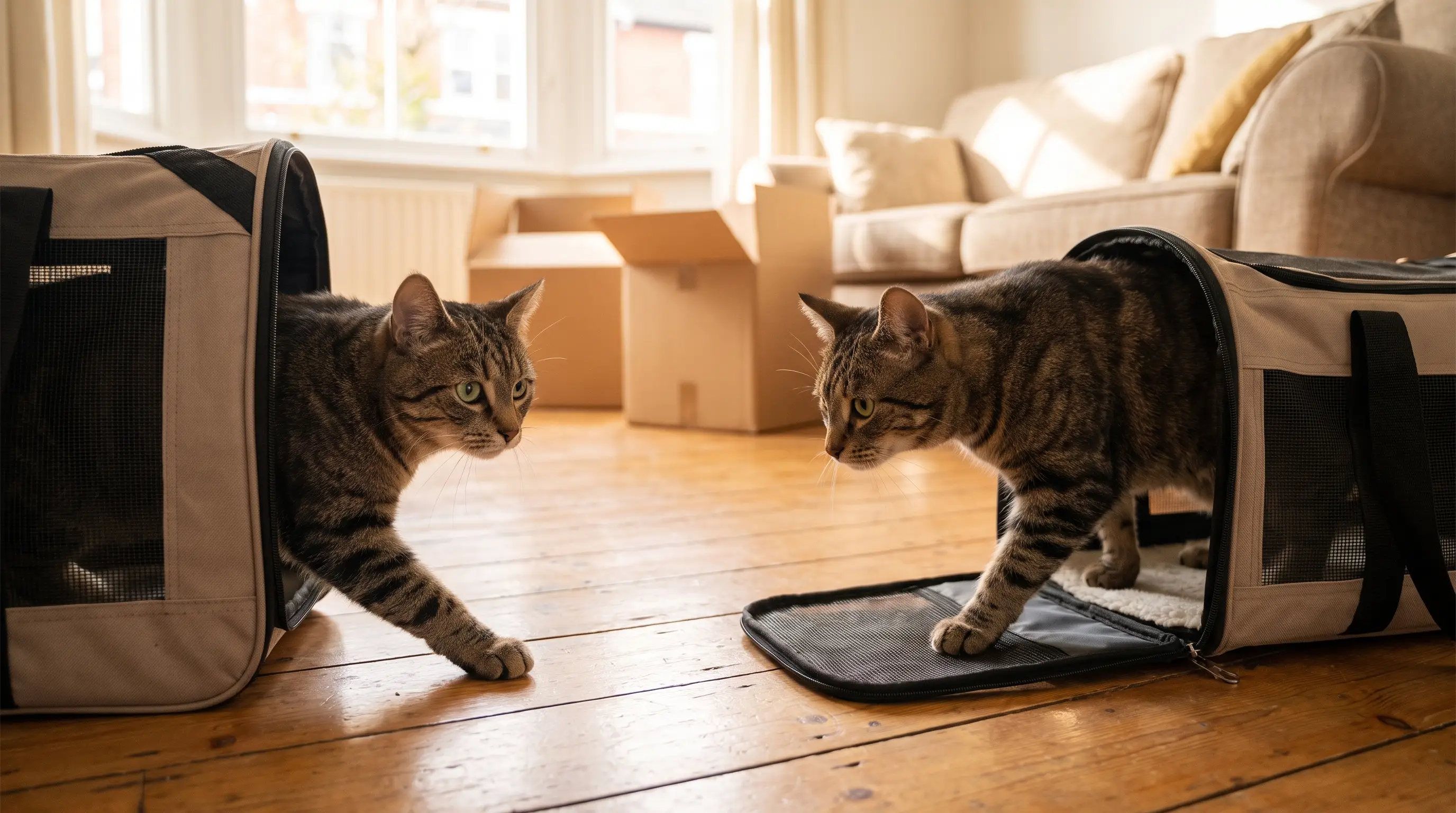
Cat-proof the room and the wider home before the cat is loose in it. Tuck away or clip up dangling cords from blinds, chargers and lamps, since they invite chewing and tangling. Move breakables off the shelves a cat can reach, which is most of them, and check that windows and any balcony are secure — an unscreened upstairs window is one of the most common ways indoor cats get hurt. Fit screens or limit how far windows open, and never assume a high ledge is safe just because it looks it.
Deal with poisons next. Many common houseplants are toxic to cats, lilies most dangerously of all, where even the pollen or the vase water can cause kidney failure, so move those out of the house rather than just up high. Store cleaning products, medicines and anything with essential oils behind closed doors. Several everyday foods are dangerous too, and a curious cat on a worktop will investigate them; the full list is in foods that are toxic to cats.
What not to over-buy
Cats need far less kit than the pet shop suggests, so spend on two things and skip the rest. Put your money into a good scratching post — tall, heavy-based and sisal-wrapped, so the cat uses it instead of the sofa — and a proper litter setup you'll actually keep clean. Most of what's marketed as essential beyond that gathers dust: automated feeders, fountains, elaborate cat trees, and gadgets that a cat ignores in favour of the box they came in.
On litter, a plain covered box or a large open tray with unscented clumping litter beats most of the pricey options, and a self-cleaning robot is rarely worth it for one cat. What matters is size, cleanliness and a quiet location, not features. We compare the litter types and box styles in the cat litter guide. Buy a couple of cheap toys to learn what this particular cat likes before spending on more, because most cats have strong and surprising preferences.
Adoption day itself
On the day, keep it calm and go straight to the safe room. Bring the cat home in the closed carrier, drive gently, and resist the urge to open it in the car or fuss over it the whole way. At home, carry the carrier into the prepared room, shut the door, open the carrier, and then sit back — don't lift the cat out. Let it come into the room in its own time, which might be minutes or might be hours.
Then do less than you want to. Sit quietly nearby, let the cat explore and eat when it's ready, and keep other pets, children and visitors out for the first day or two. The most common first-day mistake is flooding a nervous cat with attention, which slows everything down. Give it space, a predictable routine and time, and most cats relax within a week or two. If you're still deciding which cat suits your home, our cat breed profiles cover typical temperament and needs.
Common questions
What do I need before getting a cat?
At a minimum you need a litter box and unscented litter, food and water bowls, a carrier, a bed and a scratching post, plus one quiet room set up before the cat arrives. Have a bag of the same food the cat is already eating ready too, so its diet doesn't change on moving day. Everything else can be bought later, once you know the cat.
What should I buy for a new cat?
Buy the essentials — a litter box, unscented clumping litter, food and water bowls, a sturdy carrier, a bed and a tall, stable scratching post — and put your money into the scratching post and litter setup rather than gadgets. Automated feeders, fountains and elaborate cat trees are optional and often ignored. A couple of cheap toys will tell you what this cat actually likes.
How do I prepare my house for a new cat?
Prepare one quiet room with a litter box, food, water, a bed and a hiding spot, then cat-proof it and the wider home. Secure or tuck away dangling cords, move breakables and toxic plants out of reach, make windows and balconies safe, and lock away cleaning products and medicines. Keep the rest of the house calm and low-traffic for the first few days.
Does a new cat need its own room at first?
Yes, a new cat settles best in one small, quiet room before it meets the whole house. A single space with litter, food, water and somewhere to hide is far less overwhelming after a stressful move, and a scared cat that can retreat relaxes faster. Open the rest of the home to it gradually, at the cat's pace, over days.
How many litter boxes does one cat need?
The common guideline is one litter box per cat plus one spare, so a single cat is usually best with two boxes in different quiet spots. During the first days in the safe room, one clean box in that room is enough. Once the cat has the run of the house, a second box, well separated from the first, helps prevent accidents.
What plants are toxic to cats?
Lilies are the most dangerous common houseplant for cats — every part is toxic and even the pollen or vase water can cause kidney failure — so keep them out of the house entirely. Other toxic plants include tulips, daffodils, sago palm, dieffenbachia, philodendron, pothos and aloe. If you're unsure about a plant, move it out of reach and check before bringing a cat home.
See also
More in Cats

The longest-lived cat breeds, and what actually adds years
Siamese and Russian Blues regularly see their late teens; some cats double a dog's run. The breeds with the long odds — and the honest truth that how a cat lives beats what it was born as.

Hairless cat breeds: the four to know, and what no fur really costs
Sphynx, Peterbald, Donskoy — and the half-bald Lykoi. Where each gene came from, why hairless means more care rather than less, and the allergy promise none of them can keep.
Single kitten syndrome: real, overstated, or both?
Rescues warn that a lone kitten becomes a biting, yowling tyrant, and some won't rehome singles at all. The evidence is thinner than the warnings — but the thing underneath the branding is real. An honest sort-out.

How to introduce a new cat to your resident cat
The scent-swap protocol that actually works, step by step — with realistic timelines and the signs that mean you moved too fast.

Helping a shy rescue cat settle in
A shy rescue cat hiding for days is normal, not rejection. One quiet room, a hiding spot and patience settle almost any scared cat. Here is how.

Adopting a senior dog or cat
What to expect when you adopt an older dog or cat: the calm, the fast bond, the vet planning, and the honest trade-off of less time.