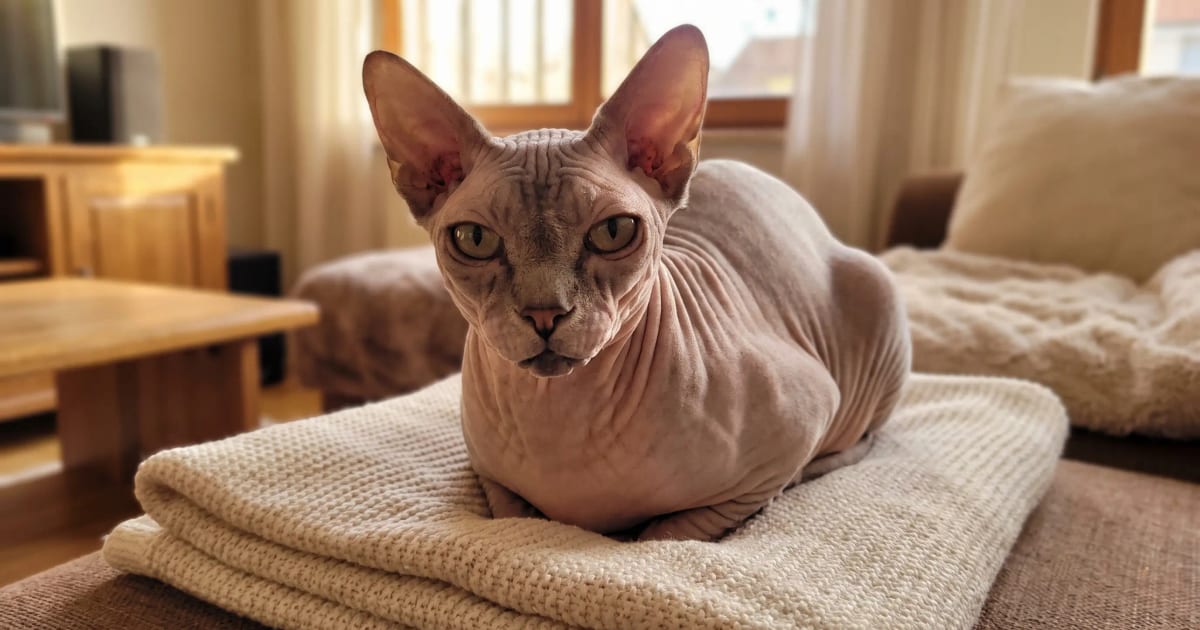
Hairless cats
No coat, all character. Hairless cats trade fur for warmth-seeking, people-obsessed personalities — and for skin that needs real care.
Traits of the group
Popular breeds
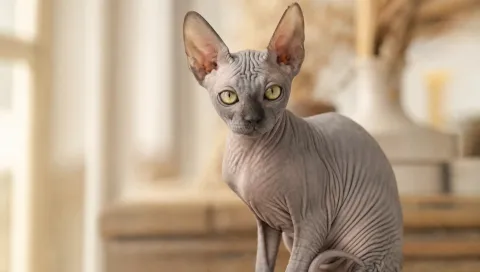
Every breed in this group (3)
Common questions
Do hairless cats need sunscreen or sun protection?
Yes — with no fur to shield the skin, a hairless cat can genuinely sunburn, even indoors through a sunny window. Limit direct midday sun and ask a vet about cat-safe sunscreen for a cat that spends real time in bright light.
How do you care for a hairless cat's skin?
With regular bathing, usually weekly — fur normally absorbs a cat's natural body oils, and without it those oils build up on bare skin and can feel greasy or irritate. Ears need extra attention too, since they collect more wax without fur to catch it first.
Are hairless cats hypoallergenic?
No — the main cat allergen, Fel d 1, comes from saliva and skin glands rather than fur, and a hairless cat still produces it. Less fur means less surface for allergen to collect and spread around a home, but it isn't allergy-free.
Do hairless cats get cold?
Yes, easily — with no coat for insulation, hairless cats actively seek out warmth: laps, sunny windows, heating vents, a spot under the blankets. Many owners keep their home a little warmer or add a cat sweater for cooler months.
Are hairless cats affectionate?
Very, as a rule — hairless breeds like the Sphynx are known as velcro cats that follow their people from room to room, seeking both company and body heat. Expect a cat that wants to be involved, not one that keeps its distance.
Can hairless cats go outside?
It's not recommended. The combination of sunburn risk, no insulation against cold, and no coat to buffer scrapes makes outdoor time genuinely riskier for a hairless cat than for a coated one — an enclosed catio is a safer way to give one fresh air.