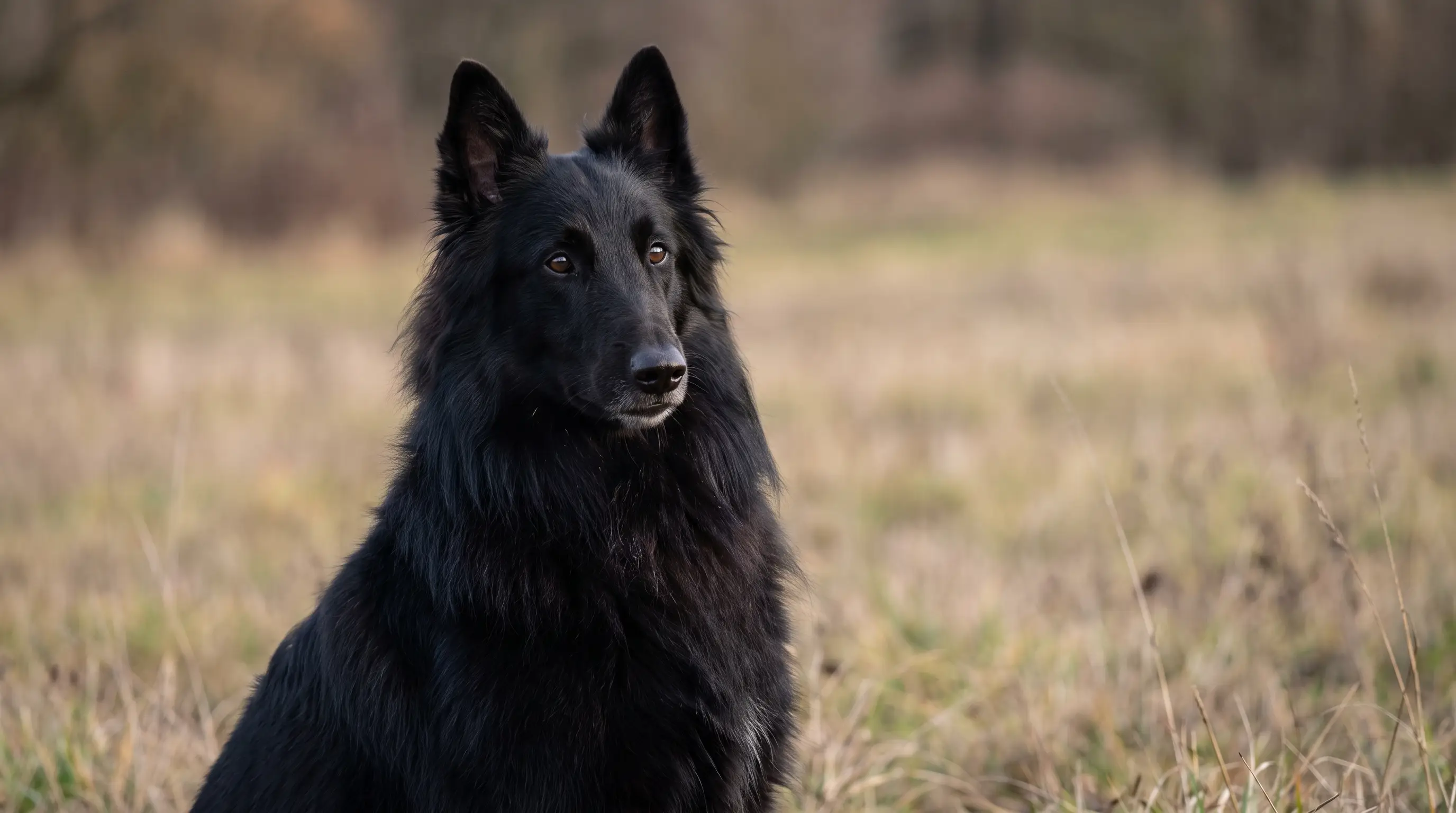
Belgian Sheepdog
A shadow in silk — Belgium's black-coated thinker.
Vital stats
| Size | Medium-large · 56–66 cm |
| Weight | 20–30 kg |
| Life expectancy | 12–14 years |
| Energy | High — 90+ min/day |
| Shedding | High, with heavy seasonal blows |
| Coat | Long, straight double coat · black |
| Group | Herding · FCI №15 / AKC |
| Origin | Groenendael, Belgium |
| FCI group | 1 — Sheepdogs and Cattledogs · FCI 15 |
Breed traits
Friendliness
Care
Mind
The Belgian Sheepdog by the numbers
The Belgian Sheepdog facts owners search for most — price, lifespan, weight, shedding and colours, in one place.
Widely bred, so you can usually find a litter from a registered breeder without a long wait. Ongoing costs run high — more food, bigger doses at the vet, and pricier insurance. Its coat also needs a professional groom every few weeks — a real line in the budget.
We don't quote a single figure: the real price swings with breeder, region, bloodline and health testing — and a rescue costs a fraction of a breeder's litter. Adopting is almost always the cheapest route.
Temperament
Bred to herd by day and guard the farmstead by night, the Groenendael watches everything and forgets nothing. It is the most outwardly elegant of the Belgians and among the most sensitive — devoted to its family, reserved with strangers, and so responsive that a sharp word lands like a thunderclap. Give it work and gentle, consistent leadership.
Habits & quirks
The velvet orbit
It circulates quietly through the house, keeping every family member within sensor range.
Weather report
The first cold snap of autumn produces visible joy — this coat was built for it.
The doorway commentary
Arrivals are announced with conviction; a Groenendael takes its watch duties seriously.
Mirror moods
It reads your emotional state with unnerving accuracy and reflects it straight back.
Health
The Belgian Sheepdog is fundamentally a sound working dog, and there's no single condition that defines the breed. What it needs most for a long, healthy life is a job: this is a fit, athletic herder that stays well when it's kept lean, exercised hard and given real work for its mind. Buy from a breeder who health-tests their lines and can show you the results, keep an eye on a growing pup's joints, and don't let a sensitive dog stew in boredom — an under-worked Groenendael frets, and a fretful dog is not a well one.
Nutrition
| Exercise | Ninety minutes daily blending running with brainwork — obedience, agility and trick training all delight it. |
| Grooming | Thorough brushing weekly, near-daily during the twice-yearly blows when black drifts colonise the house. |
| Training | Reward-based and consistent; harsh corrections shut this sensitive breed down completely. |
| Socialisation | Wide early exposure keeps natural reserve from tipping into shyness or sharpness. |
Feed a Belgian Sheepdog to its workload, which is considerable — this is an active dog that burns real fuel. Weigh the meals, count training treats into the day's total, and aim for ribs you can feel under that dense black coat. Keep it lean: extra weight on an athletic herding frame steals the very stamina the breed is built for, and does its joints no favours over a long life.
Puppy guide
A Groenendael puppy is bright, busy and sensitive from the start, and the first year sets the adult you'll live with. Keep the body's work gentle while the joints are forming, but busy the mind early with short training games and calm new experiences. Socialise widely and thoughtfully — this reserved breed can tip into shyness or sharpness without it — and teach an off switch as deliberately as you teach a sit, so an alert dog learns how to settle.
Training
This is one of the most trainable dogs there is, and also one of the most sensitive, so the two go together. A Belgian Sheepdog learns fast, reads you closely and wants to work — give it a real curriculum of obedience, agility or trick work rather than just a walk. Keep everything reward-based: a harsh correction lands on this breed like a thunderclap and shuts it down completely. Train the mind, keep it fair, and the manners follow.
Life expectancy
Belgian Sheepdogs live 12–14 years. The Belgian Sheepdog is a hardy, long-lived breed, and you keep it at the top of that range the same way you keep it happy: lean weight, parents from health-tested lines, and a life with enough real work in it to keep body and mind sound.
Similar breeds
Breeds with a similar build and background — worth a look if this one isn't quite the fit.
Breeds that look like this
Common questions
Is the Belgian Sheepdog the same as the Groenendael?
Yes — 'Belgian Sheepdog' is the American name for the long-haired black variety known elsewhere as the Groenendael. Under FCI rules it's one of four coat varieties of a single Belgian breed.
Do Belgian Sheepdogs shed a lot?
Yes — steadily year-round and dramatically twice a year. A quality brush and a tolerant attitude to black hair are prerequisites.
Are Belgian Sheepdogs easier than Malinois?
Somewhat — the Groenendael is typically softer and less relentlessly driven, making it more liveable for an active pet home. It still needs far more work and engagement than an average companion breed.
Is the Belgian Sheepdog hypoallergenic?
Not really. No dog is truly hypoallergenic, and the Belgian Sheepdog's shedding coat releases plenty of the dander that sets off allergies. If someone at home is allergic, this isn't the easiest breed to live with — spend time around one first.
Is the Belgian Sheepdog good with children?
They can be. The Belgian Sheepdog is reasonably sociable and can be good with children in the right home, especially when socialised early. Supervise around young kids and teach dog and child to respect each other.
Is the Belgian Sheepdog easy to train?
Yes. The Belgian Sheepdog is one of the more trainable breeds — quick to learn and keen to work with you, which makes reward-based training straightforward. Start early, keep it positive, and it picks things up fast.