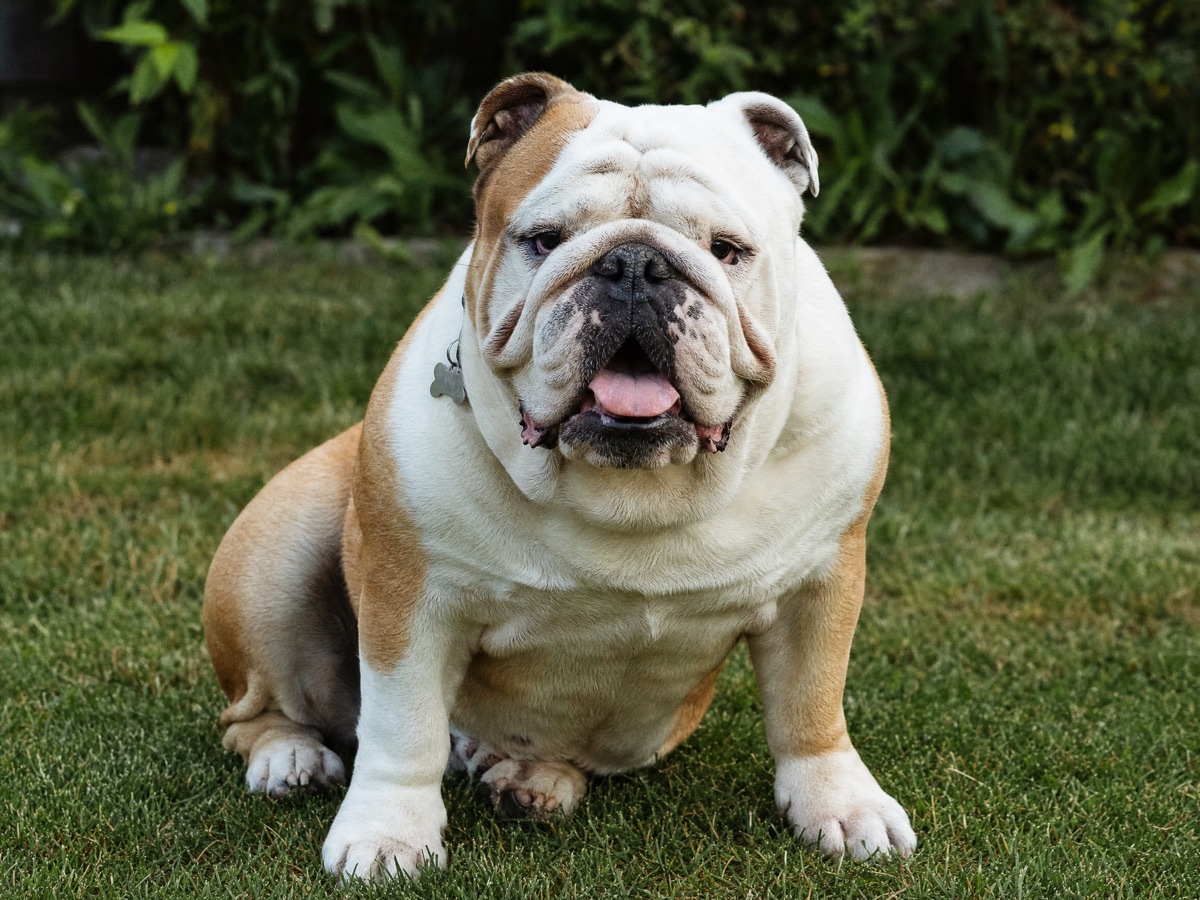
Bulldog
A wrinkled, snuffling softie — stoic, stubborn and endlessly loveable.
On these lists: Dogs for apartments
Vital stats
| Size | Medium · 31–40 cm |
| Weight | 18–25 kg |
| Life expectancy | 8–10 years |
| Energy | Low — 20–40 min/day |
| Shedding | Moderate, year-round |
| Coat | Short, smooth · fawn, red, brindle, white |
| Group | Non-Sporting · FCI №149 / AKC |
| Origin | England |
| FCI group | 2 — Pinscher and Schnauzer, Molossoid and Swiss Mountain Dogs · FCI 149 |
Breed traits
Friendliness
Care
Mind
The Bulldog by the numbers
The Bulldog facts owners search for most — price, lifespan, weight, shedding and colours, in one place.
Widely bred, so you can usually find a litter from a registered breeder without a long wait. Plan for steady ongoing costs — mid-range food, routine vet care and insurance.
We don't quote a single figure: the real price swings with breeder, region, bloodline and health testing — and a rescue costs a fraction of a breeder's litter. Adopting is almost always the cheapest route.
Temperament
Bred to face a bull and not flinch, the Bulldog kept the courage and let the ferocity go: what remains is unshakeable calm, quiet affection and a granite streak of stubbornness. It loves children, tolerates chaos, and meets most of life's demands — including your training plans — with the same amiable, immovable patience.
Habits & quirks
The professional nap
Any surface, any hour; a Bulldog treats rest as a vocation.
The sit-down protest
When it decides the walk is over, it sits — and negotiation begins.
Chin parking
That heavy head will find your knee and stay there.
Doorstep supervision
It prefers to observe household business from one strategic, horizontal position.
Health
The Bulldog's flat face is its defining health issue: many struggle to breathe well and cannot cool themselves, a set of problems called BOAS, so a Bulldog overheats fast. The hips can develop dysplasia too, and the breathing, joints and eyes all need watching. Buy from a breeder who selects for open nostrils and sound, easy movement, keep your Bulldog lean, and budget for the vet care the breed tends to need.
Nutrition
| Heat | Bulldogs overheat quickly and cannot cool themselves well — walk early, keep shade and water close, never leave one in a car. |
| Skin folds | Wipe and dry the facial wrinkles and tail pocket regularly to prevent infection. |
| Weight | Extra kilos worsen breathing and joint problems — measure meals and keep the waist visible. |
| Health | Choose breeders who prioritise open nostrils and sound movement, and budget for vet care; breathing, joints and eyes all need watching. |
Every extra kilo lands straight on a Bulldog's breathing and its joints, so keeping the dog lean is the whole job. Measure the meals, count treats into the day's total, and aim for ribs you can feel under the broad frame. A trim Bulldog moves easier and breathes easier.
Puppy guide
A Bulldog puppy is affectionate and easy-going, but it shouldn't be pushed. Keep exercise short and cool while the joints are still forming, and never let a puppy overheat — they cool badly from the start. Get it used to having the face wrinkles and the tail pocket wiped and dried early, so cleaning them stays easy for life, and socialise gently and often.
Training
Bulldogs are clever and famously stubborn, so training works best in short, upbeat, reward-based sessions rather than repetition the dog will simply sit out. Keep it light and food-motivated, start early while the habits are forming, and don't drill in the heat — a Bulldog that gets wound up or hot needs to stop and cool down. Patience gets you a long way with this breed.
Known health issues
No breed is problem-free. These are the conditions most worth knowing about for this breed — with what a good breeder screens for and what an owner watches. General guidance, not a substitute for your vet.
Breathing trouble (BOAS)
Flat-faced breeds are prone to obstructed airways — the full story is here. Good breeders screen: Airway-graded parents (RFG 0–3); open nostrils. Watch for: Snoring, easy tiring, and overheating in warm weather.
Hip dysplasia
A poorly fitting hip joint that wears early and can cause pain and arthritis, most common in larger breeds. Good breeders screen: Hip-scored parents (BVA/OFA/FCI). Watch for: Stiffness, a bunny-hop run, or reluctance on stairs.
Worried about a symptom right now? Flat faces, hard breathing: the truth about brachycephalic dogs
Life expectancy
Bulldogs live 8–10 years. Breathing and weight decide most of it. A Bulldog from breeders who select for open airways and sound movement, kept lean and out of the heat, sidesteps the problems that cut the breed's life short. Steady weight and honest breeding are the two things most within your control.
Popular Bulldog mixes
Bullador
A sturdy, affectionate mix that's usually more active and easier-breathing than a Bulldog, though the flatter-faced pups still need watching in the heat.
Beabull
A friendly, food-loving cross with a stubborn streak from both sides. Fun and affectionate; keep it lean and mind the shorter-faced ones in the heat.
Bullboxer
A muscular, playful, protective mix with more energy than a Bulldog. It needs real exercise and early training, and can still overheat.
Bulldogge
A bigger, more athletic bulldog type with a longer muzzle and more drive. Powerful and affectionate; it wants a job and steady handling.
English Bulldog Poodle
A curly-coated, often lower-shedding cross that's usually more active than a Bulldog. Coat and build vary a lot from pup to pup.
Similar breeds
Breeds with a similar build and background — worth a look if this one isn't quite the fit.
Breeds that look like this
Common questions
Are Bulldogs healthy dogs?
The breed faces many health issues from its extreme build — breathing, joints, skin and heat sensitivity. Choose careful breeders and keep the dog lean and cool.
Are Bulldogs good apartment dogs?
Yes — they're calm, quiet and low-energy, needing only short gentle walks. Just avoid heat and stairs, and never over-exert them.
Are Bulldogs good with children?
Famously so — they're patient, sturdy and tolerant, and genuinely enjoy family life. Supervise as with any dog, and teach children not to disturb one while it eats or sleeps.
Does the Bulldog shed a lot?
Moderately. The Bulldog sheds a fair amount, steadily through the year with heavier seasonal patches. A weekly brush keeps most of the loose hair off your floors and clothes.
Is the Bulldog hypoallergenic?
Not really. No dog is truly hypoallergenic, and the Bulldog's shedding coat releases plenty of the dander that sets off allergies. If someone at home is allergic, this isn't the easiest breed to live with — spend time around one first.
Is the Bulldog easy to train?
Reasonably. The Bulldog is trainable with consistency and rewards, though it isn't the quickest study. Keep sessions short and positive, and be patient with the basics like recall.
Stories featuring this breed
All stories →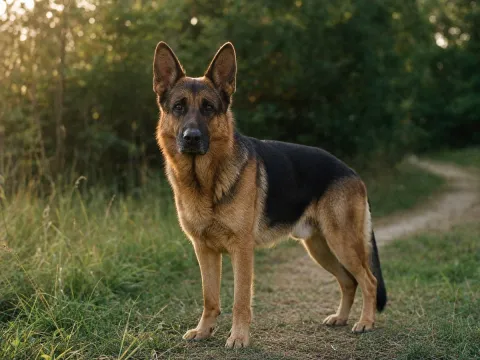
PAW Patrol breeds: every pup's real dog, from Chase to Tracker
Chase is a German Shepherd, Zuma is a Chocolate Labrador, and Skye's Cockapoo isn't a registered breed at all. The honest, canon breed behind every PAW Patrol pup.
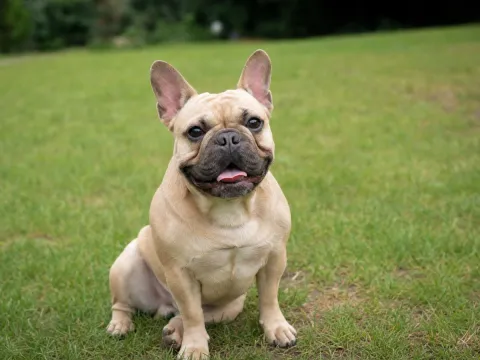
Flat faces, hard breathing: the truth about brachycephalic dogs
A pug's snore is a warning, not a feature. What BOAS is, which breeds it affects, and what a responsible owner and breeder actually do about it.
Who invented dog breeds, and when
Most 'ancient' breeds are younger than the bicycle. The breed as we know it was invented by Victorians with a stud book, in about 1873.