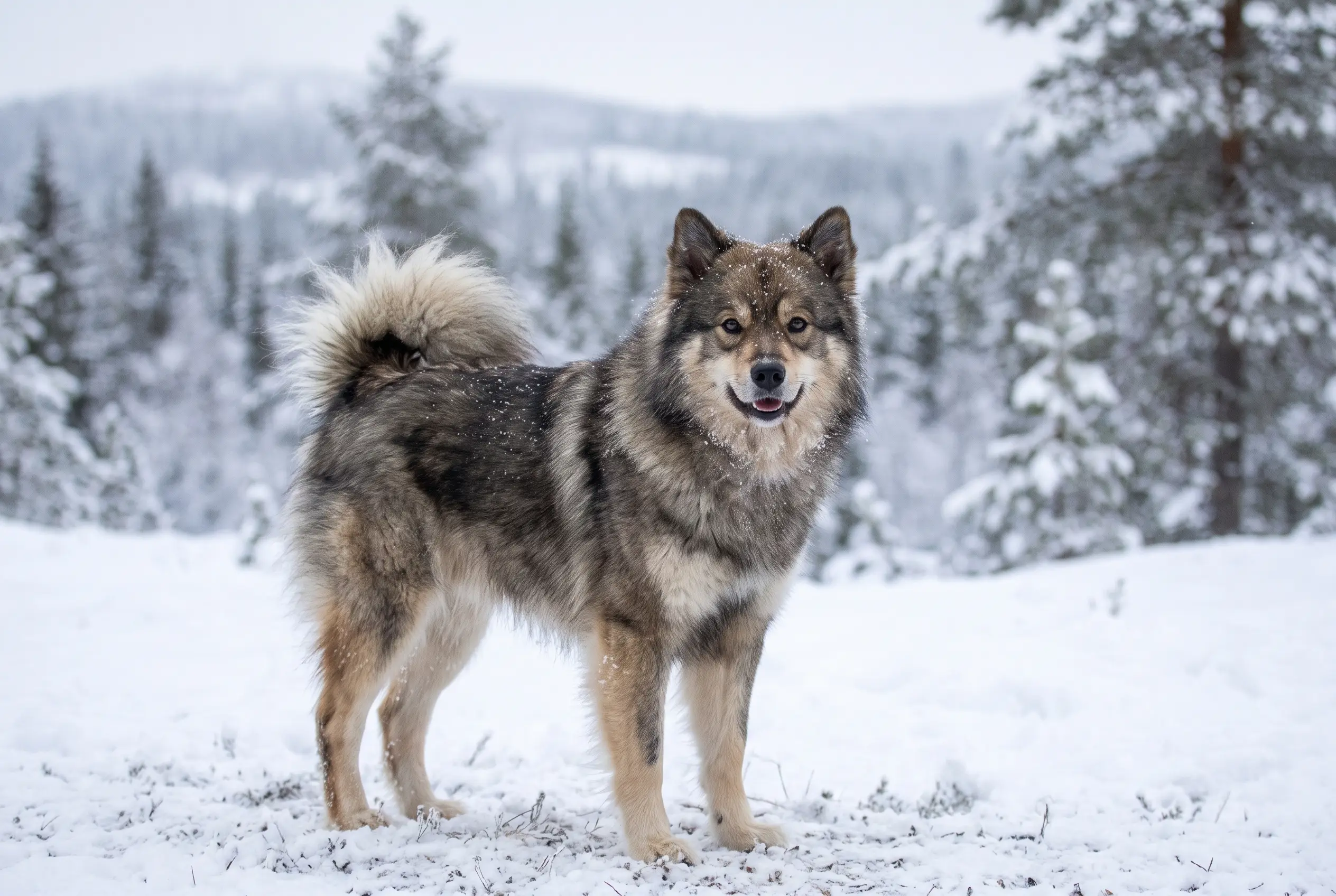
Finnish Lapphund
A reindeer herder in a teddy-bear coat — Arctic sense, family-room soul.
Vital stats
| Size | Medium · 41–52 cm |
| Weight | 15–24 kg |
| Life expectancy | 12–14 years |
| Energy | Moderate–high — 60 min/day |
| Shedding | Heavy, with major seasonal moults |
| Coat | Profuse double coat · black, brown, tan and many combinations |
| Group | Herding · FCI №189 / AKC |
| Origin | Lapland, Finland |
| FCI group | 5 — Spitz and primitive types · FCI 189 |
Breed traits
Friendliness
Care
Mind
The Finnish Lapphund by the numbers
The Finnish Lapphund facts owners search for most — price, lifespan, weight, shedding and colours, in one place.
Widely bred, so you can usually find a litter from a registered breeder without a long wait. Plan for steady ongoing costs — mid-range food, routine vet care and insurance. Its coat also needs a professional groom every few weeks — a real line in the budget.
We don't quote a single figure: the real price swings with breeder, region, bloodline and health testing — and a rescue costs a fraction of a breeder's litter. Adopting is almost always the cheapest route.
Temperament
Herding reindeer demanded a dog quick enough to dodge antlers and calm enough to live in the family tent, and the Lapphund still carries both settings. It startles fast, recovers faster, and defaults to cheerful cooperation. Expect a soft-hearted, faintly comic companion that keeps one ear on the household at all times.
Habits & quirks
The startle-and-shrug
A sudden noise gets a leap sideways, a quick think, and a return to business — antler-dodging reflexes die hard.
Town crier
Herding was done with voice; visitors, squirrels and interesting weather all get announced.
Snow joy
The first flakes of winter produce visible delight; summer heat produces a strategic retreat to tiles.
Soft supervision
It follows the family from room to room, settling where it can watch everyone at once.
Health
The Finnish Lapphund is a hardy northern breed with a well-earned reputation for soundness, and there's no single disorder its profile flags to warn you about. Do the ordinary things well: buy from a responsible breeder and ask what health testing they do and can show you, keep the dog lean and fit, and mind the two care points the coat and the climate create. The double coat needs real brushing rather than a vet, and the heat needs respect — this is an Arctic dog, so shade, water and easing off exercise on warm days matter more than they would for most breeds.
Nutrition
| Grooming | Brush thoroughly once or twice weekly — daily during the two epic annual moults; never clip the double coat. |
| Exercise | An hour a day of varied walking and play suffices, topped up with training games for that busy mind. |
| Heat | Built for the Arctic: provide shade, water and restraint on warm-weather exercise. |
| Training | Quick and willing, with a light independent streak; keep sessions fun and the barking channel managed early. |
A Finnish Lapphund needs moderate daily fuel to match roughly an hour of walking and play, not a sled dog's ration. Feed to that real activity, weigh the meals, and count training treats into the day's total. Keep him lean — and don't be fooled by the coat, because that profuse double coat hides a thickening waistline easily, so judge condition with your hands, not your eyes. Lean weight keeps this agile herder light on its feet for a long life.
Puppy guide
A Finnish Lapphund puppy is friendly, clever and quick to learn, and the first year is about channelling all of that. Socialise him broadly while keeping training short and fun — this is a soft, willing breed that does its best work when it's enjoying itself. Get on top of the barking early, because herding was done with voice and the habit sets in young if nothing shapes it. Introduce coat handling and brushing as a normal routine from the start, keep hard exercise sensible while the joints are growing, and don't leave him long hours alone — this breed wants to be part of everything.
Training
The Finnish Lapphund is quick and willing, with just a light streak of northern independence — an easy dog to train as long as you keep it fun. Reward-based, varied, upbeat sessions suit it far better than repetition or pressure. The one habit to manage from the start is the voice: barking was a herding tool, so it comes naturally, and early training softens it even if it rarely deletes it entirely. Put that busy mind to work with games and tricks and you'll have a cheerful, cooperative partner.
Life expectancy
Finnish Lapphunds live 12–14 years. The Finnish Lapphund is a hardy, long-lived northern breed, and you keep one at the top of its range the straightforward way: lean weight, an hour of daily exercise and mental work, a well-kept double coat, and sensible care in the heat it wasn't built for. Buy from a responsible breeder who tests their stock, keep the dog fit rather than heavy, and this is an easy breed to share a long life with.
Similar breeds
Breeds with a similar build and background — worth a look if this one isn't quite the fit.
Breeds that look like this
Common questions
Are Finnish Lapphunds good family dogs?
Excellent — gentle, patient and genuinely fond of children. They want to be part of everything and dislike long hours alone.
Do Finnish Lapphunds shed a lot?
Enormously, twice a year, with steady background shedding besides. If floating undercoat troubles you, this is not your breed.
Do Finnish Lapphunds bark a lot?
They're vocal by heritage — barking was a herding tool. Early training softens the habit but rarely deletes it.
Is the Finnish Lapphund hypoallergenic?
Not really. No dog is truly hypoallergenic, and the Finnish Lapphund's shedding coat releases plenty of the dander that sets off allergies. If someone at home is allergic, this isn't the easiest breed to live with — spend time around one first.
Is the Finnish Lapphund easy to train?
Yes. The Finnish Lapphund is one of the more trainable breeds — quick to learn and keen to work with you, which makes reward-based training straightforward. Start early, keep it positive, and it picks things up fast.