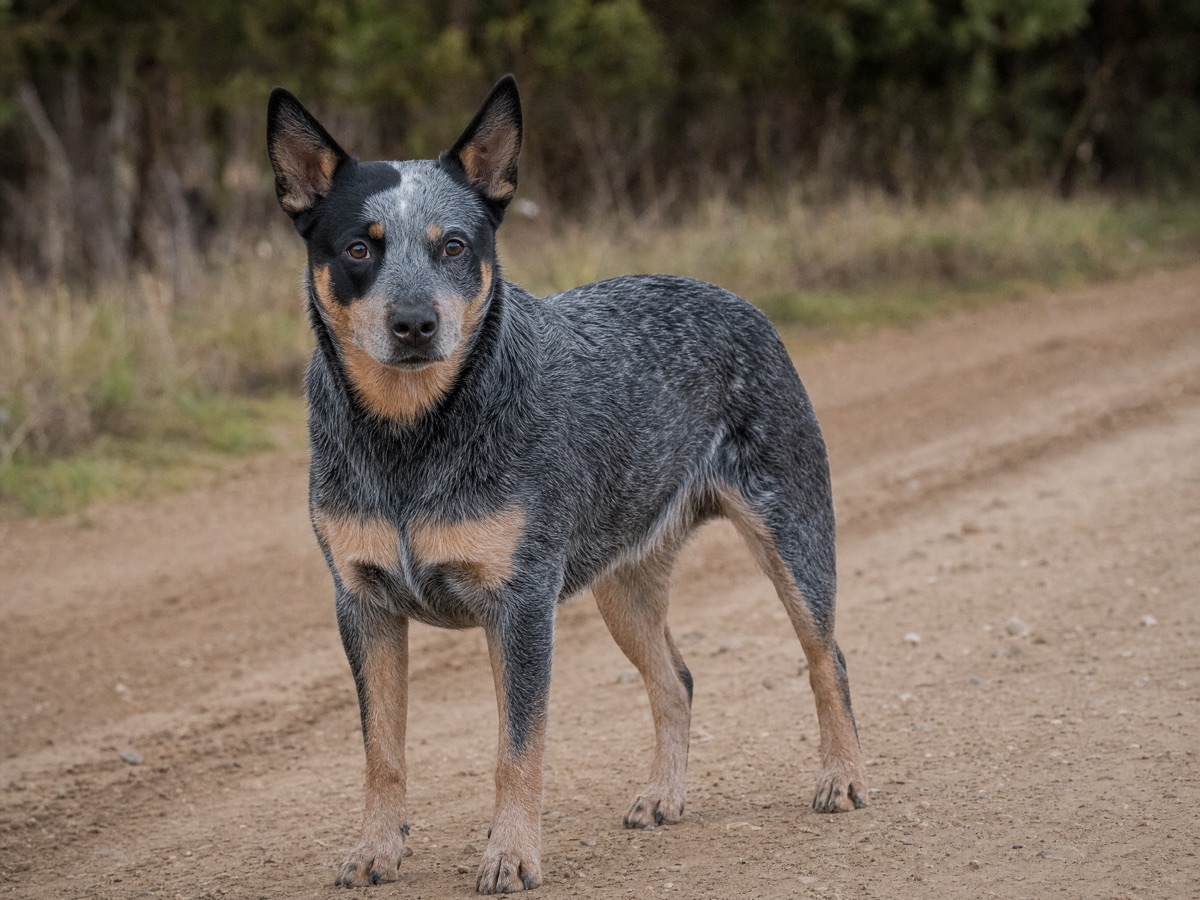
Australian Cattle Dog
The Blue Heeler — a tough, tireless drover no one has found the off-switch for.
On these lists: Dogs for runners · Farm dogs
Vital stats
| Size | Medium · 43–51 cm |
| Weight | 16–23 kg |
| Life expectancy | 12–16 years |
| Energy | Very high — 2+ hours/day |
| Shedding | Moderate, heavy seasonal blows |
| Coat | Smooth double coat · blue or red speckle |
| Group | Herding · FCI №287 / AKC |
| Origin | New South Wales, Australia |
| FCI group | 1 — Sheepdogs and Cattledogs · FCI 287 |
Breed traits
Friendliness
Care
Mind
The Australian Cattle Dog by the numbers
The Australian Cattle Dog facts owners search for most — price, lifespan, weight, shedding and colours, in one place.
Widely bred, so you can usually find a litter from a registered breeder without a long wait. Plan for steady ongoing costs — mid-range food, routine vet care and insurance.
We don't quote a single figure: the real price swings with breeder, region, bloodline and health testing — and a rescue costs a fraction of a breeder's litter. Adopting is almost always the cheapest route.
Temperament
Built from collie stock, Dalmatian and — so the story goes — a dash of Dingo, the Cattle Dog was designed to push stubborn cattle across brutal country. The result is tenacity in a compact frame: one-person loyalty, sharp intelligence, and an instinct to control anything that moves, ankles included, unless you give it proper work.
Habits & quirks
Heeler by name
Nipping at moving heels is the job title; redirect it onto toys and tasks early.
Shadow mode
Picks one person and supervises their entire life.
Puzzle addict
A bored Heeler redesigns your garden; a busy one is a model citizen.
Born plain
Puppies arrive white and darken into their blue or red speckle — a Dalmatian inheritance.
Health
The Australian Cattle Dog is famously sound — one of the hardiest dogs going for its size, and a well-bred one asks little of the vet. The things worth screening are exactly the ones a careful breeder already tests for: hearing, since deafness does turn up in the breed, so ask to see BAER results, and the eyes. Past that, keep him lean and keep him working. A fit Cattle Dog with a real job stays sound well into old age.
Nutrition
| Exercise | Two hours plus mental work daily — herding, agility, or fetch with rules |
| Training | Channel the nip young and teach impulse control before adolescence arrives |
| Grooming | A weekly brush most of the year, daily through the coat blow |
| Health | A famously sound breed; good breeders BAER-test hearing and screen eyes |
Feed to the work, not to the begging. A Cattle Dog in real training burns far more than one pottering around the garden, so match the ration to the day and fold the treats you use to redirect that heel-nip into the daily total. Keep him lean enough to feel the ribs — spare weight on a stocky, hard-driving dog lands straight on the joints he depends on.
Puppy guide
A Cattle Dog puppy arrives white and already hard-wired, and the first year sets the adult you'll live with. Start impulse control early and give the heel-nip a legal target — a tug, a ball with rules — before it finds your ankles, because it will look for one either way. Keep the body's work light while the joints are still forming, socialise him widely so wariness of strangers stays sensible rather than sharp, and teach an off switch as deliberately as you teach a sit.
Training
This is one of the most trainable dogs there is, and one of the most self-employed — leave the brain idle and it writes its own job description, usually involving your heels or your flowerbeds. A Cattle Dog learns fast and wants to work, so give it a real curriculum: herding, agility, obedience, fetch with rules, anything with a task attached. Channel the nip young, teach impulse control before adolescence, and keep sessions short and worth its while. A busy Heeler is a model citizen; a bored one is a renovation project.
Life expectancy
Australian Cattle Dogs live 12–16 years. The Australian Cattle Dog is famously long-lived and hardy for its size, and you hold it at the top of that range the same way you keep it happy: a lean weight, parents screened for hearing and eyes, and a life with enough real work in it to keep body and mind sound.
Similar breeds
Breeds with a similar build and background — worth a look if this one isn't quite the fit.
Breeds that look like this
Common questions
Are Blue Heelers good first dogs?
Rarely — their drive, intensity and heel-nipping suit experienced, active owners who can channel the energy into work or sport.
Are Australian Cattle Dogs aggressive?
Not by nature, but they're wary of strangers and nip to herd. Early socialisation and training channel the instinct safely.
How long do Australian Cattle Dogs live?
Often well into their teens — the breed is famously long-lived and hardy for its size. Keeping weight lean and the mind busy helps them age superbly.
Does the Australian Cattle Dog shed a lot?
Yes — the Australian Cattle Dog is a heavy shedder, dropping hair year-round or in big seasonal moults. Brush it several times a week and expect regular vacuuming; it isn't the coat for you if loose fur is a dealbreaker.
Is the Australian Cattle Dog hypoallergenic?
Not really. No dog is truly hypoallergenic, and the Australian Cattle Dog's shedding coat releases plenty of the dander that sets off allergies. If someone at home is allergic, this isn't the easiest breed to live with — spend time around one first.
Is the Australian Cattle Dog good with children?
They can be. The Australian Cattle Dog is reasonably sociable and can be good with children in the right home, especially when socialised early. Supervise around young kids and teach dog and child to respect each other.
Is the Australian Cattle Dog easy to train?
Yes. The Australian Cattle Dog is one of the more trainable breeds — quick to learn and keen to work with you, which makes reward-based training straightforward. Start early, keep it positive, and it picks things up fast.
Stories featuring this breed
All stories →
What breed is Bluey? The Heeler family, explained
Bluey is a Blue Heeler and Bingo a Red Heeler — same breed, different coat. The honest guide to the real Australian Cattle Dog behind the show.
The oldest dog ever and how long dogs really live
Bluey reached 29 years. Bobi's 31-year claim fell apart. Here's the real math on dog lifespan, and how to buy your dog more time.