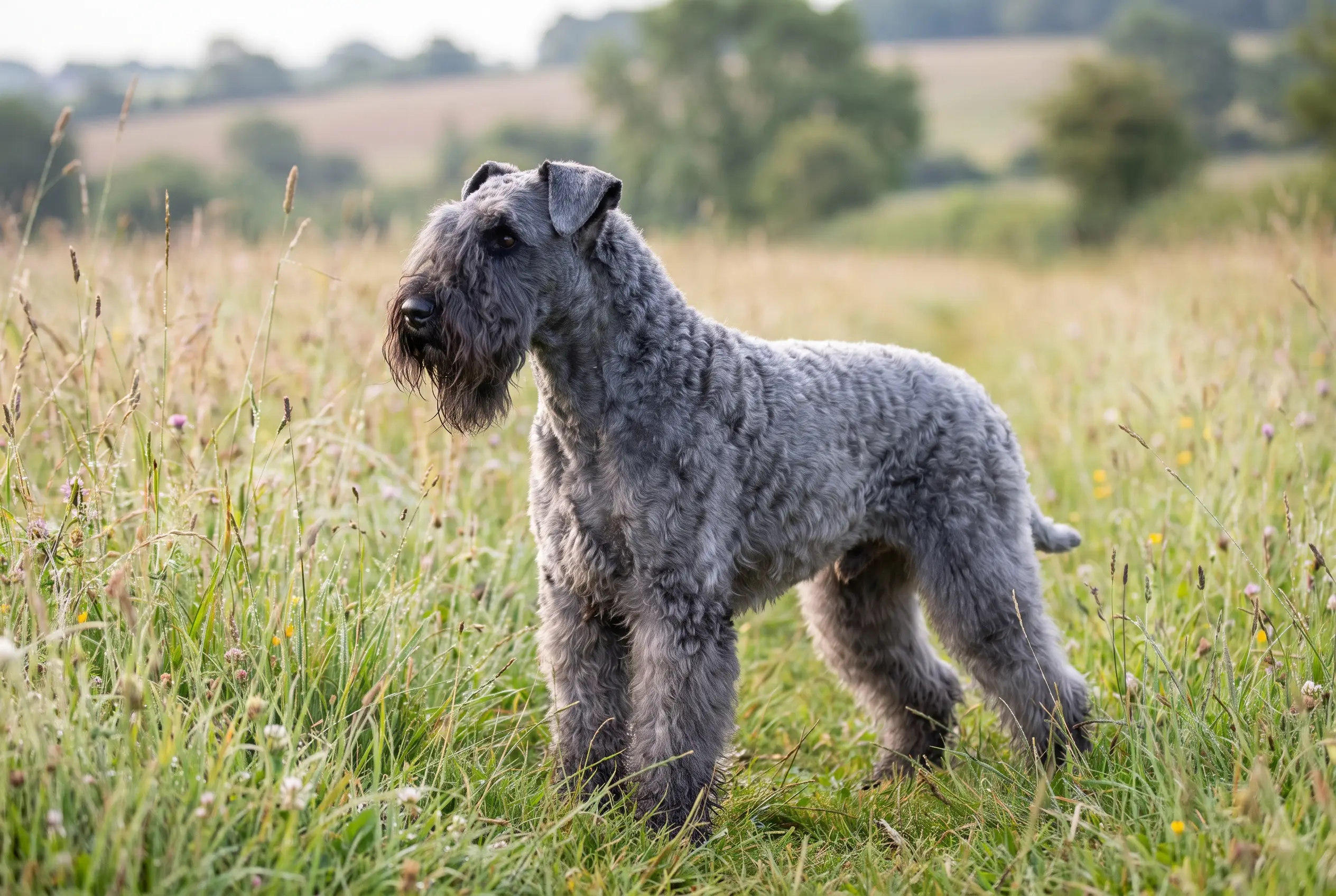
Kerry Blue Terrier
Ireland's blue-coated all-rounder — a farm terrier with a poet's coat and a fighter's heart.
On these lists: Low-shedding dogs
Vital stats
| Size | Medium · 44–50 cm |
| Weight | 15–18 kg |
| Life expectancy | 12–15 years |
| Energy | Moderate-high — 60 min/day |
| Shedding | Minimal — coat grows and needs trimming |
| Coat | Soft, dense, wavy · slate to silver blue |
| Group | Terrier · FCI №3 / AKC |
| Origin | County Kerry, Ireland |
| FCI group | 3 — Terriers · FCI 3 |
Breed traits
Friendliness
Care
Mind
The Kerry Blue Terrier by the numbers
The Kerry Blue Terrier facts owners search for most — price, lifespan, weight, shedding and colours, in one place.
Widely bred, so you can usually find a litter from a registered breeder without a long wait. Plan for steady ongoing costs — mid-range food, routine vet care and insurance. Its coat also needs a professional groom every few weeks — a real line in the budget.
We don't quote a single figure: the real price swings with breeder, region, bloodline and health testing — and a rescue costs a fraction of a breeder's litter. Adopting is almost always the cheapest route.
Temperament
Bred as the Irish smallholder's everything-dog — rats, rabbits, herding, guarding, even churning butter by treadmill in some tellings — the Kerry Blue is confident, versatile and always slightly amused. At home it's affectionate and playful with its family, watchful with strangers, and inclined to settle arguments with other dogs rather than avoid them.
Habits & quirks
The beard inspection
That splendid beard collects water, food and garden debris, then delivers all three to your lap.
Job hunting
A farm dog by wiring, it patrols, supervises and appoints itself to household tasks.
The Kerry stare
Direct, intelligent eye contact — half affection, half negotiation.
Silent stalking
Less barky than many terriers; it prefers to act first and comment later.
Care
| Grooming | Brush and comb weekly to the skin, with a full scissor or clipper trim every 4–8 weeks — the coat never stops growing. |
| Dog manners | Early, ongoing socialisation matters: same-sex dog aggression is the breed's classic fault. |
| Training | Bright and quick but self-employed; keep it fair, consistent and interesting or it renegotiates the contract. |
| Exercise | A solid hour of varied activity — walks, play, brain work — keeps the farm dog satisfied. |
Life expectancy
This breed has a typical life expectancy of 12–15 years.
Similar breeds
Breeds with a similar build and background — worth a look if this one isn't quite the fit.
Breeds that look like this
Common questions
Do Kerry Blue Terriers shed?
Barely — the soft coat grows continuously like hair rather than dropping out. In exchange you take on brushing and a professional-quality trim every month or two.
Are Kerry Blues good with other dogs?
It's the breed's weak spot: many are fine with familiar dogs but combative with strangers, especially of the same sex. Early socialisation and sensible management make all the difference.
Why are Kerry Blue puppies black?
The breed carries a progressive greying gene: puppies are born black and the coat gradually lightens, or 'clears', to blue-grey by around 18 months. Judges even allow young dogs their darker coats.
Is the Kerry Blue Terrier hypoallergenic?
No dog is truly hypoallergenic, but the Kerry Blue Terrier comes closer than most: its low-shedding coat releases less of the dander that triggers allergies. Many allergy sufferers manage well with this breed, but spend time around one before committing.
Is the Kerry Blue Terrier good with children?
They can be. The Kerry Blue Terrier is reasonably sociable and can be good with children in the right home, especially when socialised early. Supervise around young kids and teach dog and child to respect each other.
Is the Kerry Blue Terrier easy to train?
Reasonably. The Kerry Blue Terrier is trainable with consistency and rewards, though it isn't the quickest study. Keep sessions short and positive, and be patient with the basics like recall.