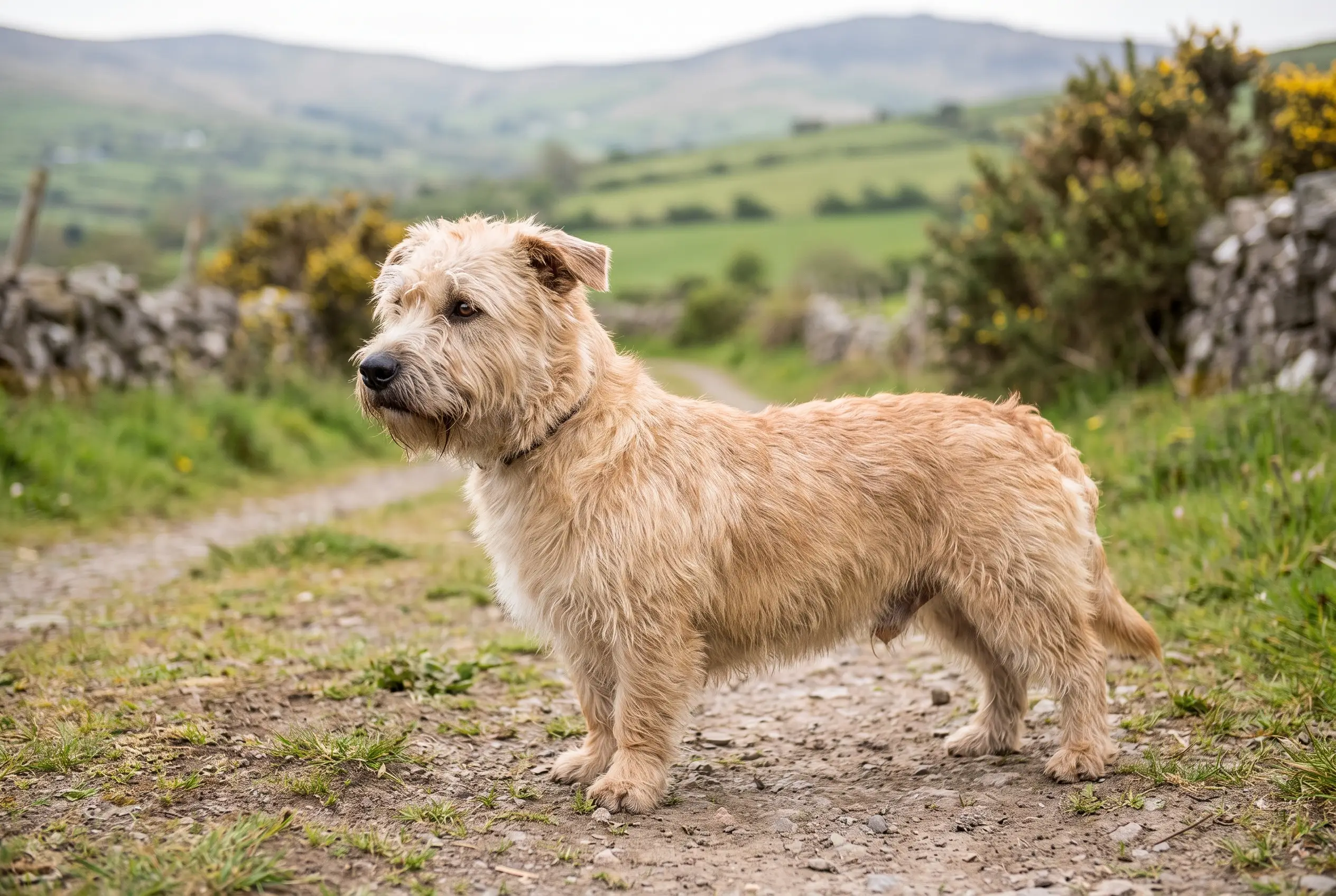
Glen of Imaal Terrier
Ireland's quiet strongman — a big dog on short legs from a hidden valley.
Vital stats
| Size | Small · 32–36 cm |
| Weight | 14–16 kg |
| Life expectancy | 10–15 years |
| Energy | Moderate — 40–60 min/day |
| Shedding | Low |
| Coat | Harsh medium coat · wheaten, blue brindle |
| Group | Terrier · FCI №302 / AKC |
| Origin | County Wicklow, Ireland |
| FCI group | 3 — Terriers · FCI 302 |
Breed traits
Friendliness
Care
Mind
The Glen of Imaal Terrier by the numbers
The Glen of Imaal Terrier facts owners search for most — price, lifespan, weight, shedding and colours, in one place.
Less common, so expect a waitlist and some travel to a reputable breeder — which pushes the price up. Plan for steady ongoing costs — mid-range food, routine vet care and insurance.
We don't quote a single figure: the real price swings with breeder, region, bloodline and health testing — and a rescue costs a fraction of a breeder's litter. Adopting is almost always the cheapest route.
Temperament
Isolated for centuries in a Wicklow valley, the Glen was bred to go to ground after badger and fox — working mute, since a barking dog underground is a liability. The result is the terrier paradox: fierce game when roused, yet placid, patient and pleasingly quiet at home. Add a donkey's stubbornness and a labourer's strength, and you have a small dog of considerable substance.
Habits & quirks
The Glen sit
Bottom down, back upright, front paws off the ground — the breed's famous begging posture, held with total composure.
Selective hearing
Commands are received, considered and actioned on a schedule of the Glen's own devising.
The quiet watch
Where other terriers shout, a Glen observes — then acts only if genuinely necessary.
Garden excavations
Centuries of earthwork don't vanish; flowerbeds may acquire unscheduled trenches.
Health
The Glen of Imaal is a sturdy, substantial little dog built long and low, and that shape is the thing to look after. Protect the back and those short, bowed front legs: limit stair-running and repeated jumping on and off furniture, especially while a puppy is still growing, and keep him lean, because every extra kilo lands on that long back. Beyond the build it's a hardy breed — buy from a breeder who health-tests, keep the weight sensible, and you have a robust, low-maintenance dog.
Nutrition
| Exercise | Forty to sixty minutes daily suits it well — this is a terrier that enjoys walks without demanding marathons. |
| Health | Those short, bowed legs and long back need protection: limit stair-running and jumping, especially while growing, and keep it lean. |
| Grooming | Hand-strip the harsh coat two or three times a year and brush weekly; it sheds very little in between. |
| Training | Patient, motivating sessions work; repetition and nagging simply activate the stubborn gene. |
Feed the Glen of Imaal to keep it lean — this matters more here than for most small dogs, because a long back and short legs make every extra kilo a strain on the spine and joints. Weigh the meals rather than guessing, count the training treats into the day's total, and aim for a dog you can feel the ribs on under that harsh coat. It's a substantial, muscular terrier, not a delicate one, but it's an easy dog to over-feed on modest exercise.
Puppy guide
A Glen of Imaal puppy is growing a long back on short, still-forming legs, so the first year is about protecting that frame while you build the dog's mind. Go easy on stairs and on jumping down from furniture or the car while the joints set, keep him lean, and let exercise be gentle and regular rather than hard. Socialise him widely and start calm, patient training early — the Glen is quietly stubborn, and the habits you set now are the ones you'll live with.
Training
The Glen is bright and perfectly trainable, as long as you work with the stubbornness rather than against it. Keep sessions short, motivating and rewarding; repetition and nagging simply switch on the donkey gene the breed is famous for. This is a quiet, thoughtful terrier that considers a command before acting on it, so patience pays where drilling doesn't. Recall deserves real work — the hunting instinct runs deep, and a Glen that catches a scent stops listening.
Life expectancy
Glen of Imaal Terriers live 10–15 years. The Glen of Imaal is a hardy, long-lived terrier, and you keep it at the top of that range mostly by looking after the frame: lean weight, sensible limits on stairs and jumping to spare the long back, a breeder who health-tests, and steady daily exercise without the strain.
Similar breeds
Breeds with a similar build and background — worth a look if this one isn't quite the fit.
Breeds that look like this
Common questions
Are Glen of Imaal Terriers rare?
Genuinely so — only a few hundred puppies are registered worldwide each year, and it's listed as a vulnerable native breed in Britain and Ireland. Expect a waiting list for a well-bred puppy.
Do Glen of Imaal Terriers bark a lot?
No — they're among the quietest terriers, bred to work silently underground. They'll alert you when something matters, then stop, which neighbours appreciate.
Are Glens good with other pets?
They're generally fine with dogs they know, but the hunting instinct runs deep. Cats raised alongside them may be accepted; rabbits and rodents should never be left within reach.
Does the Glen of Imaal Terrier shed a lot?
Not much. The Glen of Imaal Terrier is a low-shedding breed, so loose hair around the home stays minimal. It still needs regular grooming, but you won't be fighting drifts of fur.
Is the Glen of Imaal Terrier hypoallergenic?
No dog is truly hypoallergenic, but the Glen of Imaal Terrier comes closer than most: its low-shedding coat releases less of the dander that triggers allergies. Many allergy sufferers manage well with this breed, but spend time around one before committing.
Is the Glen of Imaal Terrier good with children?
They can be. The Glen of Imaal Terrier is reasonably sociable and can be good with children in the right home, especially when socialised early. Supervise around young kids and teach dog and child to respect each other.
Is the Glen of Imaal Terrier easy to train?
Reasonably. The Glen of Imaal Terrier is trainable with consistency and rewards, though it isn't the quickest study. Keep sessions short and positive, and be patient with the basics like recall.