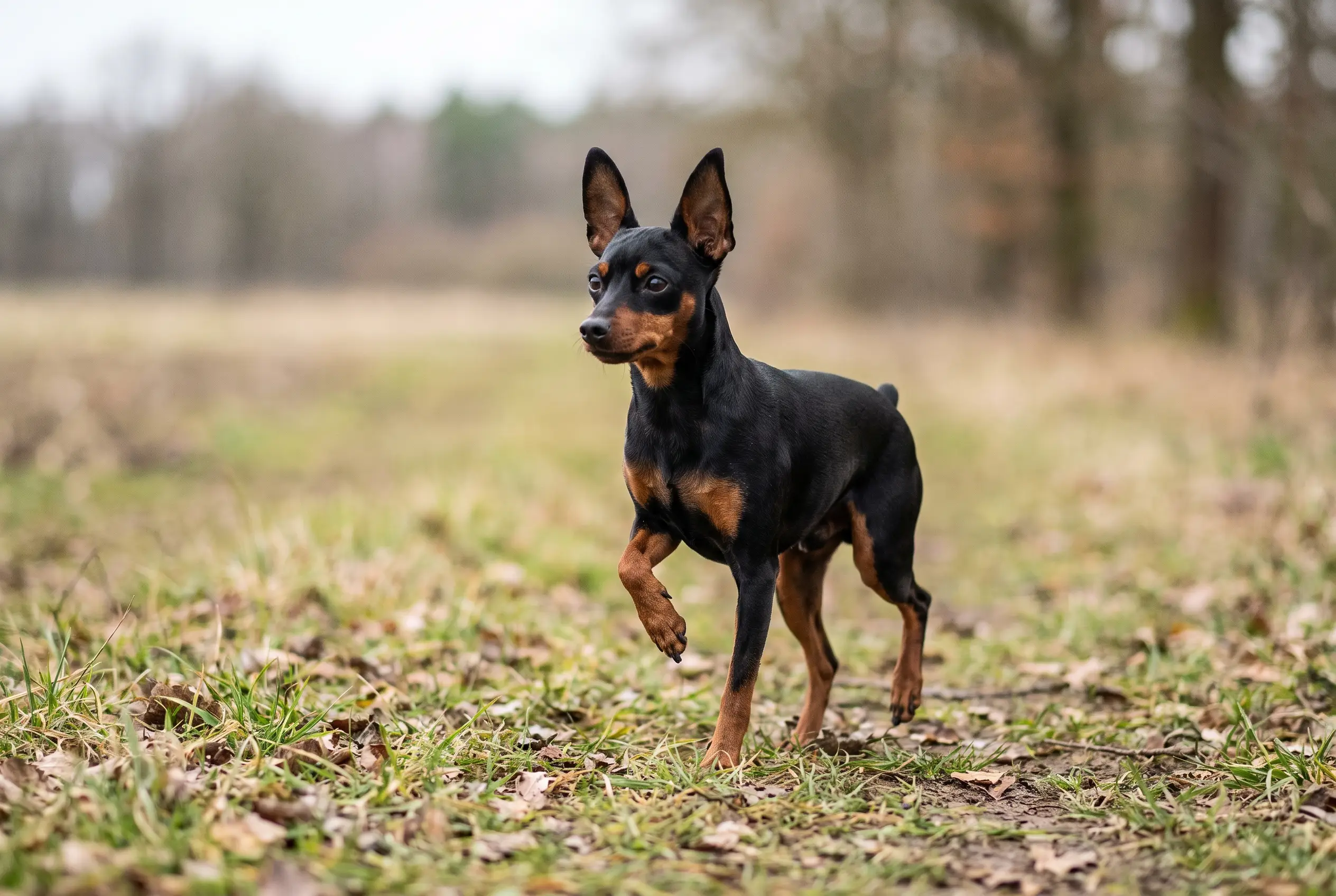
Miniature Pinscher
The King of Toys — a hackney-gaited firecracker in a sleek red coat.
Vital stats
| Size | Toy · 25–30 cm |
| Weight | 4–6 kg |
| Life expectancy | 12–16 years |
| Energy | High — 45–60 min/day |
| Shedding | Low |
| Coat | Short, sleek, glossy · red, stag red, black & tan, chocolate & tan |
| Group | Toy · FCI №185 / AKC |
| Origin | Germany |
| FCI group | 2 — Pinscher and Schnauzer, Molossoid and Swiss Mountain Dogs · FCI 185 |
Breed traits
Friendliness
Care
Mind
The Miniature Pinscher by the numbers
The Miniature Pinscher facts owners search for most — price, lifespan, weight, shedding and colours, in one place.
Widely bred, so you can usually find a litter from a registered breeder without a long wait. Ongoing costs stay modest — it eats little and routine vet care sits at the lower end.
We don't quote a single figure: the real price swings with breeder, region, bloodline and health testing — and a rescue costs a fraction of a breeder's litter. Adopting is almost always the cheapest route.
Temperament
Bred in Germany to clear stables of rats, the Min Pin was never meant to be a lapdog — and it hasn't forgotten. Expect a vigilant, perpetual-motion little athlete that patrols its territory, interrogates every noise, and carries itself with a swagger fanciers call the 'King of Toys'. Affection comes on its schedule, at full intensity.
Habits & quirks
The hackney prance
Trots with high-lifted front legs like a carriage pony — the breed's signature move.
Blanket submarine
Vanishes under duvets, cushions and jumpers; check every soft pile before sitting.
Border patrol
Runs a scheduled inspection of windows, garden and gate, filing loud reports on all irregularities.
Vertical launch
Springs onto tables and shelf-tops you'd swear were out of range — nothing is out of range.
Health
The Min Pin is a robust, long-lived little dog, so the watch-points are the ordinary small-dog ones rather than anything dramatic: daily dental care for crowded teeth, and a lean weight to protect small knees and a light frame. The fine coat gives almost no protection from cold, so a jumper in winter is genuinely necessary rather than decorative. Buy from a breeder who health-tests, and keep it trim and fit.
Nutrition
| Containment | The breed's defining care need: a Min Pin fits through tiny gaps and treats open doors as invitations, so secure fencing and door discipline are essential. |
| Exercise | Short legs, big engine — brisk walks and lively play daily, plus games that occupy the brain. |
| Warmth | The fine coat gives little cold protection; a jumper in winter is genuinely necessary, not decorative. |
| Training | Smart and quick but easily bored and a touch bossy; short, upbeat sessions and early socialisation shape the swagger. |
A Min Pin has a big engine in a small body, but it still eats very little, so measure the meals and keep it lean — extra weight is a lot on a dog this size and hard on the knees. Quality matters more than quantity. Small-dog teeth crowd and suffer, so make daily dental care part of the routine from the start.
Puppy guide
A Min Pin puppy is bold and busy and genuinely believes it's a big dog, so socialise it early and widely before that confidence turns into bossiness. This is an escape artist from day one — secure the house and garden, and treat open doors and gaps as the invitations the puppy already thinks they are. Teach a quiet cue early to manage the loud watchdog instinct, get it used to a winter layer, and start dental care young.
Training
Min Pins are smart and quick but bore easily and carry a streak of self-importance the fanciers call the "King of Toys", so keep sessions short, upbeat and varied. Reward-based training and early, wide socialisation channel the swagger into good manners. Build a reliable quiet cue for the watchdog barking, and give the busy brain daily games — an under-occupied Min Pin invents loud, athletic hobbies of its own.
Life expectancy
Miniature Pinschers live 12–16 years. Miniature Pinschers are long-lived toy dogs, and steady small-dog care keeps them there: daily dental care, a lean weight that spares the knees, and a winter coat so the cold never becomes a strain. Keep it fit and busy, secure enough that its escape habit never ends in a scare, and let regular vet checks catch small problems early.
Popular Miniature mixes
Chipin
A tiny, bold, devoted cross with a huge personality and a watchful streak. Loves its people; socialise early, keep a winter layer handy and watch the teeth and knees.
Muggin
A small, playful, affectionate cross with a big character. Fun and sociable; keep it lean, watch for a shorter muzzle in the heat, and keep up the dental care.
Similar breeds
Breeds with a similar build and background — worth a look if this one isn't quite the fit.
Breeds that look like this
Common questions
Is the Miniature Pinscher a mini Dobermann?
No — the Min Pin is the older breed, and the two were developed separately; 'Pinscher' simply meant a German ratting-terrier type. The resemblance is shared ancestry, not miniaturisation.
Can a Miniature Pinscher live in a flat?
Very happily, given daily walks, play and things to supervise from a windowsill. Neighbours will appreciate early training of a quiet cue — the watchdog instinct is loud.
Are Miniature Pinschers good with children?
Better with older children who respect a small, quick dog with firm opinions. With toddlers, the combination of fragile bones and low tolerance for grabbing makes supervision essential.
Does the Miniature Pinscher shed a lot?
Not much. The Miniature Pinscher is a low-shedding breed, so loose hair around the home stays minimal. It still needs regular grooming, but you won't be fighting drifts of fur.
Is the Miniature Pinscher hypoallergenic?
No dog is truly hypoallergenic, but the Miniature Pinscher comes closer than most: its low-shedding coat releases less of the dander that triggers allergies. Many allergy sufferers manage well with this breed, but spend time around one before committing.
Is the Miniature Pinscher easy to train?
Reasonably. The Miniature Pinscher is trainable with consistency and rewards, though it isn't the quickest study. Keep sessions short and positive, and be patient with the basics like recall.