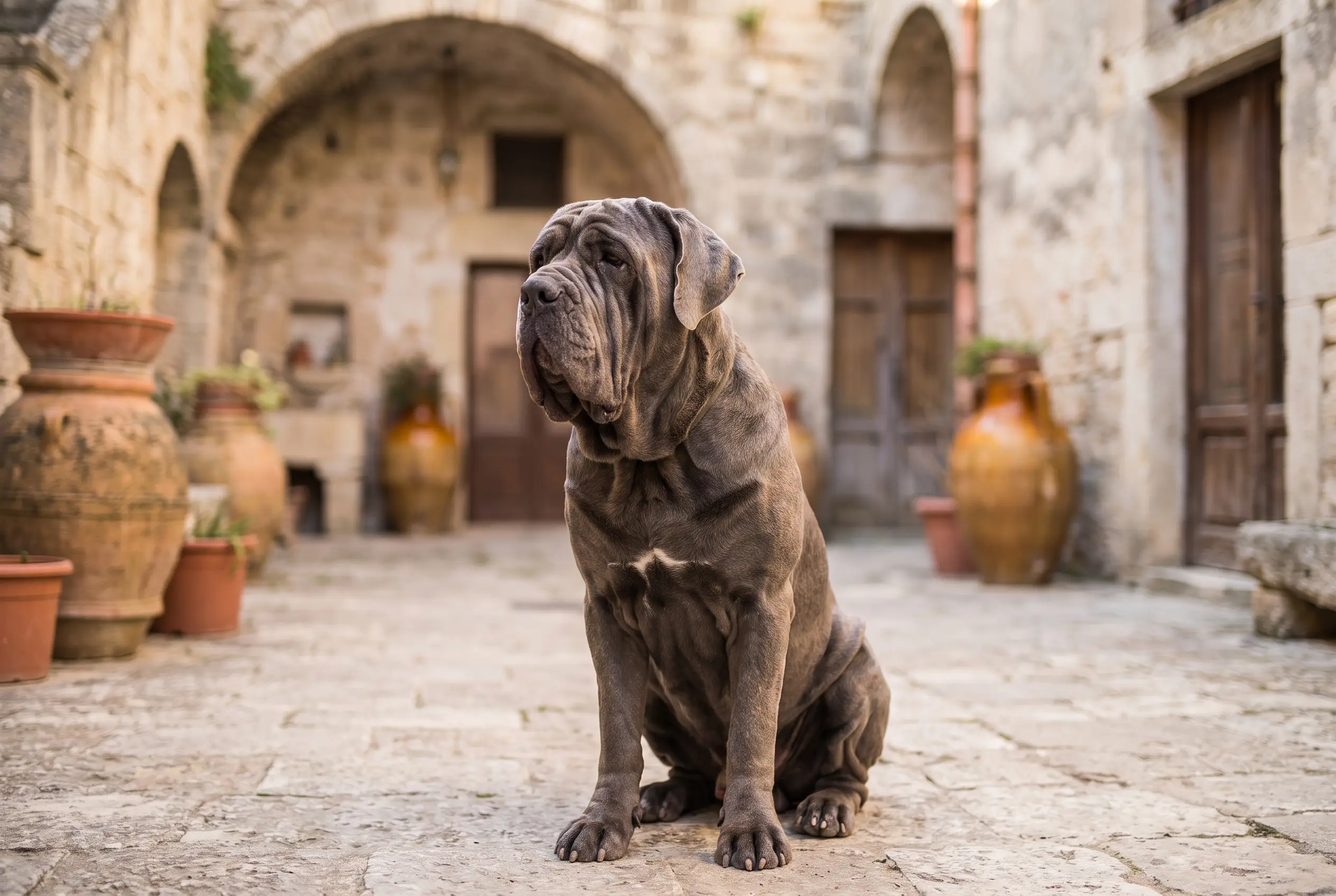
Neapolitan Mastiff
Rome's ancient guardian, draped in velvet folds and utter devotion.
Vital stats
| Size | Giant · 58–75 cm |
| Weight | 50–70 kg |
| Life expectancy | 7–9 years |
| Energy | Low — 30–45 min/day |
| Shedding | Low, year-round |
| Coat | Short and dense · grey-blue, black, mahogany, tawny |
| Group | Working · FCI №197 / AKC |
| Origin | Campania, Italy |
| FCI group | 2 — Pinscher and Schnauzer, Molossoid and Swiss Mountain Dogs · FCI 197 |
Breed traits
Friendliness
Care
Mind
The Neapolitan Mastiff by the numbers
The Neapolitan Mastiff facts owners search for most — price, lifespan, weight, shedding and colours, in one place.
Widely bred, so you can usually find a litter from a registered breeder without a long wait. Ongoing costs run high — more food, bigger doses at the vet, and pricier insurance.
We don't quote a single figure: the real price swings with breeder, region, bloodline and health testing — and a rescue costs a fraction of a breeder's litter. Adopting is almost always the cheapest route.
Temperament
Descended from the molossers that guarded Roman estates, the Neapolitan protects by presence: it watches, positions itself, and rarely wastes a bark. With its family it is affectionate to the point of clinginess; with strangers it is reserved and judging. This is a thinking guardian that needs an owner it respects.
Habits & quirks
The doorway audit
Visitors are inspected at length before the household receives them.
Drool broadcasting
One head-shake redecorates a radius of several metres.
The lean of love
Affection is expressed by transferring sixty kilograms onto your legs.
Strategic placement
It naps precisely where it can see both the door and you.
Care
| Health | Choose health-tested lines and keep weight strictly controlled — hips, elbows, heart and eyelids all carry breed risk. |
| Exercise | Moderate daily walks; never force running or stairs on a growing puppy's soft joints. |
| Grooming | Wipe the facial folds regularly to prevent infection, and station drool towels through the house. |
| Feeding | Feed measured meals and rest after eating — like most giants, the breed is at risk of bloat. |
Life expectancy
This breed has a typical life expectancy of 7–9 years.
Similar breeds
Breeds with a similar build and background — worth a look if this one isn't quite the fit.
Breeds that look like this
Common questions
Are Neapolitan Mastiffs aggressive?
Well-bred, well-socialised Neos are calm and discerning rather than aggressive — but they are natural guardians of great power. Early, ongoing socialisation and a confident owner are non-negotiable.
How much do Neapolitan Mastiffs drool?
As much as any breed alive. Feeding, drinking, heat and excitement all open the taps; most owners keep towels in every room.
How long do Neapolitan Mastiffs live?
Typically 7–9 years, as with most giant breeds. Lean weight, gentle puppyhood exercise, and health-tested parents give the best odds.
Does the Neapolitan Mastiff shed a lot?
Not much. The Neapolitan Mastiff is a low-shedding breed, so loose hair around the home stays minimal. It still needs regular grooming, but you won't be fighting drifts of fur.
Is the Neapolitan Mastiff hypoallergenic?
No dog is truly hypoallergenic, but the Neapolitan Mastiff comes closer than most: its low-shedding coat releases less of the dander that triggers allergies. Many allergy sufferers manage well with this breed, but spend time around one before committing.
Is the Neapolitan Mastiff good with children?
It depends. The Neapolitan Mastiff tends to be more reserved, so it suits older, calmer children better than boisterous toddlers. Early socialisation and careful, supervised introductions matter more with this breed.
Is the Neapolitan Mastiff easy to train?
They can be a challenge. The Neapolitan Mastiff is intelligent but independent, and would rather make its own decisions than take orders. Reward-based training and patience work best; expect recall in particular to take time.