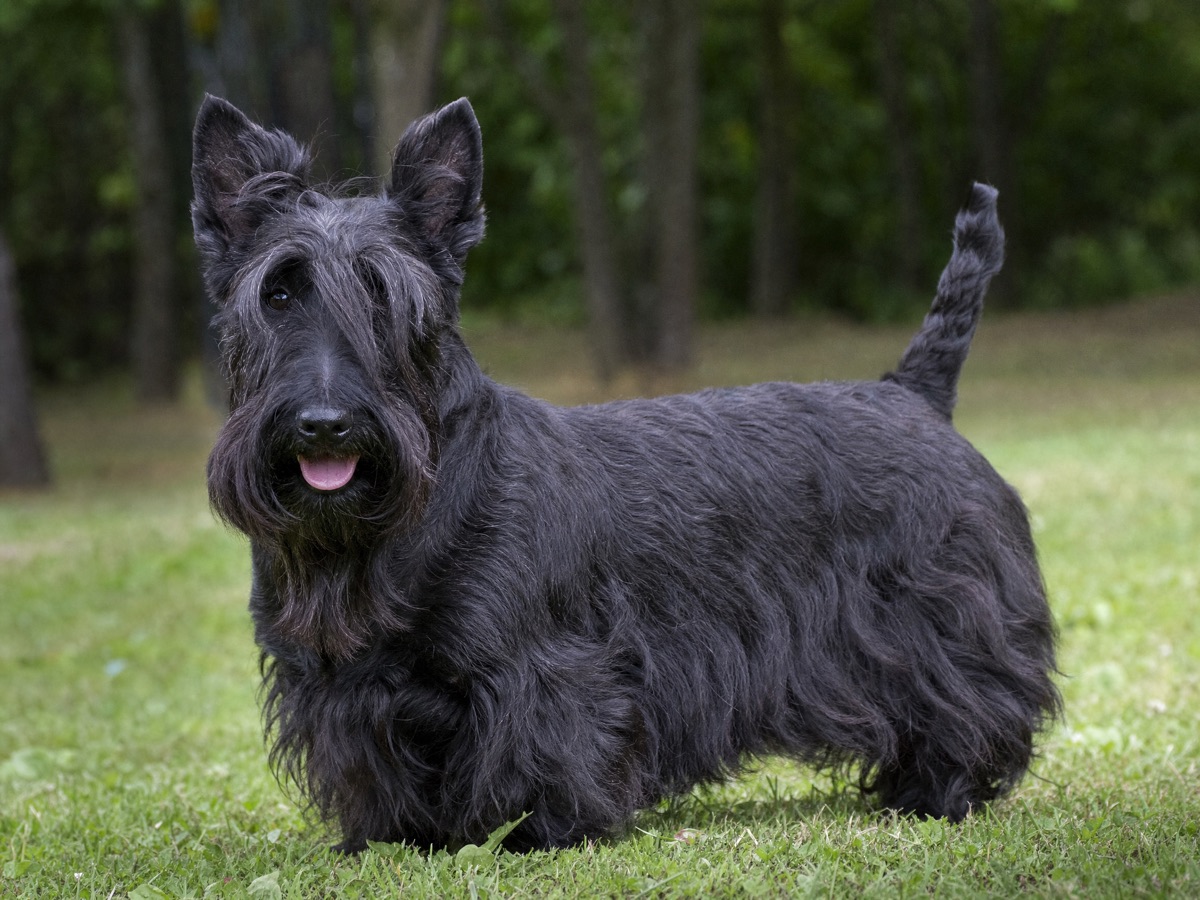
Scottish Terrier
Dignified, bearded and gloriously stubborn — the aloof little laird.
On these lists: Low-shedding dogs
Vital stats
| Size | Small · 25–28 cm |
| Weight | 8.5–10.5 kg |
| Life expectancy | 11–13 years |
| Energy | Moderate — 30–60 min/day |
| Shedding | Low |
| Coat | Hard wiry coat with beard · black, brindle, wheaten |
| Group | Terrier · FCI №73 / AKC |
| Origin | Aberdeen and the Highlands, Scotland |
| FCI group | 3 — Terriers · FCI 73 |
Breed traits
Friendliness
Care
Mind
The Scottish Terrier by the numbers
The Scottish Terrier facts owners search for most — price, lifespan, weight, shedding and colours, in one place.
Widely bred, so you can usually find a litter from a registered breeder without a long wait. Ongoing costs stay modest — it eats little and routine vet care sits at the lower end. Its coat also needs a professional groom every few weeks — a real line in the budget.
We don't quote a single figure: the real price swings with breeder, region, bloodline and health testing — and a rescue costs a fraction of a breeder's litter. Adopting is almost always the cheapest route.
Temperament
Sent alone into badger setts and rock crevices, the Scottie needed nerve, decisiveness and no committee — and it has never surrendered any of the three. At home that means a self-contained, watchful companion who loves its few people deeply, negotiates rather than obeys, and treats squirrels as unfinished business.
Habits & quirks
The Scottie stare
A long, level look that weighs your request before declining it.
Excavation works
Flowerbeds are provisional; the digging instinct is permanent.
One-clan heart
Reserved with the world, quietly devoted to its own few people.
The beard audit
Water bowls, soup and rain all leave evidence in the whiskers.
Health
The Scottie is a tough, self-contained little dog and, on the whole, a healthy one. Two things are worth knowing. 'Scottie cramp' — a brief stiffening of the gait when the dog is excited — looks alarming the first time you see it, but it's harmless and needs no treatment. The one to take seriously is anything unusual in how your Scottie passes urine: mention changes to your vet early rather than waiting, because with this breed catching a problem here soon makes a real difference. A careful breeder is the best place to start.
Nutrition
| Grooming | Hand-strip or clip the wiry coat every few weeks, and comb the beard and furnishings often. |
| Training | Short, positive, varied sessions win; repetition and harsh corrections entrench the stubbornness. |
| Exercise | A couple of brisk on-lead walks plus garden patrol — prey drive makes off-lead risky. |
| Health | Know the breed's quirks: 'Scottie cramp' is harmless, but report any urinary changes to the vet early. |
Feed a measured amount and keep this short-legged terrier lean — extra weight sits heavily on a low, long-backed dog, and a trim Scottie moves and ages far better. Weigh the meals rather than filling the bowl by eye, count treats in the day's total, and check the ribs by feel now and then. A dignified little dog needn't be a stout one.
Puppy guide
A Scottie puppy is bold and independent from the first week, and it pays to shape that early. Socialize it kindly and widely so the natural reserve with strangers doesn't harden into suspicion, and start short, patient, upbeat training before the famous stubbornness sets in. Expect digging and a keen interest in anything that scurries, keep early walks on the lead, and get it used to being groomed young — the wiry coat and beard need handling for life.
Training
The Scottie negotiates rather than obeys, and it never forgets a dull lesson. Keep sessions short, positive and varied; repetition and harsh corrections only entrench the famous terrier stubbornness. Reward what you like, stay patient, and keep walks on the lead — the prey drive is strong, and no amount of training fully overrides a Scottie that has spotted a squirrel.
Life expectancy
Scottish Terriers live 11–13 years. The Scottie is a sturdy breed with a good span in it, and you help one reach the far end the plain way: a lean weight, regular grooming and dental care, walks that keep the body sound, and a trip to the vet whenever something seems off — especially anything about how the dog is urinating.
Popular Scottish mixes
Scoodle
A scruffy, low-shedding terrier cross with the Scottie's independent streak. Smart and characterful, but it keeps a mind of its own.
Scoland Terrier
Two Scottish terriers in one small, sturdy package. Bold and loyal with a big-dog attitude, and the usual terrier drive to dig and chase.
Similar breeds
Breeds with a similar build and background — worth a look if this one isn't quite the fit.
Breeds that look like this
Common questions
Are Scottish Terriers affectionate?
Loyal and loving with their family, but independent and dignified rather than clingy, and aloof with strangers. They bond deeply with one or two people.
Are Scottish Terriers easy to train?
They're clever but famously stubborn and independent. Short, positive, consistent sessions work best; harsh methods just entrench the terrier obstinacy.
Do Scottish Terriers shed?
Barely — the hard wiry coat holds its hair, which is why it needs stripping or clipping every few weeks instead. Regular grooming is the trade for a nearly shed-free house.
Is the Scottish Terrier hypoallergenic?
No dog is truly hypoallergenic, but the Scottish Terrier comes closer than most: its low-shedding coat releases less of the dander that triggers allergies. Many allergy sufferers manage well with this breed, but spend time around one before committing.
Is the Scottish Terrier good with children?
They can be. The Scottish Terrier is reasonably sociable and can be good with children in the right home, especially when socialised early. Supervise around young kids and teach dog and child to respect each other.