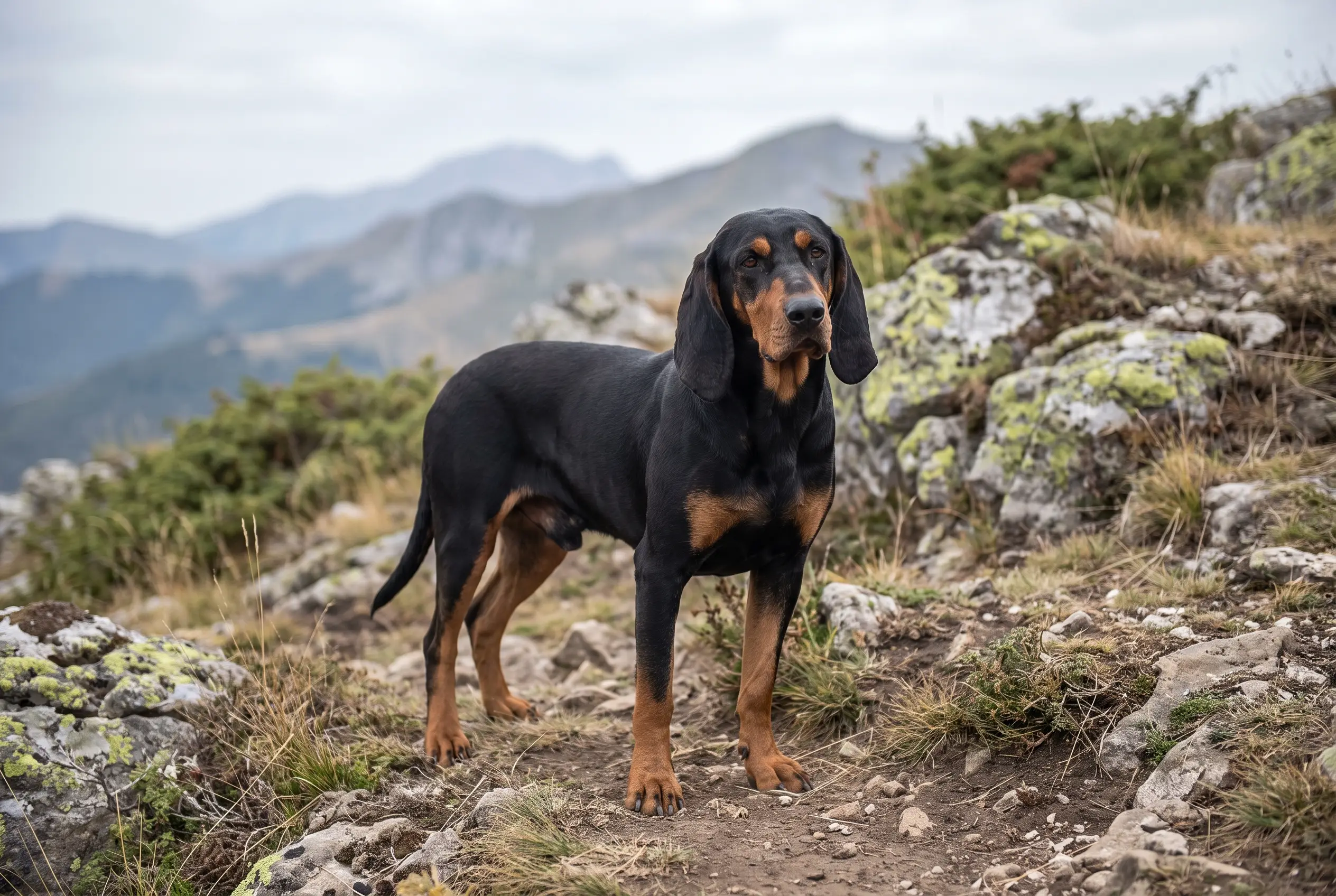
Apennine Hound
A mountain hare-hound from the Apennine spine — bred to climb and hunt, not to lounge.
Vital stats
| Size | Medium · roughly 44–56 cm (approximate) |
| Weight | About 13–23 kg |
| Life expectancy | About 12–14 years |
| Energy | Very high — needs a job or long daily exercise |
| Shedding | Low to moderate — short, dense coat, minimal grooming |
| Coat | Two varieties — rough (a pelo forte) and smooth (a pelo raso) · fawn (fulvo) or black-and-tan |
| Group | Hound · Scent hound (FCI №375, Group 6) |
| Origin | Apennines, Italy |
| FCI group | 6 — Scent hounds and related breeds · FCI 375 |
Breed traits
Friendliness
Care
Mind
The Apennine Hound by the numbers
The Apennine Hound facts owners search for most — price, lifespan, weight, shedding and colours, in one place.
Less common, so expect a waitlist and some travel to a reputable breeder — which pushes the price up. Plan for steady ongoing costs — mid-range food, routine vet care and insurance.
We don't quote a single figure: the real price swings with breeder, region, bloodline and health testing — and a rescue costs a fraction of a breeder's litter. Adopting is almost always the cheapest route.
Temperament
The Apennine Hound is hardy and high in stamina, a passionate hunter with a strong nose and a good voice once it opens on a line — a reliable finder, keen flusher and dogged pursuer. Italian hunters were already writing about it in the journal La Caccia in 1882, and the breeder Filippo Zacchini set down its type in 1932. With its handler it works in close symbiosis, balanced and cooperative in the field and steady off duty. It stays first a working dog, though: without hunting or a lot of vigorous exercise it grows restless, and its prey drive makes loose small stock and unsecured gardens a problem.
Habits & quirks
On the hare's line
It picks up scent and follows over steep, broken ground, opening its voice on the trail so the hunter can read the chase.
Mountain stamina
Bred for hard country, it keeps working uphill and over rock long after a softer dog would quit.
The handler's dog
It bonds closely with the person it hunts for and settles near them off duty rather than working the whole room.
Weatherproof coat
The short, dense coat sheds mud and cold; a brush now and then keeps it in order.
Care
| Exercise | It needs hunting work or long, hard daily exercise. A short lead walk leaves it wound up and looking for something to chase. |
| Grooming | Brush the short coat now and then. It sheds lightly and asks for little else. |
| Fencing | Give it secure fencing. The nose and stamina will follow a scent for miles if the garden lets them. |
| Health | A rustic, hardy mountain breed with little recorded about inherited problems; check ears and paws after a day in rough country. |
Life expectancy
This breed has a typical life expectancy of About 12–14 years.
Similar breeds
Breeds with a similar build and background — worth a look if this one isn't quite the fit.
Breeds that look like this
Common questions
Is the Apennine Hound a good family pet?
It can live in a home, but it was bred to hunt hare in the mountains and needs that outlet. Without hunting or heavy daily exercise it gets frustrated, so it suits hunting or very active households far more than a quiet flat.
Is it recognised by the FCI?
Yes. It is recognised by the ENCI, the Italian kennel club, and has an official FCI standard — FCI №375, in Group 6 (scent hounds). It comes in rough- and smooth-coated varieties and is well documented in Italy, though little known abroad.
What was it bred to hunt?
Mainly hare across the steep, rough terrain of the central Apennines, and sometimes wild boar. It works on scent, giving voice on the trail, with the stamina to keep going over hard mountain ground.
Does the Apennine Hound shed a lot?
Moderately. The Apennine Hound sheds a fair amount, steadily through the year with heavier seasonal patches. A weekly brush keeps most of the loose hair off your floors and clothes.
Is the Apennine Hound hypoallergenic?
Not really. No dog is truly hypoallergenic, and the Apennine Hound's shedding coat releases plenty of the dander that sets off allergies. If someone at home is allergic, this isn't the easiest breed to live with — spend time around one first.
Is the Apennine Hound easy to train?
Reasonably. The Apennine Hound is trainable with consistency and rewards, though it isn't the quickest study. Keep sessions short and positive, and be patient with the basics like recall.