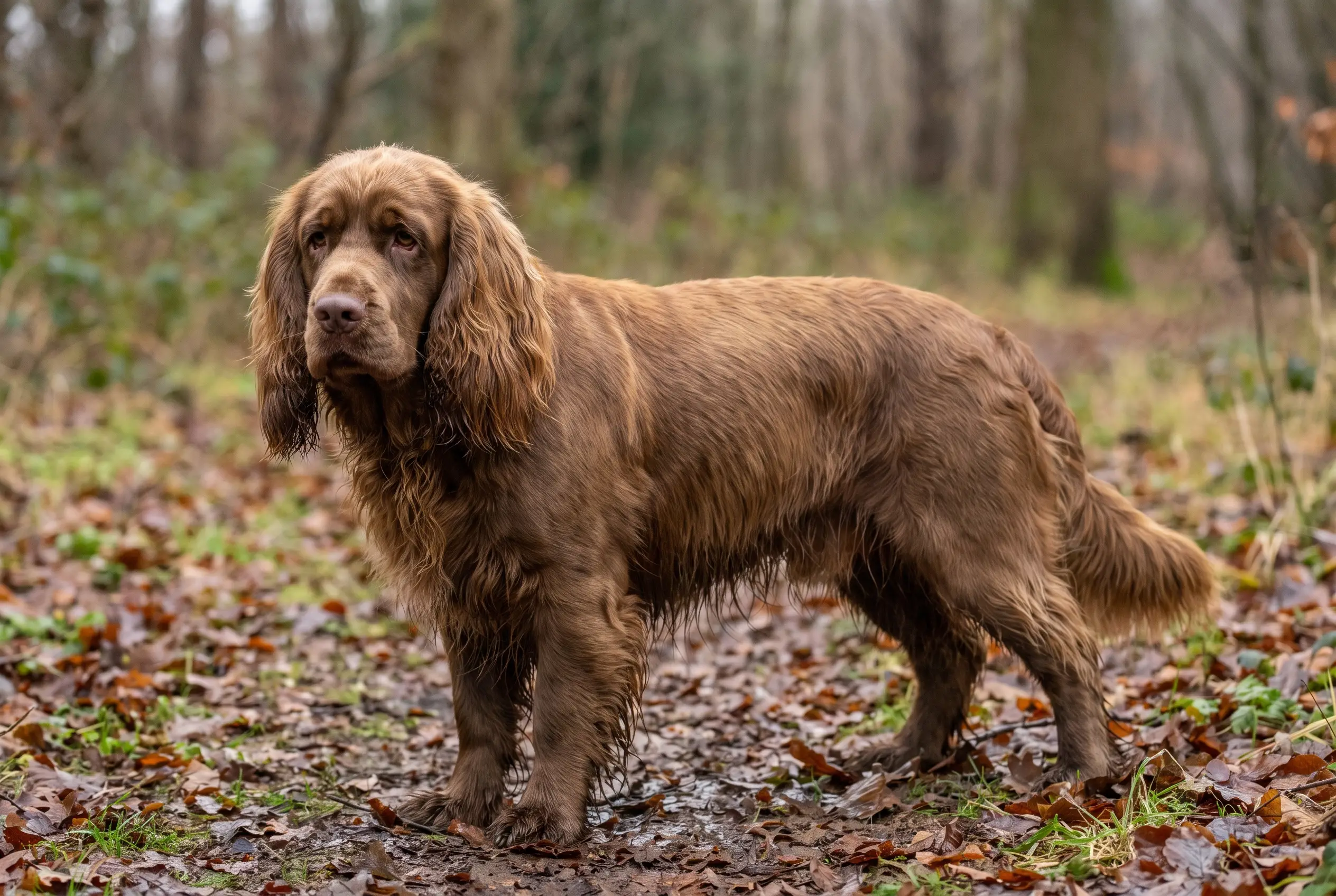
Sussex Spaniel
The slow, golden gentleman of the hedgerows — rare, low-slung, and quietly cheerful.
Vital stats
| Size | Small-medium · 38–41 cm |
| Weight | 16–20 kg |
| Life expectancy | 12–15 years |
| Energy | Moderate — 40–60 min/day |
| Shedding | Moderate, year-round |
| Coat | Wavy double coat · golden liver only |
| Group | Sporting · FCI №127 / AKC |
| Origin | Sussex, England |
| FCI group | 8 — Retrievers, Flushing Dogs and Water Dogs · FCI 127 |
Breed traits
Friendliness
Care
Mind
The Sussex Spaniel by the numbers
The Sussex Spaniel facts owners search for most — price, lifespan, weight, shedding and colours, in one place.
Less common, so expect a waitlist and some travel to a reputable breeder — which pushes the price up. Plan for steady ongoing costs — mid-range food, routine vet care and insurance.
We don't quote a single figure: the real price swings with breeder, region, bloodline and health testing — and a rescue costs a fraction of a breeder's litter. Adopting is almost always the cheapest route.
Temperament
Bred to work dense Sussex cover at a walking pace, giving tongue so hunters could follow the sound, this spaniel is unhurried where its cousins are frantic. At home that translates to a placid, sociable companion with a surprisingly deep voice, happiest pottering behind you from room to room.
Habits & quirks
Gives tongue
Uniquely for a spaniel, the Sussex was bred to bay on scent — and still offers commentary.
The stately potter
Moves through life at hedgerow pace; hurrying is for other breeds.
Frowning on purpose
The heavy brows give a permanently thoughtful, slightly disapproving expression.
Shadow at knee height
Long and low, it follows you everywhere — usually half a step behind.
Care
| Ears | The long, heavy ears trap moisture — check and clean them weekly to prevent infections. |
| Feeding | A slow-paced breed gains weight easily; measure meals and go steady with treats. |
| Exercise | Two moderate walks a day with sniffing time suit it better than hard running. |
| Grooming | Brush the wavy coat a couple of times a week and trim the feathering to keep it tidy. |
Life expectancy
This breed has a typical life expectancy of 12–15 years.
Similar breeds
Breeds with a similar build and background — worth a look if this one isn't quite the fit.
Breeds that look like this
Common questions
Are Sussex Spaniels rare?
Very — the breed nearly vanished after WWII and remains one of the least-registered AKC breeds. Expect a waiting list from the small band of dedicated breeders.
Are Sussex Spaniels good family dogs?
Yes — they're gentle, steady and affectionate with children. Their calmer pace makes them easier to live with than many spaniels, though they still like a daily outing.
Do Sussex Spaniels bark a lot?
They're more vocal than most spaniels — the breed was designed to bay while hunting. Training helps, but expect a dog with opinions and a deep voice.
Does the Sussex Spaniel shed a lot?
Moderately. The Sussex Spaniel sheds a fair amount, steadily through the year with heavier seasonal patches. A weekly brush keeps most of the loose hair off your floors and clothes.
Is the Sussex Spaniel hypoallergenic?
Not really. No dog is truly hypoallergenic, and the Sussex Spaniel's shedding coat releases plenty of the dander that sets off allergies. If someone at home is allergic, this isn't the easiest breed to live with — spend time around one first.
Is the Sussex Spaniel easy to train?
Reasonably. The Sussex Spaniel is trainable with consistency and rewards, though it isn't the quickest study. Keep sessions short and positive, and be patient with the basics like recall.