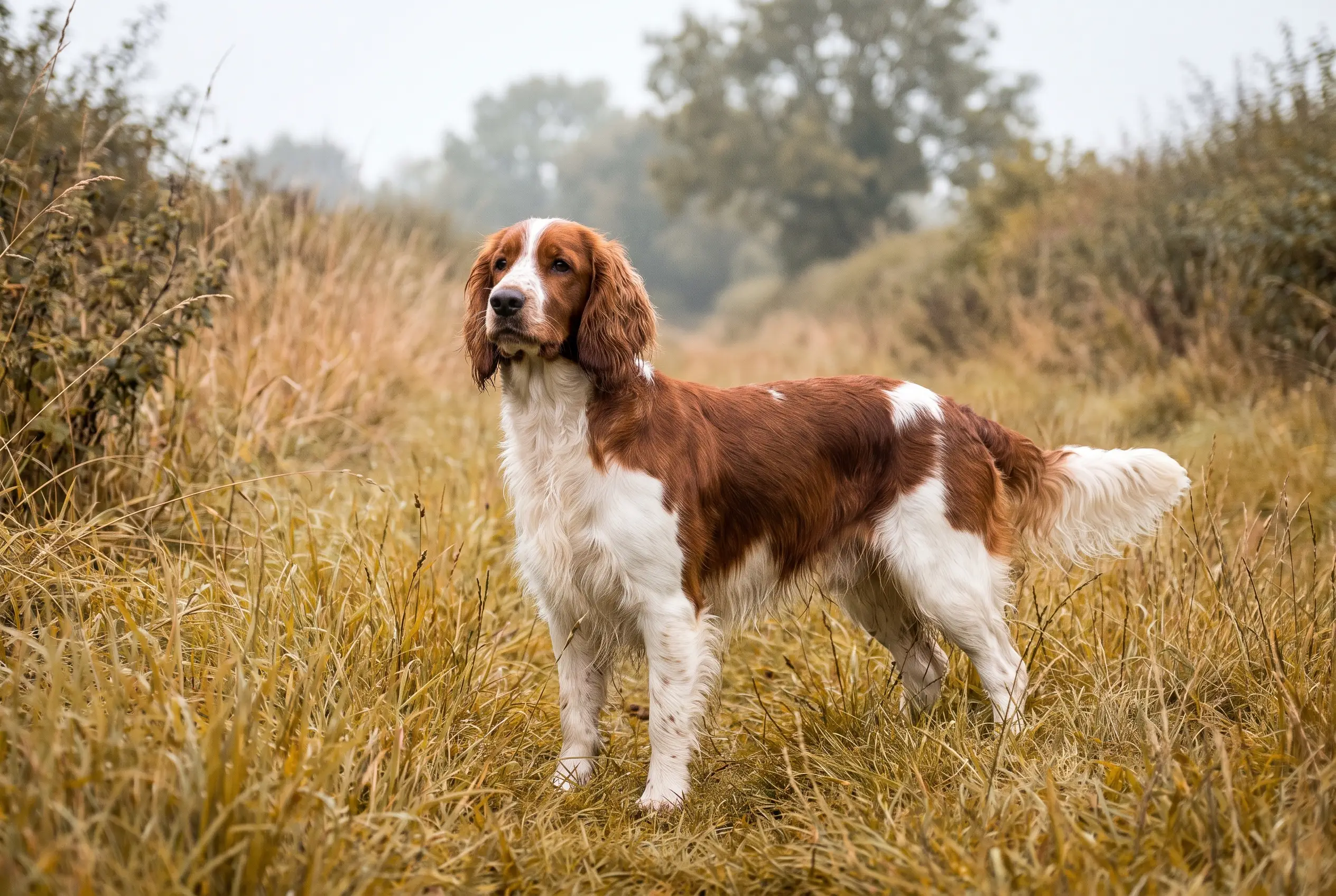
Welsh Springer Spaniel
Wales's red-and-white secret — a soft-hearted spaniel that never left home.
Vital stats
| Size | Medium · 43–48 cm |
| Weight | 16–20 kg |
| Life expectancy | 12–15 years |
| Energy | High — 60–90 min/day |
| Shedding | Moderate, heavier in season |
| Coat | Flat silky coat · rich red and white |
| Group | Sporting · FCI №126 / AKC |
| Origin | Wales |
| FCI group | 8 — Retrievers, Flushing Dogs and Water Dogs · FCI 126 |
Breed traits
Friendliness
Care
Mind
The Welsh Springer Spaniel by the numbers
The Welsh Springer Spaniel facts owners search for most — price, lifespan, weight, shedding and colours, in one place.
Widely bred, so you can usually find a litter from a registered breeder without a long wait. Plan for steady ongoing costs — mid-range food, routine vet care and insurance.
We don't quote a single figure: the real price swings with breeder, region, bloodline and health testing — and a rescue costs a fraction of a breeder's litter. Adopting is almost always the cheapest route.
Temperament
Bred to spring game from Welsh valleys for centuries, the Welshie works with steady, biddable enthusiasm and saves its whole heart for its own people. Expect a sensitive dog — harsh handling shuts it down, kind consistency opens it up — with a spaniel nose that overrules its ears outdoors.
Habits & quirks
The Welsh wag
Greeting family involves the entire back half of the dog.
One-family heart
Polite with guests, but its true devotion has a short, fixed list.
Nose overrides ears
On a scent, your recall becomes a polite suggestion — train it early.
Puddle magnetism
A water-loving spaniel will find the one wet ditch on a dry walk.
Care
| Exercise | An hour a day of proper walking or field work — a bored Welshie invents spaniel projects. |
| Ears | Long, feathered and airtight: check and clean weekly to head off infections. |
| Grooming | Weekly brushing keeps the silky feathering free of burrs and mats. |
| Socialisation | Naturally reserved with strangers — broad, gentle early exposure stops reserve becoming shyness. |
Life expectancy
This breed has a typical life expectancy of 12–15 years.
Similar breeds
Breeds with a similar build and background — worth a look if this one isn't quite the fit.
Breeds that look like this
Common questions
How is a Welsh Springer different from an English Springer?
The Welshie is slightly smaller, always red and white, and typically calmer and more one-family in its loyalties. It's also considerably rarer.
Are Welsh Springers good family dogs?
Excellent — gentle, patient and playful with children they know. They just need daily exercise and don't enjoy being left alone for long.
Do Welsh Springer Spaniels shed?
Moderately, with heavier seasonal blows. Weekly brushing manages the coat and keeps the feathering tidy.
Is the Welsh Springer Spaniel hypoallergenic?
Not really. No dog is truly hypoallergenic, and the Welsh Springer Spaniel's shedding coat releases plenty of the dander that sets off allergies. If someone at home is allergic, this isn't the easiest breed to live with — spend time around one first.
Is the Welsh Springer Spaniel easy to train?
Reasonably. The Welsh Springer Spaniel is trainable with consistency and rewards, though it isn't the quickest study. Keep sessions short and positive, and be patient with the basics like recall.