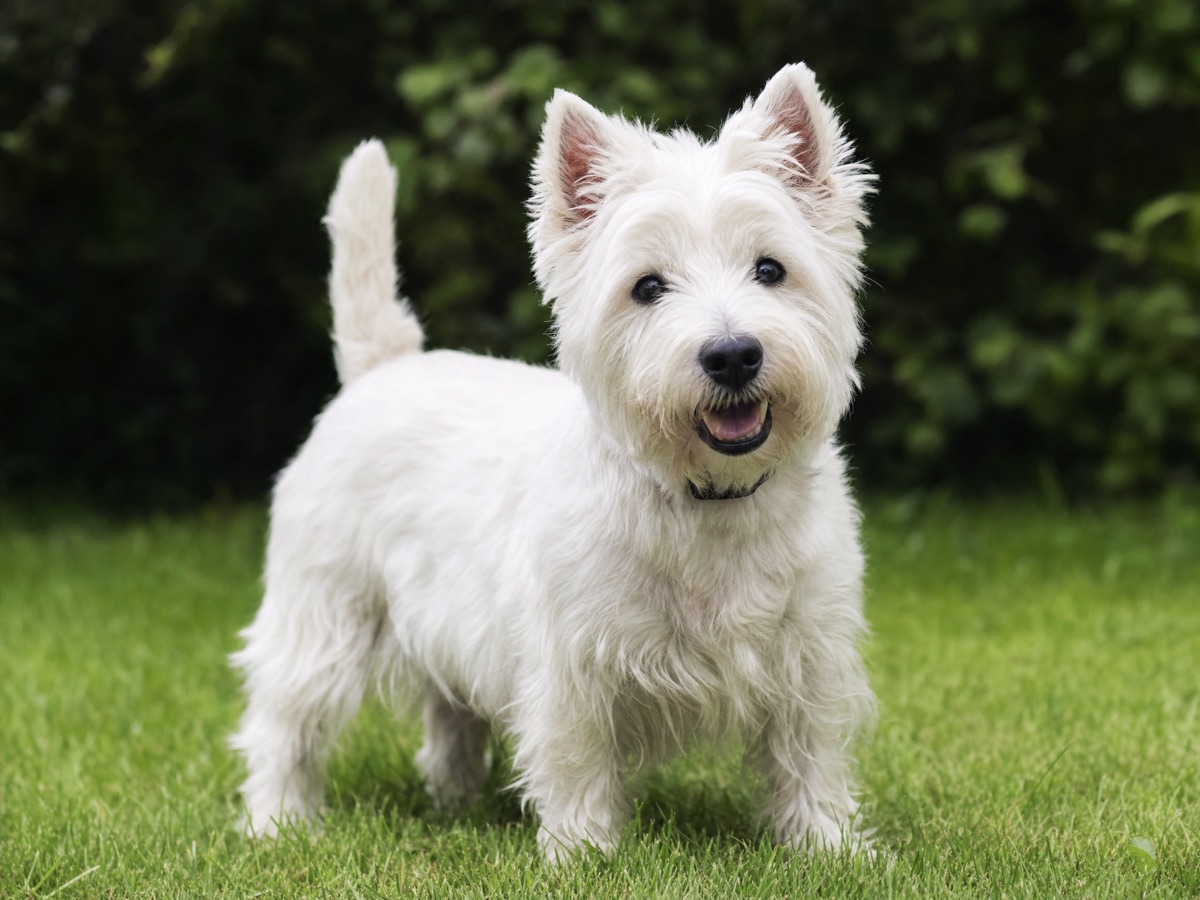
West Highland White Terrier
A perky white ratter with terrier fire and a big-city grin.
On these lists: Low-shedding dogs
Vital stats
| Size | Small · 25–28 cm |
| Weight | 7–10 kg |
| Life expectancy | 12–16 years |
| Energy | Moderate — 45–60 min/day |
| Shedding | Low, with regular stripping |
| Coat | Harsh white double coat |
| Group | Terrier · FCI №85 / AKC |
| Origin | Highlands, Scotland |
| FCI group | 3 — Terriers · FCI 85 |
Breed traits
Friendliness
Care
Mind
The West Highland White Terrier by the numbers
The West Highland White Terrier facts owners search for most — price, lifespan, weight, shedding and colours, in one place.
Widely bred, so you can usually find a litter from a registered breeder without a long wait. Ongoing costs stay modest — it eats little and routine vet care sits at the lower end. Its coat also needs a professional groom every few weeks — a real line in the budget.
We don't quote a single figure: the real price swings with breeder, region, bloodline and health testing — and a rescue costs a fraction of a breeder's litter. Adopting is almost always the cheapest route.
Temperament
Bred to go to ground after rats and foxes in the rocky Highlands, the Westie pairs true terrier fire with an unusually sunny outlook. It's confident, sturdy and self-possessed — expect enthusiasm for digging, alert-barking at everything, and a cheerful conviction that it is at least a mid-sized dog.
Habits & quirks
The Westie tilt
Head cocked hard at any interesting sound — irresistible, and it knows it.
Excavation projects
Bred to dig out vermin; your flowerbeds are simply modern practice.
Town crier
Doorbells, foxes, suspicious leaves — all announced with conviction.
Independent cuddler
Affectionate on its own schedule: it'll sit beside you, thanks, not on you.
Health
The Westie is a sturdy little terrier and, for its size, a pretty sound one — but the thing to keep an eye on is the skin. This is a breed prone to itchy, allergic skin, so watch for persistent scratching, licking or red patches and get your vet involved early, before a flare-up settles in for good. A good breeder will talk to you honestly about what runs in their lines. Beyond that, keep him lean, keep the white coat clean and well cared for, and you have a cheerful dog built to last.
Nutrition
| Grooming | Hand-strip or clip every few months, with brushing several times a week to keep the white coat white. |
| Skin | Westies are prone to itchy, allergic skin — watch for scratching and involve your vet early. |
| Exercise | Two decent walks and a play session daily keep body and terrier brain settled. |
| Training | Confident and a touch stubborn: short, rewarding sessions beat repetition every time. |
A Westie is small, which makes it easy to overfeed without noticing — a few extra treats go a long way on a dog this size. Weigh the meals, count the training treats in the day's total, and aim for a trim waist you can feel under the coat. Because the breed is prone to itchy skin, some Westies do better on food chosen for sensitive skin and coat; if the skin or coat seems off, talk it through with your vet rather than guessing.
Puppy guide
A Westie puppy turns up already sure of its own importance, and the first year is where you shape the adult. Socialize it widely and kindly so the terrier boldness stays cheerful instead of tipping into barking at everything, and start short, rewarding training early — including teaching it that not every sound needs announcing. Get it used to being brushed, handled and having its feet and ears touched young, because the coat and skin need looking after for life, and keep half an eye on that skin from the very start.
Training
Confident and a touch stubborn, the Westie does best in short, rewarding sessions — this is a terrier that switches off the moment drilling gets dull. Keep it varied and fun, reward generously, and put real work into the barking and the recall early on, because a dog bred to hunt will always find a squirrel worth chasing. Kind, firm and consistent beats sheer repetition every time.
Known health issues
No breed is problem-free. These are the conditions most worth knowing about for this breed — with what a good breeder screens for and what an owner watches. General guidance, not a substitute for your vet.
Slipping kneecap
A kneecap that slips out of place, common in small breeds and usually manageable. Good breeders screen: Vet-checked knees on the parents. Watch for: An occasional skip or hop on a back leg.
Stiffening lungs (pulmonary fibrosis)
A slow scarring of the lung tissue that makes breathing harder over time, well documented in older West Highland White Terriers. Good breeders screen: Not a genetic test — a middle-age and older watch point, not a puppy one. Watch for: A persistent dry cough and faster, harder breathing that builds up over months.
Life expectancy
West Highland White Terriers live 12–16 years. The Westie is a long-lived little terrier, and you keep it at the top of that range with the ordinary things done well: a lean weight, skin and coat kept in good order, teeth and ears checked, and enough walks and terrier games to keep body and mind busy well into old age.
Popular West mixes
Westiepoo
The Westie's cheek with the Poodle's lower-shedding coat: a small, lively companion that still wants its walks, its games and regular grooming.
Similar breeds
Breeds with a similar build and background — worth a look if this one isn't quite the fit.
Breeds that look like this
Common questions
Are Westies good for first-time owners?
Yes — they're one of the more manageable terriers: friendly, sturdy and adaptable, though still lively and prone to barking and digging.
Do Westies need a lot of grooming?
Yes — the white double coat needs brushing several times a week and regular hand-stripping or clipping, plus care for terrier-prone skin.
Are Westies good with cats and small pets?
They were bred to hunt vermin, so small furries are genuinely at risk and outdoor cats will be chased. Raised with a resident cat from puppyhood, most learn to keep the peace.
Does the West Highland White Terrier shed a lot?
Not much. The West Highland White Terrier is a low-shedding breed, so loose hair around the home stays minimal. It still needs regular grooming, but you won't be fighting drifts of fur.
Is the West Highland White Terrier hypoallergenic?
No dog is truly hypoallergenic, but the West Highland White Terrier comes closer than most: its low-shedding coat releases less of the dander that triggers allergies. Many allergy sufferers manage well with this breed, but spend time around one before committing.
Is the West Highland White Terrier good with children?
They can be. The West Highland White Terrier is reasonably sociable and can be good with children in the right home, especially when socialised early. Supervise around young kids and teach dog and child to respect each other.
Is the West Highland White Terrier easy to train?
Reasonably. The West Highland White Terrier is trainable with consistency and rewards, though it isn't the quickest study. Keep sessions short and positive, and be patient with the basics like recall.