Reading cat body language: annoyed, scared, or in pain
A cat that bites "out of nowhere" gave three or four warnings first. They are small, they are fast, and they happen in an order — which is good news, because it means they can be read in the moment rather than worked out afterwards. Ears first, then tail, then whiskers, then the whole body. Here is what each one is telling you, and the combinations that mean put your hand back.
Read in this order, and read the whole cat
One signal on its own means very little. Wide pupils are fear, arousal, excitement or a dim room; a swishing tail is a hunting cat or an irritated one. What tells you something is the combination, and the fastest way to get it is a fixed order: ears, tail, whiskers, body. Four looks, about a second, and you have the whole picture rather than one ambiguous piece of it.
This is about the moment you are in — a cat on your lap right now, a cat you are about to pick up. It is different from the slow signals of a cat that has been unhappy for weeks, which show up in eating, hiding and grooming instead. Those are worth knowing too, and the stress signs owners miss covers them; this page is the fast version.
Ears first, because they move first
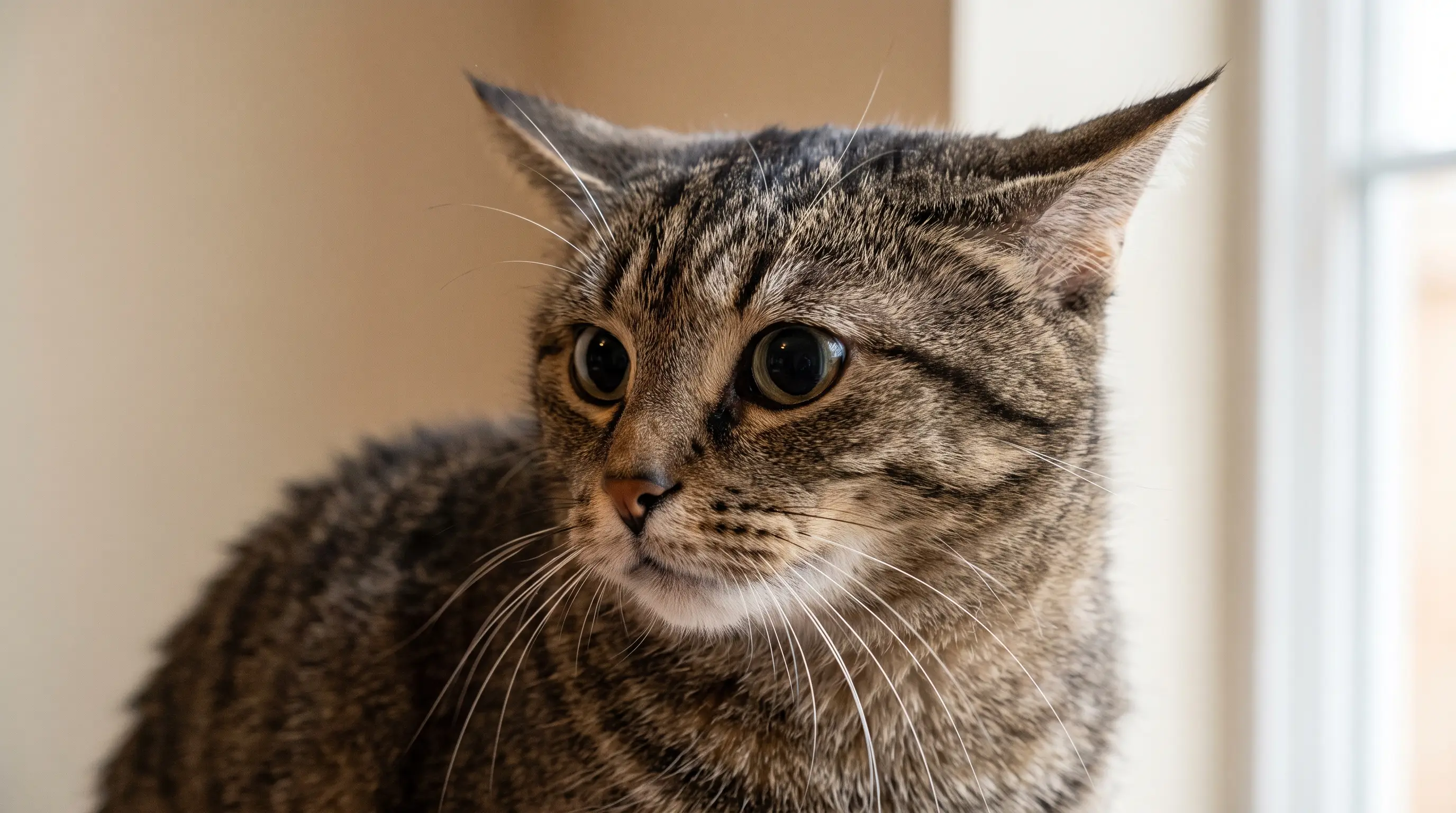
Ears are the earliest tell and the most reliable, because a cat rotates them before it does anything else. Forward and upright is interested and comfortable. Swivelled sideways — the shape people call aeroplane ears — is a cat that has had enough, and it is the single most useful thing on this page: it usually arrives a few seconds before a swat.
Flat back against the skull is fear or a cat about to defend itself, and it is not a subtle position once you know it. One ear forward and one back is genuine ambivalence: something has its attention and it has not decided yet. Ears twitching independently while the cat looks relaxed is just listening, and means nothing at all.
Then the tail, which carries the mood
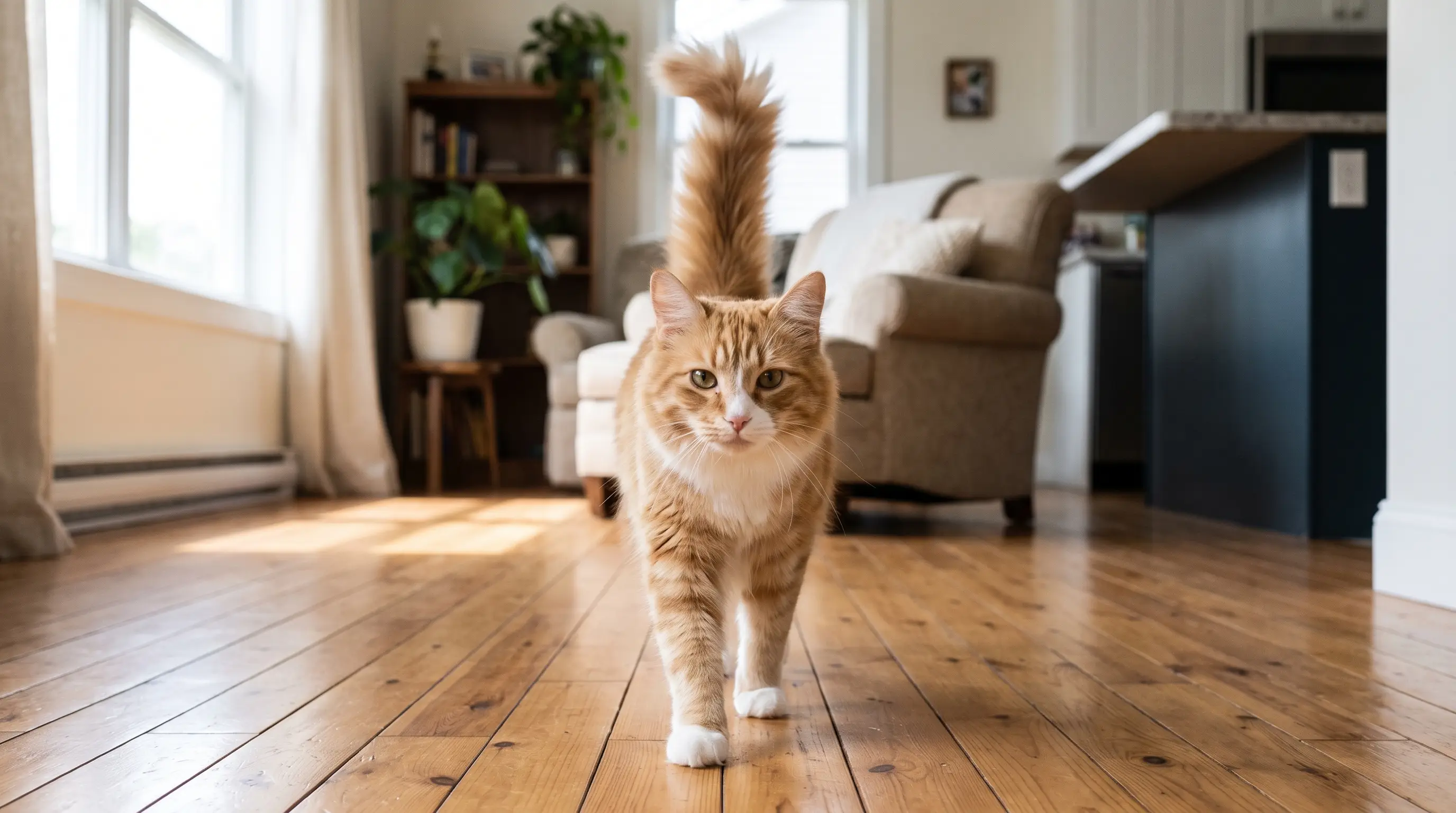
A tail straight up is the friendliest thing a cat does — it is a greeting, and a small hook at the tip is the warm version of it. A tail held low and level is neutral. A tail tucked under the body, or wrapped tight around a sitting cat, is a cat making itself small.
Movement matters more than height. A slow, lazy sway is contentment. A fast flick or thump, especially the tip, is irritation and it builds — a cat that starts thumping while you stroke it is telling you to stop, and it will not tell you twice for long. The bottle-brush tail with an arched back is fear rather than aggression, whatever it looks like: the cat is trying to appear larger because it does not want the fight.
Whiskers and eyes for the fine detail
Whiskers fan forward when a cat is interested or hunting, sit relaxed and slightly out to the side when it is calm, and pull flat back against the cheeks when it is frightened or in pain. Flattened whiskers on an otherwise still cat is one of the quieter distress signals and easy to miss entirely.
Eyes: a slow blink is the closest thing cats have to a compliment, and blinking slowly back is a real conversation rather than a myth. A hard, unbroken stare is a challenge. Pupils tell you about arousal rather than mood — wide in fear and in play, narrow in confident irritation — so read them against the light in the room and against the ears, never on their own.
Then the whole body, and what it is ready to do
Stand back and read the posture as intent. Loose and sprawled, belly exposed, is a comfortable cat — though a shown belly is trust rather than an invitation, and a lot of bitten hands come from misreading that one. Sitting upright, weight even, is neutral and alert.
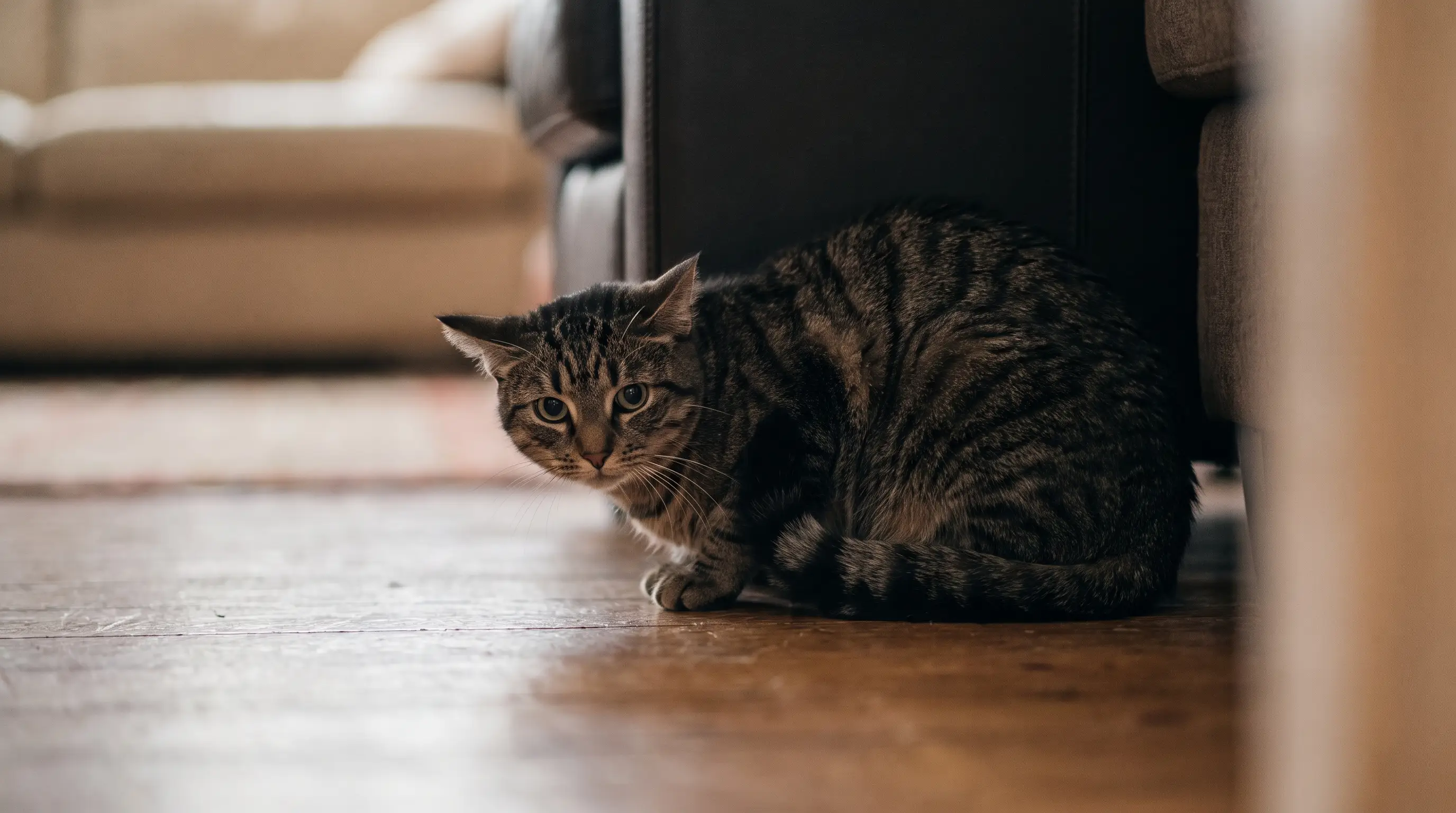
Crouched low with the weight tucked under and the tail wrapped tight is the one to take seriously. It reads as a loaf and it is not: a loafing cat is loose with its paws tucked and its eyes half closed, while a frightened cat is compact, tense and ready to move. Arched back with fur up is fear made large. A cat rolling onto its side or back with claws out and ears flat is not playing — it has run out of exits and is defending itself with all four feet.
Pain looks like irritability, which is the trap
A cat in pain rarely limps, cries or does anything obvious. It gets grumpy. The pattern to watch for is a change rather than a state: a cat that has always disliked its back end touched is a preference, but a cat that suddenly objects to being picked up, stops jumping onto the sofa it has used for years, sits hunched with flattened whiskers, or turns on you during a routine stroke has told you something has changed.
Other quiet ones: sitting still and facing a wall, sleeping in a new hidden spot, over-grooming one specific patch, growling when touched in one particular place. Any of those, especially in a cat over ten, is a vet appointment and not a training problem — and worth booking rather than watching, because cats are good enough at hiding pain that by the time it is obvious it has usually been going on a while.
What to do when the answer is stop
Take your hand away and stop moving. Do not finish the stroke, do not pick the cat up to move it somewhere calmer, and do not lean in to reassure it — a hand coming towards a cornered cat is the thing it is worried about. Give it a clear exit and let it take it. Cats de-escalate by leaving, and one that walks off has resolved the situation exactly the way it should.
Then leave it alone for a while. A cat that has been startled or over-handled stays wound up for longer than the moment lasted, and the mistake most people make is going after it to make friends again. Let it come back on its own — it will, usually sooner than you expect, and the relationship survives being read correctly far better than it survives being pushed through.
Common questions
What does it mean when a cat's ears go flat?
Ears rotated sideways — aeroplane ears — mean a cat has had enough and usually arrive a few seconds before a swat. Ears pressed flat back against the skull are fear, or a cat preparing to defend itself. Ears are the earliest and most reliable signal because a cat moves them before it moves anything else.
Is a wagging tail on a cat the same as on a dog?
No, close to the opposite. A slow lazy sway is contentment, but a fast flick or a thump, especially at the tip, is irritation and it escalates. A cat that starts thumping while you stroke it is asking you to stop.
Why does my cat bite me when I stroke its belly?
Because a shown belly is trust rather than an invitation. Most cats find belly contact uncomfortable, and a cat that rolls over is relaxing near you, not asking to be touched there. If it grabs your hand with all four feet, that is defence rather than play.
How can I tell if my cat is in pain rather than annoyed?
Look for a change instead of a state. A cat that suddenly objects to being picked up, stops jumping onto furniture it has always used, sits hunched with flattened whiskers, over-grooms one patch, or growls when touched in one particular place is telling you something has changed. That is a vet appointment, especially in a cat over ten.
What is the difference between a loaf and a scared crouch?
A loafing cat is loose, paws tucked, eyes half closed. A frightened cat is compact and tense, weight tucked under it and ready to move, often with its tail wrapped tight around its body. They look similar at a glance and mean opposite things.
What should I do when my cat gives a warning?
Take your hand away, stop moving, and give it a clear way out. Do not finish the stroke, pick it up, or lean in to reassure it — a hand approaching a cornered cat is the problem, not the solution. Then leave it alone; cats de-escalate by leaving and come back on their own.
More in Cats
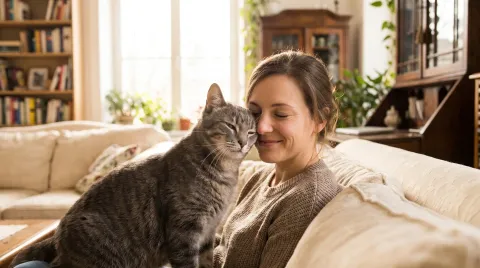
Do cats love their owners? The kidnap experiment says yes
Science ran the same attachment test on cats that it runs on human infants, and 64% passed. What the secure-base test found, why one earlier study disagreed, and how a cat actually says it.
Do cats miss their owners? They even track the clock
Cats greet you harder after four hours away than after thirty minutes — they know how long you were gone. What missing looks like in a cat, when it tips into separation anxiety, and how to leave well.
How cats choose their favourite person
It isn't whoever fills the bowl. The Swiss living-room study found one habit that predicts a cat's favourite better than food ever did — and the person who ignores cats has it by accident.
Cats know their names. They've decided not to answer
A Tokyo lab proved cats pick their own name out of a string of similar words — even from a stranger's mouth. What cats actually understand of what you say, and why the response is optional.
Zoomies: why your cat sprints through the house at 3am
The wall-of-death lap around the living room has a name, a mechanism, and a fix for the 3am edition. Why a predator that sleeps sixteen hours a day sometimes has to spend the surplus all at once.
Headbutts and ankle rubs: what your cat marks you with
The forehead slam is called bunting, it comes with a chemical payload, and it's one of the biggest compliments a cat pays. What the glands are doing, what the group scent means, and when a rub is really an invoice.