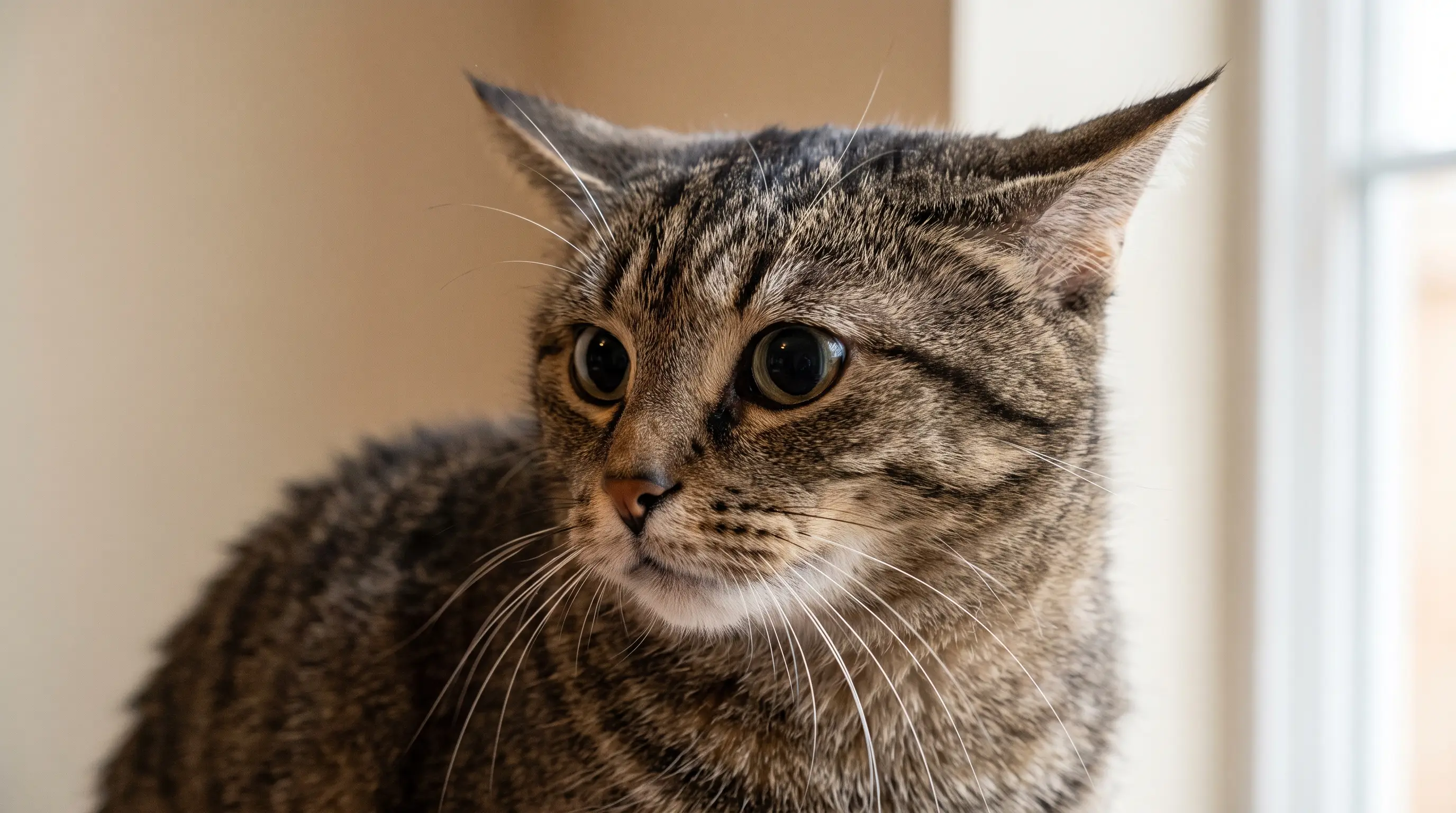
Cat behaviour, decoded
Why cats and dogs really do what they do — meowing, tail talk, dreams, stress and the myths in between, explained honestly.
Articles
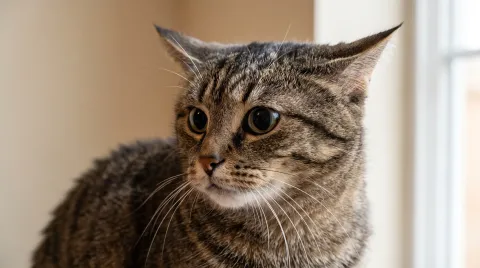
Reading cat body language: annoyed, scared, or in pain
Ears, tail, whiskers, posture — read in that order, in the moment. What each one means, which combinations mean stop, and the signs that are a vet visit rather than a mood.
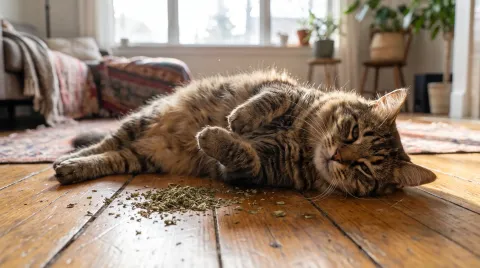
What catnip really does to a cat
The honest, myth-busting guide to catnip: what nepetalactone does, why 1 in 3 cats ignore it, and what to try instead.
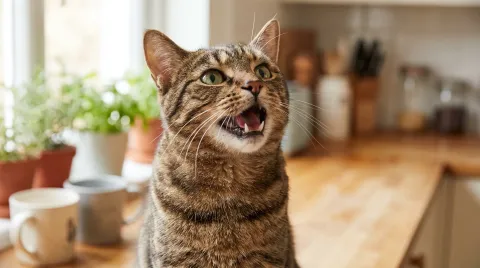
What your cat's meow actually means
Adult cats barely meow at each other. The meow is a language they built for one audience: you. Here's how to read it.
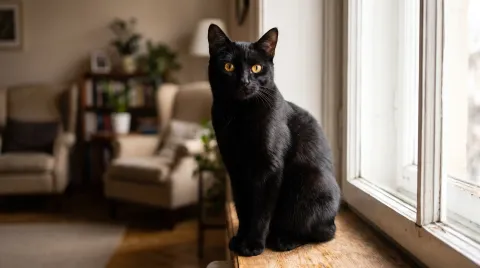
Black cats: the luckiest and unluckiest cat alive
The same black cat is a curse in one country and a blessing in the next. Here's the split, the real genetics, and why shelters can't rehome them.
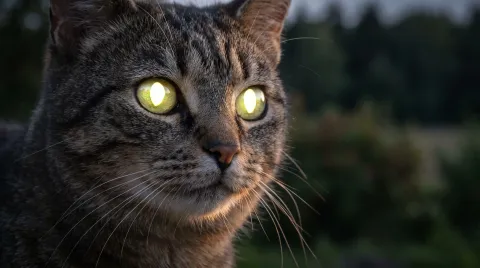
Why cats' eyes glow in the dark, and what they see
A mirror behind the retina gives cats a second shot at every photon. Here's the science of the glow, and the blurry, blue-gold world they actually see.
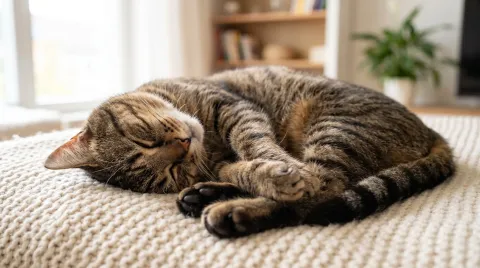
Do cats dream? What the science really shows
Cats share our sleep architecture and drop into REM, where the twitching happens. Here's the evidence, what they likely dream about, and when to worry.
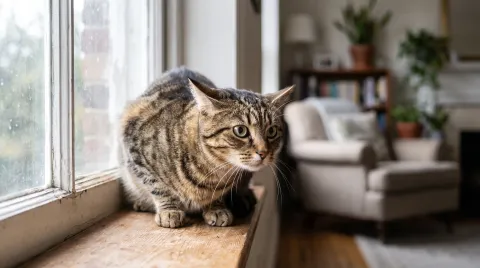
Cat stress signs owners miss
Cats hide stress by instinct, so the signals are quiet. Here are the subtle signs owners overlook, the triggers behind them, and when to call the vet.
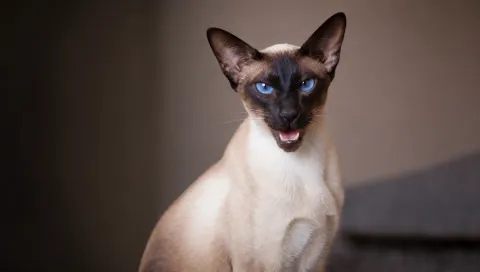
Cartoon cat breeds: what Garfield, Tom and Hello Kitty really are
Garfield is an orange tabby, Tom is a domestic shorthair and Hello Kitty has a Sanrio canon. The honest guide to famous cartoon cats.
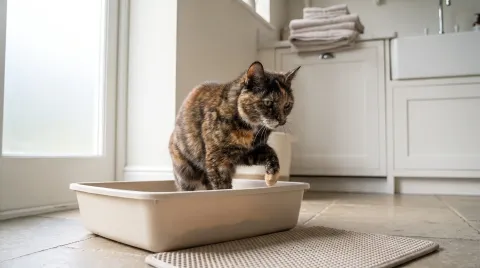
Old cat peeing outside the litter box: why and what to do
It's never spite. Arthritis, kidney disease, infection or confusion explain almost every miss. Here's the vet-first plan that stops the accidents.
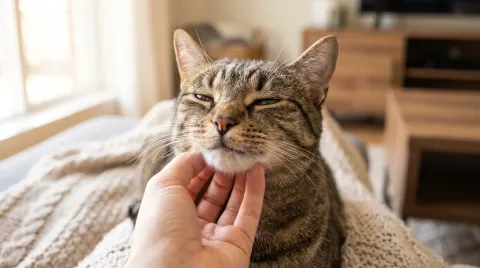
Why do cats purr? It's not always happiness
Purring is a self-soother, a request and sometimes a sign something's wrong — not just contentment. How cats make the sound, and what a purr at the vet really means.
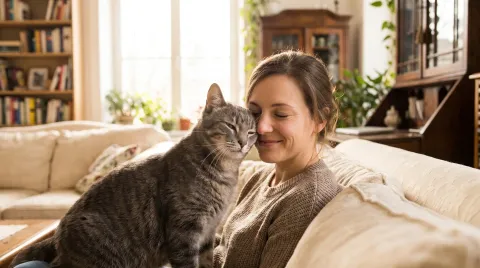
Do cats love their owners? The kidnap experiment says yes
Science ran the same attachment test on cats that it runs on human infants, and 64% passed. What the secure-base test found, why one earlier study disagreed, and how a cat actually says it.
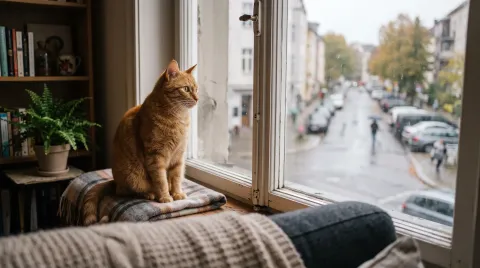
Do cats miss their owners? They even track the clock
Cats greet you harder after four hours away than after thirty minutes — they know how long you were gone. What missing looks like in a cat, when it tips into separation anxiety, and how to leave well.
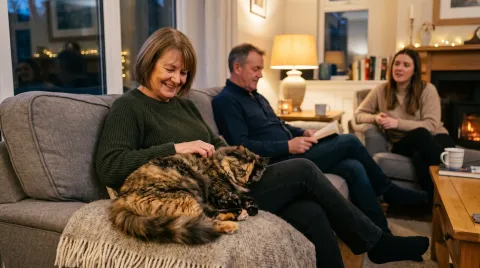
How cats choose their favourite person
It isn't whoever fills the bowl. The Swiss living-room study found one habit that predicts a cat's favourite better than food ever did — and the person who ignores cats has it by accident.
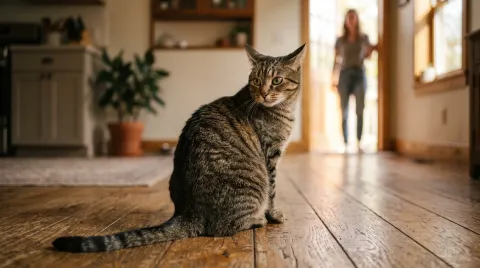
Cats know their names. They've decided not to answer
A Tokyo lab proved cats pick their own name out of a string of similar words — even from a stranger's mouth. What cats actually understand of what you say, and why the response is optional.
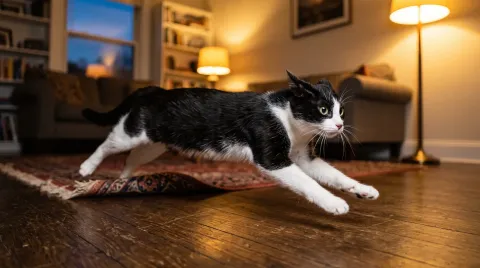
Zoomies: why your cat sprints through the house at 3am
The wall-of-death lap around the living room has a name, a mechanism, and a fix for the 3am edition. Why a predator that sleeps sixteen hours a day sometimes has to spend the surplus all at once.
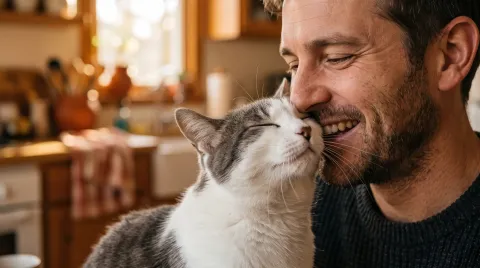
Headbutts and ankle rubs: what your cat marks you with
The forehead slam is called bunting, it comes with a chemical payload, and it's one of the biggest compliments a cat pays. What the glands are doing, what the group scent means, and when a rub is really an invoice.
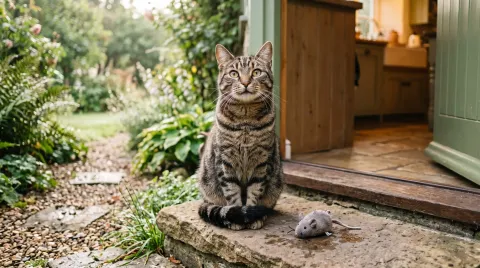
Why cats bring you dead animals
The mouse on the doormat is not a gift in any human sense, and the two leading theories disagree about what it is. What the delivery means, how to respond, and the honest arithmetic of what outdoor cats do to gardens.
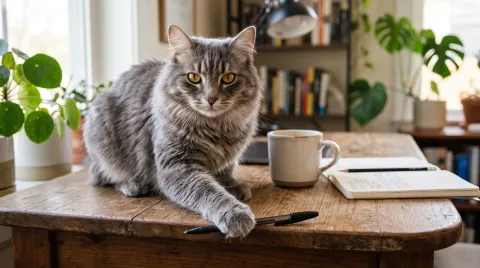
Why cats knock things off tables
The slow push, the held eye contact, the pen hitting the floor. Three real reasons behind the most theatrical move in cat ownership — and the honest one is that it reliably summons you.
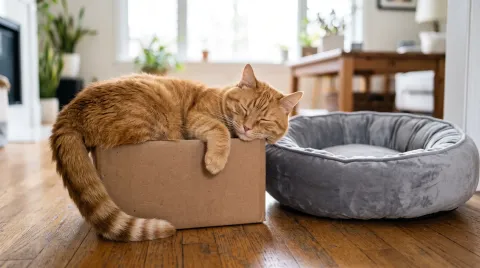
If it fits: why cats sit in boxes
The cardboard box beats the forty-euro cat bed every time, and science has actually looked into why. Pressure, warmth, ambush logic — and the study where cats sat in squares that weren't even there.
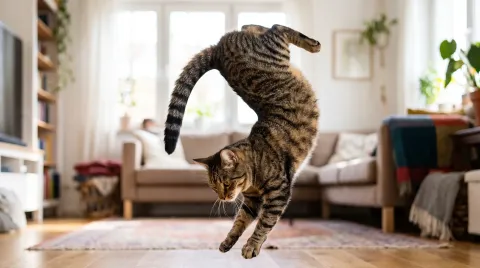
How cats land on their feet — and when they don't
The righting reflex is a mid-air physics routine that runs in a third of a second, works without a tail, and is installed by week seven. It also has limits, and the ones that matter involve your windows.
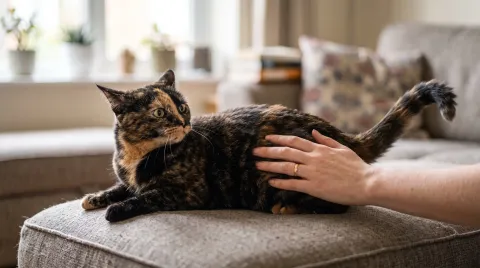
Why your cat bites you mid-stroke
Purring one second, teeth the next — petting-induced aggression is the most misread move in cat ownership. The warnings arrive earlier than you think, and the fix is counting, not forgiveness.
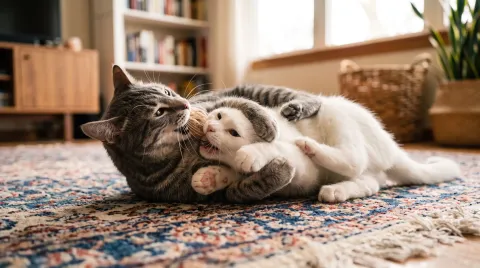
Are my cats playing or fighting? The five reads
Wrestling, neck bites, bunny kicks and thundering chases — most of it is play, some of it isn't, and the difference is visible in five places. What to check, when to step in, and how to step in without getting shredded.
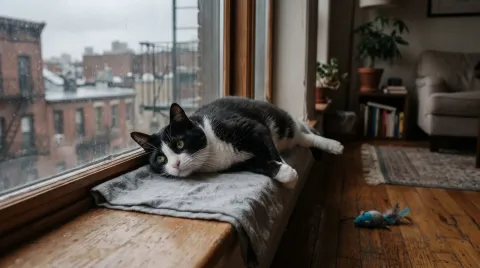
Is my cat bored? What an indoor cat actually needs
A bored cat rarely looks bored — it looks lazy, greedy, clingy or destructive. The signs, the difference between boredom and depression, and an enrichment plan that costs almost nothing and sells nothing.
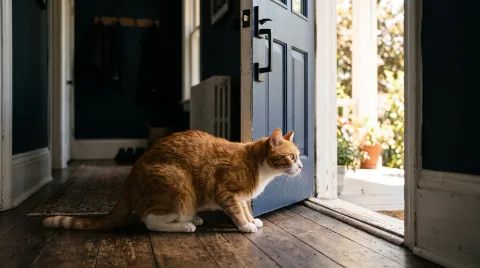
The door-dasher: why your indoor cat plots escape
The crouch by the door, the sprint through your legs, the yowling at the window — an indoor cat that wants out isn't ungrateful. What the pull actually is, whether to give in, and the middle grounds that work.
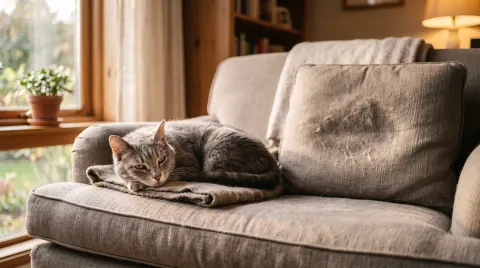
Do cats grieve? What loss looks like in a cat
When a companion animal or a person disappears from a cat's world, something real changes in the cat. What the research actually found, how feline grief shows, and what helps — including the question of the goodbye.
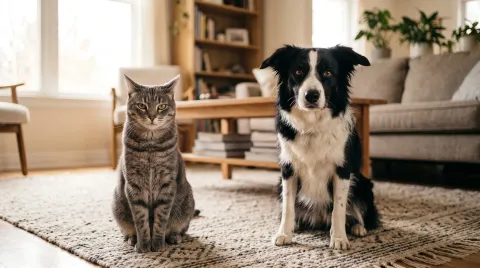
Are cats smarter than dogs? What we can actually measure
Dogs have twice the neurons; cats fail experiments by refusing them. The oldest argument in pet ownership, settled as far as science can settle it — which is less far, and more interesting, than either side hopes.
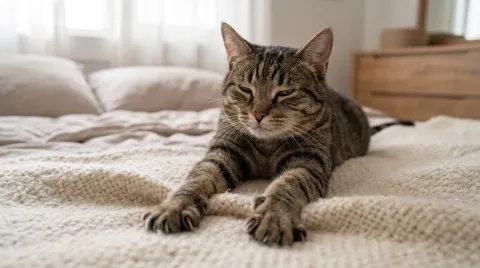
Why do cats knead? The biscuit-making instinct
Making biscuits is a leftover from kittenhood, a way of laying down scent and a sign your cat feels safe. What the pushing paws mean, why some cats drool, and what to do about claws.
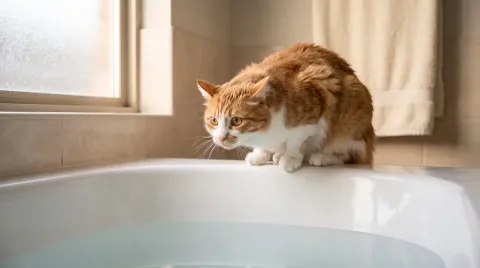
Why do cats hate water? Most do — here's why
It's evolution, a coat that waterlogs and a need for control — not fear of getting clean. Why most cats dodge a bath, the breeds that swim, and why the same cat loves a dripping tap.
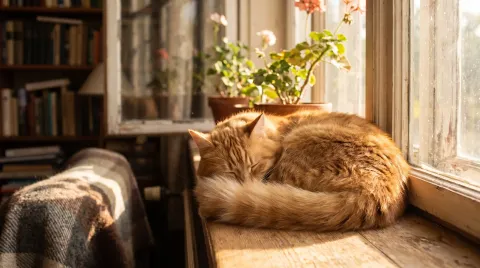
Why do cats sleep 16 hours a day?
Cats sleep 12–16 hours because hunting is expensive and they're built to conserve energy between bursts. What a 'cat nap' really is, why they wake at dawn, and when sleep is a red flag.
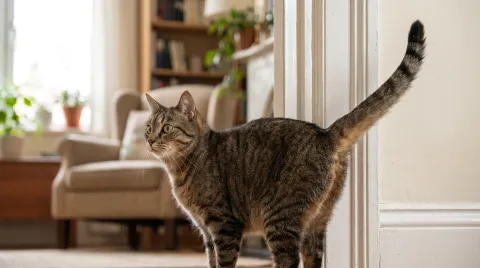
Why is my cat spraying? What it means and how to stop it
Spraying isn't a litter-box failure — it's a message about territory, written in urine. How to tell it from peeing, what's behind it, and the fixes that hold.
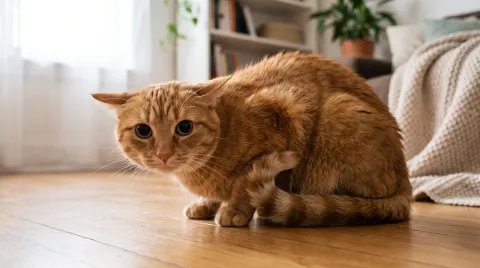
Why is my cat aggressive? Causes and how to calm it
Cat aggression isn't a personality — it's a diagnosis with about six usual suspects, and each one has a different fix. Work through them in order and the biting usually explains itself.
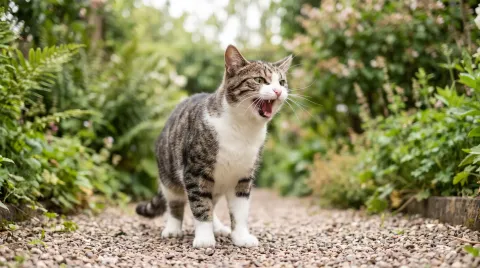
Why do cats hiss? What it means and what to do
A hiss is not an attack — it's the thing a cat does to avoid one. What the sound actually is, what triggers it, and why the polite answer is always to back off.
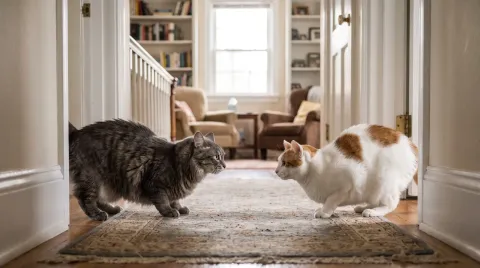
Why are my cats fighting? How to restore the peace
Two cats that shared a bed for years can turn into enemies in an afternoon. What breaks a feline relationship, why 'letting them fight it out' entrenches the war, and the reset that works.
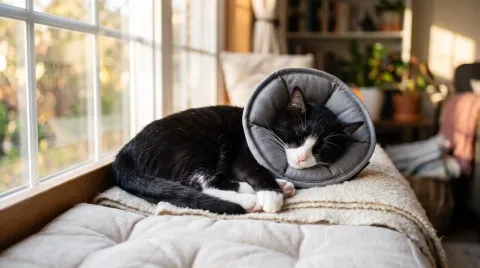
How neutering changes cat behavior — and what it won't fix
Neutering deletes the hormone-driven behaviours — the roaming, the spraying, the 3am opera — and touches almost nothing else. What changes, what doesn't, and when.
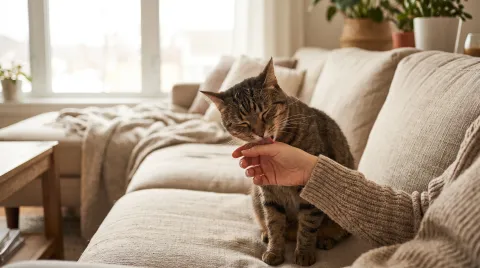
Why does my cat lick me? Grooming, love and salt
A cat's lick is mostly a compliment: you've been adopted into the grooming circle. What the sandpaper tongue is doing, why some cats overdo it, and when to gently opt out.
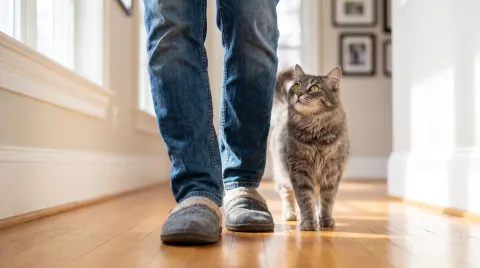
Why does my cat follow me everywhere, even the bathroom?
The supposedly aloof animal trailing you from room to room is behaving exactly as the attachment science predicts. Why cats shadow their person, the bathroom mystery, and the one change that needs a vet.
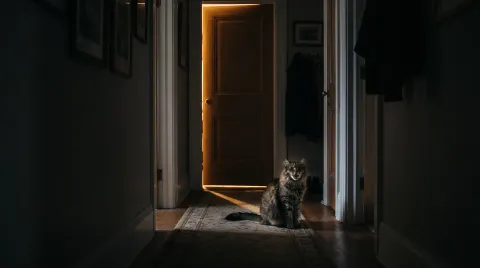
Why does my cat meow at night? And how to make it stop
Night calling is a solvable problem with a short list of causes: a crepuscular body clock, a lesson you accidentally taught, an unneutered announcement, or — in older cats — a medical flag that comes first.