Zoomies: why your cat sprints through the house at 3am
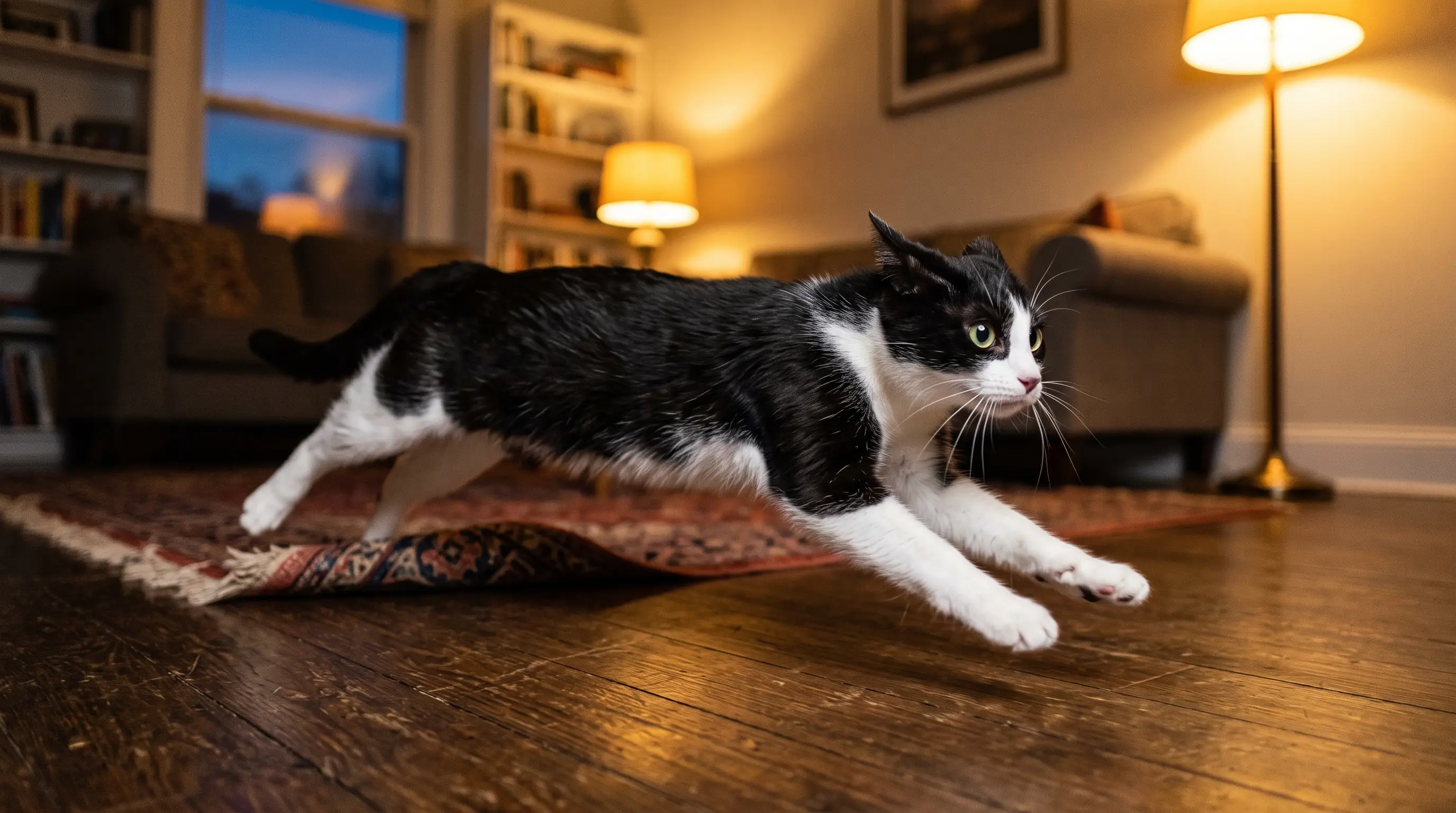
The zoomies — five minutes of flat-out galloping, wall-jumping and rug-skidding, often at some indefensible hour — are normal, healthy and even have a clinical name: frenetic random activity periods. Underneath them is simple arithmetic. Your cat is an ambush predator built for short, explosive hunts, it sleeps most of the day, and if nothing spends that banked energy, the body eventually spends it all at once. Here is what triggers the sprint, why it so often happens at 3am or straight out of the litter box, and how to move the show to a civilised hour.
What the zoomies actually are
Behaviourists call them FRAPs — frenetic random activity periods — and they're documented across mammals, from puppies to rabbits to, occasionally, you after a cold swim. In cats the mechanism is a budget problem. A cat is built as an ambush hunter: its natural day is a series of short, violent bursts — stalk, sprint, pounce — separated by long stretches of rest, and its body is primed to deliver several of those bursts daily. An indoor cat with a full bowl gets the rest without the hunts. The energy is still budgeted, still loaded, and when the pressure gets high enough it discharges as one glorious lap of the flat.
That's why zoomies cluster in young cats and kittens, whose energy budgets are largest, and why they often fire after long naps or when you come home — arousal spikes on top of a full tank. A cat that has just had the zoomies is not malfunctioning. It has balanced its books.
Why 3am, specifically
Cats are crepuscular: their wiring points the biggest activity peaks at dawn and dusk, when the rodents their ancestors hunted are moving. Your cat's 3-to-5am slot is the dawn patrol arriving early — helped along by a household that's been asleep for hours, which to a cat means the territory is quiet, boring and entirely available as a racetrack. The full picture of how a cat's sixteen-hour sleep schedule interlocks with those twilight peaks is in how much cats really sleep.
There's usually a learned layer on top. If a 3am gallop across your bed has ever produced a reaction — feeding, chasing, shouting, even sleepy conversation — the cat has logged that the night show gets an audience. Cats run remarkably accurate ledgers on what works. The fix, below, involves quietly closing that account.
The litter-box zoomies
The post-poop victory lap is real enough to have folk names in several languages, and the honest answer is that nobody has nailed the mechanism. The leading candidates: relief and arousal after stimulation of the vagus nerve, an old instinct to clear out of the area where you've just advertised your presence to every predator downwind, and simple joy at a job done. None are proven; all are plausible; your cat may be running on all three.
One caveat earns its place here. A cat that bolts from the box every time, cries while going, or races away as if stung may not be celebrating — pain from constipation, urinary trouble or an irritated rear can produce the same sprint. A change in the pattern is the signal: the occasional triumphant lap is folklore-normal, a new habit of frantic exits alongside straining or accidents is a vet call. The same reading — pattern change, not single event — runs through the stress signs owners miss.
When zoomies are a symptom
Most zoomies are healthy. A few patterns deserve a closer look. In older cats, a new onset of frantic tearing around — especially with weight loss, ravenous appetite, yowling or a scruffy coat — can point at hyperthyroidism, which cranks the whole metabolism up to eleven; our guide to hyperthyroidism in cats covers what the vet will check. Skin rippling, tail-lashing and sudden sprints triggered by touch can indicate feline hyperesthesia syndrome, which needs a professional diagnosis rather than a diagnosis from the internet.
And zoomies that come with a swarm of other changes — hiding, aggression, litter box avoidance — are better read as agitation than exuberance. The distinction is usually easy to make from the sofa: happy zoomies end in a theatrical flop and a wash; distressed running ends in a tense, watchful cat. Judge the landing, not the flight.
Moving the show to prime time
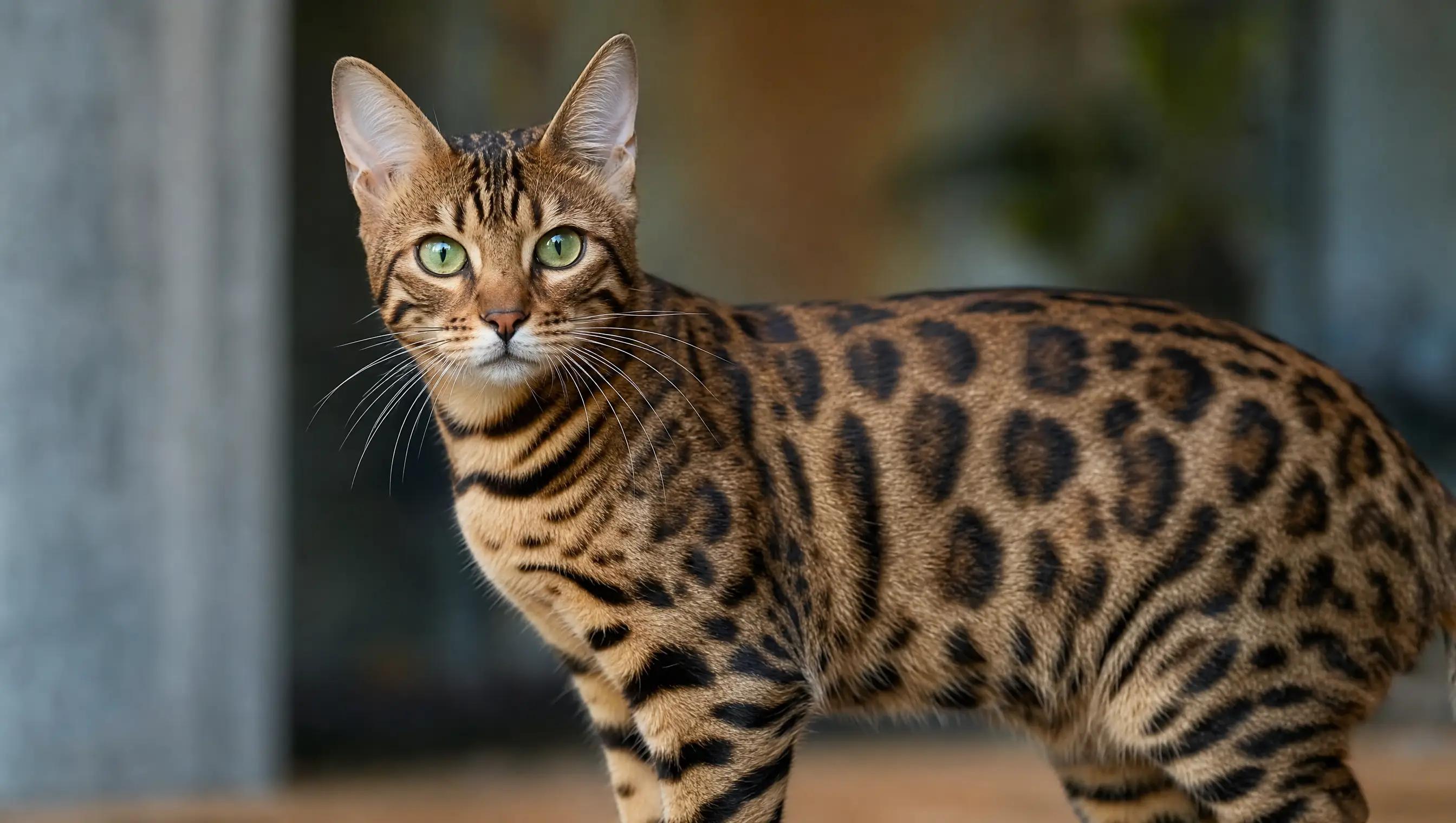
You don't suppress zoomies — you schedule them. The tool is the hunt-catch-eat-groom-sleep cycle every cat runs on: a proper play session with a wand toy that ends in a caught "kill", followed immediately by a meal, reliably drops a cat into grooming and then deep sleep. Run that sequence in the late evening and you've moved the biggest energy spend to bedtime and paired it with a full stomach — the closest thing cat ownership has to a sleep button. High-energy breeds like the Bengal may need two rounds of it where a sofa philosopher needs one.
For the 3am specialists, add the boring half: total non-response at night. No feeding, no chasing, no commentary — any reaction at all is a win for the cat and funds the next show. Feed the last meal late, ideally from a puzzle feeder that makes the cat work, and give the daytime hours more to do: window perches, climbing routes, a rotation of toys. A cat whose days contain several small hunts rarely needs to liquidate the whole account at 3am. If boredom looks like the underlying story, the scratching guide shares most of the same enrichment playbook.
Common questions
Why does my cat get the zoomies?
Zoomies — frenetic random activity periods, or FRAPs — are how an ambush predator spends banked energy. A cat's body is built for several short, explosive hunts a day; an indoor cat with a full bowl still loads that energy and eventually discharges it as a burst of flat-out running. It's normal and healthy, especially in young cats.
Why does my cat run around at 3am?
Cats are crepuscular — wired for activity peaks at dawn and dusk — so the small hours are their natural prime time, and a quiet sleeping house makes a perfect racetrack. If night runs have ever earned food or attention, there's a learned layer too: the cat has logged that the 3am show gets a response.
Why does my cat get the zoomies after pooping?
Nobody has proven the mechanism. The main theories are post-toilet relief linked to vagus nerve stimulation, an old instinct to leave the area where a cat has just advertised its location, and plain celebration. An occasional victory lap is normal; a cat that bolts from the box every time, cries or strains needs a vet check.
How do I stop my cat's zoomies at night?
Schedule the energy spend earlier: a late-evening wand-toy session that ends in a caught kill, followed straight away by the last meal, drops most cats into groom-then-sleep mode. Pair it with total non-response at night — no feeding, no chasing, no talking — so the 3am show loses its audience and its funding.
Are zoomies a sign my cat is happy?
Usually, yes — they're an energy release, most common in young, healthy cats, and a happy episode typically ends in a relaxed flop and a wash. Read the landing: running that ends in a tense, watchful cat, or that arrives with hiding, aggression or litter box changes, is agitation rather than joy.
When should I worry about my cat's zoomies?
When the pattern changes. New frantic activity in an older cat — especially with weight loss, huge appetite or yowling — can signal hyperthyroidism. Sprints triggered by touch with skin rippling can indicate hyperesthesia. And frantic litter box exits with straining or accidents point at pain. All three are vet conversations.
More in Cats
Why does my cat lick me? Grooming, love and salt
A cat's lick is mostly a compliment: you've been adopted into the grooming circle. What the sandpaper tongue is doing, why some cats overdo it, and when to gently opt out.
Why does my cat follow me everywhere, even the bathroom?
The supposedly aloof animal trailing you from room to room is behaving exactly as the attachment science predicts. Why cats shadow their person, the bathroom mystery, and the one change that needs a vet.
Do cats love their owners? The kidnap experiment says yes
Science ran the same attachment test on cats that it runs on human infants, and 64% passed. What the secure-base test found, why one earlier study disagreed, and how a cat actually says it.
Do cats miss their owners? They even track the clock
Cats greet you harder after four hours away than after thirty minutes — they know how long you were gone. What missing looks like in a cat, when it tips into separation anxiety, and how to leave well.
How cats choose their favourite person
It isn't whoever fills the bowl. The Swiss living-room study found one habit that predicts a cat's favourite better than food ever did — and the person who ignores cats has it by accident.
Cats know their names. They've decided not to answer
A Tokyo lab proved cats pick their own name out of a string of similar words — even from a stranger's mouth. What cats actually understand of what you say, and why the response is optional.