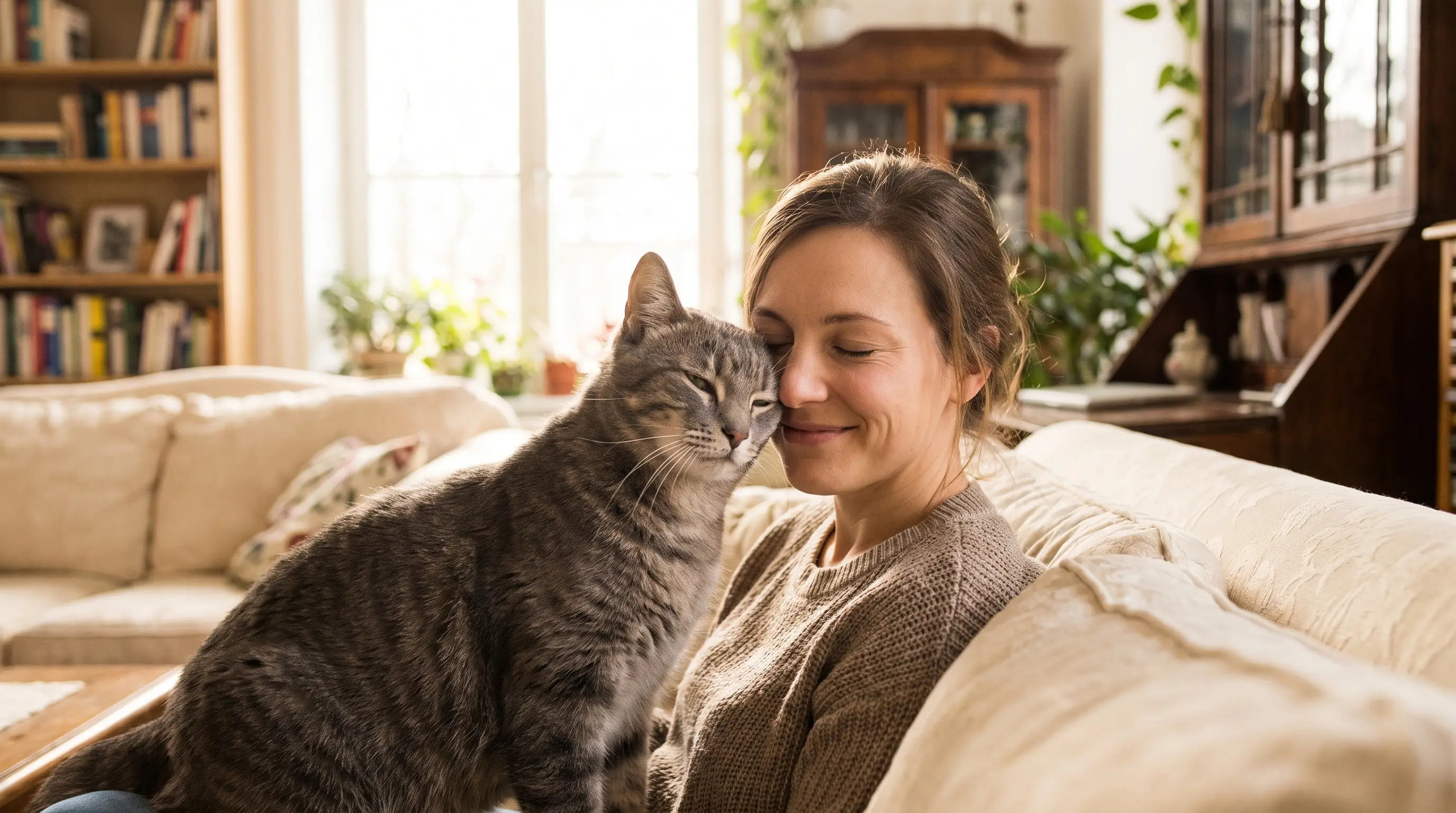
Do cats love their owners? The kidnap experiment says yes
Yes — and not in a vague, wishful way. In 2019, researchers put cats through the same attachment test used on human infants, and about 64% showed secure attachment to their owner, a fraction below the figure for babies and above the one for dogs. The interesting part is everything around that number: the study that found the opposite four years earlier, the experiment where half the cats chose their human over food, and why a bond this real is this easy to miss.
The test they run on babies, run on cats
The evidence starts with a mild, deliberate ordeal. In the secure-base test, an infant spends two minutes in an unfamiliar room with their caregiver, two minutes alone, and two minutes reunited. What matters is the reunion: a securely attached child checks in with the returning parent, settles, and goes back to exploring, using the caregiver as a base. An insecurely attached child either clings and won't settle, or pointedly ignores the person who just came back.
In 2019, Kristyn Vitale's team at Oregon State University ran exactly this protocol on 70 kittens. On reunion, 64.3% behaved like the secure infants: a greeting, a settling, then back to exploring the room. The published comparison figures are 65% for human infants and 58% for dogs. Kittens, in other words, matched the babies. When part of the group was retested after a six-week training and socialisation course, their attachment styles had barely moved — the bond, once formed, behaves like a trait of the relationship, not a mood. A follow-up with adult cats landed in the same range.
The study that found the opposite
Honesty requires the other result. In 2015, Alice Potter and Daniel Mills at the University of Lincoln ran an adapted version of the classic Ainsworth test on adult cats and concluded they showed no secure-base effect at all: the cats were no more confident with their owner in the room than with a stranger, and the authors suggested cats don't need humans for safety the way dogs do.
So which is it? Both, partly. The two studies used different protocols, different ages and different read-outs, and cats sit awkwardly in a test built for animals that show distress openly — a mildly stressed cat goes still and quiet, which scores as indifference. The picture that survives both papers is this: cats form genuine attachments to specific people, but they carry their independence into the lab with them. A cat's bond is real and undemonstrative at the same time, which is exactly why owners have argued about it for as long as there have been cats on sofas.
Cupboard love? The food experiment
The standing accusation against cats is that the affection is really about the tin opener. In 2017, Vitale's group tested it directly. Fifty cats — half owned pets, half shelter cats — were offered four things at once after a few hours' break from all of them: food, a toy, an interesting scent, and a person offering attention. Half the cats chose the human over everything else, food included. Preference varied cat by cat, as anyone who owns one would predict, but "they only love you for the food" did not survive contact with the data.
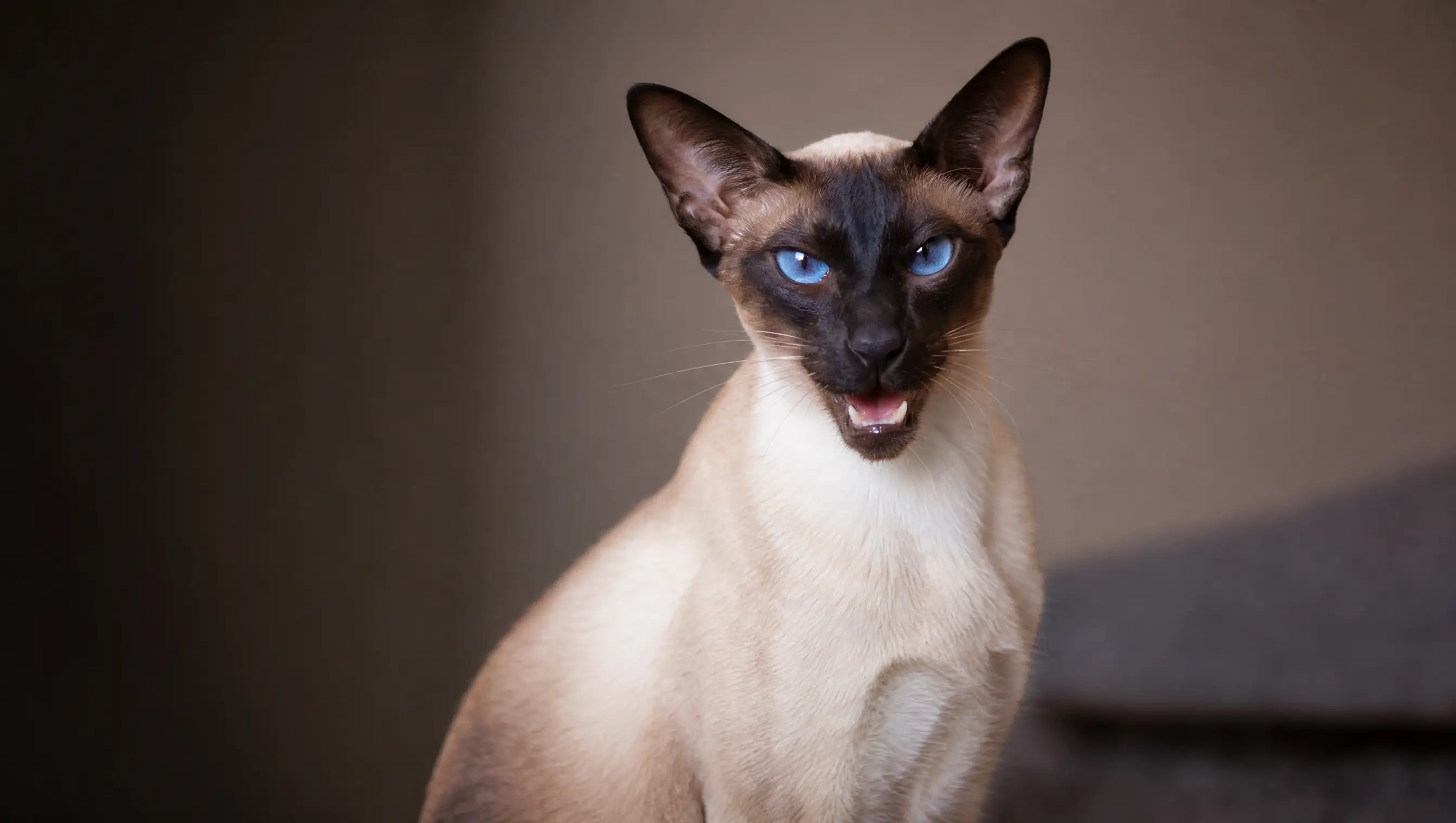
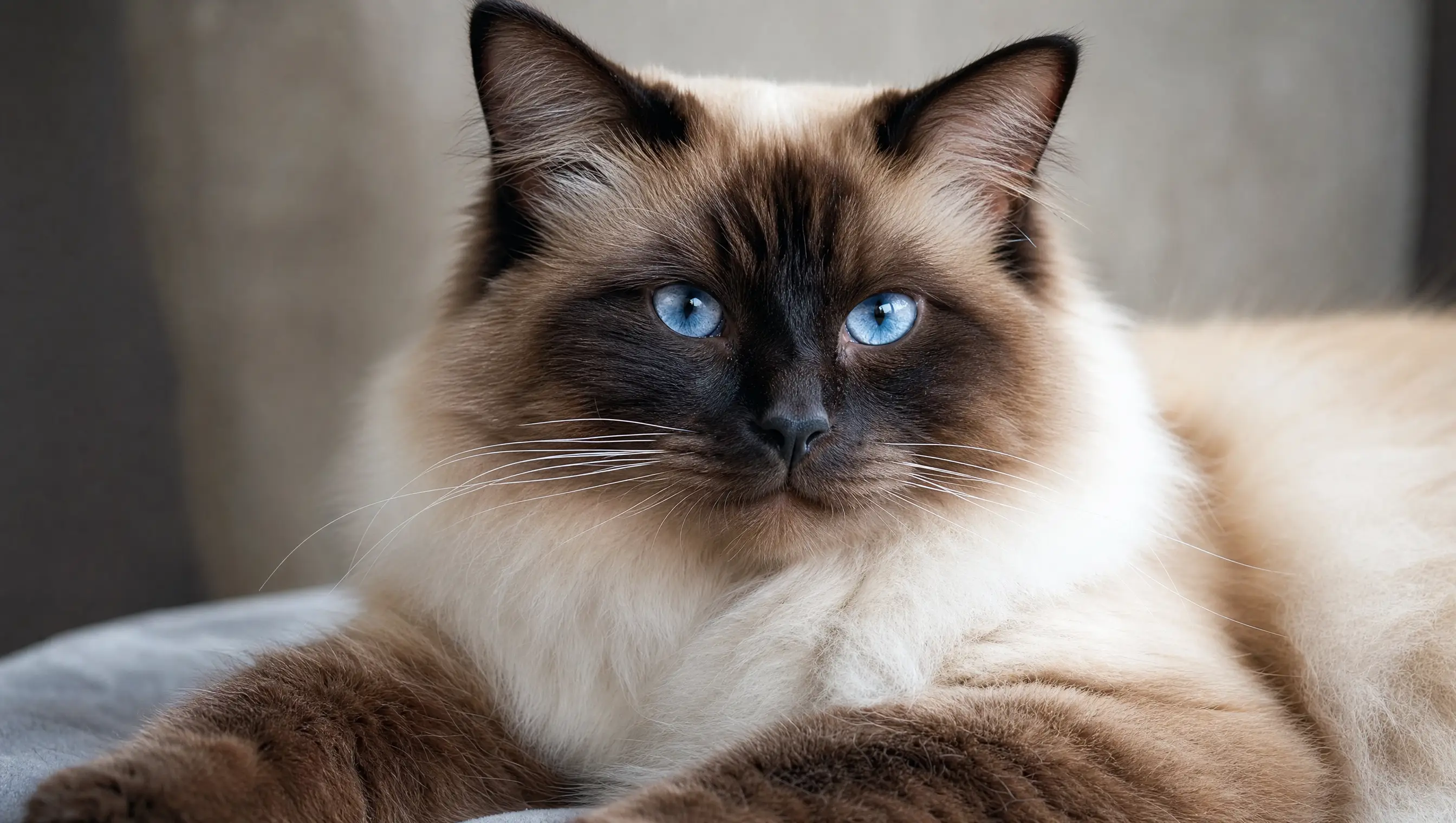
There's a wrinkle worth knowing: sociability differs by individual far more than by ownership status, and breeding plays a part too. Deliberately people-oriented breeds like the Siamese and the Ragdoll sit at the affectionate end of the spectrum, while plenty of magnificent loners hold down the other end. The attachment machinery is standard equipment; how loudly a cat uses it is not.
How a cat says it
A dog's love is legible from across a car park. A cat's is a quieter dialect, and most of it is body language. The tail held straight up with a soft hook at the tip is a greeting reserved for friendly encounters — cats raise it to other cats they like and to their people. The slow blink is a deliberate signal, not sleepiness, and cats offer it more to people they trust. The headbutt and the ankle rub are scent-marking that folds you into the group smell; the kneading paws are kittenhood comfort re-aimed at you; following you from room to room means the room is better with you in it. We take the full vocabulary apart in cat body language, and the strange machinery of the purr — including the one aimed squarely at your breakfast routine — in why cats purr.
Your voice counts too. Work by Charlotte de Mouzon in France found cats reliably respond to their own owner's voice — especially the higher, sing-song register people use with them — and largely ignore the same words from a stranger. The aloofness is selective. That's rather the point.
Can you make your cat love you more?
Somewhat, yes — mostly by changing your half of the relationship. The consistent finding across cat interaction studies is that cats give more contact, for longer, when the human lets the cat start it and lets the cat end it. Sit at their level, offer a hand, look away, blink slowly, and let them decide; the approach that would read as standoffish in a dog is courtship in a cat. Add daily play with a wand toy, predictable routines, and contact on their schedule rather than yours.
And read the misses honestly. A cat that hides, flinches from touch or bites mid-stroke isn't withholding love — it's telling you something about stress or overstimulation, and the stress signs owners miss is the place to start. As for the roughly one cat in three that tested as insecurely attached: that is an attachment style, not a verdict. An anxious, clingy cat and a wary, distant one are both attached — the bond is there, it just wears different clothes.
Common questions
Do cats love their owners?
Yes. In a 2019 Oregon State University study that ran the infant secure-base test on 70 kittens, 64.3% showed secure attachment to their owner — essentially the same rate as human infants (65%) and above dogs (58%). Cats treat a trusted person as a source of safety, which is what attachment researchers mean by a bond.
Does my cat actually love me, or just want food?
It's not just the food. In a 2017 study, cats offered food, toys, an interesting scent and human attention at the same time chose the human more often than anything else — half of them preferred social interaction with a person over eating. Food matters, but it doesn't explain the relationship.
How do cats show affection?
In their own dialect: a tail held straight up with a hooked tip as a greeting, slow blinks, headbutts and cheek rubs that mark you with their scent, kneading with their front paws, following you between rooms, and choosing to sleep in contact with you. None of it is as loud as a dog's greeting, and all of it is deliberate.
Do cats love their owners like dogs do?
The underlying attachment is remarkably similar — kittens actually edged out dogs on secure attachment in the same style of test. What differs is the display: dogs advertise the bond, cats economise on it. A cat's affection is quieter, more selective and easier to miss, not weaker.
Do cats get attached to one person?
Often, yes. Cats tend to favour the person who reads their signals best — who lets them start and end contact, plays with them, and handles them predictably. In multi-person homes the favourite is usually earned through those habits rather than through who fills the bowl.
Do cats recognize their owner's voice?
Yes. French research by Charlotte de Mouzon found cats respond clearly to their own owner's voice, particularly the sing-song register people naturally use with them, while largely ignoring identical phrases from strangers. A cat that doesn't come when called heard you — it's just reserving the response.
More in Cats
Why does my cat lick me? Grooming, love and salt
A cat's lick is mostly a compliment: you've been adopted into the grooming circle. What the sandpaper tongue is doing, why some cats overdo it, and when to gently opt out.
Why does my cat follow me everywhere, even the bathroom?
The supposedly aloof animal trailing you from room to room is behaving exactly as the attachment science predicts. Why cats shadow their person, the bathroom mystery, and the one change that needs a vet.
Do cats miss their owners? They even track the clock
Cats greet you harder after four hours away than after thirty minutes — they know how long you were gone. What missing looks like in a cat, when it tips into separation anxiety, and how to leave well.
How cats choose their favourite person
It isn't whoever fills the bowl. The Swiss living-room study found one habit that predicts a cat's favourite better than food ever did — and the person who ignores cats has it by accident.
Cats know their names. They've decided not to answer
A Tokyo lab proved cats pick their own name out of a string of similar words — even from a stranger's mouth. What cats actually understand of what you say, and why the response is optional.
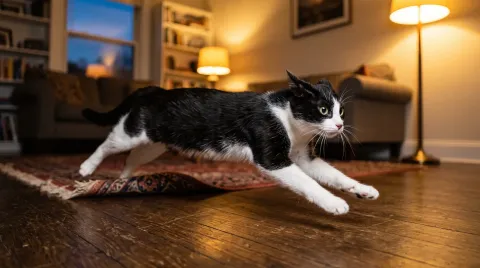
Zoomies: why your cat sprints through the house at 3am
The wall-of-death lap around the living room has a name, a mechanism, and a fix for the 3am edition. Why a predator that sleeps sixteen hours a day sometimes has to spend the surplus all at once.