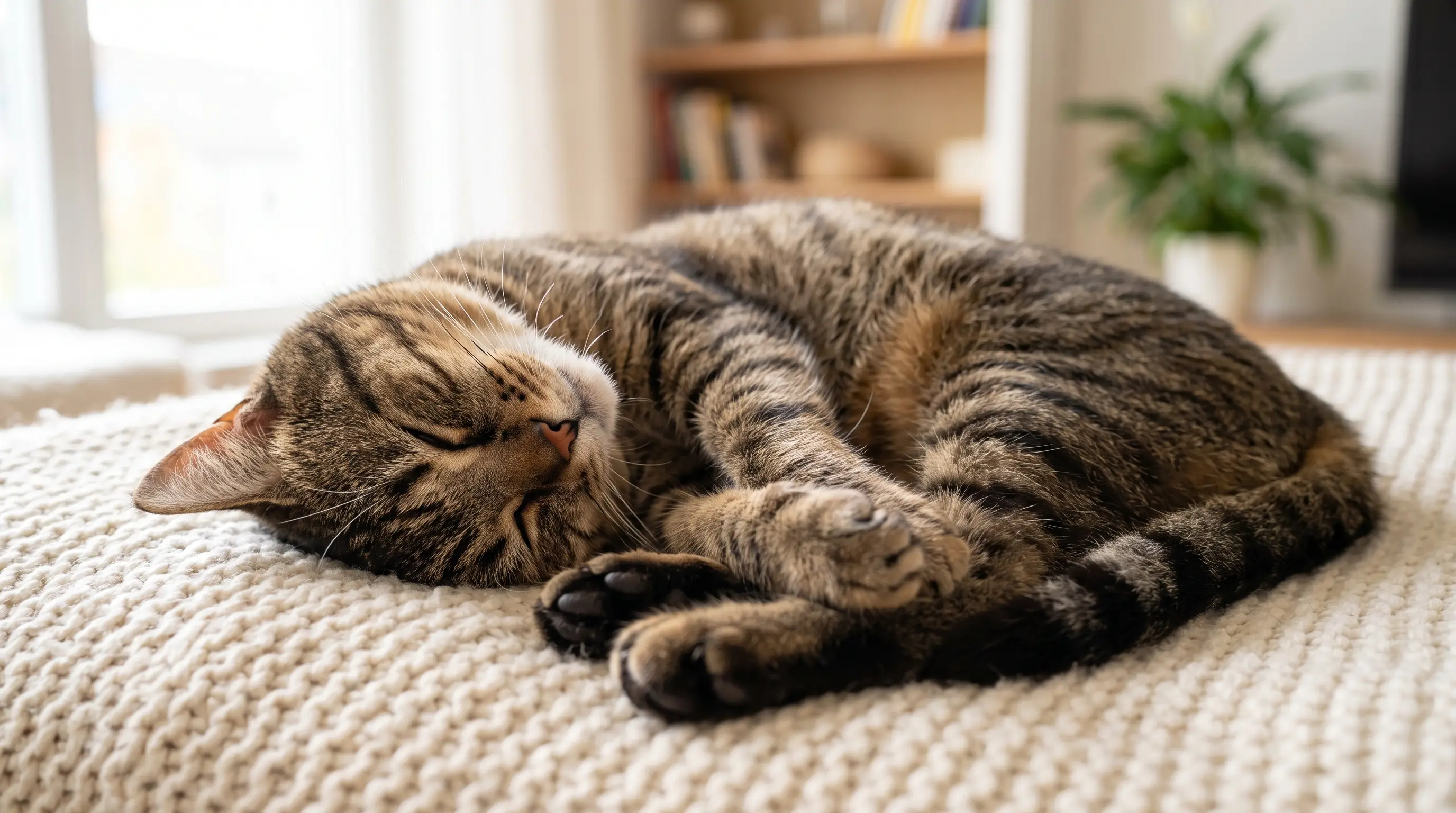
Do cats dream? What the science really shows
Cats almost certainly dream. They run the same basic sleep cycle we do, dropping from light dozing into deep sleep and then into REM, the phase where the brain fires almost as hard as it does awake. The paddling paws, flicking ears and tiny chirps you see in a cat gone limp and floppy all happen during REM. No one can ask a cat what it saw, so we stop short of proof, but the brain hardware and the behavior match human dreaming closely enough that most sleep researchers read it the obvious way.
Do cats dream
Cats dream during REM sleep, the same stage where most human dreaming happens. A sleeping cat cycles between light dozing, where it stays half-alert and easy to rouse, and deeper sleep that ends in a burst of REM. In REM the eyes dart under the lids, breathing turns irregular, the body goes floppy, and the brain lights up on an EEG almost the way it does when the cat is awake and hunting. That combination, an active brain paired with a switched-off body, is the physical signature of dreaming. We can measure every part of it in a cat. The one thing we can't do is get a report back, which is why careful writers say cats almost certainly dream rather than claiming certainty.
Michel Jouvet's cat experiments
The best evidence that cats act on their dreams came from French neuroscientist Michel Jouvet in the 1960s at the University of Lyon. Jouvet worked out that a small patch of the brainstem, the pons, is what paralyses the body during REM so animals don't physically perform whatever the sleeping brain is running. When he damaged that region in cats, the paralysis switch stopped working. The cats stayed asleep and their EEG traces confirmed they were in REM, yet they stood up and moved. They crouched and stalked, pounced on prey that wasn't there, arched as if squaring up to a rival, and went through grooming motions.
Jouvet called it oneiric behavior, meaning dream behavior, and the plainest reading is that the cats were acting out dreams about being cats. The same mechanism exists in people. When the human version of that brainstem brake fails, you get REM sleep behavior disorder, where someone physically acts out a dream. A cat with a working pons is doing all of that too, just held still, which is why the outward signs shrink to a twitching paw and a flicking whisker.
What cats dream about
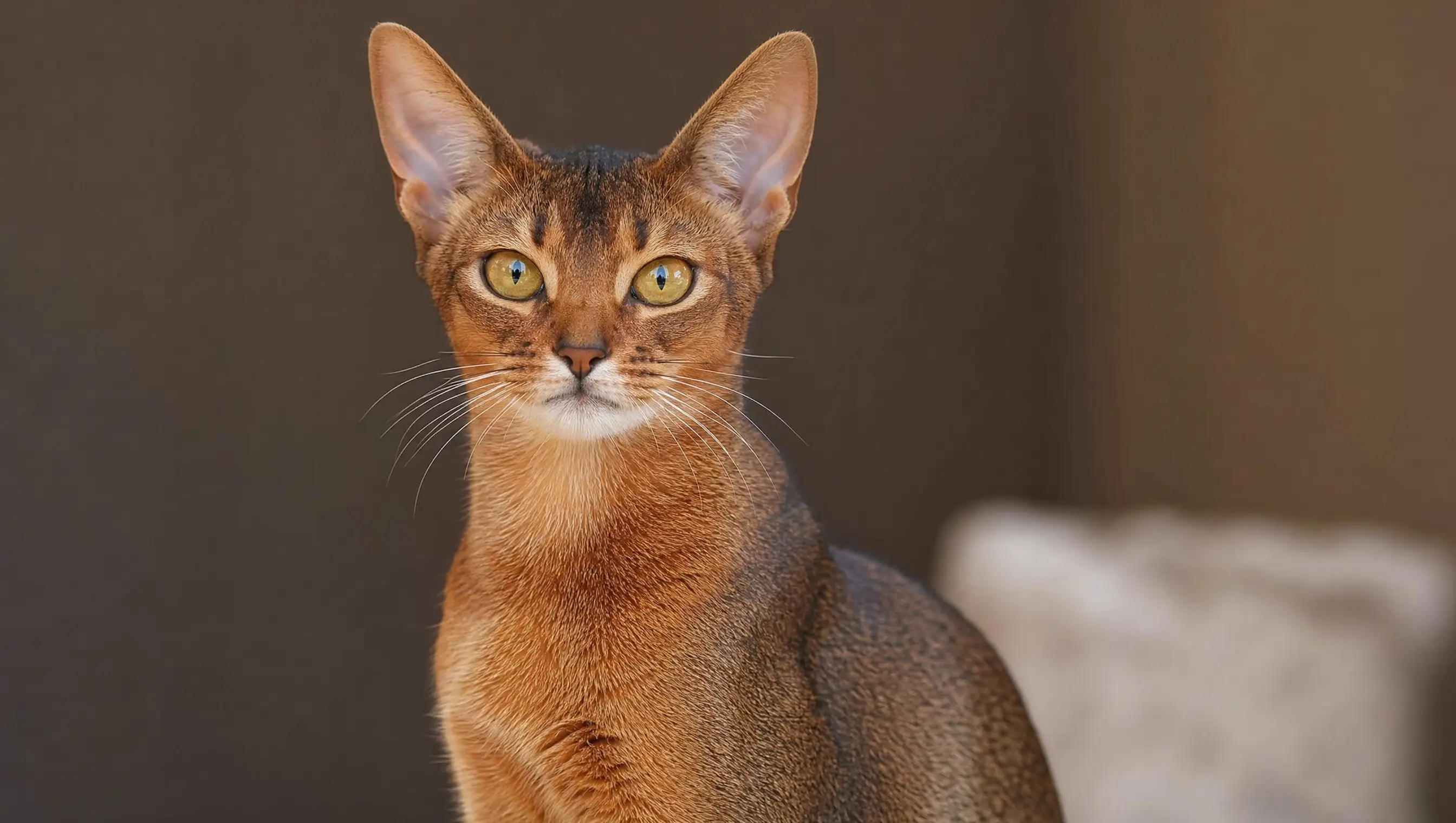
Cats most likely dream about ordinary cat life: hunting, patrolling their territory, and the people and animals they live with. Jouvet's acting-out cats didn't do anything exotic. They rehearsed the stalk-and-pounce sequence that fills a cat's waking hours, which points to dreams built from everyday experience rather than anything stranger. It fits what we see in other animals too; sleep researchers have shown rats replay the same brain patterns at night that they used running a maze during the day.
So a napping cat is probably reliving the bird at the window, a chase across the kitchen, a scent trail along its patch, or being stroked by its person. A high-drive breed like the Abyssinian may simply have more hunting footage to run. If you want a sense of the instincts feeding those dreams, the same predatory wiring shows up across the family in our look at wild cats. Whether cats have nightmares is genuinely unknown. Some owners describe a cat waking with a start and looking spooked, but that's anecdote, not evidence.
How much cats sleep
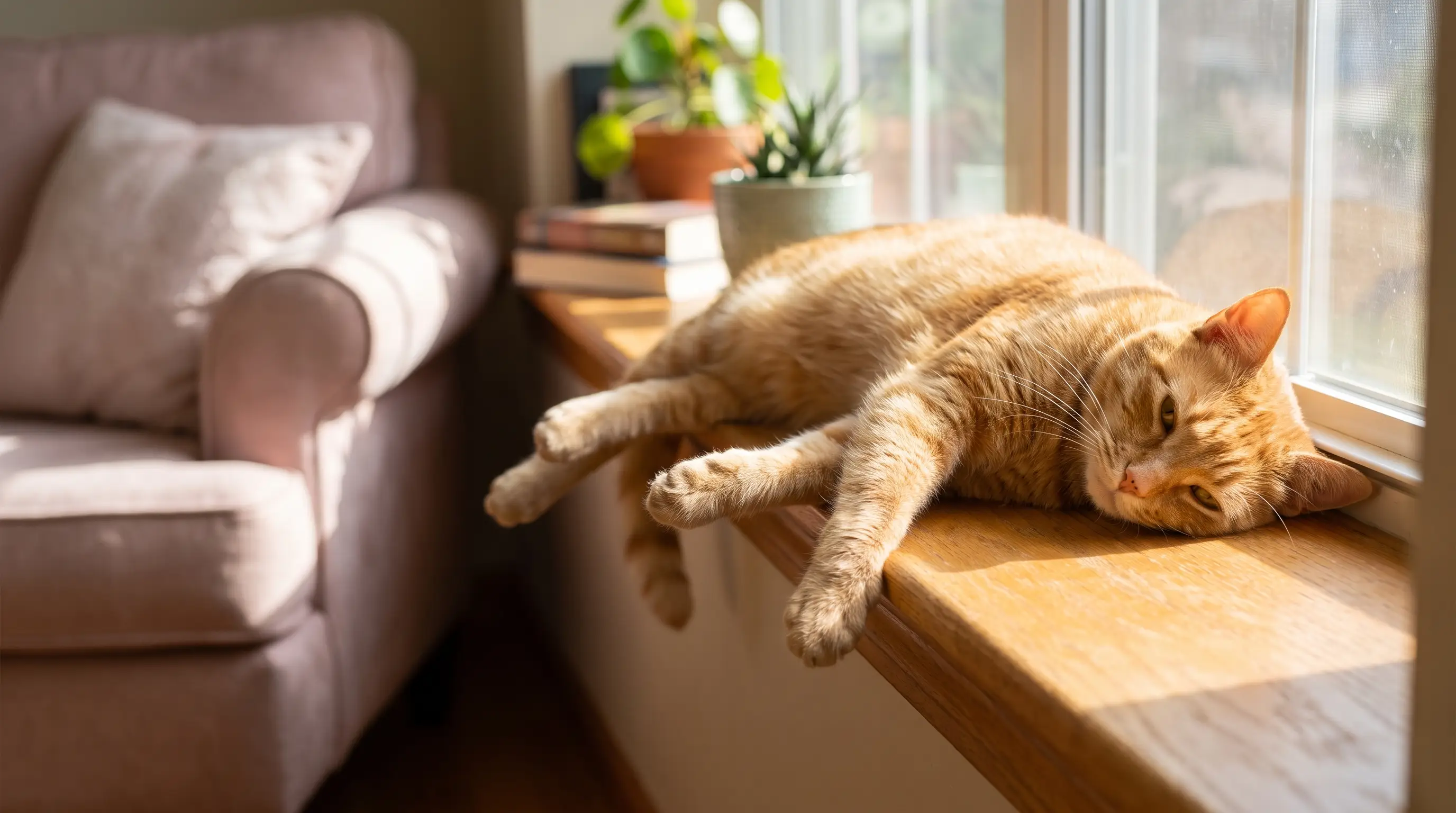
Cats sleep roughly 12 to 16 hours a day, and kittens and senior cats sleep even more. Most of that is light dozing, the state that earned cats the word catnap, where they can go from apparently asleep to fully alert in a second. Only a slice of it is the deep sleep that tips into REM, and that's the only stage where the dreaming and the twitching happen. Cats also drop into REM far more often than we do, on the order of every 25 minutes against roughly every 90 minutes in a sleeping human, though their REM bouts are short. So across a long day of sleep, a cat gets many brief dream windows rather than a few long ones. If you watch a cat nap for an hour, you'll often catch at least one stretch of paw-paddling and whisker movement, then a return to still, heavy breathing.
Dream twitching or a seizure
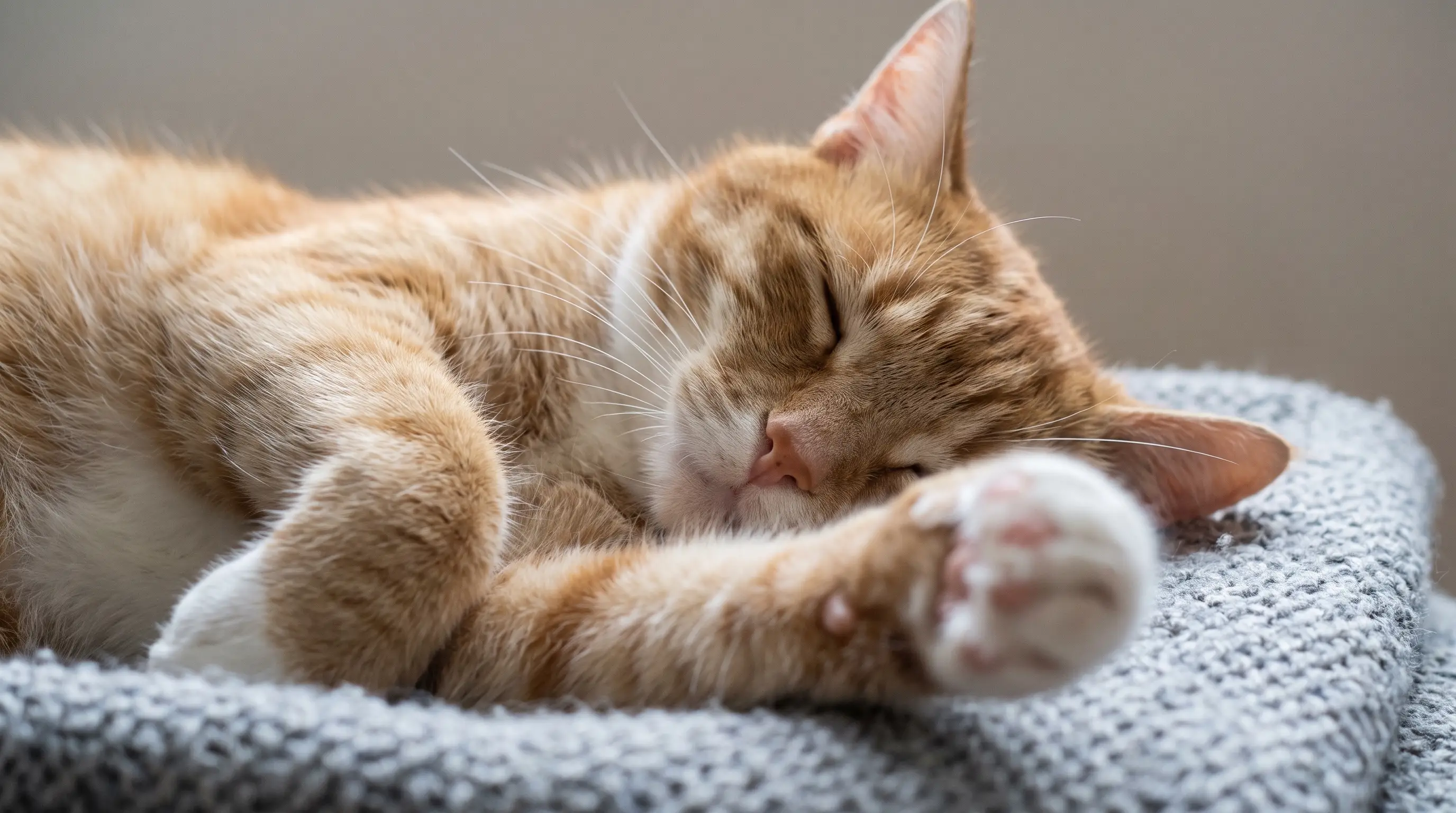
Normal dream twitching is brief, gentle, and relaxed between movements, while a seizure is stiff, violent, and unresponsive. In a dreaming cat the body stays loose. Paws paddle softly, ears and whiskers flick, the tail twitches, and there may be small chirps or muffled meows, with calm stretches in between. Say the cat's name quietly from across the room and a dreaming cat will usually settle, shift, or wake normally.
A seizure looks different. The whole body goes rigid or the limbs paddle in a hard, rhythmic, exaggerated way. The cat won't respond to your voice, may drool, may urinate or defecate, and often seems dazed or disoriented for minutes afterward once it comes round. Cats that seize also tend to show other changes when awake, like shifts in appetite, energy, or behavior. If you're unsure, film it on your phone and show your vet; a video of the movements tells them far more than a description, and it's worth a visit if anything looks stiff, prolonged, or leaves the cat confused.
Should you wake a twitching cat
Don't wake a cat mid-twitch. A twitching cat is deep in REM, the hardest stage to surface from, and a cat yanked out of it can be disoriented and may lash out or bite before it knows where it is. There's no benefit to interrupting a normal dream, and you risk a scared, defensive reaction and a cat that trusts naps near you a little less. Leave it be and let the cycle finish on its own. The only reason to intervene is if you genuinely suspect a seizure rather than a dream, and even then the move is to watch, time it, and film it rather than shake the cat awake.
Common questions
What do cats dream about?
Most likely ordinary cat life: hunting, chasing, patrolling their territory, and the people and animals they live with. Michel Jouvet's cats acted out stalking and pouncing in their sleep, which points to dreams built from everyday experience rather than anything exotic.
Do cats dream about their owners?
Probably yes. Since cats seem to dream about their daily experiences, and interaction with their humans is a big part of a housecat's day, it's reasonable to think they dream about being stroked, fed, or playing with you. We can't confirm it directly, so treat it as a fair inference rather than proof.
Can cats have nightmares?
We don't know for certain. Cats clearly dream, but whether they have bad dreams is unproven. Some owners report a cat waking suddenly and looking frightened, which hints at it, but that's anecdote, not evidence, and a startled waking has other explanations.
How can you tell if your cat is dreaming?
Watch for small, relaxed movements during deep sleep: paddling paws, flicking ears and whiskers, a twitching tail, and soft chirps or meows, with calm stretches in between. If the cat is loose and settles when you quietly say its name, it's dreaming, not distressed.
Why do cats twitch in their sleep?
During REM sleep the brain fires motor signals as if the cat were moving, and a little of that leaks past the body's paralysis switch as small twitches. Those flickers roughly track what the cat is dreaming, which is usually hunting, chasing, or playing.
Why does my cat move its tail while sleeping?
For the same reason its paws and whiskers twitch: during REM the sleeping brain sends movement signals to the muscles, including those of the tail, and small contractions slip through. It's a normal sign of dreaming, not discomfort, as long as the cat stays relaxed.
More in Cats
Why does my cat lick me? Grooming, love and salt
A cat's lick is mostly a compliment: you've been adopted into the grooming circle. What the sandpaper tongue is doing, why some cats overdo it, and when to gently opt out.
Why does my cat follow me everywhere, even the bathroom?
The supposedly aloof animal trailing you from room to room is behaving exactly as the attachment science predicts. Why cats shadow their person, the bathroom mystery, and the one change that needs a vet.
Do cats love their owners? The kidnap experiment says yes
Science ran the same attachment test on cats that it runs on human infants, and 64% passed. What the secure-base test found, why one earlier study disagreed, and how a cat actually says it.
Do cats miss their owners? They even track the clock
Cats greet you harder after four hours away than after thirty minutes — they know how long you were gone. What missing looks like in a cat, when it tips into separation anxiety, and how to leave well.
How cats choose their favourite person
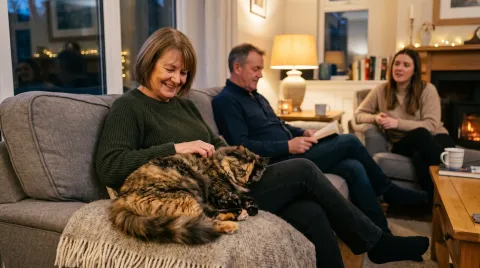
It isn't whoever fills the bowl. The Swiss living-room study found one habit that predicts a cat's favourite better than food ever did — and the person who ignores cats has it by accident.
Cats know their names. They've decided not to answer
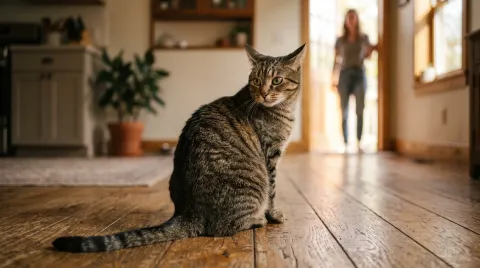
A Tokyo lab proved cats pick their own name out of a string of similar words — even from a stranger's mouth. What cats actually understand of what you say, and why the response is optional.