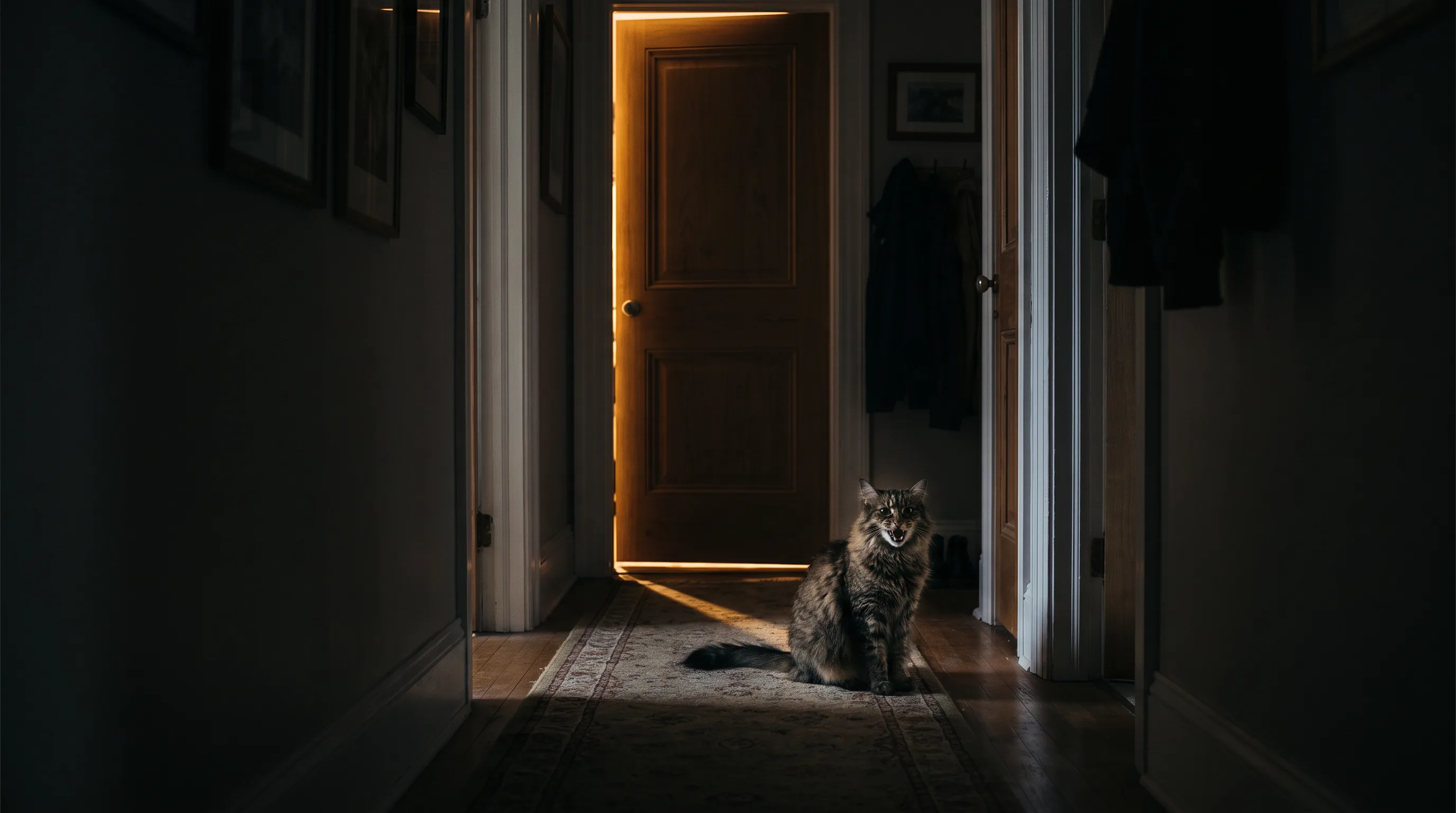
Why does my cat meow at night? And how to make it stop
A cat meowing through the night has a reason, and it's almost always on a short list: a body clock tuned to dawn and dusk, boredom banked during a day of sleep, a lesson you taught by getting up, hormones, or — in a cat past ten — a medical condition announcing itself. The fix depends entirely on which one it is, so this guide runs the list in order, with the senior-cat flag first because it's the one that shouldn't wait.
Start here if your cat is over ten
New night yowling in an older cat is a medical sign until proven otherwise. Hyperthyroidism — common in senior cats — produces a hungry, restless, loud cat that paces and calls at night; high blood pressure can do the same, and both are treatable. Failing hearing makes a cat call louder and listen less for a reply; failing sight makes the dark house disorienting. And feline cognitive dysfunction, the cat's version of dementia, has night-time calling as one of its signature signs, typically with a lost, flat-toned quality and a cat that seems disoriented rather than demanding.
So for a senior, the first stop is the vet, not a training plan: bloodwork and a blood-pressure check cover the big three. If the senses are the issue, a nightlight along the usual routes genuinely helps. The wider picture of what changes after eleven is in senior cat care — night calling and litter-box lapses often arrive as a pair, and often share a cause.
Your cat isn't nocturnal, but it isn't on your schedule either
Cats are crepuscular: built to hunt at dawn and dusk, the hours their prey moves. A cat that sleeps away a quiet afternoon — and they sleep a lot, as how much cats sleep lays out — arrives at 4 a.m. rested, hungry and ready for the day's first hunt, which the household has inconveniently scheduled for three hours later.
That mismatch is the engine behind most healthy-cat night calling, and it means the fix happens during the day, not at night. A cat that gets real play in the evening — a proper wand-toy hunt, not a half-hearted dangle — followed by a meal, runs its natural hunt-catch-eat-groom-sleep sequence and files the longest sleep block where yours is. Under-stimulated indoor cats with nothing to hunt and nobody to play with are the loudest cats at night for a reason: the energy has to go somewhere, and at 4 a.m. it goes through the door.
The lesson you accidentally taught
If your cat meows at night and you have ever gotten up and fed it, the meowing has a sponsor. Cats are superb students of consequence: a meow that produces breakfast at 5 a.m. — even once, even occasionally — is a strategy worth repeating forever. Intermittent rewards train harder than reliable ones, which is why “I only give in sometimes” makes the problem stronger, not weaker.
The way out has two parts, and both are required. First, total consistency: night meowing produces nothing — no food, no scolding, no door opening, no interaction at all, because to a lonely, bored cat even an annoyed human is a result. Expect an extinction burst: the calling gets louder for several nights before it fades, and surviving that stretch is the whole treatment. Second, remove the 5 a.m. stake entirely with an automatic feeder set for dawn. The cat transfers its campaign from your door to the machine, and the machine never gives in.
Hormones, and the cat that wants the whole neighbourhood to know
An unneutered cat meowing at night is running an advertising campaign. A female in heat yowls — a loud, insistent, oddly human sound — on and off for days at a time, several times a season; an intact male answers any such broadcast in range, patrols, sprays and calls. No training plan touches this, because nothing about it is a training problem.
Neutering resolves the heat-and-advertising cycle, usually quickly, and brings the rest of its well-documented package — less roaming, less spraying, fewer fights. What it does and doesn't change about a cat's behaviour is covered honestly in neutering and cat behaviour. If a neutered cat still produces that distinctive yowl at the window, the campaign is usually someone else's: an outside cat on the territory, which is a different problem with a different fix — block the sightline, and the show usually closes.
The night-calling fix, in order
Put together, the plan runs: rule out medicine (always first for seniors and for any sudden change); then fix the day — a serious evening play session, a meal after it, foraging toys so the daytime hours cost some energy; then close the loopholes — an automatic feeder for the dawn meal, and absolute consistency that your door produces nothing at night. Most households that do all of it get their nights back inside two or three weeks, with the worst nights in the first few days.
What doesn't work: punishment (water sprays and shouting give an attention-seeking cat attention and a stressed cat more stress), locking a caller in a distant room (the calling moves, the cause stays), and half-measures (one night of giving in refinances the whole campaign). If a full medical check and three disciplined weeks haven't moved it, the meow itself might be the clue — what cat meows mean breaks down the vocabulary, and a cat that calls while staring at a specific window, door or room is usually reporting something rather than requesting something.
Common questions
Why does my cat meow at night?
The short list: a dawn-and-dusk body clock colliding with your schedule, boredom banked during a sleepy day, a learned habit (meowing has produced food or attention before), mating behaviour in unneutered cats, or — especially past age ten — a medical cause such as hyperthyroidism, high blood pressure, failing senses or cognitive decline.
Why does my old cat yowl at night?
Treat it as medical first. Hyperthyroidism, hypertension, hearing or vision loss and feline cognitive dysfunction all produce night calling in seniors, and the first three are very treatable. Book bloodwork and a blood-pressure check before any behavioural plan; a nightlight helps cats whose senses are fading.
How do I stop my cat meowing at night?
Fix the day: a real evening play session followed by a meal, and foraging toys to spend daytime energy. Then close the loopholes: an automatic feeder for dawn, and no response of any kind to night calling — expect it to get briefly louder before it fades. Most homes see results within two to three weeks.
Should I ignore my cat meowing at night?
Once medical causes are ruled out, yes — completely and every time. Any response, including an annoyed one, pays the behaviour. The exception is a sudden change in an older cat or a cry that sounds distressed or disoriented, which is a vet matter, not a discipline matter.
Will getting another cat stop the night meowing?
Sometimes, if the driver is boredom and loneliness in a sociable cat left alone all day — a compatible companion gives the energy somewhere to go. It isn't a shortcut though: a poorly matched introduction adds stress, and stress is its own source of night-time noise.
Why does my cat scream at night like it's in pain?
An intact female in heat and toms answering her produce exactly that sound, and it's hormonal advertising, not pain. In a neutered cat, a scream-like yowl warrants attention: check for an outside cat triggering territorial alarm at a window, and for seniors treat it as a medical flag.
More in Cats
Why is my cat spraying? What it means and how to stop it
Spraying isn't a litter-box failure — it's a message about territory, written in urine. How to tell it from peeing, what's behind it, and the fixes that hold.
Why is my cat aggressive? Causes and how to calm it
Cat aggression isn't a personality — it's a diagnosis with about six usual suspects, and each one has a different fix. Work through them in order and the biting usually explains itself.
Why do cats hiss? What it means and what to do
A hiss is not an attack — it's the thing a cat does to avoid one. What the sound actually is, what triggers it, and why the polite answer is always to back off.
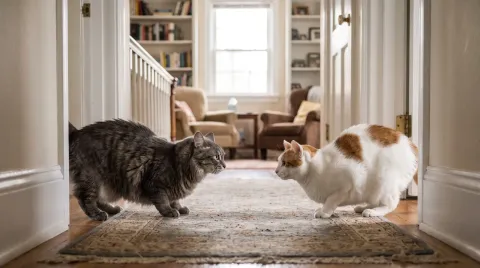
Why are my cats fighting? How to restore the peace
Two cats that shared a bed for years can turn into enemies in an afternoon. What breaks a feline relationship, why 'letting them fight it out' entrenches the war, and the reset that works.
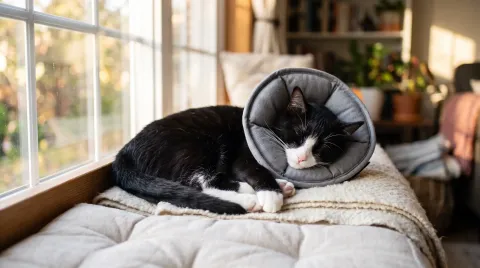
How neutering changes cat behavior — and what it won't fix
Neutering deletes the hormone-driven behaviours — the roaming, the spraying, the 3am opera — and touches almost nothing else. What changes, what doesn't, and when.
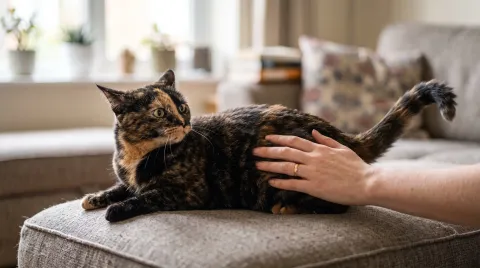
Why your cat bites you mid-stroke
Purring one second, teeth the next — petting-induced aggression is the most misread move in cat ownership. The warnings arrive earlier than you think, and the fix is counting, not forgiveness.