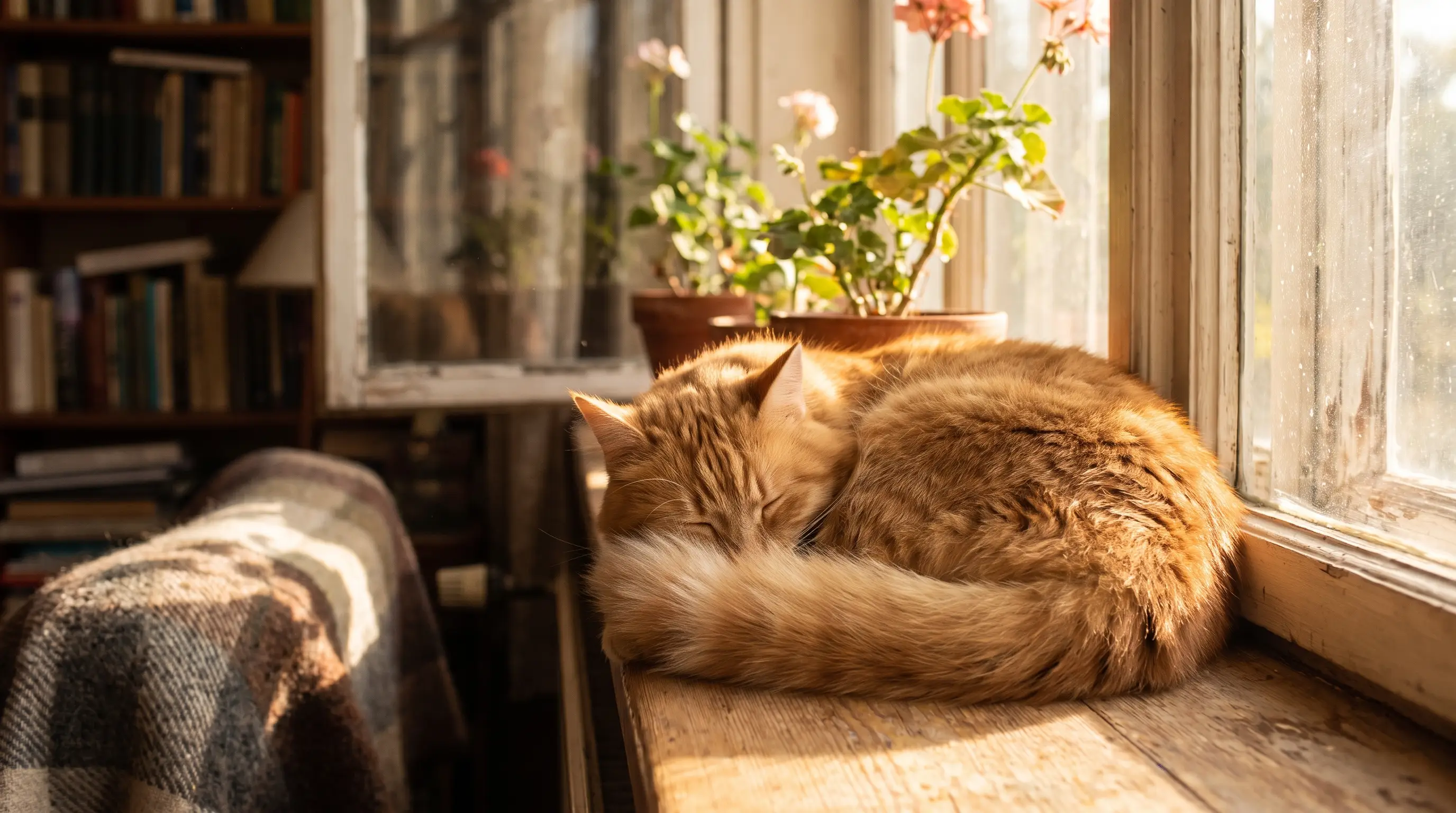
Why do cats sleep 16 hours a day?
Cats sleep between twelve and sixteen hours a day, and kittens and seniors can push past twenty, because they are built around short, expensive bursts of hunting with long stretches of rest in between. Most of that sleep is light dozing rather than deep sleep — the famous cat nap, with the ears still tracking the room. Here is why an obligate predator rests so much, why your cat comes alive at dawn and dusk, and the changes in sleep that are worth a vet's attention rather than a photograph.
Sleep is a hunting strategy
The cat is an obligate carnivore, an animal that must hunt to eat, and hunting is metabolically expensive and often unsuccessful. A wild cat spends its energy in short, explosive efforts — the stalk, the sprint, the pounce — and may fail many times before it catches anything. Between those efforts, the smart thing to do with a body is nothing at all.
Sleep is how a cat banks energy for the next burst and rides out the gaps between meals, a feast-or-famine budget written into the species. A well-fed house cat keeps the same accounting even though its meals arrive in a bowl on schedule, which is why a pet with nothing to hunt still sleeps like it is rationing itself for a lean week. The big cats do exactly the same — a lion can sleep the better part of a day between kills.
The cat nap is real — most of it is light sleep
A cat's sixteen hours are not sixteen hours of deep sleep. Roughly three-quarters of it is light dozing, the true cat nap, in which the cat can be fully awake and moving in a second. During that phase the ears still swivel towards sounds and the muscles stay ready, which is why a cat apparently flat out is on its feet the instant a fridge door opens or a tin is touched.
Only the remaining quarter or so is deep sleep, including the REM stage where the whiskers twitch, the paws paddle and the cat is almost certainly dreaming. Splitting sleep this way lets a small predator — which is also potential prey for something bigger — get the rest it needs without ever being fully off guard. The long total is less impressive once you know most of it is a doze with one ear open.
Why they wake at dawn and dusk
Cats are crepuscular: their natural peak of activity falls at twilight, at the two edges of the day. It is the schedule their prey keeps — mice and other small animals move at dawn and dusk — and it is when a cat's eyes work best, since they are built to see in low light rather than in full dark or bright sun. Long midday sleeps and a burst of energy at first light are the wild timetable showing through.
So the four-in-the-morning zoomies and the pre-dawn demand for breakfast are not misbehaviour; they are the clock the cat was issued. You can shift it a little by playing with the cat to tire it out and feeding it right before your own bedtime, so the big energy release and the meal land at night rather than at 5am. You are working with the schedule, not overriding it.
Kittens and seniors sleep even more
The sixteen-hour figure is an adult average, and the two ends of life run higher. Kittens can sleep up to twenty hours a day because sleep is when growth happens and a developing body and brain need it. Senior cats also drift back up towards those numbers as their energy drops and they spend more of the day resting in a warm spot.
Both are normal, so more sleep in a kitten or an old cat is not in itself a worry. What matters is not the raw number of hours at any age but a sudden change from that particular cat's own normal, which is the thing to keep an eye on.
When sleep is a warning sign
Because the healthy range is so wide, it is change, not quantity, that flags a problem. A cat that suddenly sleeps far more than usual, seems genuinely lethargic, is hard to rouse or has gone off its food may be ill or in pain rather than simply resting, and that is a vet visit, not a nap.
The opposite pattern matters too, especially in older cats. A senior that starts sleeping less, becomes restless, paces or yowls at night can be signalling an overactive thyroid, high blood pressure, cognitive decline or the discomfort of arthritis keeping it from settling. In either direction, a marked and lasting shift from your cat's usual sleep is worth a check-up — the amount a cat sleeps is only reassuring when it stays roughly the same.
Common questions
Why do cats sleep so much?
Cats are predators built for short, energetically expensive bursts of hunting, so they sleep to conserve energy between efforts and to ride out the gaps between meals. This feast-or-famine energy budget is inherited from their wild ancestors, and a well-fed house cat keeps it even though food arrives reliably. Much of the sleep is also light dozing rather than deep sleep, so the long hours are less total rest than they look.
How many hours a day do cats sleep?
Adult cats sleep on average twelve to sixteen hours a day. Kittens and elderly cats sleep more — a kitten can sleep up to twenty hours because it is growing, and seniors drift back up as their energy drops. What counts as normal is wide, so the useful thing to track is not the exact number of hours but whether it has changed sharply from your own cat's usual pattern.
Do cats really sleep 16 hours a day?
Yes, but most of it is not deep sleep. Around three-quarters of a cat's sleep is light dozing — the cat nap — during which the ears still track sounds and the cat can be fully awake in a second. Only about a quarter is deep sleep, including the dreaming REM stage. So a cat resting sixteen hours is mostly on standby with one ear open, not unconscious for two-thirds of the day.
Why is my cat awake and active at night?
Cats are crepuscular, meaning they are naturally most active at dawn and dusk, when their prey moves and their low-light vision works best. Night-time or pre-dawn activity is the wild schedule showing through, not misbehaviour. You can shift it towards your own bedtime by having a vigorous play session and then feeding the cat late in the evening, so the big burst of energy and the meal happen at night rather than at first light.
Should I worry that my cat sleeps too much?
Not usually — long sleep is normal for cats, and more is expected in kittens and seniors. Worry about change rather than quantity. A cat that suddenly sleeps much more, seems lethargic, is hard to wake or stops eating may be ill or in pain and should see a vet. In older cats, sleeping less and becoming restless or yowling at night can also signal a problem such as an overactive thyroid or arthritis.
Do cats dream while they sleep?
Almost certainly. During the deep REM stage of sleep, a cat's whiskers twitch, its paws paddle and its eyes move behind the lids — the same signs of dreaming seen in humans and dogs. A famous experiment on cats in the 1960s, which disabled the brain region that paralyses the body during REM, showed sleeping cats acting out hunting behaviour. Only about a quarter of a cat's sleep reaches this dreaming stage.
More in Cats
Why do cats purr? It's not always happiness
Purring is a self-soother, a request and sometimes a sign something's wrong — not just contentment. How cats make the sound, and what a purr at the vet really means.
Why do cats knead? The biscuit-making instinct
Making biscuits is a leftover from kittenhood, a way of laying down scent and a sign your cat feels safe. What the pushing paws mean, why some cats drool, and what to do about claws.
Why do cats hate water? Most do — here's why
It's evolution, a coat that waterlogs and a need for control — not fear of getting clean. Why most cats dodge a bath, the breeds that swim, and why the same cat loves a dripping tap.
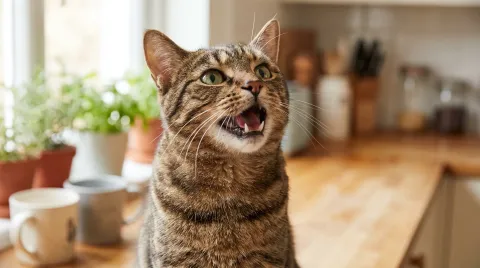
What your cat's meow actually means
Adult cats barely meow at each other. The meow is a language they built for one audience: you. Here's how to read it.
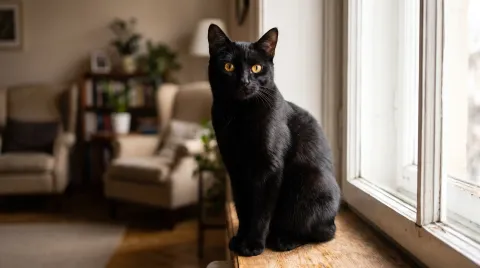
Black cats: the luckiest and unluckiest cat alive
The same black cat is a curse in one country and a blessing in the next. Here's the split, the real genetics, and why shelters can't rehome them.
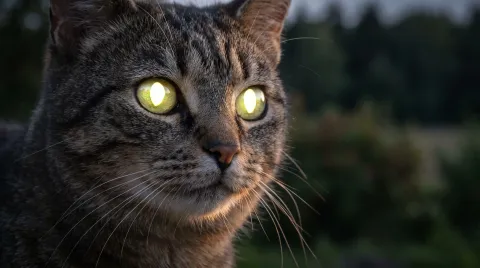
Why cats' eyes glow in the dark, and what they see
A mirror behind the retina gives cats a second shot at every photon. Here's the science of the glow, and the blurry, blue-gold world they actually see.