Why your cat bites you mid-stroke
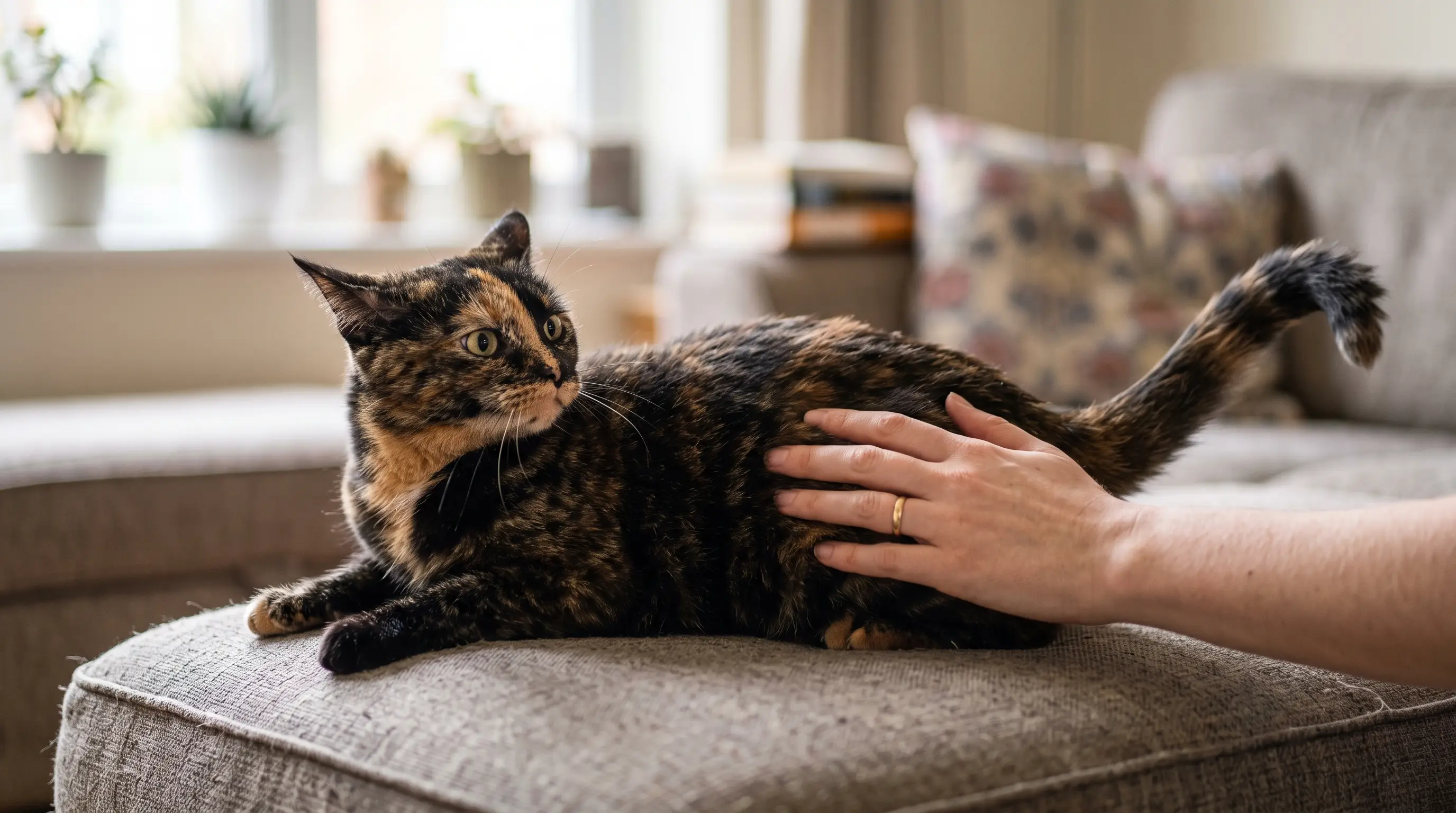
The sequence that convinces people cats are treacherous: the cat asks for attention, settles under your hand, purrs — and then, apparently out of nowhere, spins and bites the hand it recruited. Behaviourists call it petting-induced aggression, and the important word is induced: the bite has causes, warnings and a predictable arc, all of which are visible if you know where to look. Nothing about it is betrayal. It is an animal with a hard sensory limit enforcing that limit the only way it can once its polite signals have been missed.
Why a nice thing becomes too much
Petting is not a neutral pleasure for a cat; it's stimulation, and stimulation accumulates. The leading explanation for the mid-stroke bite is simple arousal overshoot: repetitive stroking keeps adding sensory input until the cat crosses from enjoyment into irritation — the feline equivalent of a touch that starts pleasant and becomes unbearable through pure repetition. Static build-up on the coat and mild pain points (a full-bladdered senior, an arthritic hip under your palm) can lower the threshold further.
Where you stroke matters as much as how long. Most cats tolerate — and solicit — contact around the head and cheeks, where the scent glands they use for their own social marking sit. Belly, back near the tail, and full-body strokes rank far lower on the average cat's list, however invitingly the belly is displayed. The rolled-over belly is a trust posture, not a request; treating it as an invitation is one of the most reliable ways to meet the teeth.
The warnings you were given
The bite only looks sudden. Rewind any mid-stroke nip and you'll find a ladder of escalating notices, climbed in seconds: the purring stops. The body stills. The tail tip starts to flick — the single most reliable early warning — then the whole tail lashes. The skin along the back ripples. The ears rotate sideways, then flatten. The head turns toward your hand, first watching it, then tracking it. A short, low vocal note. Then teeth — usually a controlled, inhibited bite, which from the cat's side is not an attack but the final rung of a ladder you climbed with it.
These are the same signals mapped across the rest of the cluster's signal dictionary in cat body language, and they run in roughly that order for most cats. The practical skill isn't reflexes; it's watching the tail and ears with the same attention you'd give a conversation. A cat that bites "without warning" almost always gave four or five.
The count, and the exit
The working fix is almost embarrassingly mechanical. Learn your cat's number: count strokes during a calm session and note when the first warning appears. If the tail-flick reliably arrives around stroke eight, your working number is five — stop there, while the experience is still entirely positive, and let the cat decide whether to ask for more. Short sessions that end well raise a cat's tolerance over time; long sessions that end in teeth lower it, because the cat learns that only escalation makes the hand stop.
Structure the session on the cat's terms: let it initiate, keep strokes to the head and cheeks, pause every few strokes and wait — a cat that wants more will bump your hand, a cat that doesn't will simply sit. If a bite does land, don't snatch (tearing against gripping teeth is what breaks skin) — freeze, let go of the moment, and withdraw calmly once released. No punishment, ever: shouting or swatting converts an overstimulated cat into a fearful one, and fearful cats bite harder, earlier and with less warning. The same respond-don't-initiate economy that builds a cat's affection in the first place — covered in how cats choose their favourite person — is exactly what prevents the bite.
When it isn't overstimulation
Petting-induced aggression has imitators worth ruling out. Pain is the big one: a cat that suddenly stops tolerating touch it used to enjoy — especially over the lower back, hips or belly — may be guarding arthritis, dental disease or something internal, and a change in touch tolerance is a vet conversation before it's a training project. Redirected aggression is the second: a cat wound up by something else entirely (the neighbour's cat through the window, a noise) that discharges at the nearest touchable object, which is you. That bite arrives without the petting ladder and with a generally agitated cat.
And some of it is play that never got educated. Kittens separated early from their litter miss the lessons siblings teach about bite pressure, and treat hands as prey for life if hands were ever used as toys. The rule that fixes it is absolute: hands are never toys; wand toys exist precisely to be the prey. A cat that hunts your ankles at dusk is running surplus energy, not malice — the budget arithmetic, and the play prescription that spends it, live in the zoomies guide. If the biting is frequent, escalating, or paired with the withdrawal patterns in the stress signs owners miss, bring in the vet first and a behaviourist second.
Common questions
Why does my cat bite me when I pet it?
It's petting-induced aggression: stroking is stimulation, stimulation accumulates, and past a threshold the cat crosses from enjoyment into irritation. The bite ends contact after quieter signals — stilled body, flicking tail tip, rotating ears — were missed. It's a sensory limit being enforced, not betrayal.
Why does my cat lick me and then bite me?
Usually the same overstimulation arc with a social opening: grooming you is affiliative, but the contact still adds arousal, and the nip marks the limit. In young cats it can also be play that was never taught bite limits — especially if hands were ever used as toys.
What are the warning signs before a cat bites?
In rough order: purring stops, the body stills, the tail tip flicks, the tail lashes, skin ripples along the back, ears rotate sideways then flatten, the head turns to track your hand, a short low vocalisation — then the bite. The tail tip is the most reliable early warning; end the session when it starts.
Why does my cat show its belly but bite me when I touch it?
The rolled-over belly is a trust display, not an invitation. A cat exposing its most vulnerable side is saying it feels safe — touching it converts trust into a startle for many cats, and the defensive grab-and-bite follows. Admire the belly; pet the cheeks.
How do I stop my cat biting me when I stroke it?
Learn the cat's stroke count: note when the first warning arrives and stop well before it, ending sessions while they're still positive. Let the cat initiate, stick to head and cheeks, pause and let it ask for more. If bitten, freeze rather than snatch, withdraw calmly, and never punish — punishment produces earlier, harder bites.
When is cat biting a sign something is wrong?
When touch tolerance changes: a cat that abruptly stops accepting strokes it used to enjoy — particularly over the lower back, hips or belly — may be guarding pain from arthritis, dental disease or illness, and needs a vet before any training. Bites with no petting ladder from a generally agitated cat point at redirected aggression instead.
More in Cats

Why does my cat meow at night? And how to make it stop
Night calling is a solvable problem with a short list of causes: a crepuscular body clock, a lesson you accidentally taught, an unneutered announcement, or — in older cats — a medical flag that comes first.
Why is my cat spraying? What it means and how to stop it
Spraying isn't a litter-box failure — it's a message about territory, written in urine. How to tell it from peeing, what's behind it, and the fixes that hold.
Why is my cat aggressive? Causes and how to calm it
Cat aggression isn't a personality — it's a diagnosis with about six usual suspects, and each one has a different fix. Work through them in order and the biting usually explains itself.
Why do cats hiss? What it means and what to do
A hiss is not an attack — it's the thing a cat does to avoid one. What the sound actually is, what triggers it, and why the polite answer is always to back off.
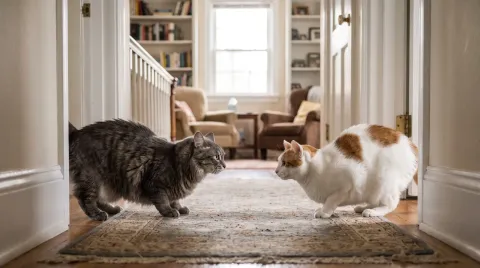
Why are my cats fighting? How to restore the peace
Two cats that shared a bed for years can turn into enemies in an afternoon. What breaks a feline relationship, why 'letting them fight it out' entrenches the war, and the reset that works.
How neutering changes cat behavior — and what it won't fix
Neutering deletes the hormone-driven behaviours — the roaming, the spraying, the 3am opera — and touches almost nothing else. What changes, what doesn't, and when.