Cystitis in cats: why it's usually not an infection
A cat straining in the litter box, passing small bloody puddles, or suddenly peeing on the bathmat has bladder trouble — but in most cats under ten it is not an infection, and a course of antibiotics is often the wrong tool. The majority of feline cystitis is feline idiopathic cystitis (FIC), a stress-linked inflammation of the bladder. One version of this is a genuine emergency measured in hours, so that comes first.
The emergency first: a cat that can't pee
A cat — almost always male — that keeps straining and produces nothing, cries in the box, repeatedly visits it, licks urgently at its rear or becomes withdrawn and then flat may be blocked: crystals, stones or an inflammatory plug sealing the narrow male urethra. A blocked cat cannot empty its bladder, its kidneys back up, and the chemistry that follows can stop the heart. This kills within a day or two and is excruciating well before that.
So the rule, before anything else in this guide: straining with no urine in a male cat is an immediate vet visit — now, out of hours, whatever the time. Do not wait for morning, do not press the belly, do not try home remedies. If you are ever unsure whether a cat has passed urine, check the box: a dry tray plus a cat in distress settles the question in the emergency direction.
Why it's usually not an infection
Vets group bladder-and-urethra trouble under one umbrella, FLUTD — feline lower urinary tract disease — and the surprise inside the umbrella is what's most common. In otherwise healthy cats under about ten, the leading cause by a distance is feline idiopathic cystitis: a sterile inflammation of the bladder with no bacteria in it. True bacterial infections are genuinely uncommon in young cats, whose concentrated urine is a hostile place for microbes; they become more common in older cats, where kidney disease or diabetes dilute the urine — one more reason new thirst and bladder signs belong in the same vet conversation.
This is why the diagnosis matters and why antibiotics aren't automatic. A urine sample tells the vet whether there are bacteria, crystals or blood, and whether the problem is infection, stones, or FIC. Antibiotics for a sterile bladder do nothing for the cat and plenty for resistance. A good vet will want urinalysis before a prescription — that's rigour, not penny-pinching.
What cystitis looks like from the outside
The signs cluster around the box: more visits producing less urine, straining, crying while passing it, pink or bloody urine, and intense licking afterwards. Many cats add the sign owners misread as behaviour: peeing outside the tray, often on soft, cool surfaces — the bathmat, the duvet, the laundry pile. A bladder that hurts gets associated with the place it hurt, and the cat tries somewhere else; our guide to peeing outside the litter box runs that full decision tree.
Between flares, a cat with FIC often looks completely normal. During one, expect a tense, hiding, grumpy cat — pain does that. Flares typically settle in around three to seven days, and the vet's job during one is pain relief and ruling out the dangerous causes, not simply waiting it out: cystitis hurts the way it hurts you, and untreated pain feeds the stress that feeds the disease.
The stress disease
FIC is the clearest example in cats of a body part paying for a mental state. The current understanding: in susceptible cats, chronic stress alters the nervous system's input to the bladder and thins the bladder's protective lining, so stress chemistry reaches tissue it shouldn't. That's why flares follow upheavals — a house move, building work, a new baby or pet, conflict with another cat, even a changed routine — and why the condition concentrates in indoor, multi-cat households where one cat quietly blocks another from resources.
Which makes stress management genuine medicine here, not a soft extra. The checklist is the one in cat stress signs: one litter box per cat plus one, separated; food, water and resting places that no housemate can ambush; predictable routine; daily play as an outlet. For the box itself — size, placement, substrate, cleaning rhythm — the litter routine guide covers what a bladder patient needs: a box it never hesitates to use.
Water, food and the long game
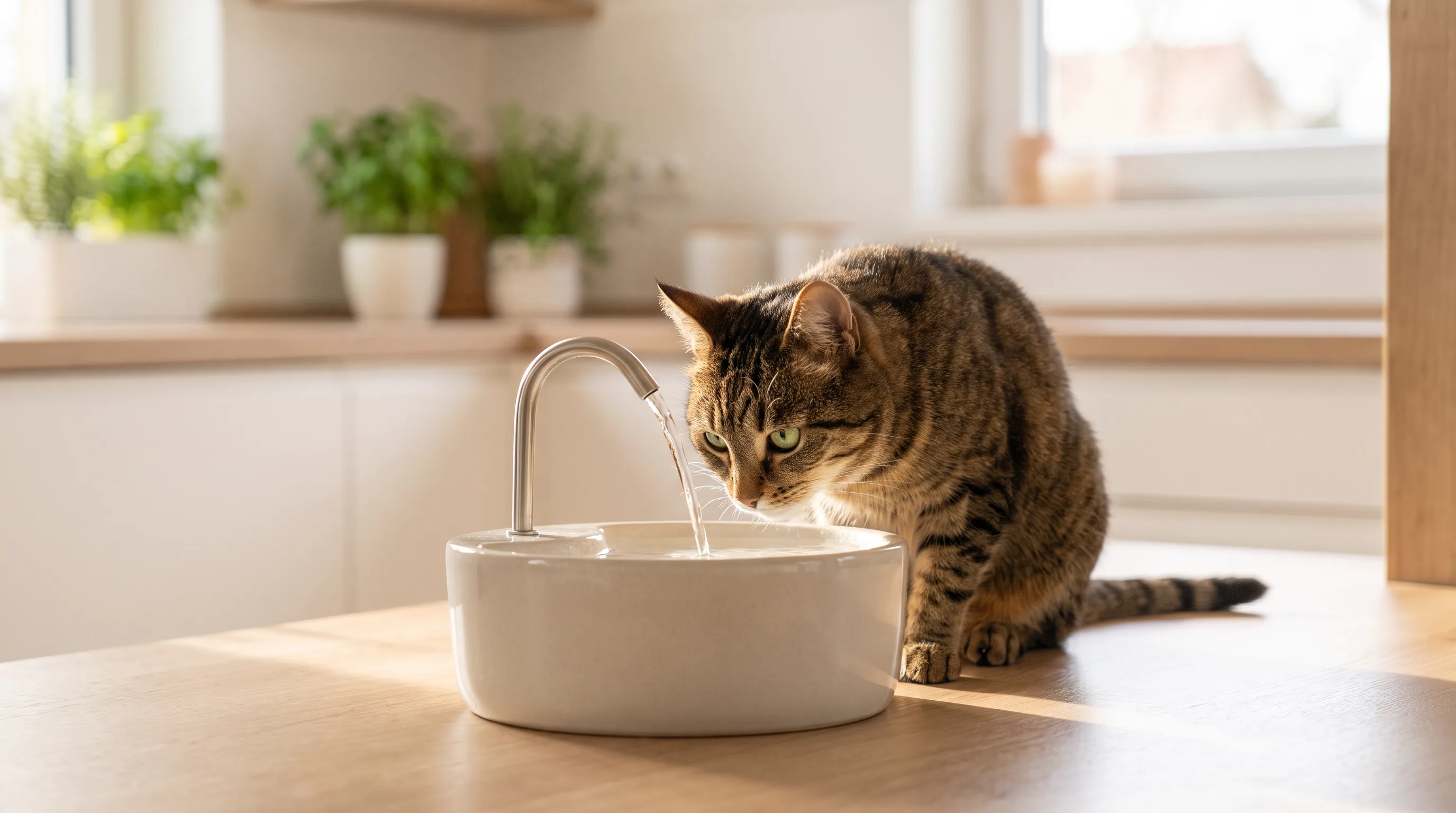
The other proven lever is dilution. Cats descend from desert animals that drink little, and concentrated urine irritates an inflamed bladder; getting more water through the cat genuinely reduces recurrence. Wet food is the single biggest move — a pouch is roughly 80% water against kibble's 10%, the arithmetic in wet vs dry food — and fountains, wide bowls away from food, and a splash of water stirred into meals all add to it. Where crystals or stones are involved, the vet may prescribe a urinary diet; that's a medical tool, matched to the stone type, not a supermarket swap.
Be honest with yourself about the long game: FIC is managed, not cured. Many cats have one or two episodes and never again; some flare under every major stress for life. What tips the odds are the unglamorous things — moisture, weight (overweight cats flare more), stable routine, clean accessible boxes — plus a vet who treats flare pain promptly. Keep notes on when flares happen; the pattern usually points straight at the trigger.
Common questions
Is cystitis in cats caused by a urine infection?
Usually not. In cats under about ten, the most common cause is feline idiopathic cystitis (FIC), a sterile, stress-linked inflammation — there are no bacteria to kill, which is why antibiotics often aren't prescribed. True infections become more likely in older cats, especially alongside kidney disease or diabetes. A urine test tells the difference.
When is cat cystitis an emergency?
When a cat — especially a male — strains and produces nothing, cries in the box, or visits it again and again with a dry tray. That can mean a blocked urethra, which is fatal within a day or two untreated. It's an immediate, out-of-hours vet visit, not a wait-for-morning problem.
How can I treat my cat's cystitis at home?
You can't treat a flare at home — a vet needs to rule out blockage, stones and infection, and prescribe pain relief, because cystitis genuinely hurts. What you do at home is prevention: wet food and more water, one litter box per cat plus one, stress reduction, play and a steady routine.
How long does a cystitis flare last?
Uncomplicated FIC flares typically settle in three to seven days. Veterinary pain relief makes those days humane and breaks the pain-stress loop that feeds the disease. A flare that isn't easing, or any straining without urine, goes back to the vet.
Does wet food really help cystitis?
Yes — it's the best-evidenced everyday measure. Wet food is roughly 80% water, so the urine gets more dilute and less irritating to an inflamed bladder, and recurrence drops. Fountains and extra water bowls help on top; prescription urinary diets are for specific crystal and stone cases, on a vet's say-so.
Why does my cat get cystitis again and again?
Because FIC is a stress-sensitivity, not a one-off bug. Recurrent flares usually track an identifiable pressure — tension with another cat, an unpredictable routine, too few safe resources. Fix the moisture and the stress and many cats stop flaring; keep a diary of episodes and the trigger usually shows itself.
See also
More in Cats
Tooth resorption in cats: the painful disease hiding below the gumline
A third or more of adult cats have teeth being dissolved from the inside — and almost all of them eat normally and say nothing. What resorption is, why only dental X-rays find it, and why extraction is good news.
Why is my cat pooping outside the litter box? Causes and fixes
Poop on the floor has a different list of suspects than pee on the wall — urgency, pain, an unreachable tray, or (rarely) an actual message. Here's the order to check them in.
A litter box routine that actually works
Daily, weekly and monthly, plus the placement and the n+1 rule. How to keep a box a cat will keep using, and get rid of the smell without scented litter.

Autumn dangers for dogs: acorns, conkers and mushrooms
Autumn puts three scavenging hazards on the ground — acorns, conkers and wild mushrooms — plus rat bait and fermenting fruit. What's toxic, what the warning signs are, and when to call the vet.

Winter pet dangers: antifreeze, road salt and chocolate season
Antifreeze is the winter emergency — sweet, deadly and quick. Plus gritted-salt paws, the festive-food gauntlet and cats sheltering in warm car engines. What to watch and when it's urgent.

The pet danger calendar: what to watch, month by month
Most pet hazards are seasonal and many are regional. Here's the year mapped out — when heatstroke, grass seeds, processionary caterpillars, antifreeze and the rest actually peak, and which ones your area even has.